Why there are Amazon links here: Brave Review is paid a commission for qualifying Amazon purchases made through the links below. Your price does not change, and using our links is entirely optional. How this works
Philips WiFi Keypad Deadbolt with Handle: One Lock for the Whole Entryway
The Philips WiFi keypad deadbolt with handle is a single unit that replaces both the deadbolt and the door lever on an entry door, so one purchase covers the whole opening. It bundles keyless entry, a fingerprint reader, voice control and built-in WiFi at a price that undercuts most name-brand smart locks sold without a handle. This review covers how it is built, what it can and cannot do, and which households should consider it before anything else.
Features and Specifications
Type: WiFi keypad deadbolt with integrated door lever
Unlock Methods: Fingerprint, keypad code, app, voice control, physical key
Connectivity: Built-in WiFi, no hub required
Access Management: Flexible codes for family, guests and service providers
Convenience: Auto-lock and backlit keypad
Remote Control: App-based control and monitoring
Power Source: Battery-powered (standard for the deadbolt category)
The headline here is the combination. Most smart locks sold at this price are a deadbolt only, which leaves the buyer sourcing a matching lever separately and paying a locksmith or spending a Saturday with a chisel. Philips ships the whole assembly, so the door gets one hardware set in one finish instead of two mismatched pieces bolted on a few inches apart.
Built-in WiFi matters more than it sounds. Plenty of entry locks in the budget and midrange tiers talk to a separate bridge or hub, an extra box that costs money, occupies an outlet and becomes one more thing to troubleshoot. This unit connects to the home network directly, which keeps the app useful from anywhere and keeps the installation to a single device.
Build, Power and Maintenance
The unit is a complete entry set, so the deadbolt cylinder, the keypad face, the interior assembly and the lever all arrive matched. Buyers replacing an older mechanical deadbolt with a separate handle should measure the door’s existing bore holes before ordering, because an integrated set has to line up with both the deadbolt bore and the lever bore. A door that has been drilled for an unusual configuration may need adjustment.
Power comes from batteries, which is the norm for this category and the reason the lock keeps working during a power cut. The trade-off is a maintenance rhythm: batteries need checking periodically, and the lock needs to be on the app’s radar rather than forgotten until a keypad goes dark at an inconvenient moment. The backlit keypad helps in the dark but does not solve a dead battery, so a spare set on hand is sensible.
Keypad, Fingerprint and Code Management
The backlit keypad is the everyday interface. Illumination means a code can be entered at night without a phone flashlight, which is a small thing that becomes a large one during the first week of ownership. The keypad also gives the household a fallback that does not depend on a phone being charged or a finger being dry.
Fingerprint unlock is the fastest path through the door for people who live there. It is convenient precisely because it requires nothing carried and nothing remembered, which is why it suits a household with children or with adults who come home carrying groceries. Fingerprint readers in this price bracket are generally reliable but not infallible, and a wet, cold or abraded finger can require a second attempt. The keypad and the app exist for exactly that reason.
Flexible codes are the feature that earns this lock its place in a rental or a busy household. A code can be issued to a dog walker, a cleaner or a visiting relative and withdrawn later without rekeying anything. That is a genuinely better arrangement than hiding a key under a mat or handing out the only spare and hoping for its return.
WiFi, App Control and Voice Unlock
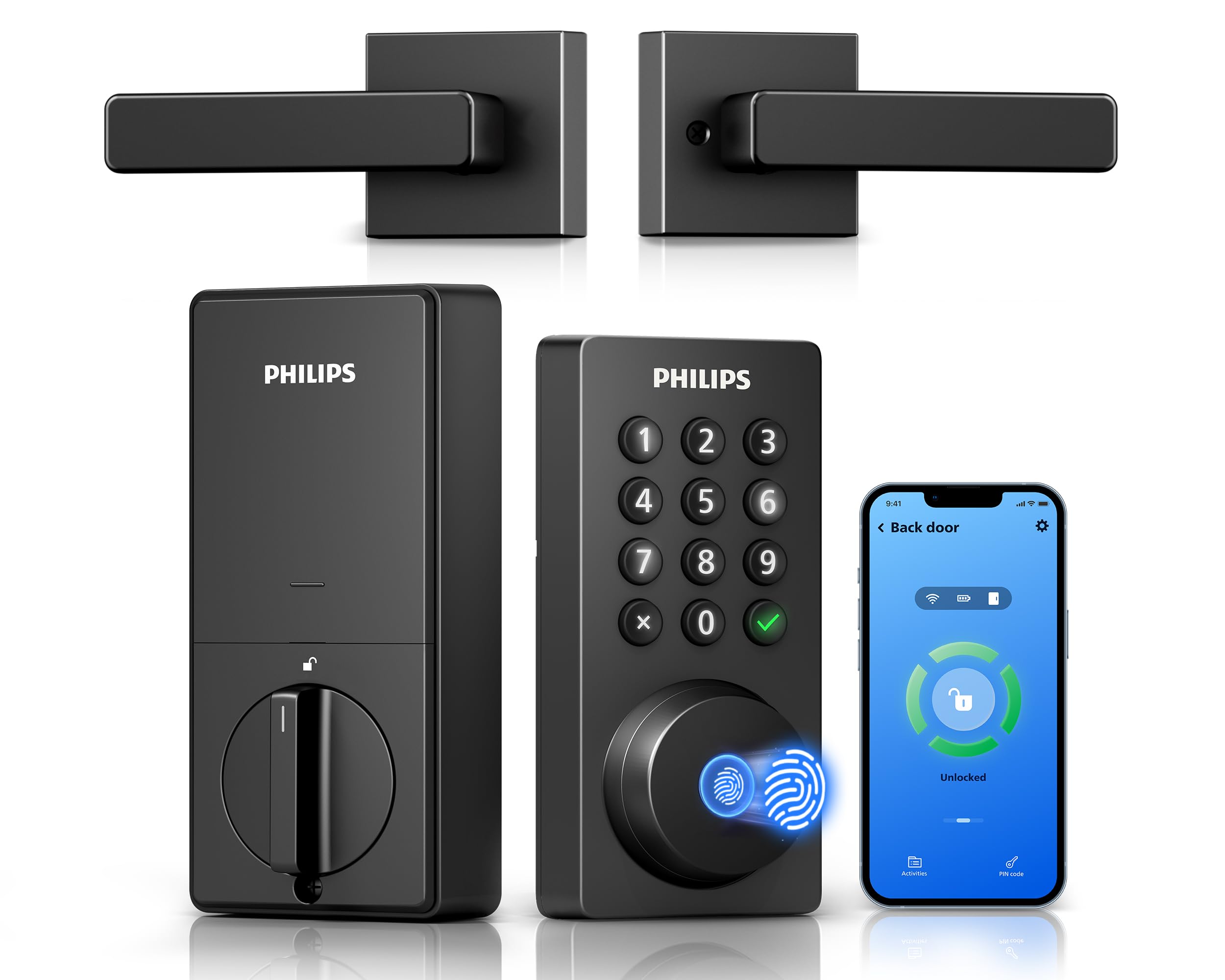
Built-in WiFi means the app works from outside the home, not just within Bluetooth range of the door. Remote control is useful for the obvious case — letting someone in while away from home — and for the less obvious one, confirming the door is locked after leaving in a hurry. The lock can be checked and operated without turning the car around.
Voice unlock is the convenience layer on top. It suits a household already committed to a voice assistant, and it is the sort of feature that gets used heavily for a month and then intermittently once the fingerprint reader proves faster. Buyers should treat voice control as a bonus rather than the reason to buy, and should confirm their assistant ecosystem is supported before ordering.
Auto-lock is the quiet hero of the feature set. A door that relocks itself after closing removes the most common failure of smart lock ownership, which is not a hack or a glitch but a person who simply forgot. The setting is adjustable on most locks of this type, and buyers with pets or children moving through the door frequently should tune it rather than leave it at the default.
Trade-off: An all-in-one deadbolt and handle set is less forgiving of an existing door’s drilling than a deadbolt-only lock, so buyers with an older or unusually bored door should measure before committing.
Check the current price on Amazon
Who It Suits and Who It Does Not
This lock suits the buyer replacing a full entry set — deadbolt and lever together — who wants keyless entry without buying two products and hiring help to fit them. It also suits households that hand out access regularly, since temporary codes solve the spare-key problem cleanly. Renters with permission to change hardware get a strong case here too, because the whole set comes off at move-out as one unit.
It is a weaker fit for anyone with an unusual door. A door with a non-standard bore spacing, a metal frame that resists modification, or a configuration that needs a specific backset may turn a straightforward swap into a job for a locksmith. Buyers in that position should compare the door’s existing holes against the lock’s requirements before ordering rather than after.
It is also a poor match for someone who wants a lock and nothing else. The handle is part of the product, not an optional extra, so a buyer with a perfectly good lever already fitted is paying for hardware they will not use. A deadbolt-only smart lock makes more sense in that case.
FAQ
-
Does the Philips WiFi keypad deadbolt with handle need a hub?
No. WiFi is built into the lock, so it connects to the home network directly and the app works without a separate bridge. -
Can it be unlocked without a phone?
Yes. Fingerprint, keypad code, voice control and a physical key all work independently of the app, so a dead phone is not a lockout. -
Is it suitable for a rental property?
It can be, provided the landlord permits a hardware change. Temporary codes for guests and cleaners are a strong fit for short-term rentals, and the full set can be removed at the end of a lease. -
What happens during a power outage?
The lock runs on batteries rather than mains power, so a household outage does not affect it. Battery level is the thing to watch instead. -
Can codes be cancelled after a guest leaves?
Yes. Flexible codes can be issued and withdrawn through the app, so access ends without rekeying the lock or collecting a physical key. -
Does it work with voice assistants?
Voice unlock is supported, and buyers should confirm their specific assistant ecosystem is compatible before ordering. -
Will it fit an existing door?
It is designed as a replacement for a standard deadbolt and lever setup. Doors with unusual bore spacing or non-standard backsets should be measured against the lock’s requirements first. -
Does the keypad light up at night?
Yes. The keypad is backlit, so codes can be entered in the dark without a phone light. -
Can the door lock itself automatically?
Yes. Auto-lock relocks the door after it closes, and the setting can be adjusted to suit the household’s traffic. -
Is a physical key still included?
Yes. A keyed option remains as a backup alongside the fingerprint, keypad, app and voice methods.
Bottom Line
The Philips WiFi keypad deadbolt with handle makes its case by covering the entire entry in one purchase — deadbolt, lever, keypad, fingerprint reader and WiFi with no hub to buy or power. For a household replacing a full entry set and handing out access to guests, cleaners or family, it removes the two most annoying parts of smart lock ownership: the second hardware purchase and the bridge box. Buyers with an unusually drilled door or a perfectly good lever already fitted should pause and measure first, but for everyone else this is a clean, complete answer to keyless entry.