Why there are Amazon links here: Brave Review is paid a commission for qualifying Amazon purchases made through the links below. Your price does not change, and using our links is entirely optional. How this works
Best Photo Record for a Deposit for Landlords and Small Business
A photo record for a deposit is only as good as the paper trail built around it. This guide covers five products that document deposits from two angles: cash and bank deposit tracking for small business owners, and move-in/move-out photo and damage documentation for landlords and renters. The picks suit retail cash handlers, independent landlords, and property managers running a handful of units. The overview below shows each option at a glance before the detailed reviews.
Overview of the Picks
| Product | Key Spec | Best Use | Price Tier |
|---|---|---|---|
| 8 7/8"× 3 3/8" Transaction Record Tickets | 2-part carbonless, 150 tickets | Small retail cash deposits | Budget |
| Security Deposit & Damage Documentation Organizer | Large print binder | Renters and small landlords | Budget |
| Bank Deposit Log Book | 100 pages | Simple deposit tracking | Budget |
| Landlord Property Inspection & Turnover Record Book | Records for 10 rental units | Multi-unit landlords | Mid-range |
| 100018-2 Classic Design 2-Part Booked Deposit Tickets | 2-part, 150 tickets | High-volume cash businesses | Premium |
1. 8 7/8"× 3 3/8" Transaction Record Tickets Deposit Record Book
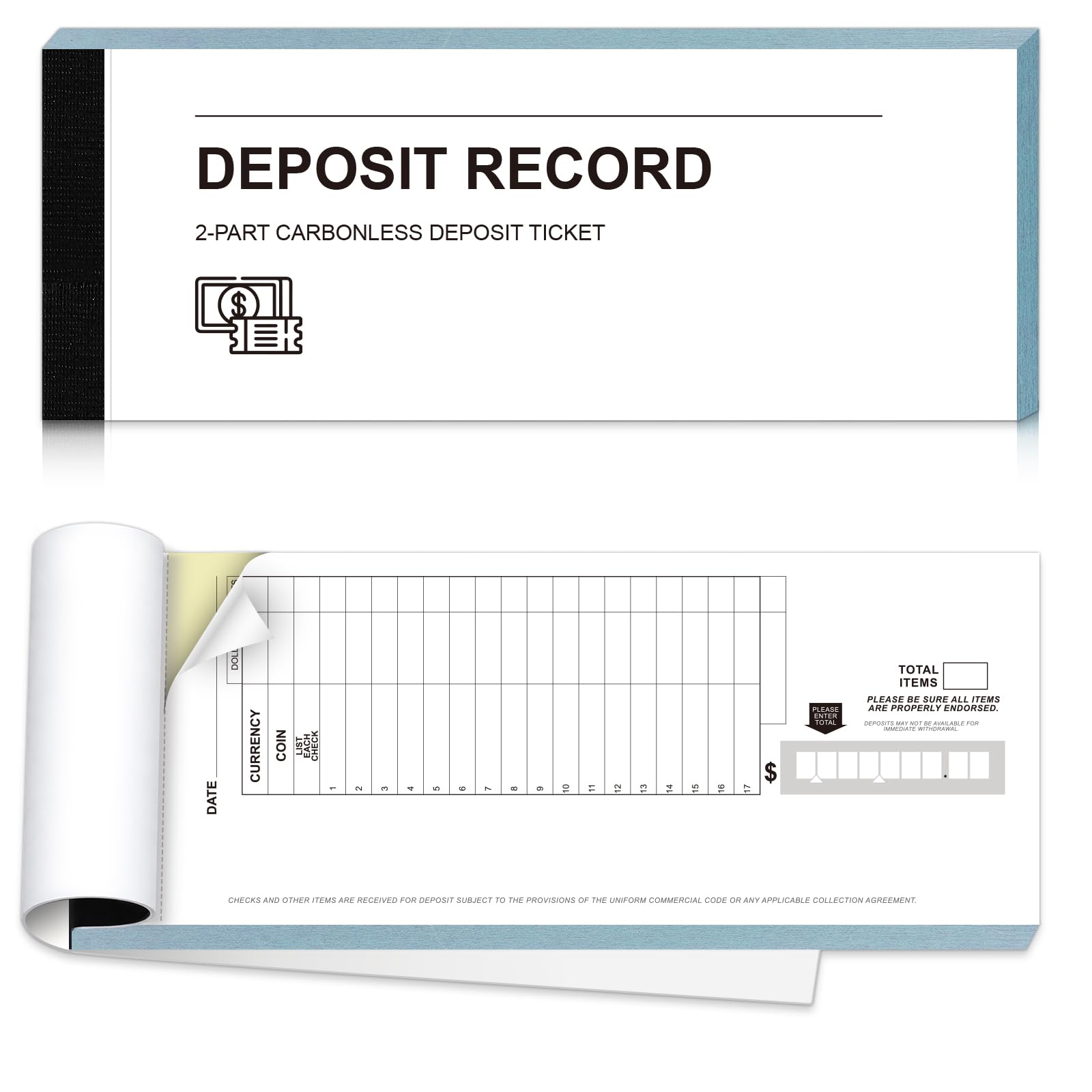
Format: 2-part carbonless tickets
Sheet Size: 8 7/8" × 3 3/8"
Quantity: 150 tickets
Detach: Tear-off sheets
Best For: Small business cash retail
8 7/8"× 3 3/8" Transaction Record Tickets Deposit Record Book
This book produces a carbonless copy of every cash deposit when the ticket is written out, so one copy stays in the book and one travels with the money. The narrow ticket format matches standard deposit slip dimensions, which makes it easy to tuck into a till drawer or bank bag. Tear-off sheets keep the book tidy as tickets are used, and the two-part construction means there is always a backup record of what went to the bank. It is built for retail counters, market stalls, and small operations that handle cash daily.
This pick suits a shop owner or vendor who wants a cheap, straightforward way to log each cash deposit and keep a copy on file. It earned its place as the lowest-cost entry in the group and the most natural fit for counter staff. The caution is volume: 150 tickets runs out quickly for a busy business, so a high-traffic counter may need to reorder often.
Trade-off: The low ticket count and paper-only format mean heavy cash handlers will burn through a book fast and still need a separate digital record.
2. Security Deposit & Damage Documentation Organizer
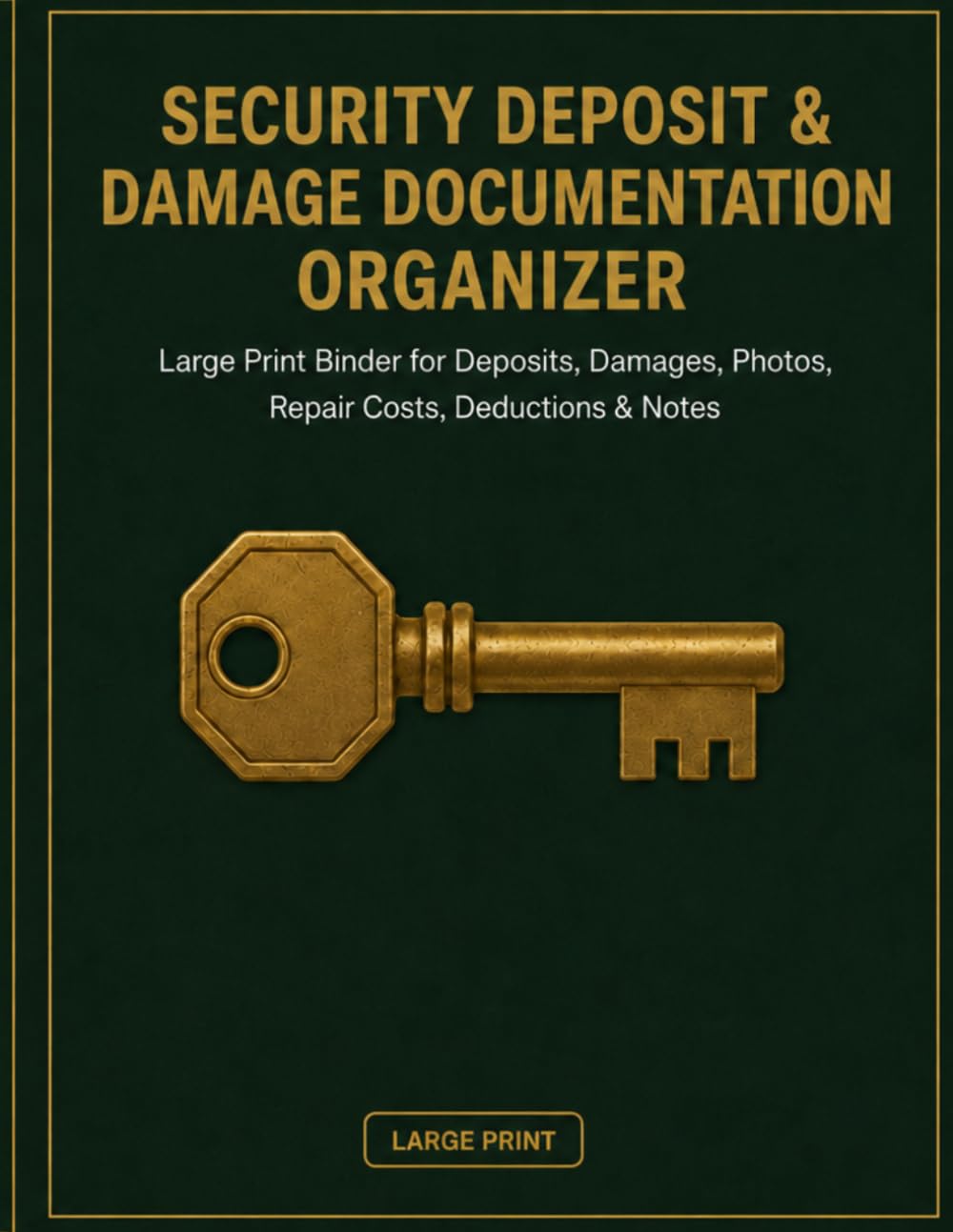
Format: Large print binder
Sections: Deposits, damages, photos, repair costs, deductions, notes
Print Size: Large print
Best For: Renters and small landlords
This binder is organized around the paper trail a security deposit dispute needs: deposit amounts, damage notes, photo references, repair costs, deductions, and free notes. The large print layout keeps the fields readable while filling in details by hand, which helps anyone who documents on the fly during a walkthrough. It is a physical organizer rather than a form pad, so the pages stay together in one place across a tenancy. That structure makes it a sensible companion for the photo record gathered at move-in and move-out.
It suits a renter who wants a personal record of condition or a small landlord handling one or two units without software. The pick earns its spot as the most deposit-specific organizer here, covering deductions and costs in one binder. The limitation is capacity: a single binder is sized for a small portfolio, so a growing landlord will outgrow it.
Trade-off: One binder holds a limited number of tenancies, and the pages are only as useful as the discipline of filling them in at every inspection.
3. Bank Deposit Log Book

Format: Logbook
Pages: 100
Use: Track and record deposit details
Best For: Simple deposit tracking
This logbook is a plain banking tracker for recording deposit details as they happen, with 100 pages of structured entries. It works as a running register that a household or small business keeps beside the bank statements, giving a written history of what was deposited and when. The book is simple by design, so it fits anyone who wants a paper backup without a complicated system. It pairs naturally with deposit tickets, since the log records what the tickets sent to the bank.
The pick suits a small operator or household that needs a clean deposit register and nothing more. It earns its place as the simplest tracking option in the group and the easiest to hand to a bookkeeper. The caution is that it records deposits only; it does not hold photo evidence or damage documentation, so it complements a deposit record rather than replacing one.
Trade-off: A logbook captures numbers but no images, so it must be paired with a separate photo record to cover damage disputes.
4. Landlord Property Inspection & Turnover Record Book
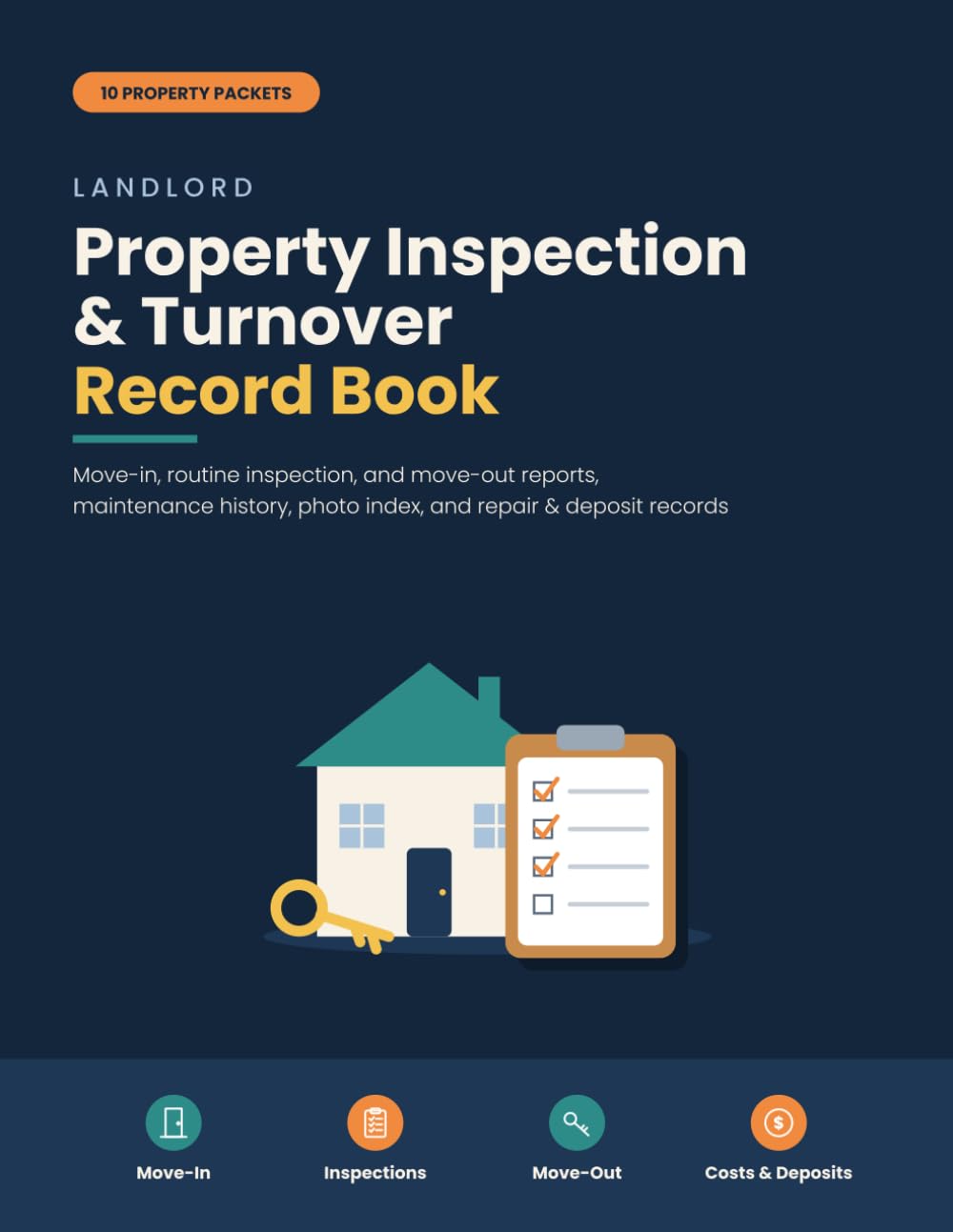
Format: Inspection and turnover record book
Coverage: 10 rental units
Checklists: Move-in, move-out, routine
Extras: Maintenance log, photo index, repair cost and deposit records
Best For: Multi-unit landlords
This book is built for the full rental cycle: move-in checklists, move-out checklists, routine inspections, a maintenance log, a photo index, and repair cost and security deposit records. The photo index is the piece that ties a photo record for a deposit to the rest of the file, letting an inspector note which images correspond to which unit and inspection. Coverage extends to 10 rental units, so a small portfolio fits inside one bound record. The checklists keep inspections consistent from one turnover to the next.
It suits a landlord or property manager running up to ten units who wants inspections, photos, repairs, and deposits in one place. The pick earns its place as the most complete documentation tool here, and the one that most directly supports a deposit dispute. The caution is the price: it costs noticeably more than the single-purpose books, so a one-unit landlord may be paying for capacity that goes unused.
Trade-off: The ten-unit capacity and higher price make it overkill for a landlord with a single property.
5. 100018-2 Classic Design 2-Part Booked Deposit Tickets
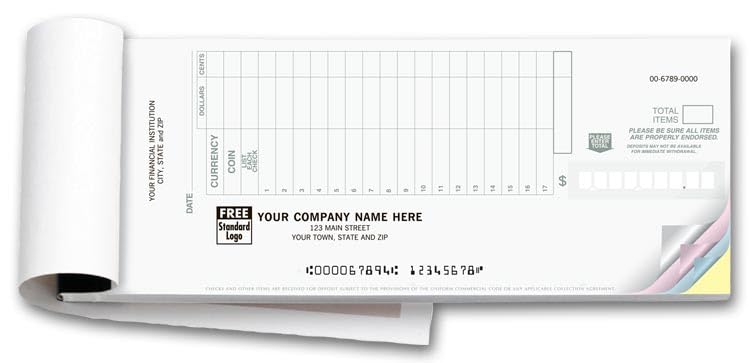
Format: 2-part booked deposit tickets
Sheet Size: 8 7/8" × 3 3/8"
Quantity: 150 tickets
Style: Classic design, bound book
Best For: High-volume cash businesses
100018-2 Classic Design 2-Part Booked Deposit Tickets 8 7/8 x 3 3/8" Qty 150 Tickets
This is a bound book of two-part deposit tickets in the classic 8 7/8" × 3 3/8" format, with 150 tickets per book. The booked construction keeps tickets attached in sequence until torn out, which reduces the chance of a loose slip going missing before it reaches the bank. The carbonless two-part design gives a retained copy for the business file alongside the copy that goes with the deposit. It is aimed at operations that deposit cash regularly and want a durable, professional-looking ticket book.
It suits a busier retail or service business that wants a sturdier deposit ticket book and is willing to pay for it. The pick earns its place as the premium option in the group, and its popularity suggests steady demand among regular cash depositors. The caution is cost: it carries a much higher price than the budget ticket book, so a low-volume operation will not get the value back.
Trade-off: The premium price only makes sense for frequent depositors; occasional cash handlers will find the budget book just as serviceable.
Before You Buy
- Purpose: Decide whether the need is cash deposit tracking (ticket books, logbooks) or property damage documentation (binders, inspection books); the two solve different problems.
- Capacity: Match ticket counts and unit coverage to actual volume, since a 150-ticket book or a 10-unit record runs out faster than expected.
- Photo handling: Confirm how the product stores photo references; a photo index links images to a unit, while a plain logbook holds no images at all.
- Format: Choose between bound books that keep tickets in sequence and tear-off pads that are quicker to use at a counter.
- Print size: For hand-filled documentation, large print layouts reduce errors during a fast walkthrough.
- Portfolio size: A single binder suits a small landlord; multi-unit books suit landlords managing several properties.
Frequently Asked Questions
-
What is a photo record for a deposit?
It is the set of dated photos and supporting notes that document a property’s condition at move-in and move-out, used to justify deposit deductions. A binder or inspection book keeps those photos indexed and tied to costs. -
Do landlords need both a photo record and a deposit log?
Yes, ideally. The photo record proves condition and damage, while a deposit log or ticket book proves the money changed hands. -
Can a small business use these for cash deposits?
The ticket books and bank log book are made for exactly that, recording each cash deposit and keeping a carbonless copy on file. -
How many tickets come in the deposit books?
Both ticket books in this guide contain 150 tickets, in the standard 8 7/8" × 3 3/8" size. -
Is a large print binder easier to use?
Large print keeps the fields legible when filling in details by hand, which helps during a quick inspection walkthrough. -
Which pick covers the most rental units?
The landlord inspection and turnover book covers 10 rental units and adds maintenance, photo index, and deposit records.
Bottom Line
For landlords who need a genuine photo record tied to deposit deductions, the Landlord Property Inspection & Turnover Record Book is the strongest single choice, covering inspections, photos, repairs, and deposits for up to ten units. Small cash businesses should start with the budget Transaction Record Tickets and step up to the premium ticket book only when volume justifies it.
