Why there are Amazon links here: Brave Review is paid a commission for qualifying Amazon purchases made through the links below. Your price does not change, and using our links is entirely optional. How this works
Best Plug In Solar and Grid Rules for a Renter-Friendly Setup
Plug in solar and grid rules are the two things that decide whether a balcony system is worth buying. This guide covers five picks that help a buyer get the rules right and the hardware right at the same time. It suits renters who cannot touch a roof, homeowners testing solar before a full install, and anyone who wants a small grid-tied kit that plugs in rather than wires in. The overview below puts every pick side by side so a decision can be made fast.
Overview of the Picks
| Product | Key Spec | Best Use | Price Tier |
|---|---|---|---|
| 800W Plug-in Balcony Solar Kit (4-Panel) | 800W, 4 panels, APsystems microinverter | First kit for a small balcony | Mid |
| Solar Without a Rooftop (book) | 5-step method, rules and safety | Learning the rules first | Budget |
| 1600W Plug-in Balcony Solar Kit (8-Panel) | 1600W, 8 panels, APsystems microinverter | Maximum output from a large space | Premium |
| 1200W Plug-in Balcony Solar Kit (6-Panel) | 1200W, 6 panels, APsystems microinverter | The balanced middle choice | Mid |
| Solar Grid Tie Micro Inverter WVC-1200W | 1200W inverter, 110V, LCD display | Adding an inverter to existing panels | Budget |
1. 800W Plug-in Balcony Solar Kit (4-Panel)
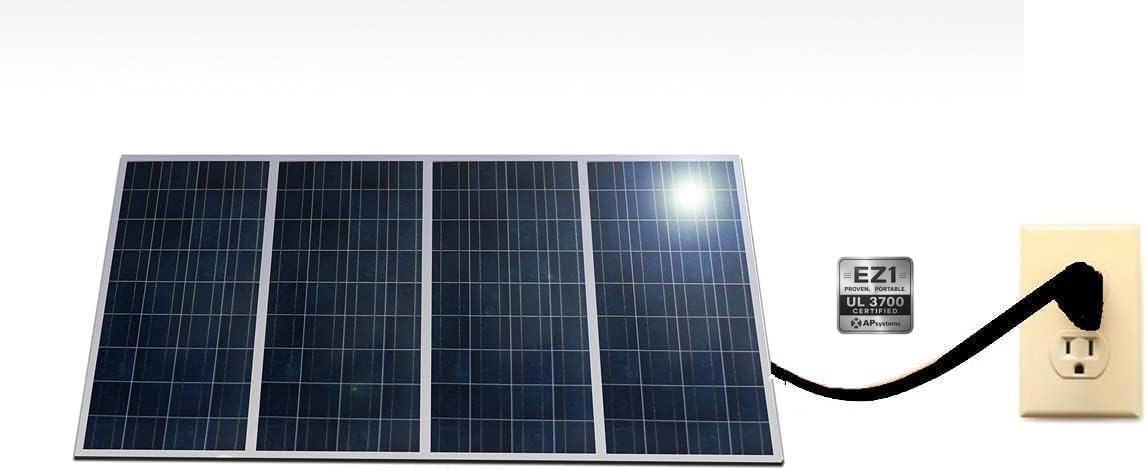
Power Rating: 800W
Panel Count: 4 panels
Inverter: APsystems microinverter
Monitoring: WiFi
Certification: UL 3700
System Type: Grid-tie, plug and play
800W Plug-in Balcony Solar Kit (4-Panel) is the entry point into plug in solar, and it is built for a first-time buyer. The four-panel array keeps the footprint modest, so a small balcony or a section of railing can carry it without crowding the space. The APsystems microinverter handles the conversion panel by panel, and the WiFi monitoring lets the owner watch production from a phone. UL 3700 certification is the detail that matters most here, because it signals the kit was tested to a recognized plug-in standard.
This is the pick for a renter with limited space who wants to learn the ropes before scaling up. It also suits a homeowner who wants a small, reversible experiment rather than a permanent roof array. The lower panel count means less output on cloudy days, so a household with heavy daytime load should look at the larger kits. The plug-and-play design still depends on local utility rules, and the buyer must confirm the connection is allowed before ordering.
Trade-off: The four-panel layout caps total production, so this kit rewards a light-load household and frustrates anyone expecting to offset a large bill.
Check the current price on Amazon
2. Solar Without a Rooftop (Book)
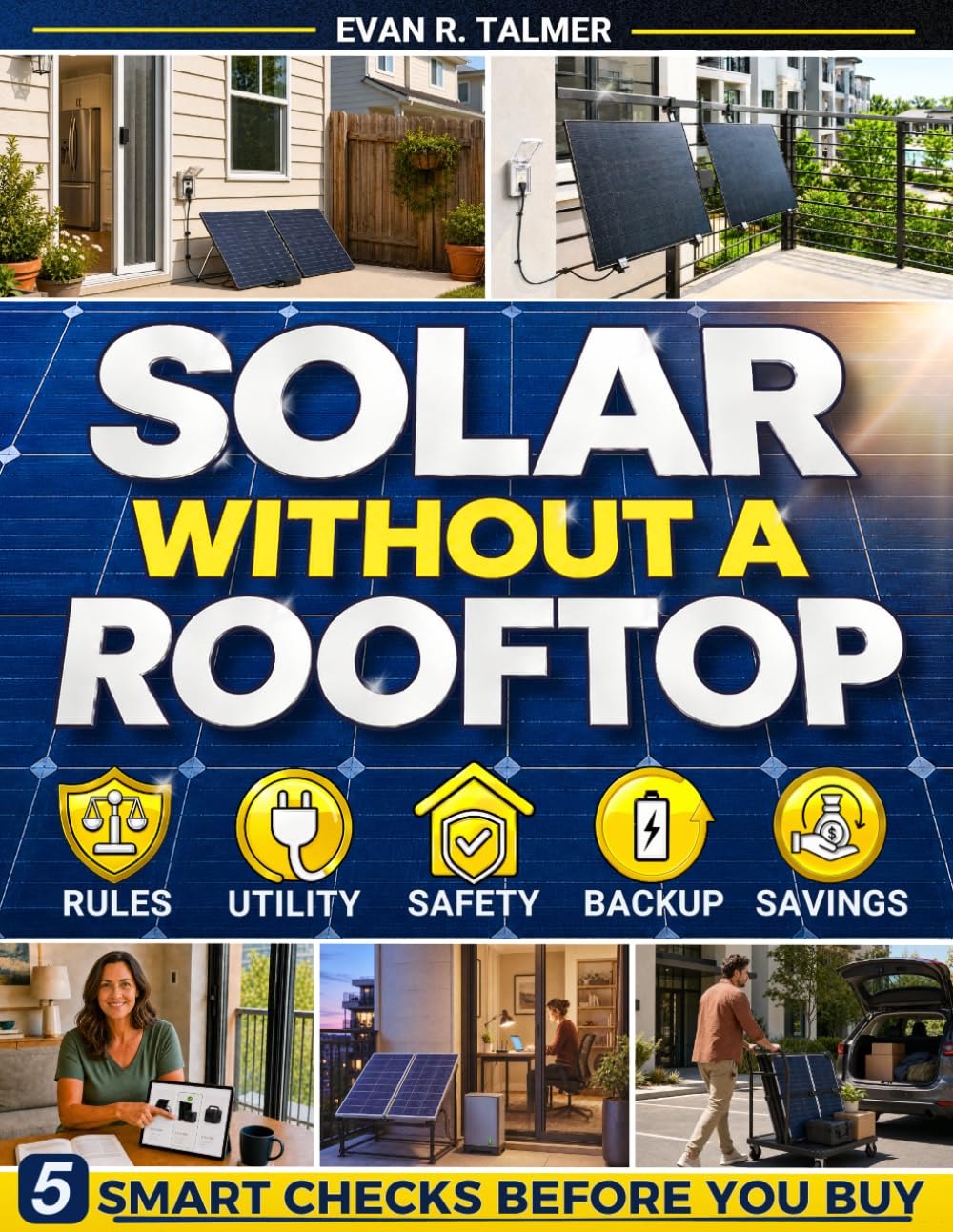
Format: Book
Method: 5-step
Topics: Rules, safety, backup, system choice
Goal: Reduce bills and grid dependence
Approach: Mistake avoidance
Audience: Beginners to plug-in solar
Solar Without a Rooftop is the odd pick in a hardware roundup, and it earns its place because plug in solar and grid rules are where most buyers get stuck. The book walks through a five-step method that starts with checking the rules and ends with choosing the right plug-in system. It treats safety and backup as part of the same decision rather than afterthoughts. For a buyer who has never dealt with a utility interconnection, that structure is worth more than a spec sheet.
The title is aimed at people who want to produce their own power without a rooftop, which describes most balcony and renter setups. It suits the cautious buyer who would rather read first and buy once. It does not replace the utility’s own paperwork, and rules vary by state and by utility, so the book is a starting point rather than a final answer. A buyer who already knows the local rules can skip it and go straight to hardware.
Trade-off: A book cannot confirm a specific address’s interconnection rules, so the reader still has to verify the local requirements directly.
Check the current price on Amazon
3. 1600W Plug-in Balcony Solar Kit (8-Panel)
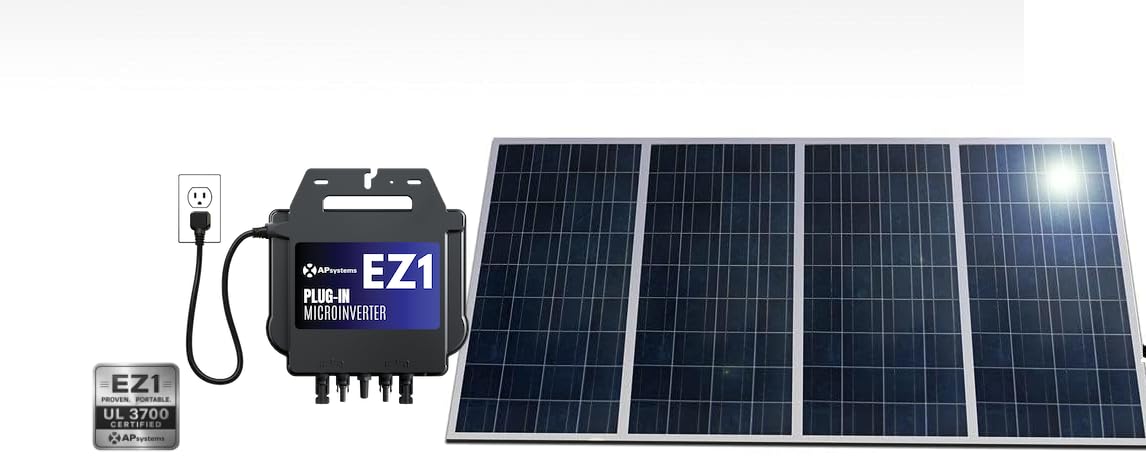
Power Rating: 1600W
Panel Count: 8 panels
Inverter: APsystems microinverter
Monitoring: WiFi
Certification: UL 3700
System Type: Grid-tie, plug and play
1600W Plug-in Balcony Solar Kit (8-Panel) is the top of this lineup and the pick for a buyer with real space. Eight panels and 1600W put it in a different class from the smaller kits, and the APsystems microinverter architecture scales with the array. WiFi monitoring matters more at this size, because eight panels on a balcony can drift out of alignment with the sun and the owner needs to see which ones are underperforming. UL 3700 certification carries over from the smaller sibling.
This kit suits a homeowner or a renter with a large balcony, a terrace, or a garden wall that gets good sun. It is also the choice for a household with meaningful daytime use, such as air conditioning or a home office. The caution is space and weight: eight panels need somewhere to go, and a small railing will not carry them. Local rules matter more at higher output, and some utilities treat larger plug-in systems differently.
Trade-off: The eight-panel array demands substantial mounting space and a structure that can bear the load, which rules out compact balconies.
Check the current price on Amazon
4. 1200W Plug-in Balcony Solar Kit (6-Panel)
Power Rating: 1200W
Panel Count: 6 panels
Inverter: APsystems microinverter
Monitoring: WiFi
Certification: UL 3700
System Type: Grid-tie, plug and play
1200W Plug-in Balcony Solar Kit (6-Panel) is the middle child, and for many buyers it is the right one. Six panels and 1200W sit between the compact 800W kit and the full 1600W array, which makes it the natural fit for a standard balcony that can take more than four panels but not eight. The APsystems microinverter and WiFi monitoring are consistent with the rest of the family, so the experience is the same. UL 3700 certification keeps it aligned with the plug-in standard.
This pick suits a buyer who has measured the space and found it fits six panels comfortably. It also works for a household that wants meaningful offset without committing to the largest array. The caution is that middle options can feel like a compromise: a buyer with room for eight will wish for more output, and a buyer with a tight balcony will wish for less bulk. Measuring before ordering is the whole game here.
Trade-off: The six-panel size lands between two clear use cases, so it rewards buyers who measure carefully and disappoints those who guess.
Check the current price on Amazon
5. Solar Grid Tie Micro Inverter WVC-1200W

Power Rating: 1200W
Voltage: 110V
Build: Waterproof, aluminium alloy
Display: LCD
Function: Solar reversing converter
Intended Use: Schools, power stations, homes
Solar Grid Tie Micro Inverter WVC-1200W is the component pick rather than a full kit. It is a 1200W grid-tie micro inverter rated at 110V, built in a waterproof aluminium alloy housing with an LCD display for on-unit readout. That makes it the choice for a buyer who already owns panels and needs the conversion side of a plug-in system. The reversing-converter function is what ties it to the grid, and the LCD gives a local readout without a phone app.
This suits a DIY-minded buyer assembling a system from parts, or someone replacing a failed inverter on an existing array. It also fits an installer working on schools, power stations, or homes, which is the audience the name calls out. The caution is that an inverter alone is not a plug-in system: mounting, wiring, and the grid rules still have to be solved by the buyer. A first-timer is better served by a complete kit than by a bare inverter.
Trade-off: Buying the inverter on its own shifts the burden of wiring, mounting, and rule compliance onto the buyer, so it is not a beginner’s shortcut.
Check the current price on Amazon
Before You Buy
- Rules: Confirm the local utility and state allow a plug-in grid-tie connection before ordering any hardware.
- Certification: Look for a recognized plug-in standard on the kit, since certification is what makes the connection defensible.
- Space: Measure the balcony, railing, or wall first; panel count is the single biggest driver of fit.
- Load: Match the kit’s output to the household’s daytime use rather than to the bill’s total.
- Inverter: Choose a complete kit for a first system and a bare inverter only when panels already exist.
- Monitoring: WiFi monitoring is worth having on larger arrays where one underperforming panel is easy to miss.
- Weight: Check what the mounting surface can bear, especially with six- and eight-panel arrays.
Frequently Asked Questions
-
What are plug in solar and grid rules?
They are the two halves of a plug-in system: the hardware that connects to a standard outlet, and the utility rules that govern whether that connection is allowed. Both have to be satisfied before a kit goes live. -
Does a plug-in solar kit need utility approval?
In most cases the local utility sets the terms, and those terms vary by state and by utility. A buyer should check before ordering rather than after. -
What does UL 3700 mean on these kits?
It is a certification named in the product listings for the balcony kits here. It signals the equipment was tested to a recognized plug-in standard, which helps when confirming rules with a utility. -
Is a book like Solar Without a Rooftop worth buying?
It is worth it for a first-time buyer who has never dealt with interconnection rules. A buyer who already knows the local requirements can skip it. -
Can an inverter be bought without panels?
Yes, the WVC-1200W is sold as a standalone component. It suits a buyer who already has panels and needs the conversion side. -
Which kit suits a small balcony?
The 800W four-panel kit is the compact pick. The 1600W eight-panel kit needs substantially more space.
Bottom Line
For most buyers, the 1200W Plug-in Balcony Solar Kit (6-Panel) is the safest first purchase: it fits a standard balcony, carries the same APsystems microinverter and UL 3700 certification as the rest of the family, and leaves room to scale. A buyer who needs the rules explained first should start with Solar Without a Rooftop, and one with a large space should go straight to the 1600W kit.