Why there are Amazon links here: Brave Review is paid a commission for qualifying Amazon purchases made through the links below. Your price does not change, and using our links is entirely optional. How this works
1Hr Fast Charge, LiFePO4 Battery, 10ms UPS 120V AC Outlet for Camping Emergency CPAP Home Blackout(Solar Panel Optional) Portable Power Station 300W, 600W Surge Solar Generator 192Wh: Backup Power That Fits in a Bag
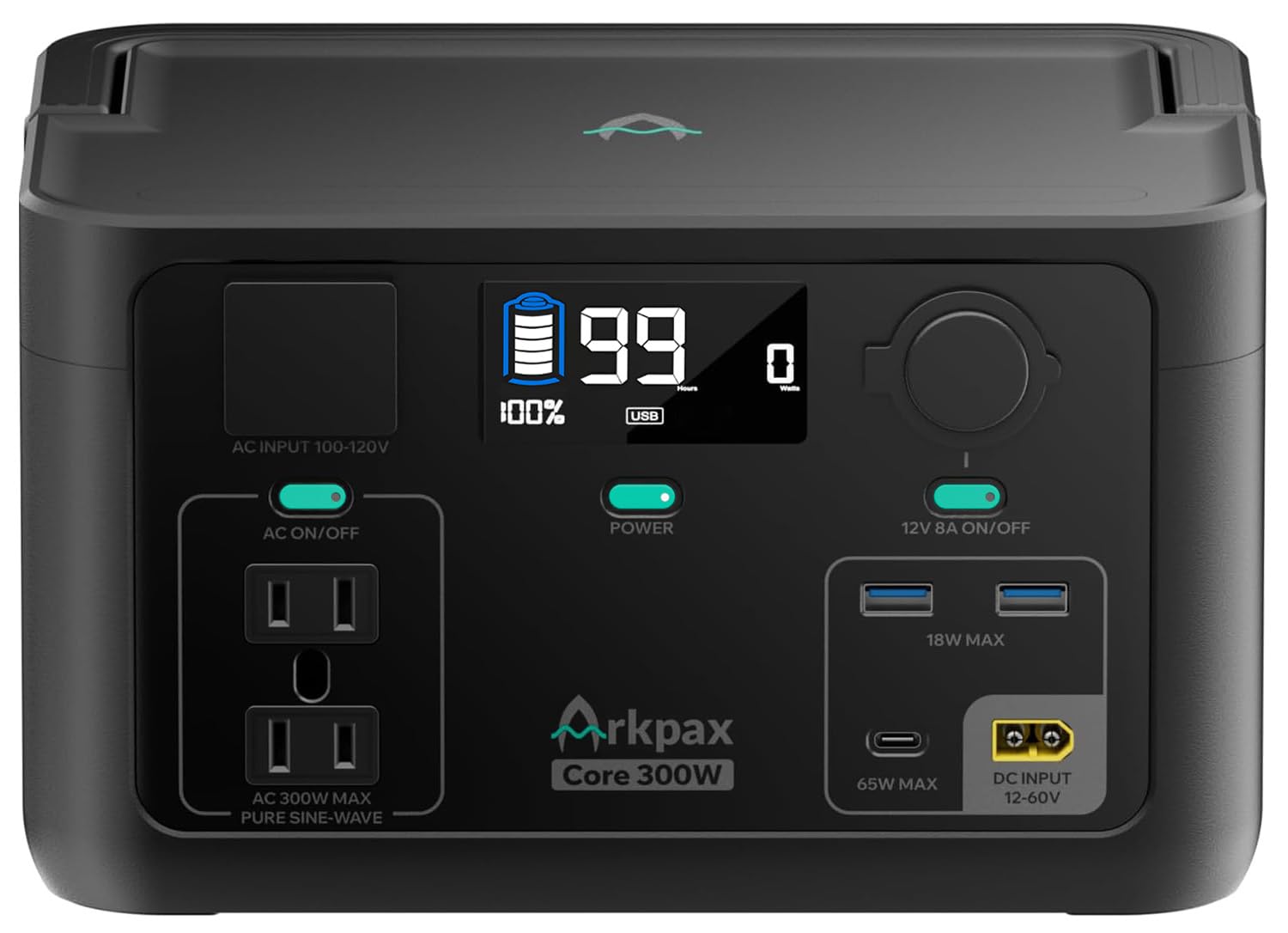
This 300W portable power station is built around a 192Wh LiFePO4 battery, and it targets a very specific buyer: someone who needs a small, quiet box of power for a CPAP machine, a router, a phone, or a short blackout, not someone trying to run a fridge or a space heater. The review below covers what the numbers on the label actually mean, where the unit earns its place in a home or a tent, and where it runs out of headroom. The short version: it is a backup and camping unit first, and a whole-home generator never.
Features and Specifications
Battery Chemistry: LiFePO4 (lithium iron phosphate)
Battery Capacity: 192Wh
AC Output: 120V, 300W continuous
Surge Output: 600W
Recharge Time: 1 hour fast charge
UPS Switchover: 10ms
Solar Input: Solar panel optional, sold separately
Intended Use: Camping, emergency backup, CPAP, home blackout
The headline here is the battery chemistry. LiFePO4 is the longer-lived, more thermally stable branch of the lithium family, and it is the reason this unit can be left charged and ready for months rather than drained and topped up on a schedule. At 192Wh, the capacity is deliberately modest — this is a unit sized to ride out an evening, not a week.
The 300W continuous rating with a 600W surge is the number that decides what the station can and cannot do. A resistive load like a lamp or a fan draws its rated wattage steadily; a motor-driven appliance like a small fridge or a pump pulls a spike at startup, which is what the surge figure is there to absorb. The 120V AC outlet is standard US household voltage, so anything already plugged into a wall socket is a candidate, subject to the wattage ceiling.
The 1-hour fast charge is the feature that separates this from the older generation of budget stations, which often needed five or six hours on the wall adapter. For a unit kept as blackout insurance, a short recharge window means the station can be back at full between outages instead of sitting half-empty for a day.
Trade-off: The 192Wh capacity is small for the price class — it is a deliberate trade for portability and fast recharge, and it will not carry a household through an extended multi-day outage.
Check the current price on Amazon
Build and Battery Chemistry
LiFePO4 is the specification that matters most over the life of the unit. Compared with the older NMC lithium cells common in cheap power stations, LiFePO4 tolerates being stored at a full charge, holds up better in heat, and generally survives more charge cycles before capacity fades. For a station that spends most of its life sitting in a closet waiting for a storm, that is the right chemistry.
The practical benefit is that the unit can be charged up and forgotten, rather than managed like a phone battery. Buyers who have owned sealed lead-acid jump packs know the failure mode: leave it in the garage for a year and it is dead when needed. A LiFePO4 pack is far more forgiving of that pattern.
The fast-charge claim is worth reading carefully. A one-hour recharge is impressive for this capacity, but it depends on the wall adapter supplied and the circuit available. A station charging that quickly will also run warmer than one trickling overnight, so it is best charged on a hard surface with some airflow rather than buried under a coat.
The build itself is the usual molded plastic shell with a carry handle, sized to be lifted with one hand. That is the correct construction for the job — a metal enclosure would add weight and cost without making the unit any more useful in a tent or on a shelf.
Capacity and Runtime Expectations
192Wh is the whole story of this unit’s limits. The math is simple: a device drawing 100W runs for roughly an hour and a half before inverter losses, and a device drawing 300W runs for well under an hour. That is enough for a phone, a laptop, a router, and a light for an evening, and not enough for anything that heats or cools.
The CPAP use case in the product name is the one worth spelling out. CPAP machines are typically modest loads, often well under 100W without a heated humidifier, so a 192Wh station can genuinely cover a night for many users. Adding a heated humidifier changes the arithmetic substantially, and buyers should check the wattage on their own machine’s label before assuming a full night is covered.
Camping is the other natural fit. A small station like this runs LED lanterns, charges phones and cameras, and powers a laptop for a few hours. It will not run an electric cooler for a weekend, and it will not run a camp stove or a heater — those belong to propane or to a much larger station.
For home blackout use, the honest framing is that this is a lights-and-communications unit. It keeps the router up, keeps phones charged, and runs a lamp or a fan. Buyers expecting to keep a refrigerator cold through a two-day outage need to look at a substantially larger capacity.
Trade-off: Buyers should size the station against the wattage printed on their own devices rather than the marketing use cases, because a single high-draw appliance can empty 192Wh in well under an hour.
Power Output and UPS Function
The 300W continuous / 600W surge split is generous for the capacity, and it means the station can start small motor loads that a pure 300W rating would refuse. In practice, the surge rating covers the brief spike when a device is switched on; the continuous rating is what the unit can sustain.
The 10ms UPS switchover is the feature that turns this from a camping accessory into a home device. Plugged between the wall and a router, a modem, or a small medical device, the station passes utility power through and switches to battery when the grid drops. Ten milliseconds is fast enough that most electronics will not notice — routers stay connected, clocks keep time, and a CPAP machine keeps running without a restart.
That function has real value for anyone who works from home or relies on a medical device overnight. It is also the reason the unit is worth keeping plugged in rather than stored in a closet: a UPS that is not connected is just a battery.
The AC outlet is a standard 120V US socket, and the station will also carry USB ports for phones and small electronics, which is where most of the daily use will happen. The limit to keep in mind is that the inverter is not designed for sustained high-draw appliances — a hair dryer or a microwave will trip the protection, and that is normal behavior for this class.
Recharging and Solar Options
The 1-hour fast charge is the standout convenience feature. For a unit kept as blackout insurance, a short wall recharge means it can be topped up between storms in the time it takes to make dinner, rather than overnight.
Solar is listed as optional and sold separately, which is the honest way to present it. Buyers who want off-grid recharging need to budget for a panel on top of the station, and they should size the panel to the station’s input limits rather than buying the largest panel available. A folding panel in the 60W to 100W range is the usual pairing for a station this size.
The realistic expectation for solar is slow top-up, not fast recharge. Panel output drops with cloud cover, angle, and heat, so a solar setup that looks adequate on paper often delivers a fraction of its rating in the field. Solar is best treated as a way to extend a camping trip or stretch a blackout, not as a primary recharge method.
Car charging is the other common option for this class of station, and it is the slowest of the three. It is useful for keeping the unit topped up on a road trip, not for filling it from empty in a hurry.
Trade-off: The solar panel is not included, so the off-grid capability advertised in the name carries an additional purchase that buyers should factor into the total cost.
Maintenance and Long-Term Care
LiFePO4 is the low-maintenance choice, and that is most of the appeal. The pack does not need to be cycled monthly to stay healthy, and it does not punish a buyer for leaving it at full charge. A top-up every few months is enough to keep it ready.
Storage temperature is the one thing worth watching. Like all lithium packs, the battery dislikes being left in a hot car or a freezing garage for long stretches. A closet or a shelf inside the house is the right home for a unit that spends most of its life waiting.
The inverter and charging circuitry are sealed inside the shell, so there is no user service to speak of. Buyers should keep the vents clear and avoid charging the unit under a pile of blankets, which is the same advice that applies to any device converting power at this rate.
Finally, the station should be tested before it is needed. Plugging a lamp into it once a season confirms the outlet, the inverter, and the battery are all still working — a five-minute habit that turns a stored device into reliable backup.
Who This Station Suits, and Who It Does Not
This unit suits the buyer who wants a small, quiet, fast-recharging battery for a specific job: keeping a CPAP machine running overnight, keeping a router and phones alive during a blackout, or powering lights and electronics at a campsite. It also suits anyone who wants UPS behavior without buying a dedicated rack-mounted unit.
It does not suit buyers who need to run appliances. A refrigerator, a space heater, a microwave, or a power tool will either trip the inverter or drain 192Wh in minutes. Buyers with those loads need a station in the 1,000Wh-and-up class, and they should expect to pay accordingly.
It also does not suit buyers who want solar out of the box. The panel is a separate purchase, and the total cost of a solar-ready setup is higher than the station alone suggests.
Trade-off: The narrow capacity and the separate solar panel mean this is a focused tool rather than a general-purpose generator, and buyers with broad backup ambitions will outgrow it quickly.
FAQ
-
What can a 300W portable power station run?
A 300W station runs small electronics and modest loads: phones, laptops, routers, LED lamps, fans, a CPAP machine without a heated humidifier, and a small TV. It will not run heating appliances, microwaves, or full-size refrigerators, which draw far more than the continuous rating. -
How long will a 192Wh battery last?
Runtime depends entirely on the load. A device drawing 50W runs for roughly three to four hours allowing for inverter losses; a 100W load runs closer to an hour and a half; a 300W load runs for well under an hour. Buyers should check the wattage on their device label and divide. -
What does the 10ms UPS function actually do?
It lets the station sit between the wall outlet and a device, passing utility power through while keeping the battery charged. When the grid drops, the station switches to battery in about 10 milliseconds, fast enough that most electronics keep running without a restart. -
Is LiFePO4 better than a regular lithium battery?
For a backup station, generally yes. LiFePO4 is more thermally stable, tolerates being stored at full charge, and typically lasts more charge cycles before capacity fades. It is heavier per unit of capacity than some other lithium chemistries, which is the usual trade. -
Can this station run a CPAP machine all night?
For many CPAP machines without a heated humidifier, yes. CPAP loads are often well under 100W, which fits within 192Wh for a night. A heated humidifier raises the draw substantially and may exceed what the station can deliver for a full night, so the machine’s label is the number to check. -
Does the solar panel come included?
No. The product name lists the solar panel as optional, which means it is sold separately. Buyers planning to recharge off-grid should budget for a folding panel in the 60W to 100W range and check the station’s solar input limits. -
How fast does it recharge from a wall outlet?
The unit is marketed with a 1-hour fast charge, which is quick for this capacity. Actual time depends on the adapter supplied and the circuit, and the station will run warmer during a fast charge than during a slow overnight one. -
Can it be left plugged in all the time?
Yes, and that is how the UPS function works. Leaving it connected keeps the battery topped up and ready to take over when power drops. The unit should still be kept out of extreme heat and given some airflow. -
Will it run a refrigerator during a blackout?
No, not realistically. A full-size refrigerator draws far more than 300W at startup and cycles on and off for hours, which is well beyond 192Wh. Keeping a fridge cold through an outage requires a much larger station. -
Is a 300W power station worth it for camping?
For tent campers running lights, phones, cameras, and a laptop, yes. For campers who want to run an electric cooler, a heater, or cooking appliances, no — those loads belong to a larger station or to propane.
Bottom Line
The 1Hr Fast Charge, LiFePO4 Battery, 10ms UPS 120V AC Outlet for Camping Emergency CPAP Home Blackout(Solar Panel Optional) Portable Power Station 300W, 600W Surge Solar Generator 192Wh is the right pick for a buyer with a narrow, well-defined need: a CPAP machine overnight, a router and phones through a blackout, or lights and electronics at a campsite. The LiFePO4 pack, the one-hour recharge, and the 10ms UPS switchover are the three features that justify it over a cheaper sealed-lead-acid box. Buyers who need to run appliances, or who want solar included in the price, should size up to a larger station instead.