Why there are Amazon links here: Brave Review is paid a commission for qualifying Amazon purchases made through the links below. Your price does not change, and using our links is entirely optional. How this works
Powkey Portable Power Station: 146Wh of Backup Power for Small Loads
The Powkey portable power station is a small lithium battery box with a 120V AC outlet and a 200W ceiling — the kind of unit that keeps a phone, a laptop, a lamp and a router alive through an outage or a night in a vehicle. It suits campers, road-trippers and apartment dwellers who want a compact emergency backup rather than a whole-home battery. This review covers its specifications, what 146Wh realistically runs, and the trade-offs that come with its budget price tier.
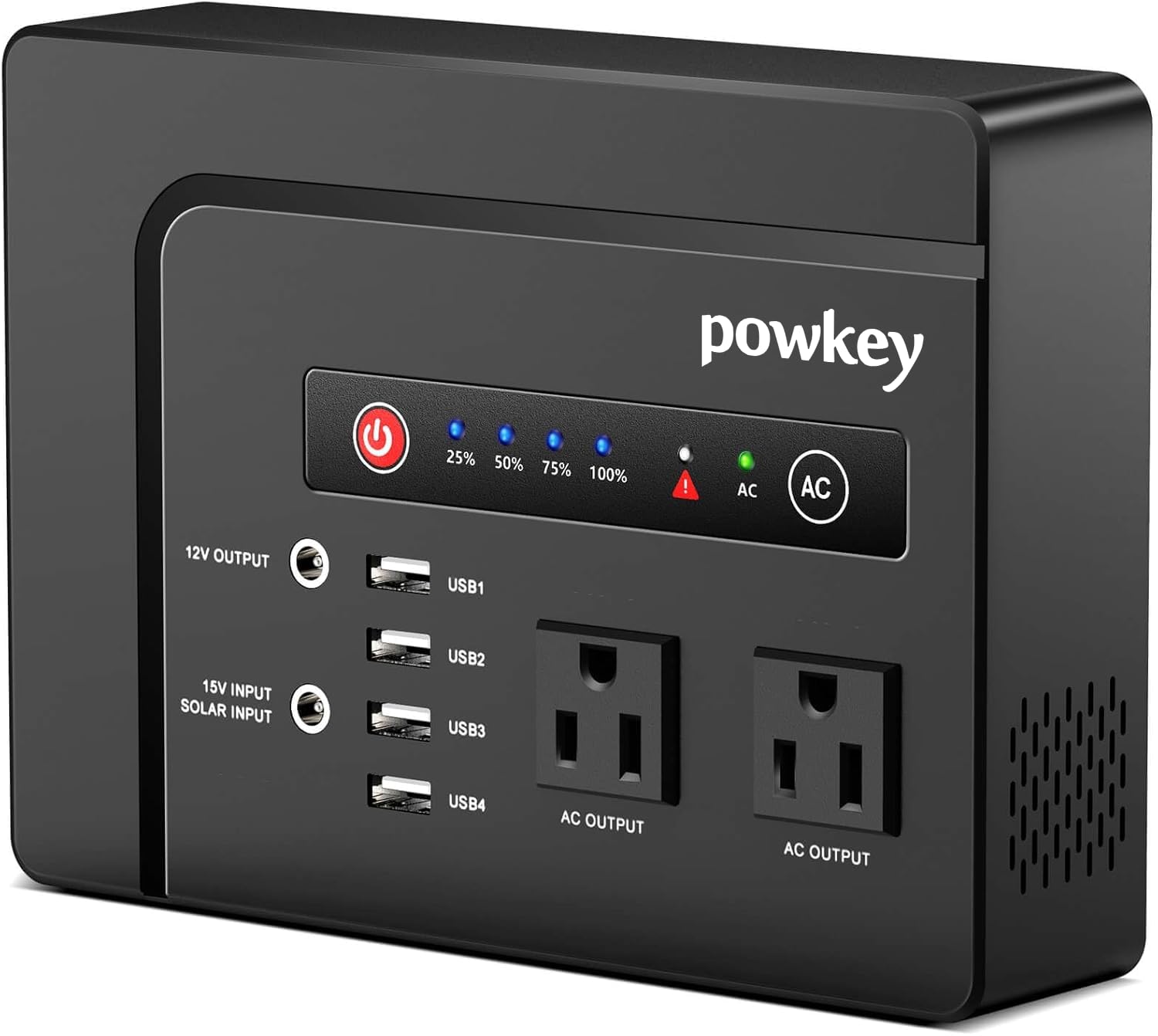
Features and Specifications
Product Type: Portable power station / lithium backup battery
Capacity: 146Wh
AC Output: 120V, 200W, pure sine wave
Outlets: AC outlet plus USB charging ports
Intended Use: Outdoor, RV, travel, home and office emergency backup
Power Source: Rechargeable lithium battery
The headline here is the combination of a pure sine wave AC inverter with a 146Wh lithium pack in a package small enough to carry. Pure sine wave matters because it delivers the smooth current that sensitive electronics — laptops, medical devices, fans with motors — expect from a wall outlet.
The 200W output figure is the ceiling, not a target. Buyers who plug in a device that draws more than the inverter is rated for will trip its protection, so the practical rule is to stay well under that number and leave headroom for startup surges.
Build and Portability
The unit is built around a rechargeable lithium battery in a compact housing with a carry handle, which is the standard shape for this class of power station. It is small enough to sit on a desk, tuck behind a seat in a vehicle, or carry from room to room during an outage without a second person.
That portability is the whole point of the 146Wh size. A larger station would run more appliances, but it would also weigh more and take up more floor space, and most buyers in this tier are trading capacity for something they can actually lift.
Trade-off: The compact housing and budget price tier mean this is not a ruggedized, weather-sealed unit — it should be kept dry and out of hard knocks rather than treated like an outdoor-rated box.
Capacity: What 146Wh Actually Runs
Capacity is the number that decides whether this product is useful. 146 watt-hours is a modest reserve: it is sized for small electronics and lighting, not for appliances with heating elements or compressors.
In practice, that means phones, tablets, laptops, LED lamps, a Wi-Fi router, a small fan, a camera battery charger or a CPAP machine without a heated humidifier. It is not sized for a mini fridge, a space heater, a microwave, a coffee maker or a hair dryer — those draw far more than 200W and would drain the pack in minutes even if the inverter allowed it.
Buyers should think in terms of a single evening or a short outage rather than days of off-grid living. A laptop and a couple of phones topped up overnight is a realistic job for this unit; running a campsite for a weekend is not.
Trade-off: 146Wh is at the small end of the portable power station market, so buyers who need to run appliances rather than electronics will outgrow it quickly.
Power Output and the AC Inverter
The 120V AC outlet is the feature that separates a power station from a plain USB power bank. It lets the unit run anything with a standard household plug, provided the draw stays under the 200W rating.
Pure sine wave output is the meaningful specification in this section. Modified sine wave inverters — common in cheaper units — can cause buzzing, overheating or erratic behavior in devices with motors or sensitive power supplies. A pure sine wave inverter behaves much more like a wall outlet, which is why this unit is a reasonable match for laptops, fans and small medical devices.
The USB ports handle the everyday charging load: phones, earbuds, smartwatches, action cameras. Splitting devices across the AC and USB sides is the sensible way to use the unit, since the AC side is the scarce resource.
Trade-off: The 200W ceiling rules out anything with a heating element or a compressor, and buyers should check the wattage printed on every device before plugging it in.
Recharging and Maintenance
The battery recharges from a standard wall outlet, which is the normal routine for a unit kept for emergencies: top it up every few months, store it in a cool dry place, and it is ready when the power goes out. Buyers who plan to use it on the road should confirm their charging options before a trip, since recharge speed and solar compatibility are the details that matter most for travel use.
Lithium packs dislike being stored empty or in extreme heat. A partial charge in a climate-controlled room is the right long-term storage state, and the unit should be cycled occasionally rather than left untouched for a year.
Trade-off: Recharging from a wall outlet is slow relative to the size of the pack, so a fully drained unit is not an instant turnaround — buyers heading out should charge it the night before.
Who It Suits and Who It Does Not
This station fits campers, RV owners, commuters, students and apartment dwellers who want a grab-and-go backup for phones, laptops and lights. It also suits anyone who wants a pure sine wave AC outlet without paying for a large-capacity system.
It does not suit homeowners looking to back up a fridge, a furnace or a sump pump, and it does not suit off-grid users who need to run appliances for days. Buyers in those groups need a much larger station with a higher wattage rating.
Trade-off: The unit’s value depends entirely on matching it to small loads — bought for the wrong job, it will feel underpowered rather than convenient.
FAQ
-
What can a 146Wh power station run?
It runs small electronics: phones, laptops, tablets, LED lights, a router, a fan, a camera charger or a CPAP without a heated humidifier. It is not sized for fridges, heaters, microwaves or coffee makers. -
Is 200W enough for a laptop?
Yes. Most laptops draw well under 200W, and the pure sine wave AC outlet delivers clean power for their chargers. Buyers should still check the wattage on the adapter, especially for gaming laptops. -
What does pure sine wave mean on a portable power station?
It means the AC output mimics the smooth waveform of a household outlet rather than the choppy modified sine wave found in cheaper inverters, which is safer for devices with motors or sensitive power supplies. -
How long does a 146Wh battery last?
Runtime depends on the load. A device drawing 50W would run for roughly a couple of hours on paper, while a phone charging draws only a few watts and lasts much longer. Heavier loads drain the pack proportionally faster. -
Can the Powkey power station be charged while in use?
Pass-through charging is a common feature in this category, but buyers should confirm it for their specific use case before relying on it during an outage. -
Is this power station good for camping?
It is a good fit for tent campers and car campers running lights, phones and a laptop. It is not enough for campsite appliances like electric stoves or space heaters. -
Can it run a CPAP machine?
A CPAP without a heated humidifier is within the range this unit can handle. The heated humidifier draws far more power and should be switched off. -
How should a portable power station be stored?
Store it in a cool, dry place with a partial charge, and top it up every few months. Avoid leaving it fully drained or in a hot vehicle for long periods. -
Does it work during a home power outage?
Yes, for small loads. It keeps phones, a router, a laptop and lamps running, which covers the basics of a short outage but not whole-home backup. -
Is a 200W power station worth it?
It is worth it for buyers whose needs are phones, laptops and lights. Buyers who need to run appliances should spend more on a higher-wattage, higher-capacity station instead.
Bottom Line
The Powkey portable power station is a sensible budget pick for anyone who wants a pure sine wave AC outlet and a compact lithium reserve for small electronics — phones, laptops, lights and a router through an outage or a night in an RV. It is not a whole-home backup and it will not run appliances, but at its price tier it covers the basics without the weight or cost of a larger station. Buyers who match it to small loads will get exactly what they paid for; buyers who need to run a fridge should look elsewhere.
