Why there are Amazon links here: Brave Review is paid a commission for qualifying Amazon purchases made through the links below. Your price does not change, and using our links is entirely optional. How this works
Best Radon Mitigation Basics for a Safer, Healthier Home
Radon mitigation basics come down to one job: moving soil gas out from under a home and venting it safely above the roofline or away from the foundation. This roundup covers five products that handle that job at different points — complete kits for a first install, a standalone fan for a replacement, and a study guide for anyone going pro. The picks suit three buyer types: a homeowner tackling a first DIY mitigation project, a handy homeowner replacing a failed fan, and a tradesperson or inspector studying for certification. The overview below shows the differences at a glance; the reviews explain who each pick fits.
The Picks at a Glance
| Product | Key Spec | Best Use | Price Tier |
|---|---|---|---|
| Tjernlund RMS160 Sidewall Radon Mitigation System | Sidewall system, corded electric | Homes where roof venting is impractical | Premium |
| Aprilaire ARN15K Radon Mitigation Kit | 1500 sq. ft. coverage, manometer, alarm | Whole-home first install with monitoring | Premium |
| Radon Fan Kit with Rubber Couplers | Quiet 260 CFM, IP67 waterproof, indicator | Budget-conscious DIY install | Budget |
| Radon Mitigation Professional Exam Preparation | Exam study guide | Certification prep | Budget |
| Festa AMG Maverick Radon Fan 3" Kit | Quiet inline fan, 4" duct, 3" kit | Fan replacement or small retrofit | Mid-range |
Tjernlund RMS160 Sidewall Radon Mitigation System

Type: Sidewall radon mitigation system
Power source: Corded electric
Vent route: Sidewall discharge
Intended use: Residential mitigation
Tjernlund RMS160 Sidewall Radon Mitigation System is built for homes where running pipe up through the roof is awkward or against local rules. Instead of a rooftop termination, the system discharges through a sidewall, which shortens the pipe run and can simplify the install on homes with tight interior layouts. The corded electric design means it plugs into household power rather than needing a dedicated hardwired circuit. It suits a homeowner or contractor who has already confirmed that a sidewall exit is allowed in the jurisdiction.
Trade-off: A sidewall discharge has to be sited carefully so exhaust does not drift back toward windows, doors or a neighboring property, so placement matters more than with a roof vent.
Check the current price on Amazon
Aprilaire ARN15K Radon Mitigation Kit

Coverage: 1500 sq. ft.
Application: Basement, crawlspace or slab
Performance: Quiet operation
Mounting: Indoor or outdoor
Included: Manometer, system alarm
Intended use: Commercial or residential
Aprilaire ARN15K Radon Mitigation Kit is the most complete package here for a first install. The 1500 sq. ft. rating covers a typical single-family home, and the kit is designed to work across basement, crawlspace and slab foundations rather than one style only. The included manometer gives a visual read on pressure so the system’s operation can be checked at a glance, and the system alarm adds a warning if performance drops. Indoor or outdoor mounting gives flexibility on where the fan and piping can sit, and the quiet performance target keeps noise down when the unit is mounted near living space.
Trade-off: The full kit with monitoring accessories costs more than a bare fan and pipe, so a buyer replacing only one failed component may be paying for parts that are not needed.
Check the current price on Amazon
Radon Fan Kit with Rubber Couplers

Airflow: Quiet 260 CFM
Couplers: Rubber, 4 to 3 inch, fits 3" PVC
Waterproofing: IP67
Included: Air pressure indicator
Intended use: Radon mitigation system kit
Radon Fan Kit with Rubber Couplers is the value pick for a straightforward DIY install. The 260 CFM rating and quiet operation suit a standard residential suction point, and the rubber couplers step from 4 to 3 inch so the fan mates with common 3" PVC without extra fittings. The IP67 waterproof rating means the housing tolerates outdoor mounting and damp conditions, and the included air pressure indicator lets the homeowner confirm the system is pulling. It is a sensible starting point for someone who wants the core components without the premium price.
Trade-off: A kit at this price tier typically ships with the essentials only, so buyers should expect to source pipe, sealant and mounting hardware separately to finish the run.
Check the current price on Amazon
Radon Mitigation Professional Exam Preparation
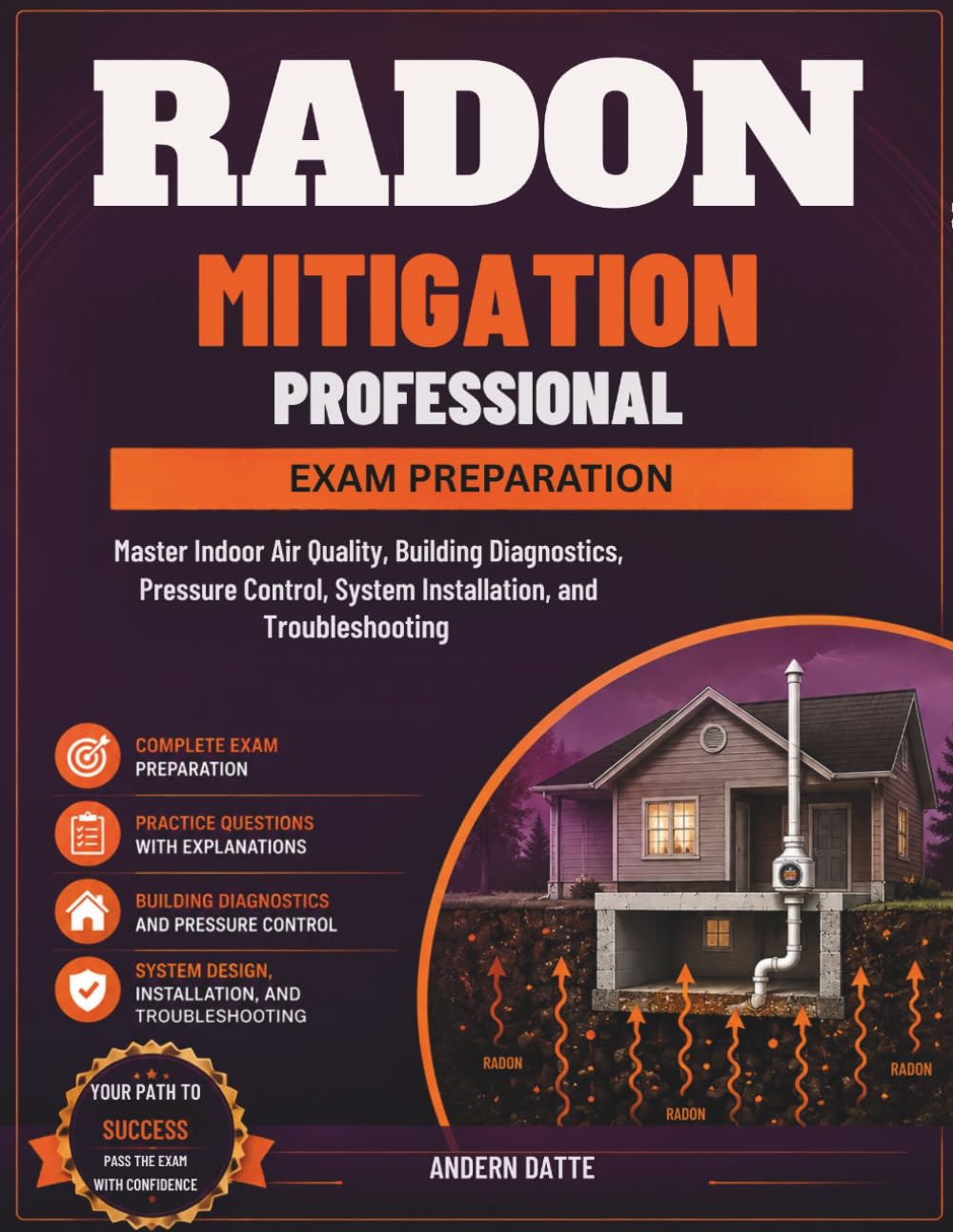
Format: Exam preparation book
Topics: Indoor air quality, building diagnostics, pressure control
Coverage: System installation and troubleshooting
Intended use: Professional certification study
Radon Mitigation Professional Exam Preparation is the odd one out in this list, and deliberately so. Anyone weighing radon mitigation basics seriously will eventually meet the certification path, and this guide covers the subjects that show up on professional exams: indoor air quality, building diagnostics, pressure control, system installation and troubleshooting. It works as a study companion for a contractor, home inspector or technician moving into mitigation work. It also gives a motivated homeowner a deeper technical grounding than a product manual provides.
Trade-off: A study guide is only as current as its printing, so buyers should check that the edition aligns with the current exam outline before relying on it.
Check the current price on Amazon
Festa AMG Maverick Radon Fan 3" Installation Kit

Fan type: Inline radon fan
Duct size: 4" duct fan
Kit size: 3" installation kit
Performance: Quiet, energy efficient, high performance
Intended use: Radon mitigation inline fan
Festa AMG Maverick Radon Fan 3" Installation Kit splits the difference between a bare fan and a full kit. The inline design mounts in the pipe run rather than at the end of it, which keeps the install tidy and the noise away from living areas. The 4" duct fan with a 3" installation kit covers the common small-to-mid residential setup, and the quiet, energy-efficient build suits a fan that runs continuously. It is a strong choice for replacing a failed fan on an existing system or for a modest retrofit where a full kit is overkill.
Trade-off: The kit is sized around 3" pipework, so a home with larger-diameter existing piping may need adapters that are not in the box.
Check the current price on Amazon
Before You Buy
- Foundation type: Basement, crawlspace and slab foundations each need a different suction point layout — match the kit to the home.
- Coverage: Compare the kit’s square-footage rating against the footprint being mitigated, not the total floor area of the house.
- Vent route: Confirm whether local rules allow a sidewall discharge or require a rooftop termination before choosing a system.
- Pipe compatibility: Check the fan’s duct size against the existing or planned PVC diameter, and plan couplers and adapters accordingly.
- Monitoring: A manometer and alarm make it easy to spot a fan that has stopped pulling, which is worth the extra cost on a first install.
- Power and mounting: Decide whether the fan will sit indoors or outdoors and whether a corded unit reaches an outlet safely.
- Permits and testing: Many areas require a permit and a post-install radon test — budget for a test kit regardless of which product is chosen.
Frequently Asked Questions
-
What are the radon mitigation basics a homeowner should know?
The core idea is to create suction under the foundation and vent the soil gas safely outside. A fan, sealed piping and a discharge point above or away from the home make up the system. -
Is a full kit or a bare fan the better buy?
A full kit suits a first install where every part is needed. A bare fan or partial kit suits a replacement job where the piping already exists. -
Does a sidewall system work as well as a roof vent?
A sidewall discharge can work well when sited correctly, but placement near windows or property lines needs care. Local rules decide whether it is allowed at all. -
Why does a manometer or pressure indicator matter?
It shows whether the system is still pulling air. Without one, a failed fan can go unnoticed until the next radon test. -
Who should consider the exam preparation guide?
Contractors, inspectors and technicians pursuing certification, or homeowners who want a deeper technical understanding before hiring or installing. -
Should a radon test come before or after installation?
Test first to confirm the level, then test again after the system has run. The post-install test is what proves the mitigation is working.
Bottom Line
For most homeowners starting from scratch, the Aprilaire ARN15K Radon Mitigation Kit is the top pick: its 1500 sq. ft. coverage, multi-foundation design and included manometer and alarm cover the radon mitigation basics in one purchase. Buyers on a tighter budget or replacing a single fan can step down to the Radon Fan Kit or the Festa Maverick kit without losing the essentials.
