Why there are Amazon links here: Brave Review is paid a commission for qualifying Amazon purchases made through the links below. Your price does not change, and using our links is entirely optional. How this works
Reolink Duo 3 PoE: One Camera, Two Lenses, Zero Blind Spots
The Reolink Duo 3 PoE is a single outdoor camera that replaces two ordinary ones. Two lenses sit side by side and stitch their images into one wide 180° panorama, so a driveway, a side yard or a shop front gets covered in one install instead of two. This review walks through what the camera is built for, how its power and recording options work, and where it asks the buyer to make a compromise. It suits homeowners and small-property owners who already have or plan to run network cable outdoors; renters and anyone wanting a battery camera should look elsewhere.
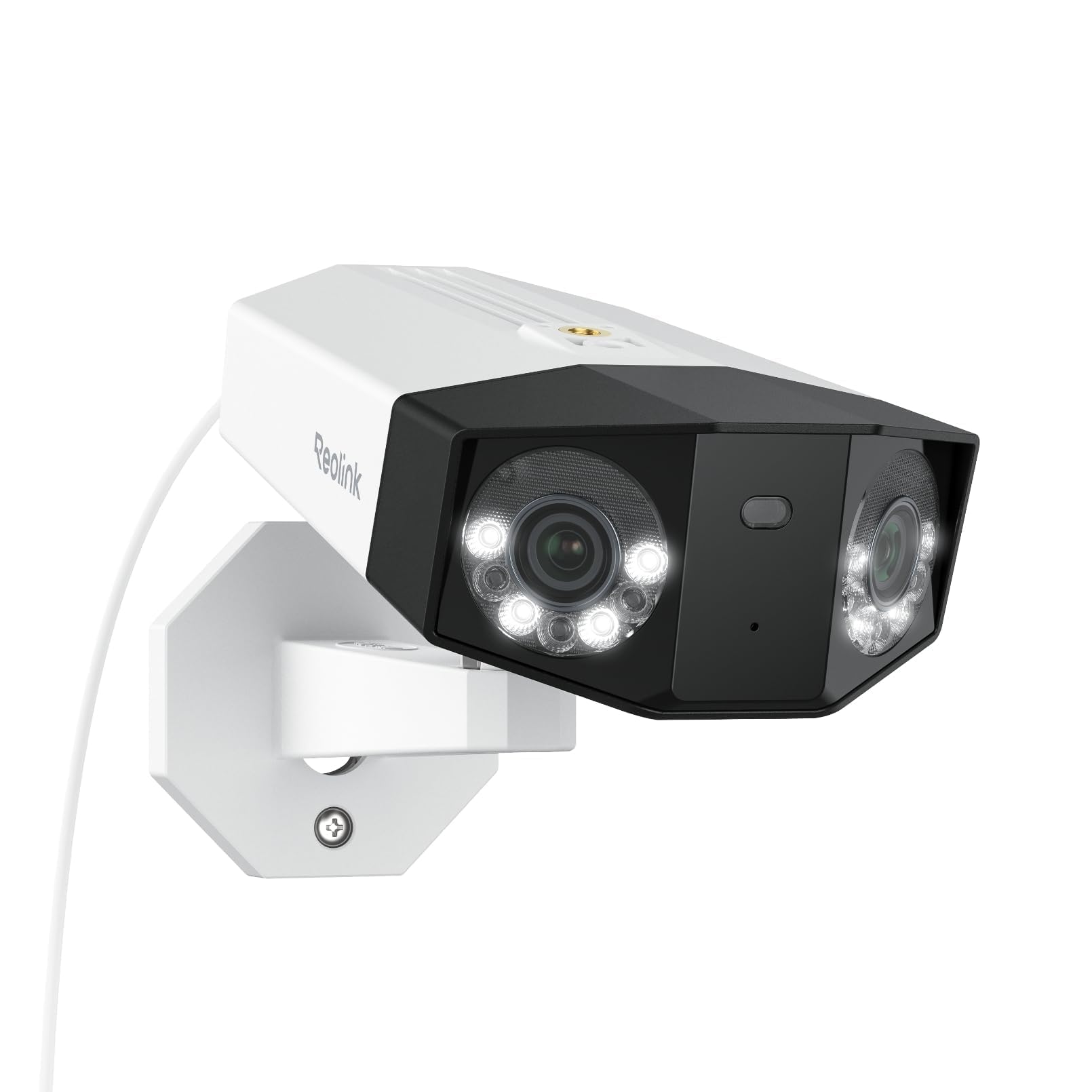
Features and Specifications
Type: Dual-lens outdoor PoE security camera
View: 180° panoramic
Night Vision: F1.6 color night vision
Detection: Person, vehicle and animal detection
Recording: 24/7 recording to microSD card (up to 512GB)
Extras: Motion tracking, two-way talk
Power: PoE (Power over Ethernet)
The headline feature is the panorama. Two lenses cover a wide arc and the camera combines them into one continuous image, which removes the usual seam between two separate cameras and the second cable run that comes with it. A single 180° view is easier to monitor on a phone than two feeds side by side, and it is easier to review after an incident because the whole scene sits in one timeline.
The rest of the spec sheet is aimed at the same goal: knowing what happened without watching hours of footage. Person, vehicle and animal detection lets the camera push alerts only for the categories that matter, and motion tracking keeps a moving subject framed as it crosses the property. Color night vision from the F1.6 aperture means the camera can show color in low light rather than dropping straight to black-and-white, which helps identify a vehicle or a jacket at night.
Power over Ethernet is the detail that decides who this camera is for. One cable carries both data and power, so there is no separate power adapter at the camera and no Wi-Fi signal to worry about at the far end of a garden. The catch is that a cable has to be run, which is straightforward on a building being wired anyway and awkward on a finished house with no easy path to the mounting point.
Build, Capacity and Power
The camera is designed for fixed outdoor mounting, with the dual-lens housing aimed in one direction and left there. Buyers should plan the position before drilling: the 180° view covers a lot, but it is still a fixed field, and the best results come from placing the camera at a corner or above a doorway where the wide arc covers the approach rather than the wall itself.
Recording happens on a microSD card inside the camera, and the card slot accepts up to 512GB. That capacity matters because 24/7 recording fills storage far faster than motion-only clips, and a larger card buys more days of continuous footage before the oldest files are overwritten. The card is the only storage the camera needs, which keeps the setup simple, but it also means the card is a single point of failure.
PoE power keeps the install clean. The camera draws what it needs over the network cable, so there is no weather-exposed power brick and no outlet to protect. A PoE switch or injector is required at the other end of the run, and that hardware is part of the budget even though it is not part of the camera.
The 24/7 recording and the smart detection work together as a practical pair. Continuous footage gives a complete record, and the detection events give a fast way to jump to the interesting part of that record. Buyers who only want alerts can lean on the detection; buyers who want evidence can lean on the full timeline.
Maintenance and Everyday Use
The main maintenance task is the memory card. Continuous recording writes constantly, so the card should be a reputable high-endurance model and it should be checked periodically. When the card fills, the camera overwrites the oldest footage, which means the retention window shrinks or grows depending on card size and scene activity.
Two-way talk turns the camera into a way to speak to a visitor or a delivery driver without opening the door. It is a small feature next to the panorama, but it changes how the camera gets used day to day: not just a recorder, but an intercom for the front of the property.
Motion tracking is the feature most likely to divide buyers. It keeps a subject in frame as it moves, which is useful on a wide view where a person can cross quickly, but it also means the camera is constantly adjusting and the recorded view is not always the fixed panorama. Buyers who want a stable, predictable frame may prefer to leave tracking off.
Trade-off: The fixed wired install is the price of reliability — buyers who cannot run Ethernet to the mounting point, or who rent and cannot modify the building, will find this camera far more work than a battery or Wi-Fi model.
FAQ
-
What does PoE mean on a security camera?
Power over Ethernet: a single network cable carries both electricity and data to the camera, so no separate power adapter is needed at the mounting point. -
Does the Reolink Duo 3 PoE need a subscription?
No. The camera records to a microSD card inside the unit, so local recording works without a monthly plan. Cloud storage, where offered, is an optional extra rather than a requirement. -
How much footage fits on a 512GB card?
That depends on resolution, frame rate and how busy the scene is, so no fixed number applies. The larger the card, the longer the continuous recording window before the oldest files are overwritten. -
Is the 180° panoramic view actually one image?
Yes. The two lenses are combined into a single wide panorama rather than two separate feeds, which is the main reason buyers choose this model over two standard cameras. -
Can this camera see in color at night?
The F1.6 aperture supports color night vision, so the camera can produce a color image in low light instead of switching immediately to infrared black-and-white. -
What can the camera detect?
Person, vehicle and animal detection, so alerts can be limited to the categories a buyer cares about rather than every passing shadow. -
Does it work without internet?
Local recording to the microSD card continues without an internet connection. Remote viewing and phone alerts need the camera connected to the network and the internet. -
Who is this camera not for?
Renters, buyers with no way to run cable to the mounting point, and anyone who wants a quick battery-powered install. The wired PoE design is a strength for permanent setups and a barrier for temporary ones. -
Is a PoE switch required?
Yes. The camera needs a PoE switch or injector at the other end of the Ethernet run to supply power. That hardware is a separate purchase. -
Can it replace two cameras?
For a single wide area such as a driveway or shop front, one 180° camera can cover ground that would otherwise need two. Two separate directions, such as front and back of a building, still need two cameras.
Bottom Line
The Reolink Duo 3 PoE is the right pick for a buyer who wants one wide, always-on view of a driveway, yard or storefront and is willing to run a network cable to get it. The dual-lens panorama, color night vision, smart detection and 24/7 local recording cover the jobs most outdoor cameras are bought for, and PoE keeps the install clean and reliable. Buyers who cannot wire the location, or who need a camera they can move, should treat the cable run as the deciding factor and look at a wireless model instead.