Why there are Amazon links here: Brave Review is paid a commission for qualifying Amazon purchases made through the links below. Your price does not change, and using our links is entirely optional. How this works
Shark RV2110 Navigator vs iRobot Roomba 104: Self-Empty or Object Avoidance
The Shark RV2110 Navigator and the iRobot Roomba 104 sit in the same corner of the market but solve different problems. The Shark leads with object detection, anti-hair-wrap and stronger suction, while the Roomba leads with a self-emptying base, mopping and LiDAR mapping at a lower price tier. This comparison breaks down every dimension that separates the two so a buyer can pick in a couple of minutes.
Both are mid-range robot vacuums aimed at carpet-and-hard-floor homes. The decision usually comes down to one question: is a hands-off dustbin more valuable than a robot that steers around clutter and handles long hair better? The sections below answer that, dimension by dimension.
Shark RV2110 Navigator Robot Vacuum
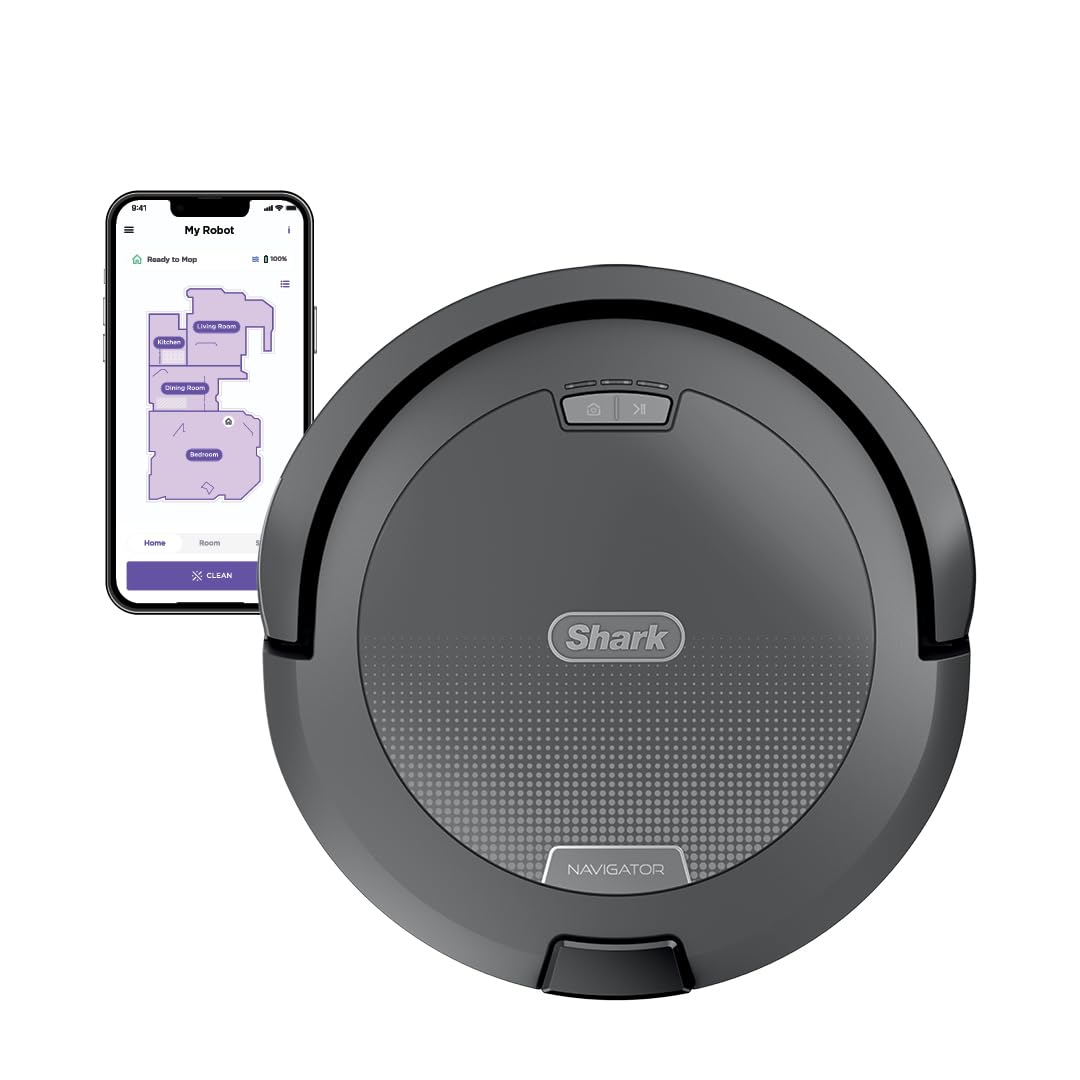
Type: Robot vacuum for carpets and hard floors
Navigation: SmartPath Navigation
Object Handling: Detects and avoids objects
Suction: Up to 50% more suction
Brush System: Anti-hair wrap
Connectivity: Wi-Fi
Color: Steel Grey
The RV2110 Navigator is built around navigation and debris handling rather than docking hardware. Its SmartPath system maps a route across carpets and hard floors, and the object-detection layer is designed to steer the robot around cables, shoes and pet bowls instead of dragging them along. The anti-hair-wrap brush is the other headline feature, aimed squarely at households with long hair or shedding pets.
Suction is pitched at up to 50% more than the brand’s baseline, which matters most on carpeted rooms where fine dust sits below the pile. Wi-Fi puts scheduling and remote control in an app, so daily runs can happen without anyone pressing a button. The trade-off is the dock: this model empties into its own onboard bin, so a buyer trades the convenience of a self-emptying base for the object avoidance and hair handling above.
Trade-off: The onboard bin needs regular emptying by hand, and object detection is a convenience layer rather than a guarantee, so floors still need a quick declutter before a run.
Check the current price on Amazon
iRobot Roomba 104 Robot Vacuum and Mop
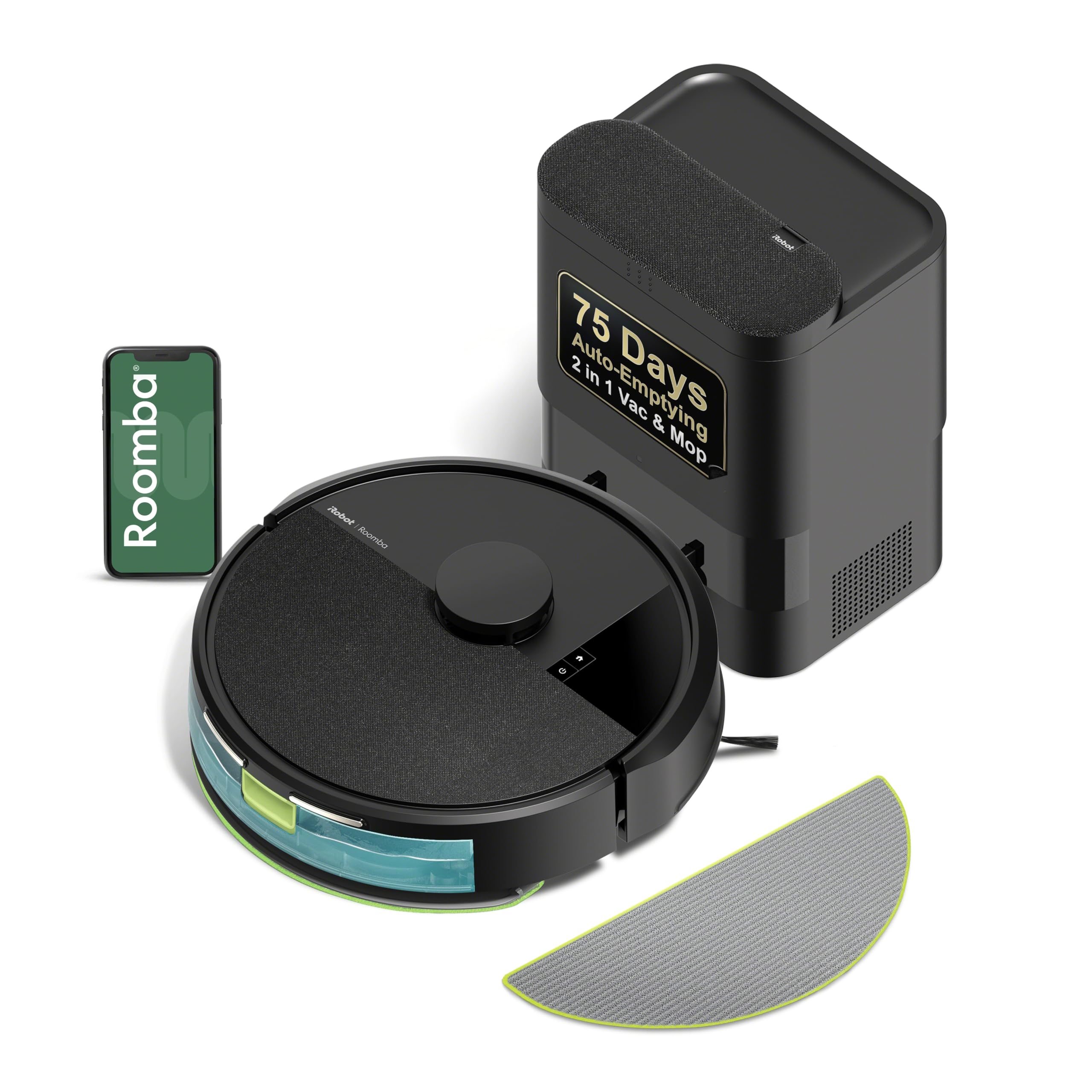
Type: 2-in-1 robot vacuum and mop
Docking: Self-empties for 75 days
Suction: Intense power-lifting suction
Floor Types: Vacuums all floors
Pet Hair: Ideal for pet hair
Navigation: LiDAR smart navigation mapping
Mopping: Mops hard floors
The Roomba 104 is the more automated package of the two. Its base pulls debris out of the robot and holds it for up to 75 days, which turns daily vacuuming into a genuinely hands-off routine. LiDAR mapping builds a floor plan rather than wandering, so coverage is systematic and the robot knows where it has already been.
The 2-in-1 design adds a mopping function for hard floors, making it a single machine for kitchens and bathrooms as well as carpeted rooms. Power-lifting suction is tuned for pet hair, and the all-floors claim covers the usual mix of carpet, tile and laminate. The trade-off is what the extra hardware costs in other areas: at this price tier the object avoidance is less developed than the Shark’s dedicated detection system, so stray cables and small items are better cleared away first.
Trade-off: The lower price tier buys a self-emptying base and mopping but not the object avoidance or anti-hair-wrap brush of the Shark, and mop pads and bags add running costs.
Check the current price on Amazon
Shark RV2110 Navigator vs iRobot Roomba 104: Side-by-Side
| Feature | Shark RV2110 Navigator | iRobot Roomba 104 |
|---|---|---|
| Primary Function | Vacuum only | Vacuum and mop |
| Navigation | SmartPath Navigation | LiDAR smart navigation mapping |
| Object Avoidance | Detects and avoids objects | Not a headline feature |
| Suction Claim | Up to 50% more suction | Intense power-lifting suction |
| Brush System | Anti-hair wrap | Standard, pet-hair oriented |
| Self-Emptying | No, onboard bin | Yes, up to 75 days |
| Floor Coverage | Carpets and hard floors | All floors, plus mopping |
| Connectivity | Wi-Fi | App-based mapping and control |
| Price Tier | Mid-range | Budget-to-mid |
The table makes the split clear. The Shark puts its budget into what happens while the robot is moving: routing, spotting obstacles and keeping hair off the brush. The Roomba puts its budget into what happens when the robot is not moving: a base that swallows debris for weeks and a mop pad for hard floors.
On navigation, LiDAR mapping is the more precise of the two approaches for building a repeatable floor plan, while SmartPath with object detection is the more useful approach for cluttered rooms. Neither is strictly better; they are tuned for different homes.
On running costs, the Roomba carries consumables in the form of base bags and mop pads, while the Shark’s costs are closer to filters and brushes. Buyers who dislike recurring purchases should weigh that alongside the price difference.
Which Should You Buy?
Choose the Shark RV2110 Navigator if: the home has pets or long-haired occupants, floors are usually cluttered with cables and small objects, and carpet is the main surface. The anti-hair-wrap brush and object detection are the features that earn their keep here, and emptying a bin after each run is an acceptable trade.
Choose the iRobot Roomba 104 if: the priority is minimal involvement. A self-emptying base that runs for up to 75 days plus hard-floor mopping covers the most common routine, and the lower price tier leaves room for consumables. Homes with a lot of hard flooring and few obstacles suit it best.
Buyers who want both object avoidance and self-emptying will need to look above this tier; neither of these two delivers both.
FAQ
-
Which is better for pet hair, the Shark RV2110 or the Roomba 104?
Both address pet hair, but differently. The Shark’s anti-hair-wrap brush targets tangles on the brush itself, while the Roomba’s power-lifting suction is pitched at hair picked up from carpet. Homes with long-haired pets tend to benefit more from the anti-hair-wrap design. -
Does the Shark RV2110 empty itself?
No. The RV2110 uses an onboard bin that the owner empties by hand. Self-emptying is the Roomba 104’s advantage in this comparison. -
Can the Roomba 104 vacuum carpets as well as mop?
Yes. It is a 2-in-1 unit that vacuums all floors and mops hard floors, so the same robot handles carpeted rooms and hard surfaces on a schedule. -
Which one is better for a cluttered home?
The Shark RV2110. Its object detection is designed to route around items on the floor, which reduces the prep work before each run. The Roomba 104 relies more on a clear floor. -
Is LiDAR mapping better than SmartPath navigation?
LiDAR produces a precise, repeatable map, which suits large or multi-room layouts. SmartPath with object detection is more about handling what is in the way. The better choice depends on whether the home is bigger or messier. -
Do both work with an app?
Both offer app-based control over Wi-Fi. The Roomba’s app centers on the LiDAR map, while the Shark’s covers scheduling and navigation settings. -
Which costs more to run?
The Roomba 104, because the self-emptying base uses bags and the mopping function uses pads. The Shark’s ongoing costs are limited to filters and brushes.
Bottom Line
The iRobot Roomba 104 is the pick for buyers who want the least possible involvement: it self-empties for up to 75 days, mops hard floors and maps with LiDAR, all at the lower price tier. The Shark RV2110 Navigator is the pick for homes where clutter and hair are the real problem, thanks to object detection and an anti-hair-wrap brush. Most households with pets and carpets will get more day-to-day value from the Shark RV2110 Navigator, while hands-off hard-floor homes should take the Roomba.
