Why there are Amazon links here: Brave Review is paid a commission for qualifying Amazon purchases made through the links below. Your price does not change, and using our links is entirely optional. How this works
Shelly 1PM Mini Gen4 vs Sonoff Mini Duo Zigbee Smart Switch: One Relay or Two
The choice between the Shelly 1PM Mini Gen4 and the Sonoff Mini Duo Zigbee smart switch comes down to a single question: does the job need one metered circuit or two switched ones? The Shelly handles one channel and reports power use, while the Sonoff fits two separate loads behind one wall plate. The short answer sits below, and the rest of the article explains where each one wins.
The Contenders at a Glance
| Product | Key Spec | Best Use | Price Tier |
|---|---|---|---|
| Shelly 1PM Mini Gen4 (2 Pack) | 1-channel, 8A, Wi-Fi with Matter and Zigbee, power metering | Single circuits where energy data matters | Mid-range, two units per pack |
| Sonoff Mini Duo | 2-channel, 16A total, Zigbee 3.0, hub required | Two loads in one box, such as a light and a fan | Budget, one unit per pack |
The Shelly pack covers two separate single-channel installs, so the effective cost per circuit is lower than the sticker suggests. The Sonoff covers two circuits with one module, but it needs a Zigbee hub already in the home. Buyers without a hub should price that in before deciding.
Shelly 1PM Mini Gen4 Smart Switch
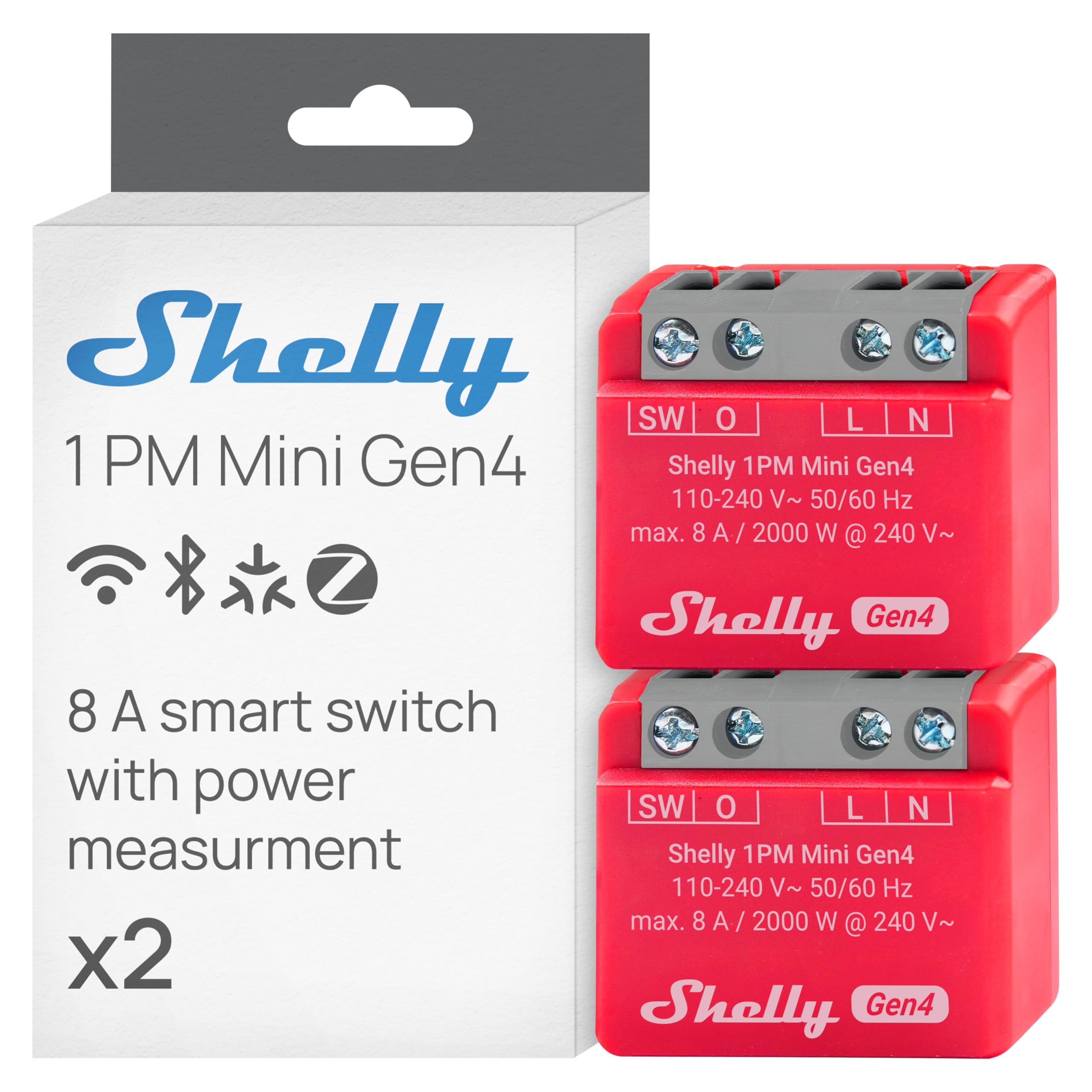
Channels: 1
Current Rating: 8A
Protocols: Wi-Fi, Matter, Zigbee
Power Metering: Yes
Ecosystems: Alexa, SmartThings, Google Home, Apple HomeKit, Home Assistant
Pack Size: 2
The Shelly 1PM Mini Gen4 is a single-channel relay built for behind-the-switch installation, and the "Mini" name signals a compact body meant to tuck into a deep back box. Its standout feature is power metering, which turns a plain lighting circuit into one that reports consumption. The protocol list is unusually broad for the size: Wi-Fi for direct connection, Matter for cross-platform pairing, and Zigbee for hub-based setups.
That triple-protocol support is the real selling point. A buyer can start on Wi-Fi without a hub, move to Matter later for Apple HomeKit or Google Home, or join a Zigbee mesh if one already exists. Home Assistant users get a local path either way. The 8A rating suits lighting, fans and small loads, not high-draw appliances.
The 2-pack matters for planning. Two circuits, two modules, one purchase, which suits a room with separate light and fan switches or a pair of rooms wired at the same time.
Trade-off: The 8A ceiling rules out water heaters, large motors and most kitchen appliances, so buyers planning anything beyond lighting and small fans need a higher-rated relay.
Check the current price on Amazon
Sonoff Mini Duo Zigbee Smart Switch
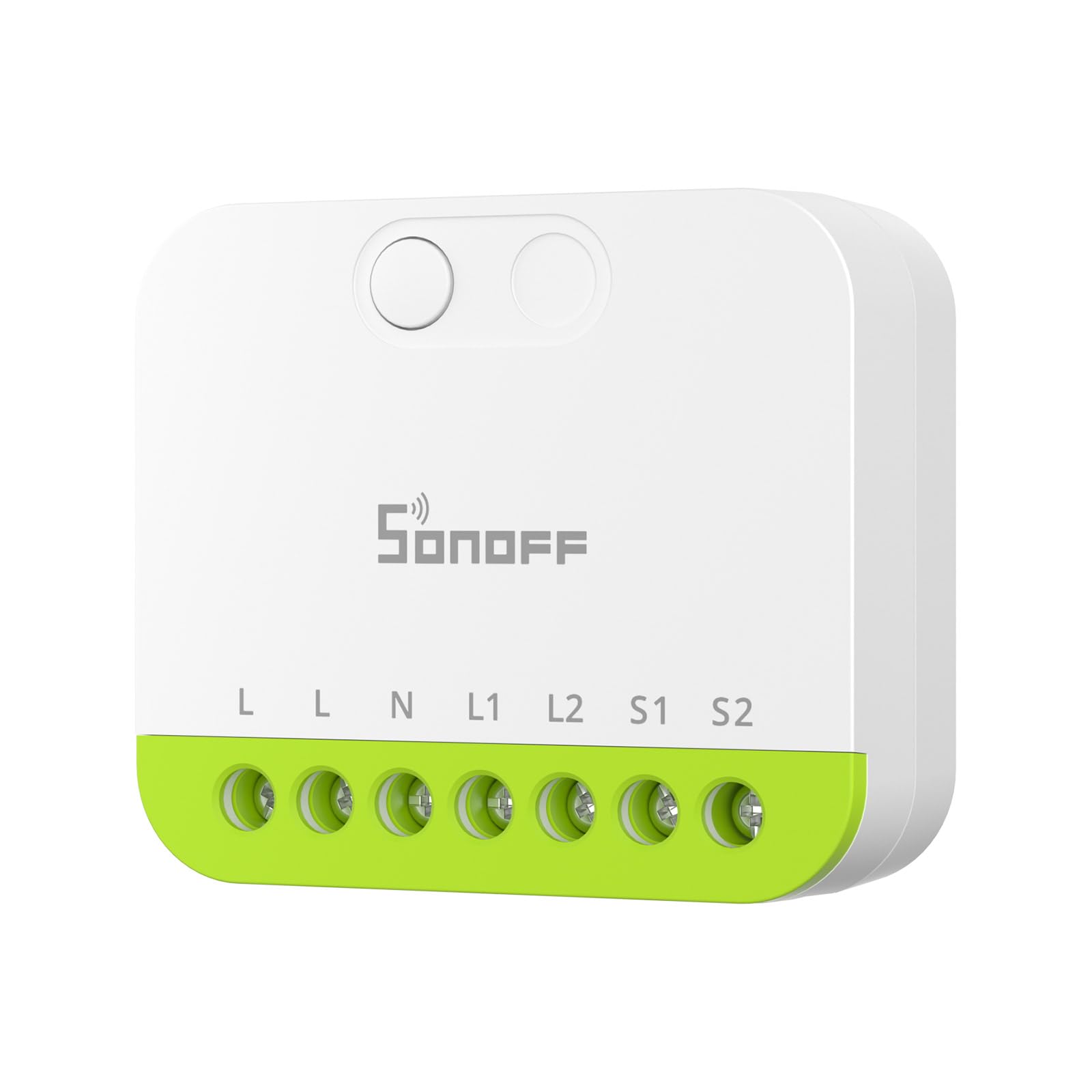
Channels: 2
Total Load: 16A
Protocol: Zigbee 3.0
Hub: Required
Neutral Wire: Required
Voice Control: Alexa, Google Assistant
Pack Size: 1
The Sonoff Mini Duo packs two independent relay channels into one module, which is the whole reason it exists. One device behind one switch plate can drive a light and a bathroom fan separately, or split a dual-gang box without buying two relays. The 16A figure is the combined total across both channels, not a per-channel rating, so the split matters when planning loads.
Zigbee 3.0 keeps it off the Wi-Fi network entirely, which appeals to buyers who already run a Zigbee coordinator and want their lighting mesh separate from their router. Response is local and fast once paired, and the module works with Alexa and Google Assistant through that hub. The neutral wire requirement is standard for this class of relay but rules out older switch loops without a neutral at the box.
Trade-off: Nothing works without a compatible Zigbee hub, and the neutral requirement means an electrician may be needed in homes wired without one, so the true cost sits above the module price.
Check the current price on Amazon
Side-by-Side: Where They Diverge
| Dimension | Shelly 1PM Mini Gen4 | Sonoff Mini Duo |
|---|---|---|
| Channels | 1 | 2 |
| Current rating | 8A | 16A total across both channels |
| Wireless | Wi-Fi, Matter, Zigbee | Zigbee 3.0 only |
| Hub needed | No for Wi-Fi, yes for Zigbee | Yes, always |
| Power metering | Yes | No |
| Neutral wire | Not stated in the product name | Required |
| Voice assistants | Alexa, Google Home, SmartThings, Apple HomeKit | Alexa, Google Assistant |
| Pack size | 2 | 1 |
The channel count is the first fork. A buyer wiring two separate loads in one box saves space and cost with the Sonoff, while two independent single circuits are cheaper per circuit with the Shelly pack.
Protocol is the second fork, and it cuts the other way. The Shelly works with no hub at all over Wi-Fi, which suits a household that has never bought a Zigbee coordinator and does not want to. The Sonoff assumes a hub exists and rewards that assumption with a clean local mesh and no router load. A buyer starting from zero should add hub cost to the Sonoff’s side of the ledger.
Power metering is the third fork and the most opinionated one. The Shelly reports what a circuit draws, which is genuinely useful for tracking a fan, a pump or a lighting bank over time. The Sonoff does not meter, so any buyer who wants consumption data has to look elsewhere regardless of channel count.
The current ratings need reading carefully. The Shelly’s 8A is a single-channel figure. The Sonoff’s 16A is a total, split between two channels, so a single heavy load on one channel still has a ceiling. Neither is a whole-house solution, and both suit lighting and small motor loads rather than major appliances.
Neutral wiring is the last practical difference. The Sonoff states the requirement outright, which is honest and useful at the buying stage. The Shelly’s product name does not state it, so buyers should confirm the wiring at the box before ordering either module.
Which Should You Buy?
Choose the Shelly 1PM Mini Gen4 if the priority is energy data, hub-free setup or Apple HomeKit and Matter support. The 2-pack covers two single circuits, the 8A rating handles lighting and small fans, and the meter settles arguments about what is actually drawing power.
Choose the Sonoff Mini Duo if a Zigbee hub is already in the home and two loads share one box. The dual channels save space and one purchase, and the combined 16A rating gives more headroom than the Shelly for modest appliances.
Buyers with no hub and no metering interest should still weigh the Sonoff’s lower entry cost against the price of a coordinator. Buyers with a hub and a metering interest should weigh the Shelly’s per-circuit cost against buying two Sonoff modules.
FAQ
-
Does the Sonoff Mini Duo work without a Zigbee hub?
No. The module is Zigbee 3.0 only and needs a compatible coordinator to join a network and appear in an app. -
Can the Shelly 1PM Mini Gen4 run without a hub?
Yes. Wi-Fi and Matter pairing let it connect directly, and Zigbee is optional for buyers who already run a mesh. -
Which one handles more power?
The Sonoff lists a 16A total across both channels, while the Shelly lists 8A on its single channel. Neither is intended for high-draw appliances. -
Does the Sonoff Mini Duo measure energy use?
No. Power metering is the Shelly’s feature, and it is the clearest reason to pick the Shelly over the Sonoff. -
Is a neutral wire needed for both?
The Sonoff states the neutral requirement in its name. The Shelly’s listing does not state it, so the wiring at the box should be checked before ordering. -
Can both control two lights independently?
Only the Sonoff has two channels. The Shelly controls one circuit per module, so two lights need two modules, which the 2-pack provides. -
Do both work with Alexa and Google Assistant?
Yes, both list Alexa and Google support, though the Sonoff reaches them through its hub and the Shelly can connect directly.
Bottom Line
The Sonoff Mini Duo wins on density and cost for hub-equipped homes with two loads in one box, but the Shelly 1PM Mini Gen4 is the better all-round pick for most buyers. It needs no hub, speaks Matter and Zigbee as well as Wi-Fi, and its power metering is a capability the Sonoff simply does not offer. Two modules in the pack cover two circuits, which closes the channel gap for anyone wiring more than one switch.