Why there are Amazon links here: Brave Review is paid a commission for qualifying Amazon purchases made through the links below. Your price does not change, and using our links is entirely optional. How this works
Shelly Flood Gen4 Review: A Leak Sensor That Watches the Whole Room
The Shelly Flood Gen4 is a leak detector built around a sensing cable rather than a single contact point, which changes where it can be used. It suits homeowners who want coverage along a pipe run, under a washing machine, or on a balcony that catches rain. This review covers how the sensor is put together, what its wireless options mean in practice, and where the design asks buyers to make a compromise. The short answer: it is a strong fit for anyone already running a smart home hub, and a weaker one for someone who wants a plug-and-play gadget.
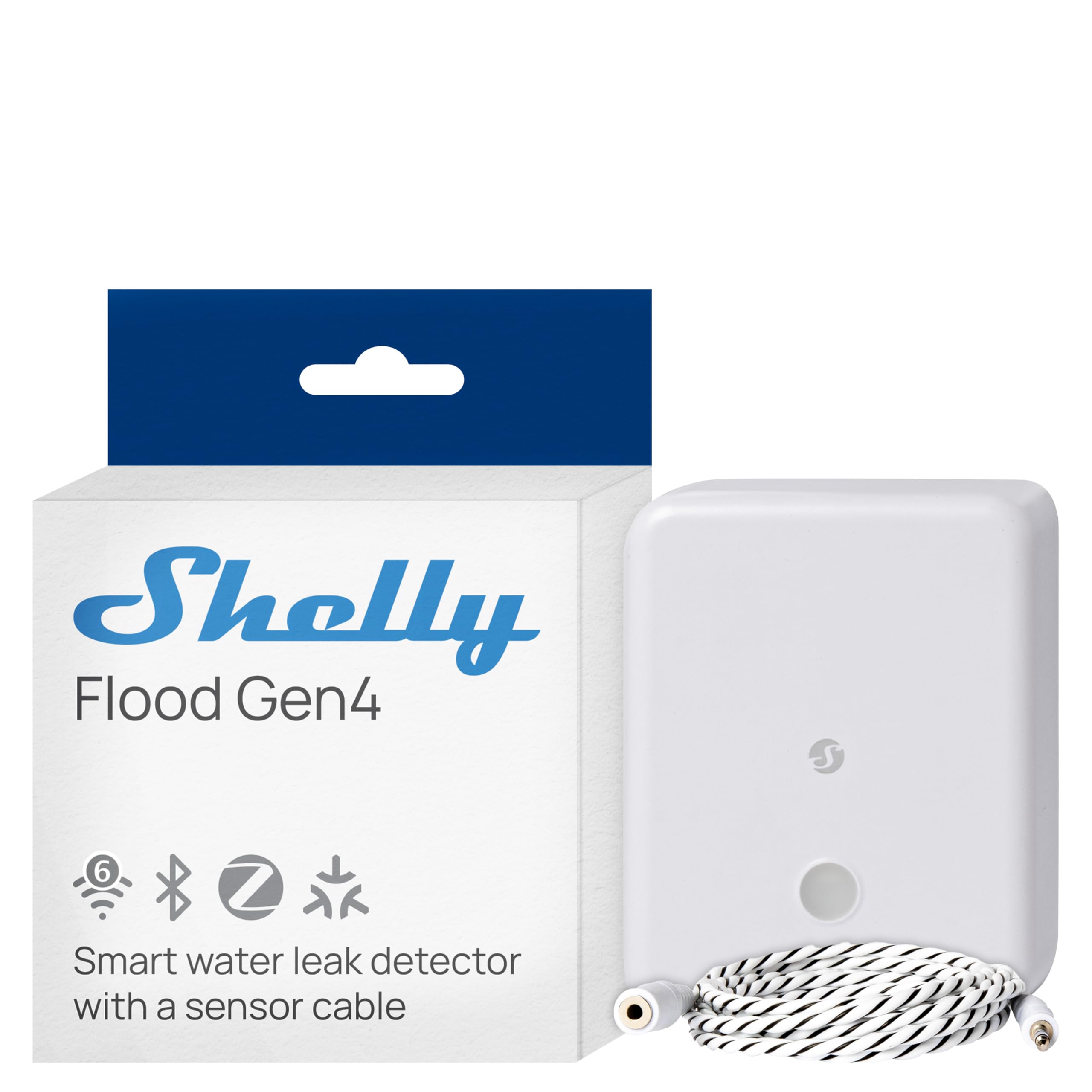
Features and Specifications
Product Type: Smart flood and rain sensor with sensing cable
Connectivity: WiFi, Bluetooth, Zigbee, Matter
Ecosystem Support: Alexa, SmartThings, Google Home, Apple HomeKit
Rating: IP44
Generation: Gen4
Intended Use: Flood detection and rain detection
Setup: Easy to use, app-based
Overview
| Product | Key Spec | Best Use | Price Tier |
|---|---|---|---|
| Shelly Flood Gen4 | IP44 cable sensor, WiFi/Bluetooth/Zigbee/Matter | Pipe runs, utility rooms, balconies | Mid-range |
The headline here is the cable. A puck-style leak sensor only reacts when water reaches the spot where it sits, so it has to be placed with care. A sensing cable spreads that detection along its length, which means one device can cover the base of a water heater, the seam behind a washing machine, and the corner where a pipe enters the wall.
The second headline is the radio stack. WiFi, Bluetooth, Zigbee and Matter in one unit is unusually generous at this price tier, and it means the sensor is not tied to a single hub brand. Matter support in particular extends the useful life of the device, since it can move between platforms without being replaced.
Build and the IP44 Rating
IP44 means the housing is protected against solid objects larger than a small finger and against water splashing from any direction. That is a sensible rating for a device whose whole job is to sit near water, and it covers splashes, condensation and the occasional spill.
It does not mean submersible. A sensor sitting in standing water is being asked to do something the rating does not promise, and buyers planning to place one in a sump pit or at the bottom of a drain should look at a purpose-built submersible probe instead. The Gen4 is a surface and cable sensor, not a dunkable one.
The cable format also means the sensing element is exposed by design. That is what makes it work, but it also means the cable should be routed where it will not be stepped on, kinked or chewed. A little care at installation pays off over the life of the unit.
Connectivity and the Hub Question
Four radios sounds like a lot, and it is, but the practical effect is choice rather than simultaneous use. A buyer with an Apple Home setup leans on HomeKit and Matter. A buyer with SmartThings or a Zigbee mesh uses that instead. Someone with no hub at all can run the sensor over WiFi through the Shelly app.
That flexibility is the product’s real strength, and it is also the source of its main friction. Buyers who expect to unbox the sensor, scan a code and be done may find the setup menus more involved than a single-purpose alarm. The app is capable, but capable apps ask questions, and the first configuration rewards a buyer who reads the prompts rather than tapping through them.
Battery life is the other variable worth thinking about. A WiFi radio is the hungriest of the four, so a sensor reporting over WiFi will generally ask for fresh cells sooner than one reporting over Zigbee or Matter through a hub. Buyers who want the longest possible service interval should lean on the low-power radio path.
Placement, Alerts and Rain Detection
The rain-detection angle is what separates this from a plain under-sink alarm. A cable run along a balcony floor, a windowsill or the lip of a rooftop drain gives the sensor something to notice during a storm, and that opens up uses beyond indoor plumbing.
Alerts depend on the platform. Through a hub, a leak event can trigger a notification, a siren on another device, or a shutoff valve if the system includes one. Through the Shelly app alone, the buyer gets the notification and whatever automation the app supports. Buyers who want a water main to close automatically need to confirm their hub and valve support that chain before buying.
Placement is where the cable design earns its keep. Running the cable along the back of a cabinet, around the base of a toilet, or behind a washing machine covers far more floor than a single sensor point. The trade-off is that the cable is visible unless it is tucked away, and tucking it away can mean routing it somewhere it will not actually get wet.
Trade-off: The sensing cable and four-radio design deliver coverage and flexibility, but they also make this a device that rewards a buyer willing to plan placement and work through app setup — not one for someone who wants a single-button leak alarm.
FAQ
-
What is the Shelly Flood Gen4?
It is a smart flood and rain sensor built around a sensing cable rather than a single contact point, with WiFi, Bluetooth, Zigbee and Matter radios and support for Alexa, SmartThings, Google Home and Apple HomeKit. -
Does the Shelly Flood Gen4 need a hub?
No. It can run over WiFi through the Shelly app. A hub is optional and adds value for buyers who want Zigbee or Matter integration and cross-device automations. -
Is the Shelly Flood Gen4 waterproof?
It carries an IP44 rating, which covers splashes and dust but not submersion. It is designed for surface and cable placement near water, not for sitting in standing water. -
Can the Shelly Flood Gen4 detect rain?
Yes. Rain detection is one of its stated uses, and the cable format makes it practical to run along a balcony floor, sill or drain lip where rain would collect. -
Does the Shelly Flood Gen4 work with Apple HomeKit?
It is listed as compatible with Apple HomeKit, and Matter support gives it a path into Apple Home setups. Buyers should confirm their specific hub generation supports the Matter route. -
Can the Shelly Flood Gen4 shut off the water automatically?
Only as part of a wider automation. The sensor reports the leak; closing a valve requires a compatible smart shutoff and a hub that can link the two. -
Where should the sensing cable be placed?
Along pipe runs, around the base of a water heater, behind a washing machine, under a sink, or along a balcony or sill for rain detection. The cable should be routed where it will not be crushed or kinked. -
Is the Shelly Flood Gen4 good for a rental apartment?
It is a reasonable fit because it needs no plumbing work and no wiring, and it can be removed and taken to the next home. Buyers in rentals should avoid permanent cable routing. -
Does the Shelly Flood Gen4 work with Alexa, Google Home and SmartThings?
All three are listed as compatible, alongside Apple HomeKit. Which features are exposed depends on the platform and whether the sensor is paired through Matter or a native integration. -
Who is the Shelly Flood Gen4 not for?
Buyers who want a zero-setup alarm, who need a submersible probe for a sump or drain, or who have no interest in a smart home app will get more value from a simpler device.
Bottom Line
The Shelly Flood Gen4 is the leak sensor to pick when coverage matters more than convenience. The sensing cable lets one unit watch a whole pipe run or a balcony edge, and the WiFi, Bluetooth, Zigbee and Matter radios mean it can move between smart home platforms instead of being locked to one. Buyers already running a hub get the most from it, and buyers who plan placement carefully will find it covers ground a puck sensor cannot. Those who want a single-button alarm or a submersible probe should look elsewhere. For everyone else, the Shelly Flood Gen4 is the version worth checking the price on.