Why there are Amazon links here: Brave Review is paid a commission for qualifying Amazon purchases made through the links below. Your price does not change, and using our links is entirely optional. How this works
Siterlink GS562A Hardwired Interconnected Smoke Detector: Code-Ready Coverage for One Room
The Siterlink GS562A is a hardwired photoelectric smoke alarm built for homeowners who already have AC wiring in the ceiling and want a detector that keeps working when the power goes out. It suits anyone replacing a failed unit, finishing a bedroom or hallway circuit, or adding a first alarm to a home that has the wiring but not the device. This review covers the specifications that matter, how the unit is built and powered, what maintenance it demands, and where the design falls short.
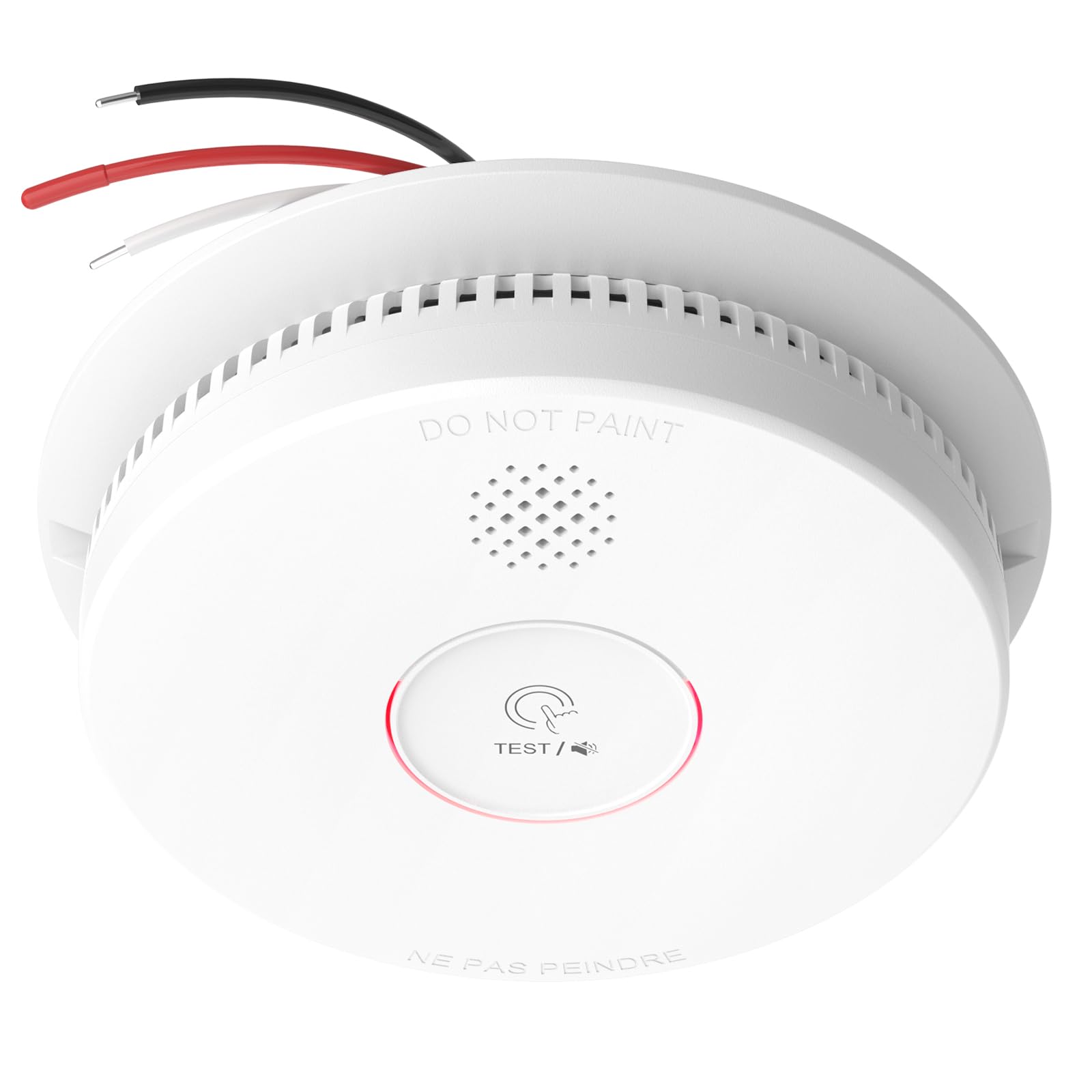
Features and Specifications
Type: Hardwired photoelectric smoke alarm
Model: GS562A
Pack Size: 1 unit
Power Source: AC hardwired with 9V battery backup
Interconnection: Interconnected with compatible hardwired alarms
Controls: Test/Silence button
Intended Use: Home fire alarm, single-room installation
The headline feature here is the combination of hardwiring and interconnection. A hardwired alarm draws constant power from the home’s electrical circuit, so it never needs a battery swap just to keep sensing — the 9V cell is a backup for outages, not the primary supply. Interconnection means that when one compatible alarm in the network trips, the others sound too, which is the difference between hearing an alarm in the basement from an upstairs bedroom and sleeping through it.
Photoelectric sensing is the other specification worth understanding. Photoelectric alarms respond to smoldering fires — the slow, smoky kind that start in upholstery, bedding or overloaded outlets — and they are the usual choice for bedrooms and living areas because they produce fewer false alarms from cooking than ionization units. The GS562A is a single-sensor device, so it is not a dual-sensor alarm that covers both flaming and smoldering fires in one housing.
The Test/Silence button serves two jobs. Test confirms the sensor and sounder are working; Silence temporarily mutes a nuisance alarm, typically from steam or burnt toast, without pulling the unit off the ceiling. On a hardwired alarm this button is the main point of human contact with the device, so it needs to be reachable from a step stool rather than a ladder.
Build and Installation
The GS562A is a ceiling-mounted unit designed to replace or supplement an existing hardwired alarm position. Installation assumes a live AC circuit with a mounting box already in place — this is not a battery-only alarm that can be stuck to drywall anywhere. A homeowner comfortable swapping a light fixture can usually handle the wiring; anyone who is not should budget for an electrician, because the unit ties into mains voltage.
Because the alarm is hardwired, the practical constraint is the existing wiring, not the device itself. Homes built or updated under modern codes typically have interconnected AC smoke alarm circuits in bedrooms and hallways, and the GS562A drops into that infrastructure. Older homes with battery-only alarms will need new wiring runs before this unit makes sense, which changes the cost calculation considerably.
The 9V backup battery is the part of the build that needs periodic attention. It is a consumable, and a hardwired alarm with a dead backup will still sense smoke while mains power is on but go silent in an outage — exactly when a fire is most likely to go unnoticed. The unit’s test button is the quick check; a scheduled annual battery replacement is the reliable habit.
Trade-off: The GS562A is a single photoelectric sensor in a one-pack, so covering a whole home means buying multiple units and confirming they interconnect — a budget-friendly entry point that becomes a larger purchase once full-house coverage is the goal.
Check the current price on Amazon
Power and Backup
The dual power design is the reason to choose a hardwired alarm over a battery-only one. Mains power keeps the sensor and sounder running indefinitely without battery changes, and the 9V cell takes over during an outage. That combination matters most at night, when a power cut and a fire can arrive together and a battery-only alarm with a weak cell would simply stay quiet.
The backup battery is also the unit’s weakest link in practice. A 9V cell has a finite life, and because the alarm works normally on AC power, a failing backup gives no obvious daily warning beyond the test button. Buyers who install this unit should treat the battery as a yearly maintenance item, not a fit-and-forget component.
Interconnection adds a second layer of reliability that is easy to underestimate. In a linked network, an alarm in the kitchen can trigger the units in the bedrooms, giving sleeping occupants the warning that a single localized alarm cannot. That function depends on every alarm in the chain being compatible and correctly wired, so mixing brands or generations on one circuit is a risk worth avoiding.
Maintenance and Everyday Use
Day-to-day, the GS562A asks very little. There is no battery to change monthly, no pairing process, and no app to configure — the unit either has power and responds to the test button, or it does not. That simplicity is a genuine advantage for older homeowners, rentals and anyone who does not want a smart-home account attached to a life-safety device.
The maintenance calendar is short but non-negotiable. The test button should be pressed regularly to confirm both the sensor and the sounder, the 9V backup should be replaced on a yearly schedule, and the sensing chamber should be kept clear of dust and cobwebs, which are the usual cause of nuisance alarms in photoelectric units. A quick vacuum or canned-air pass at the vents covers it.
The Silence function is the feature that gets used most. Cooking smoke and bathroom steam are the common triggers, and being able to mute the alarm without disabling it keeps people from pulling the unit down out of frustration — a real failure mode in households where nuisance alarms go unaddressed. The silence period is temporary by design, so the alarm returns to full protection on its own.
Strengths and Weaknesses
The core strength is the specification stack at this price tier: hardwired power, battery backup, interconnection and photoelectric sensing in one unit. For a homeowner with existing alarm wiring, that is the combination that satisfies code expectations without a premium smart-alarm price.
The weaknesses follow from the same design. It is a one-pack, so a whole-home install is a multi-unit purchase. It relies on wiring that many older homes do not have. And it is a single-sensor photoelectric alarm rather than a dual-sensor model, which means it is optimized for smoldering fires rather than covering every fire type in one device.
FAQ
-
What is the Siterlink GS562A?
It is a hardwired photoelectric smoke alarm with a 9V battery backup, a test/silence button and interconnection support, sold as a single unit for home use. -
Does the GS562A work without a battery?
Yes, while AC power is present. The 9V battery is a backup for outages, so the alarm senses smoke on mains power but loses outage protection if the backup cell is dead. -
Can the GS562A be used in a home with no existing alarm wiring?
Not without new wiring. It is a hardwired unit that needs an AC circuit at the mounting location, so battery-only homes face an electrician’s bill before installation. -
What does interconnected mean on a smoke alarm?
It means compatible alarms on the same circuit sound together — when one detects smoke, the others in the network alarm too, which extends warning coverage through the home. -
Is photoelectric better than ionization?
Photoelectric sensing is generally preferred for bedrooms and living areas because it responds well to smoldering fires and produces fewer nuisance alarms from cooking. It is not universally better; the right choice depends on the room. -
How often should the 9V backup battery be replaced?
Once a year is the standard habit for hardwired alarms with battery backup, along with regular test-button checks to confirm the unit is functioning. -
What is the Test/Silence button for?
Test verifies the sensor and sounder are working. Silence temporarily mutes a nuisance alarm, such as one triggered by cooking smoke or steam, without removing the unit. -
Is one GS562A enough for a house?
No. One unit covers one location. Whole-home protection requires an alarm in each bedroom, outside each sleeping area and on every level, all interconnected. -
Does the GS562A need Wi-Fi or an app?
No. It is a standalone hardwired alarm with no smart-home connection, which keeps setup simple and avoids dependence on a network or account. -
Who is the GS562A not for?
Renters and owners of older homes without alarm wiring, and buyers who want a dual-sensor or smart alarm with phone alerts — this unit is a straightforward hardwired replacement, not a connected device.
Bottom Line
The Siterlink GS562A is the right buy for a homeowner who already has hardwired alarm positions and wants a photoelectric unit with battery backup and interconnection at a budget-friendly price. It is a poor fit for battery-only homes, renters who cannot modify wiring, and anyone expecting app alerts or dual-sensor coverage. Buyers with the wiring in place should check the current price and confirm compatibility with the existing alarm circuit before ordering.