Why there are Amazon links here: Brave Review is paid a commission for qualifying Amazon purchases made through the links below. Your price does not change, and using our links is entirely optional. How this works
146Wh Solar Power Bank with AC Outlet: A Compact 100W Solar Generator for Camping and Road Trips
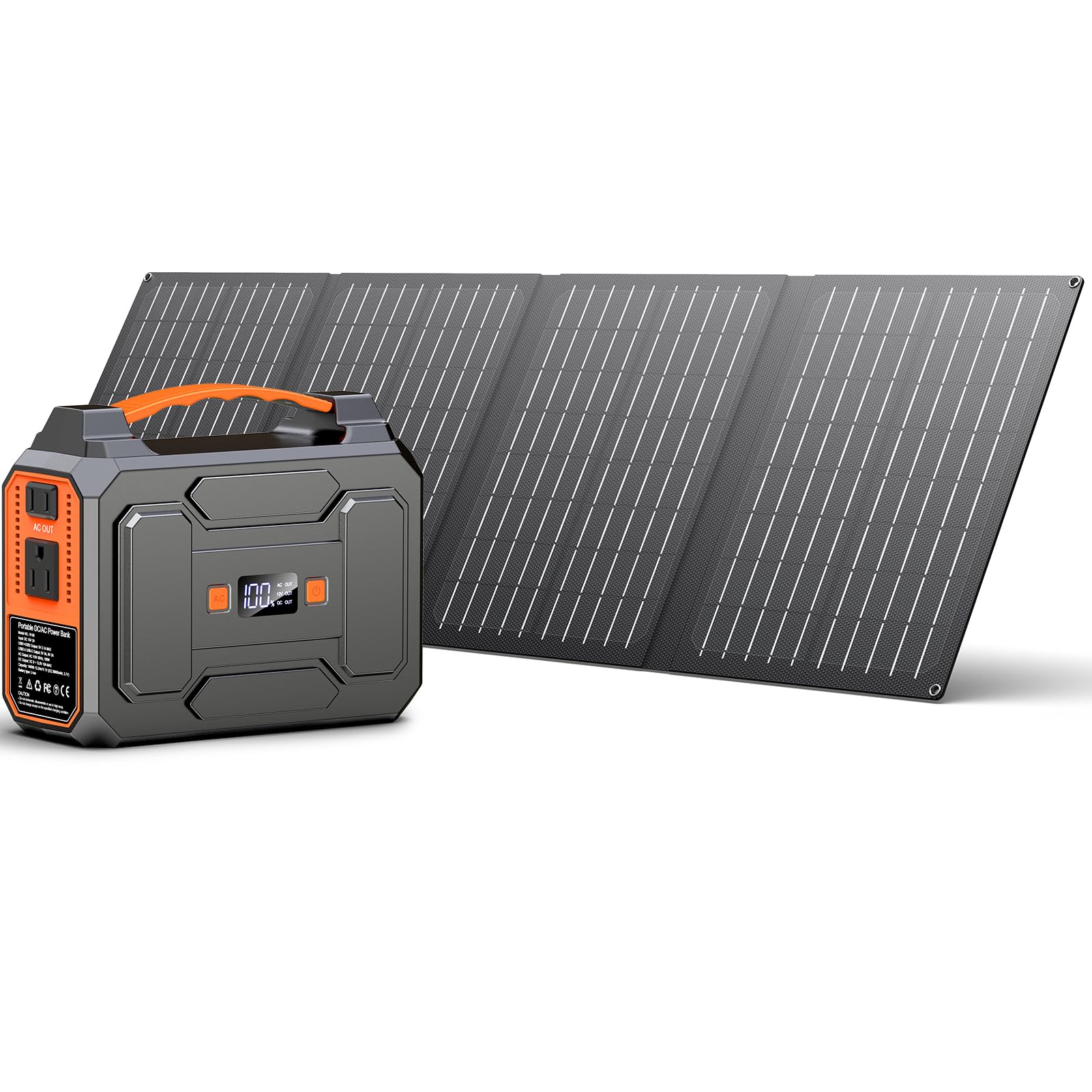
This 146Wh solar power bank with AC outlet is a compact, all-in-one power station aimed at campers, van travelers, and anyone who needs a small backup power source for phones, laptops, and lights. The bundle pairs a 146Wh battery with a 40W folding solar panel, so it can recharge from the sun when a wall outlet is out of reach. This review covers the specifications, how the unit is likely built, what the 100W rating means in practice, and which buyers should look elsewhere.
Bottom line up front: at a budget price tier, this is a sensible starter power station for light electronics and short trips — not a whole-home or appliance backup.
Features and Specifications
Model: 146Wh Solar Power Bank with AC Outlet
Battery Capacity: 146Wh
Inverter Output: 100W AC
Solar Input: 40W solar panel included
Ports: AC outlet, USB-A, USB-C, DC output
Best For: Camping, RV trips, van life, home backup for small devices
Price Tier: Budget
The headline number is 146Wh. That is the total energy the battery can store, and it is the figure that decides what this unit can run. A phone battery holds roughly 10–15Wh, so a full charge can top a phone up many times over; a laptop draws far more, and the 146Wh ceiling means a single full laptop charge or two is realistic rather than a full workday.
The 100W in the product name is the AC inverter rating, not the battery size. It sets the ceiling on what the AC outlet can power at once — small electronics, chargers, lights, a fan, a small screen. Anything with a heating element or a compressor motor will draw more than that at startup and is outside this unit’s job description.
The port lineup is the practical story here. An AC outlet covers devices with wall plugs, USB-A handles older phones and accessories, USB-C suits modern phones and small laptops, and the DC output covers car-style accessories and 12V gear. Four output types on one small box is a lot of flexibility for the size and price tier.
Included in the box is a 40W solar panel. That panel is a real advantage for off-grid use — the unit can recharge from sunlight without a separate purchase — but 40W is a modest panel, so solar recharging is a slow, multi-hour affair rather than a quick top-up.
Build and Portability
At 146Wh, this sits at the small end of the portable power station category. That capacity is the reason the unit can be carried in a backpack or stowed in a van cubby, and it is also the reason the unit cannot pretend to be a home backup. Buyers get a box that is genuinely portable, and the trade is total energy.
The form factor points to a ruggedized plastic shell with a carry handle, which is the norm at this price tier. The bundle includes a folding solar panel, which suggests the whole kit is designed to pack down together for car camping and RV trips. Buyers should treat the housing as splash-resistant rather than waterproof and keep it out of rain.
The port panel is the part that gets the most handling, so it is worth checking that the AC outlet and DC output have covers or flaps. On budget units, dust and grit in an unprotected outlet is the most common way a camping power station fails early.
Trade-off: The 146Wh battery and 100W inverter keep this unit light and affordable, but they also cap it at phones, laptops, lights, and small fans — buyers who need to run a fridge, a heater, or power tools need a much larger station.
Capacity and Power: What 146Wh and 100W Actually Mean
The 146Wh capacity is best read as a budget of energy, not a promise of runtime. A phone charge costs a few watt-hours, a tablet more, a laptop considerably more. A buyer who adds up the watt-hours of the devices carried on a trip will get a realistic picture of how many charges the unit delivers before it needs recharging itself.
The 100W AC inverter is the second limit, and it is the one that surprises people. The inverter caps the total draw from the AC outlet at any one moment. A device that pulls more than that — even briefly, at startup — will trip the protection circuit. Small electronics are safe; appliances with motors or heating elements are not.
The USB-C port is the most useful output for modern gear, and the DC output makes the unit a natural companion for 12V car accessories. Buyers who travel with a mix of USB-C laptops, phones, and 12V gear get the most out of the port layout.
Recharging from a wall outlet is the fast path. Recharging from the included 40W panel is the slow path, and it depends heavily on sun angle and cloud cover. A buyer planning multi-day off-grid trips should expect to leave the panel deployed for long stretches rather than treat it as a quick refill.
Solar Panel and Charging
The included 40W panel is a folding type, which is the right choice for a kit meant to travel. It packs flat against the station, deploys on a picnic table or a van roof, and feeds the unit through its solar input. That is a complete off-grid loop in one purchase, which is unusual at this price tier.
The honest expectation for a 40W panel is modest. Panel output depends on direct sun, angle, and shading, and real-world harvest is well below the rated figure on anything but a clear day. Buyers should plan on the panel keeping the unit topped up over a day in camp rather than refilling it in an hour.
A wall charger remains the primary recharge method for most owners, with the panel as the backup for trips away from outlets. That is the sensible way to use this bundle, and it matches how most campers actually travel.
Maintenance and Durability
The maintenance routine for a unit like this is short. Keep the battery out of extreme heat — a hot car in summer is the worst place for a lithium pack — and recharge it to a partial level every few months during long storage periods. Leaving a lithium battery fully drained for months is the fastest way to shorten its life.
The solar panel needs its surface kept clean and scratch-free, since scratches and dust cut output. The folding hinges and the cable connectors are the wear points on a portable panel, so stowing it flat and dry extends its working life.
The power station itself has no user-serviceable parts. Buyers should treat the battery as sealed and expect the unit’s useful life to be measured in years of light use rather than a decade of hard camping.
Who This Solar Generator Suits — and Who It Doesn’t
This unit suits campers, van travelers, and RV owners who want a small, self-contained power source for phones, laptops, lights, and small fans, plus a solar panel to keep it going off-grid. It also suits homeowners who want a compact backup for a router, a phone, and a lamp during a short outage. The budget price tier makes it a low-risk first power station.
It does not suit buyers who need to run a refrigerator, a space heater, a coffee maker, or power tools. Those loads exceed both the 100W inverter and the 146Wh capacity by a wide margin. Buyers planning to power a CPAP machine all night or keep a full-size fridge running through an outage should look at a larger station with a higher inverter rating and several times the capacity.
It also does not suit buyers who expect fast solar recharging. The 40W panel is a keeper, not a quick charger. Anyone who needs to refill the battery fast in the field should plan on a wall outlet or a larger solar array.
FAQ
-
What can a 100W solar generator run?
A 100W inverter handles phones, laptops, tablets, LED lights, small fans, a router, and a camera battery charger. It cannot run appliances with heating elements or compressor motors, which draw far more than 100W. -
How long does a 146Wh power station last?
Runtime depends on the load. A phone charge uses only a few watt-hours, so the unit lasts many charges; a laptop draws much more and will use a large share of the battery in one session. Buyers should total the watt-hours of the devices they plan to run. -
Can the 40W solar panel fully recharge the power station?
Yes, given enough direct sun. Panel output falls well below the rated figure in clouds or shade, so a full solar recharge takes most of a clear day rather than an hour. -
Is a 100W solar powered generator enough for camping?
For light camping — phones, lights, a small fan, a camera — yes. For camping with a powered cooler, an electric stove, or a heater, no. Those loads need a much larger station. -
Can this power station run a CPAP machine?
Only if the machine’s draw stays under 100W and the buyer accepts that a full night will consume a large share of the 146Wh battery. Buyers who need a full night of CPAP power should check the machine’s wattage and consider a larger station. -
How should the battery be stored?
Store it in a cool, dry place, partly charged, and top it up every few months. Avoid leaving it fully drained or in a hot car for long periods. -
Does the AC outlet work while the unit is solar charging?
Pass-through charging is common on units of this type, but buyers should confirm it for this model before relying on it. The safer assumption is to charge and discharge separately. -
Is this a good first power station?
Yes, for light electronics and short trips. The budget price tier and the included solar panel make it a low-risk way to learn how much capacity a buyer actually needs. -
Can it be taken on a plane?
Lithium batteries of this size fall under airline watt-hour limits, but rules vary by carrier and country. Buyers should check with the airline before packing it.
Bottom Line
The 146Wh Solar Power Bank with AC Outlet is a well-rounded starter kit for light off-grid power: a genuinely portable 146Wh battery, a 100W AC inverter for small electronics, a full set of USB-A, USB-C, and DC ports, and a 40W solar panel in the box. At the budget price tier, it covers camping, van trips, and short outages without overpromising. Buyers who need to run appliances, a fridge, or power tools should size up; everyone else gets a sensible, self-contained solar generator for the money.
