Why there are Amazon links here: Brave Review is paid a commission for qualifying Amazon purchases made through the links below. Your price does not change, and using our links is entirely optional. How this works
SONOFF Zigbee 3.0 Smart Relay Switch: The Hidden Way to Make Dumb Lights Smart
The SONOFF Zigbee 3.0 Smart Relay Switch is a tiny in-wall module that turns an ordinary light switch into a smart one, and this review covers the four-pack version built for whole-room or whole-home rollouts. It suits DIYers who are comfortable behind a light switch plate and who already run a Zigbee hub, because this module needs both a hub and a neutral wire to work. The trade-offs — hub dependency and a wiring job — are real, so the review below walks through the specifications, what the module does well, and where it falls short before sending buyers to check the current price.
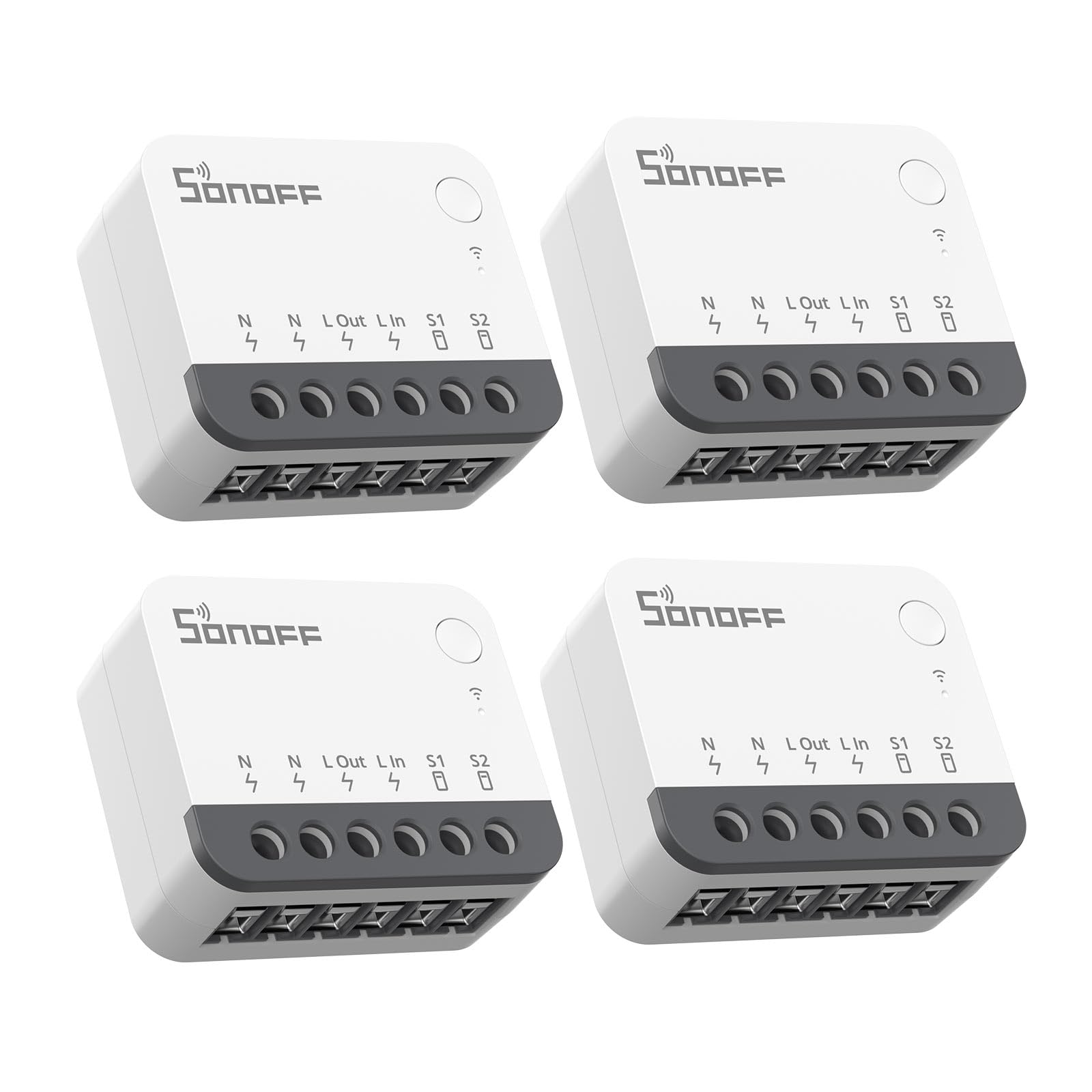
Features and Specifications
Type: In-wall smart relay switch module
Connectivity: Zigbee 3.0
Hub Requirement: Zigbee hub required (sold separately)
Wiring Requirement: Neutral wire required
Voice Assistants: Alexa, Google Home
Platform Compatibility: SmartThings
Pack Size: 4-pack
Form Factor: Mini
The core spec here is Zigbee 3.0, and it matters more than any other line on that list. Zigbee is a low-power mesh protocol, so each module can act as a relay point that strengthens the network for the others, which is exactly why a four-pack makes sense for a single home rather than a single unit. The protocol is also what forces the hub requirement: unlike Wi-Fi smart switches that talk straight to a router, this module needs a Zigbee coordinator — a SmartThings hub, an Echo with a built-in Zigbee radio, or a dedicated Zigbee bridge — to reach the internet and the voice assistants listed.
The second spec that decides the purchase is the neutral wire. Most in-wall smart relays need a neutral line to stay powered while the light is off, and many older homes simply do not have one at the switch box. A buyer who cannot find a neutral bundle in the box should stop before ordering, because no amount of app setup will fix a missing wire.
Build and Form Factor
The "mini" label is the design story. These modules are sized to tuck into the back of a standard electrical box behind the existing faceplate, which means the visible switch stays exactly as it was — same look, same feel, same muscle memory for everyone in the house. That is the quiet advantage of a relay module over a smart switch plate: nothing about the wall changes, and guests never have to learn a new interface.
The compact size also carries the main compromise. Fitting a module plus the existing wiring into a shallow box is tight work, and older boxes with thick bundles of conductors leave little room to spare. Buyers with deep boxes and clean wiring will find the install routine; buyers with crowded boxes should expect a fiddly job or a call to an electrician.
Power and Wiring
There is no battery and no plug here — the module draws its power from the household circuit it is wired into, which is why the neutral wire requirement is non-negotiable. Once installed, the relay sits between the circuit and the fixture, switching the load on command from the app, a voice assistant, or the physical wall switch itself. That last point is worth spelling out: the wall switch keeps working as a wall switch, so the household is never locked out of its own lights when the network or hub goes down.
The load rating is the number a buyer should confirm against the fixture before ordering, and it is the one figure this listing does not state in its name. A single module typically handles a standard lighting circuit, but high-draw fixtures — large arrays, motors, or anything with a big inrush — deserve a check against the manufacturer’s published rating before the box goes in the wall.
Hub, App, and Ecosystem
Zigbee 3.0 is the most widely supported version of the protocol, and the compatibility list on this module — Alexa, Google Home, SmartThings — reflects that. The practical result is that buyers are not locked into one vendor’s app: a SmartThings household can pair the module with its existing hub, and an Alexa household with a Zigbee-capable Echo can do the same. Routines and schedules live in whichever hub app is already in use, which keeps the smart home in one place instead of scattering it across three.
The catch is that the hub is a separate purchase and a separate point of failure. A buyer starting from zero needs to budget for a Zigbee coordinator on top of the four-pack, and that coordinator becomes the single device the whole setup depends on. Households that already own a compatible hub get the better deal here; households that do not should price the hub in before deciding.
Installation and Maintenance
Installation is a wiring job, not a plug-in one, and it should be treated as such: power off at the breaker, the existing switch removed, the module spliced in line with the fixture, and the whole assembly folded back into the box. Buyers who have swapped a light switch before will recognise the work. Buyers who have not should weigh an electrician’s fee against the savings of a four-pack, because a mistake at the switch box is a safety issue, not a convenience one.
Maintenance, once installed, is close to zero. There is no filter to change and no battery to replace; the module either has power or it does not. The ongoing task is software — keeping the hub firmware and the companion app current so the Zigbee mesh and the voice integrations stay reliable — and that is a job the hub handles, not the module.
Trade-off: The four-pack only pays off for buyers who already own a Zigbee hub and have neutral wiring at every switch box; anyone missing either one is buying a project, not a product.
Check the current price on Amazon
FAQ
-
Does the SONOFF Zigbee smart switch need a hub?
Yes. This is a Zigbee 3.0 module, not a Wi-Fi switch, so it needs a Zigbee coordinator — a SmartThings hub, a Zigbee-capable Echo, or a dedicated bridge — to connect to Alexa, Google Home, or the internet. -
What is a neutral wire, and why does this switch need one?
The neutral wire is the return path in a household circuit. The module draws its own power from it so it stays awake while the light is off. Many older switch boxes lack a neutral, and in that case the module cannot be installed without rewiring. -
Will the regular wall switch still work after installation?
Yes. The module sits behind the existing switch and the physical switch continues to control the light, so the room is never dependent on the hub or the app to turn on. -
Is the SONOFF smart switch compatible with Alexa and Google Home?
Both are listed as compatible, along with SmartThings. In practice the voice assistant talks to the Zigbee hub, and the hub talks to the module, so the hub has to support the integration as well. -
Can this module dim lights?
No. It is a relay switch — on and off only. Buyers who want dimming need a dimmer-rated module or a smart dimmer switch instead. -
How many modules come in the box?
Four. The four-pack is aimed at buyers wiring several rooms or a whole floor at once, and the extra units also strengthen the Zigbee mesh by acting as relay points. -
Does the module work if the internet goes down?
The physical wall switch keeps working regardless. App and voice control depend on the hub, so remote control stops when the network or hub is offline, but local switching does not. -
Can one module control more than one light?
The module switches the circuit it is wired into. Whether that is one fixture or several on the same circuit depends on how the home is wired, and the total load should be checked against the manufacturer’s rating. -
Is a four-pack worth it for a single room?
Only if the room has multiple switch points or the buyer wants spare modules for a later rollout. For one light, a single module is the cheaper route and the spare units add little. -
Who should not buy this switch?
Renters, buyers without a Zigbee hub, and anyone whose switch boxes lack a neutral wire. All three groups are better served by a plug-in smart plug or a Wi-Fi switch that suits their setup.
Bottom Line
The SONOFF Zigbee 3.0 Smart Relay Switch four-pack is the right buy for a specific household: one that already runs a Zigbee hub, has neutral wiring at the switch boxes, and wants several rooms made smart without changing a single faceplate. The mini form factor keeps the walls looking untouched, the Zigbee mesh gets stronger with every module installed, and the physical switch keeps working when the network does not. Buyers outside that profile — no hub, no neutral, or no appetite for wiring — should look elsewhere, because this module rewards preparation and punishes improvisation. For the prepared buyer, the four-pack is the efficient way in.