Why there are Amazon links here: Brave Review is paid a commission for qualifying Amazon purchases made through the links below. Your price does not change, and using our links is entirely optional. How this works
SONOFF SNZB-02WD IP65 Zigbee LCD Smart Temperature Humidity Sensor: The Waterproof Sensor for Wet Rooms and Greenhouses
The SONOFF SNZB-02WD is a Zigbee temperature and humidity sensor built for places where ordinary sensors fail: bathrooms, greenhouses, basements and anywhere damp. It shows readings on a built-in LCD and pushes the same data to a phone app with historical charts, and its IP65 housing means splashes and humidity are not a problem.
This review covers what the sensor does, how its IP65 rating and Zigbee radio shape the buying decision, and where the limits sit. Buyers who need a cheap, no-hub-display sensor for a wet room or a grow space will find the answer quickly.
Features and Specifications
Product Type: Zigbee temperature and humidity sensor with LCD display
Protection Rating: IP65 (waterproof against splashes and jets)
Display: Built-in LCD showing readings on the device
Connectivity: Zigbee wireless
App Features: Remote monitoring with historical charts
Installation: Flexible mounting options
Best Suited To: Greenhouses, bathrooms and other damp rooms
The name tells most of the story here. This is a battery-class Zigbee sensor with a screen, wrapped in a housing rated IP65. That rating is the headline feature: it means the unit tolerates water spray from a shower, condensation in a greenhouse, and the general dampness that kills unprotected electronics over a season or two.
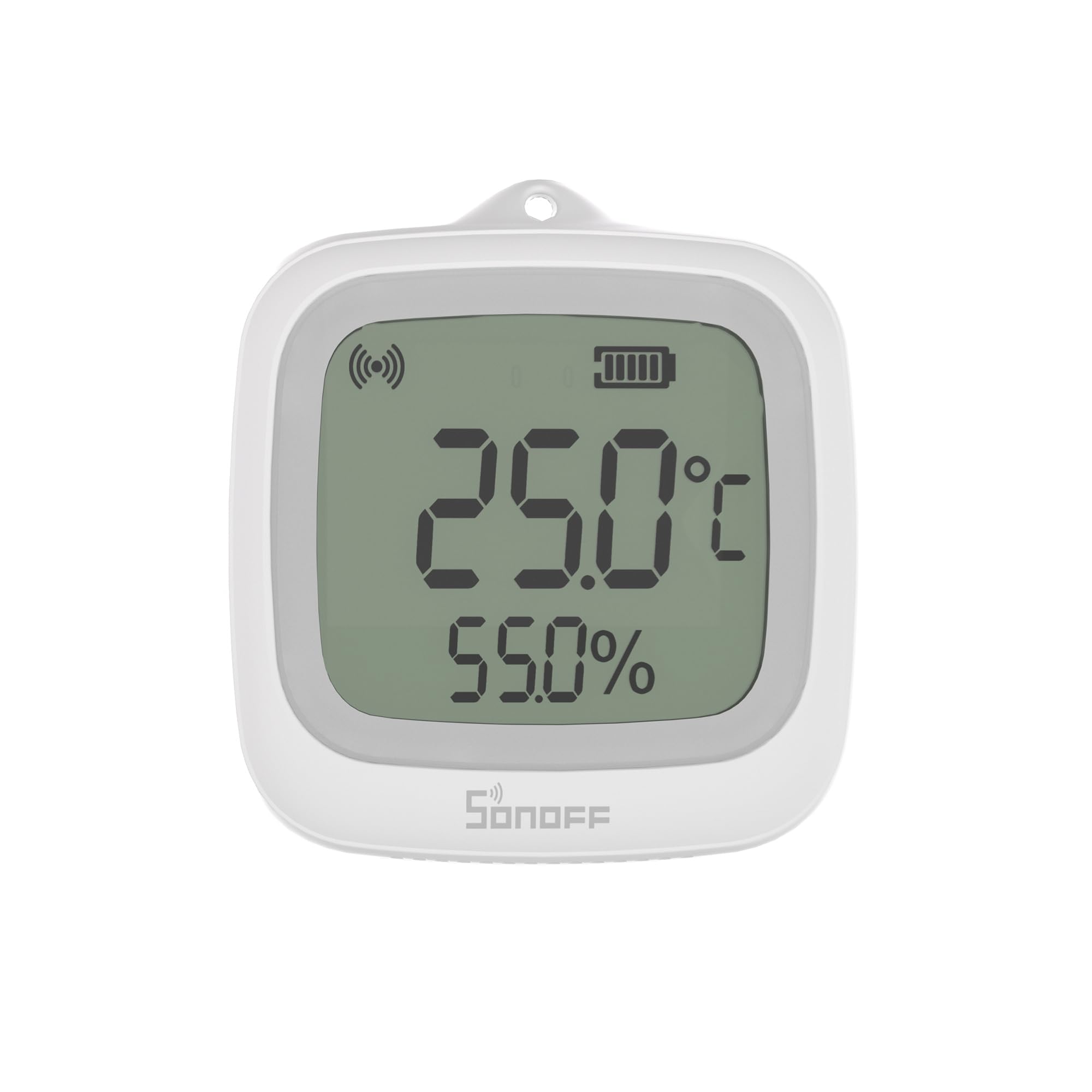
The LCD is the second differentiator. Most sensors at this price are blank pucks that only report to an app. The SNZB-02WD shows the current temperature and humidity on the device itself, so anyone standing in the room can read it without pulling out a phone.
Zigbee connectivity matters for a different reason. The sensor talks to a Zigbee hub or coordinator rather than Wi-Fi, which keeps battery drain low and avoids crowding a home Wi-Fi network. The trade-off is that a Zigbee hub is required, and that hub is not included.
Build and Waterproofing
The IP65 rating is the reason to buy this model over a cheaper indoor sensor. IP65 means protection against dust ingress and against water projected from a nozzle, which covers bathroom splashes, greenhouse misting systems and hose spray. It does not mean the sensor can be submerged, so a buyer planning to drop it into a water tank or pond should look elsewhere.
The housing is designed for mounting rather than sitting loose on a shelf. "Flexible installation" in the product name suggests more than one mounting route, which suits the awkward spots these sensors usually end up in: a shower wall, a greenhouse frame, the inside of a cabinet or a cold corner of a basement.
Buyers should think about placement before buying. A sensor mounted right beside a shower head will read the humidity of the shower, not the room, and one tucked behind a curtain will lag behind the real conditions. The IP65 housing gives freedom to mount close to the action, but a little judgement still goes a long way.
Trade-off: The IP65 housing protects against splashes and spray but not immersion, so this is not a sensor for submerged or fully flooded environments.
Display and App Monitoring
The LCD changes how the sensor gets used day to day. In a bathroom, a glance at the wall tells the household whether the extractor fan has done its job. In a greenhouse, the same glance answers whether the vents need opening. That instant read is something app-only sensors cannot match.
The app side handles the longer view. Monitoring with charts means the sensor logs temperature and humidity over time, so a buyer can see overnight dips in a greenhouse, spot a bathroom that stays damp for hours after a shower, or confirm that a basement dehumidifier is holding the line. Patterns like that are invisible from a single live reading.
The catch is the same one that applies to every Zigbee sensor: the app experience depends on the hub and platform in use. SONOFF’s own ecosystem is the natural pairing, but the sensor’s usefulness ultimately rests on the coordinator it is bound to. Buyers already running a Zigbee setup should confirm compatibility before ordering; buyers starting from scratch should budget for a hub alongside the sensor.
Power and Maintenance
Zigbee is a low-power protocol, and a sensor of this type is built to run for a long stretch on its battery rather than demand frequent charging. That is the quiet advantage of Zigbee over Wi-Fi here: a battery sensor in a greenhouse or on a bathroom wall is only useful if it can be left alone.
Maintenance is minimal by design. There is no wiring, no hub display to clean around, and no cloud subscription mentioned as a requirement. The practical chores are battery swaps and the occasional wipe of the LCD, which the IP65 housing makes safe to do with a damp cloth.
Buyers should still plan for battery access. A sensor mounted high on a wall or deep inside a greenhouse frame is awkward to reach when the battery finally goes, so mounting it somewhere serviceable is worth a minute of thought at install time.
Trade-off: A Zigbee hub or coordinator is required and sold separately, so the sensor is not a standalone purchase for a first-time smart-home buyer.
Who It Suits and Who It Does Not
This sensor suits buyers who already run a Zigbee hub and need readings from a wet or humid space. Bathroom owners tired of guessing whether the fan is winning, greenhouse growers watching overnight humidity, and anyone monitoring a basement or utility room get the most from it.
It also suits buyers who want a screen on the wall. The LCD means the whole household can read the numbers without installing an app, which is a real advantage in a shared home.
It does not suit buyers without a Zigbee hub, anyone wanting a Wi-Fi sensor that connects directly to a router, or anyone who needs a sensor for submersion. Buyers who want room-by-room coverage across a whole house should also check that their Zigbee mesh reaches the far corners before committing.
FAQ
-
Does the SONOFF SNZB-02WD need a hub?
Yes. It is a Zigbee sensor, so it needs a Zigbee hub or coordinator to report to an app. The hub is not included, and buyers without one should factor that into the total cost. -
Is the SNZB-02WD safe in a bathroom?
The IP65 rating means it handles splashes, spray and damp air, which makes a bathroom a sensible home for it. It should not be submerged, and mounting it away from direct shower spray gives more representative room readings. -
Can it be used in a greenhouse?
Yes. The product name lists greenhouse use, and the IP65 housing is what makes that credible. Humidity swings and misting systems are within its comfort zone, though full immersion is not. -
Does it show temperature and humidity on the device?
It does. The built-in LCD displays readings on the sensor itself, so the current numbers are visible without opening an app. -
Does the app keep history and charts?
The product name specifies app monitoring with charts, so historical temperature and humidity data is available through the app rather than only a live reading. -
Is it battery powered?
It is a wireless Zigbee sensor of the type that runs on battery power. Buyers should mount it somewhere reachable so a battery change does not turn into a ladder job. -
Will it work with any smart home platform?
Zigbee sensors depend on the hub and platform they are paired with. Buyers should confirm compatibility with their existing coordinator before ordering rather than assuming universal support. -
Can it be mounted on a wall?
Flexible installation is part of the product’s design, so wall and frame mounting are within scope. The exact brackets and fixings should be checked on the product page. -
Is it suitable for a basement or utility room?
Yes. Damp, cool spaces are exactly where a waterproof sensor earns its keep, and the app charts help confirm whether a dehumidifier is doing its job. -
Does it work without Wi-Fi?
Zigbee is a separate radio protocol from Wi-Fi, so the sensor talks to its hub rather than the router directly. The hub handles the connection onward, which is why the hub requirement matters.
Bottom Line
The SONOFF SNZB-02WD is the right pick for a buyer who already has a Zigbee hub and needs a temperature and humidity sensor that survives wet rooms and greenhouses. The IP65 housing, the on-device LCD and the app charts cover the three things this category is asked for, and the price sits in budget territory for a waterproof sensor.
Buyers without a hub should price one in before committing, and anyone needing submersion-level protection should keep looking. For everyone else, this is a straightforward, sensible buy.