Why there are Amazon links here: Brave Review is paid a commission for qualifying Amazon purchases made through the links below. Your price does not change, and using our links is entirely optional. How this works
Stechro Water Leak Detectors: A Five-Pack Alarm for the Whole House
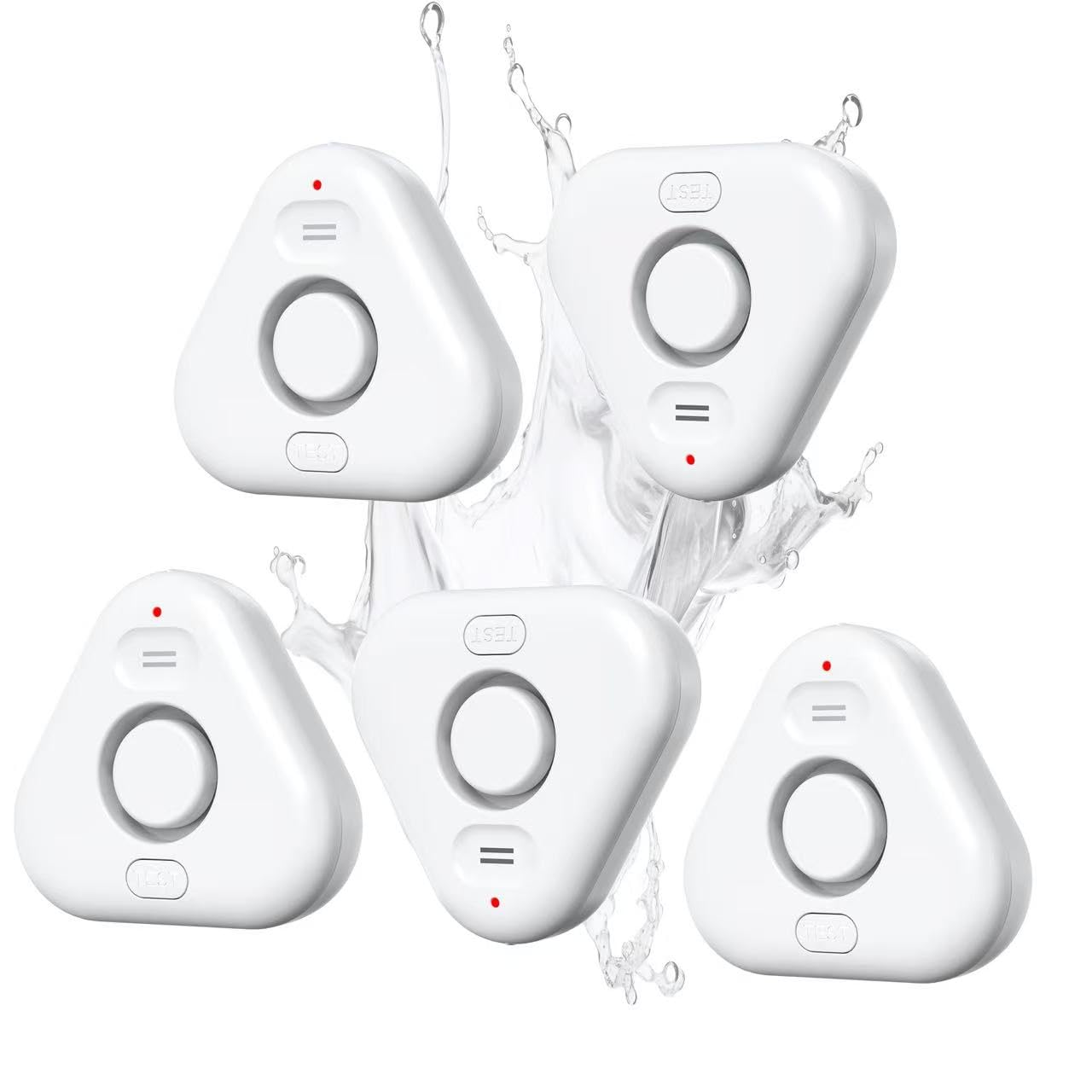
Stechro water leak detectors are a five-pack of battery-style water sensor alarms meant to sit under sinks, behind washing machines, beside water heaters and on basement floors. The pitch is simple: put one wherever water is likely to show up uninvited, and a loud alarm sounds the moment the sensor contacts get wet. This review covers what the 5-pack actually includes, how the adjustable volume and sensitivity work in practice, and which households get real value from it. Buyers who want one cheap alarm per risky spot should read on; buyers expecting app alerts or shutoff control should look elsewhere.
Features and Specifications
- Product Type: Standalone water leak sensor alarm
- Pack Size: 5 detectors
- Alert Type: Audible alarm with leak and drip alert
- Volume: 4 adjustable levels, 0-120dB range
- Ingress Protection: IP66 water-resistant housing
- Intended Use: Basements, kitchen sinks, laundry areas
- Power Source: Battery-powered, freestanding placement
- Price Tier: Budget-friendly multi-pack
The name tells most of the story here. This is a self-contained alarm, not a smart sensor: no hub, no phone app, no wiring into a home network. Each unit sits on the floor or in a cabinet and raises a siren when water bridges its sensing contacts.
The 5-pack is the headline feature. One purchase covers the usual suspects — under the kitchen sink, behind the washer, next to the water heater, in the basement, and one spare for a bathroom or utility closet. Buyers get whole-home coverage without buying five separate devices.
How the Build and Placement Work
The IP66 rating is the spec worth pausing on. It means the housing is sealed against dust and against water jets, which is exactly what a device living under a sink or on a damp basement floor needs. A leak detector that dies from a splash is useless, and this enclosure is built for the environment it sits in.
Placement is freestanding, so there is no installation to speak of. The unit goes where water would first pool — low spots, cabinet floors, the tray under a water heater — and that is the whole job. The trade-off is that nothing holds it in place: a unit knocked over or pushed behind a pipe stops protecting that spot, and nothing reminds anyone to check.
The five-pack format also means buyers have to think about where the water actually goes, not just where the pipe is. Water from a supply line can travel along a cabinet floor before it pools, so placing a detector a few inches downstream of the likely failure point is often smarter than putting it directly under the joint.
Volume, Sensitivity and the Alarm in Real Use
Four adjustable volume levels across a 0-120dB range is more control than most budget alarms offer. A detector in a basement can run at full volume so it carries through a closed door; one in a kitchen cabinet can be dialed down so it does not rattle the house every time a dish towel drips near it.
The leak-and-drip distinction matters more than it sounds. A slow drip under a sink can run for weeks before it becomes visible, and a detector that only reacts to standing water misses it. Drip alert means the unit responds to small amounts of moisture, which is the failure mode that quietly rots cabinet floors.
The trade-off is that a moisture-sensitive alarm has no way to tell a leak from a spill. A mop bucket, a wet floor after cleaning, or a humid basement corner can set it off, and each false alarm costs a little trust in the device. Homes with lots of floor washing or damp concrete should expect some nuisance triggers.
Power, Maintenance and Long-Term Ownership
Battery power is what makes the freestanding design possible, and it is also the maintenance cost. There is no wiring to run and no outlet to fight for, but every unit needs its battery checked and eventually replaced, and a detector with a dead battery is silent in the worst way.
With five units in service, battery checks become a small routine rather than a one-off. The sensible approach is to test all five at the same time on a fixed schedule — when smoke alarm batteries get checked is a natural moment — and to replace them as a batch so no unit falls behind.
The IP66 housing helps here too. Sealed electronics tolerate the damp, dusty conditions of a basement or laundry room better than open boards, so the enclosure is doing long-term reliability work, not just splash protection.
Strengths and Weaknesses
The clear strength is coverage per dollar. Five detectors in one purchase means the kitchen, laundry, basement and utility areas all get watched, which is more protection than a single premium sensor in one spot. The adjustable volume and drip sensitivity add flexibility that budget alarms often skip.
The weakness is the category itself. There is no remote notification, so an alarm only helps if someone is home to hear it. A leak that starts during a workday or a vacation goes undetected until someone walks in, and that is a real limitation for anyone who wants alerts on a phone.
Who It Suits and Who It Does Not
These detectors suit homeowners and renters who want low-cost, no-install coverage across several rooms and who are home often enough to hear an alarm. They also suit landlords and property managers watching multiple units, since a five-pack covers several spaces at once.
They do not suit buyers who want smartphone alerts, remote monitoring, or automatic water shutoff. Anyone who travels frequently or owns a second home should treat this as a first layer, not a complete leak strategy.
Check the current price on Amazon
FAQ
-
What are Stechro water leak detectors best used for?
They are best for spot protection under sinks, behind washing machines, near water heaters, and on basement floors — anywhere water would pool first if a pipe, hose, or appliance failed. -
Do these leak detectors need Wi-Fi or a phone app?
No. They are standalone alarms that sound locally when moisture reaches the sensor. There is no app, hub, or remote notification, so someone needs to be within earshot. -
How loud is the alarm?
The volume is adjustable across four levels with a range up to 120dB, so it can be set loud enough to carry from a basement or dialed down for a cabinet under a kitchen sink. -
What does the IP66 rating mean for a leak detector?
It means the housing is sealed against dust and water jets, which suits damp basements and under-sink cabinets where splashes and humidity are normal. -
Will these detect a slow drip or only standing water?
The unit is listed with leak and drip alert, so it responds to small amounts of moisture as well as pooling water — useful for the slow drips that go unnoticed for weeks. -
Where should the five detectors be placed?
A practical spread is under the kitchen sink, behind the washer, beside the water heater, in the basement near the floor drain, and one spare for a bathroom or utility closet. -
Do the detectors need batteries?
Yes. They are battery-powered and freestanding, so each unit needs periodic battery checks and replacement to keep working. -
Can these be used in a rental apartment?
Yes. There is no wiring or installation, so they can be placed and removed without modifying the property. -
Will a wet floor from mopping set off the alarm?
It can. Moisture-sensitive sensors cannot tell a spill from a leak, so wet cleaning or a damp floor near a unit may trigger a false alarm. -
Do these detectors shut off the water supply?
No. They only sound an alarm. Stopping the water still requires a manual valve or a separate automatic shutoff system.
Bottom Line
The Stechro 5-pack water leak detectors are a sensible budget buy for anyone who wants loud, no-install leak coverage in several rooms at once. The adjustable volume, drip alert, and IP66 housing cover the basics well, and five units go further than one premium sensor in a single spot. Buyers who need phone alerts or automatic shutoff should pair this with a connected system — but as a first line of defense around the house, the pack earns its place.
