Why there are Amazon links here: Brave Review is paid a commission for qualifying Amazon purchases made through the links below. Your price does not change, and using our links is entirely optional. How this works
TEEHO TK001H vs DESLOC C100: Which Keyless Lock Fits a Front Door
The TEEHO TK001H and the DESLOC C100 are both BHMA Grade 3 keyless entry locks aimed at the same buyer: someone who wants to retire the front-door key without paying smart-lock money. The decision comes down to budget and features. The TEEHO TK001H costs roughly twice as much and adds anti-peep input, a passage mode and a zinc alloy body; the DESLOC C100 undercuts it sharply and answers with a visual display and a longer code list. This comparison separates the two on build, codes, power, installation and price so the right one is obvious in under a minute.
TEEHO TK001H Keyless Entry Door Lock
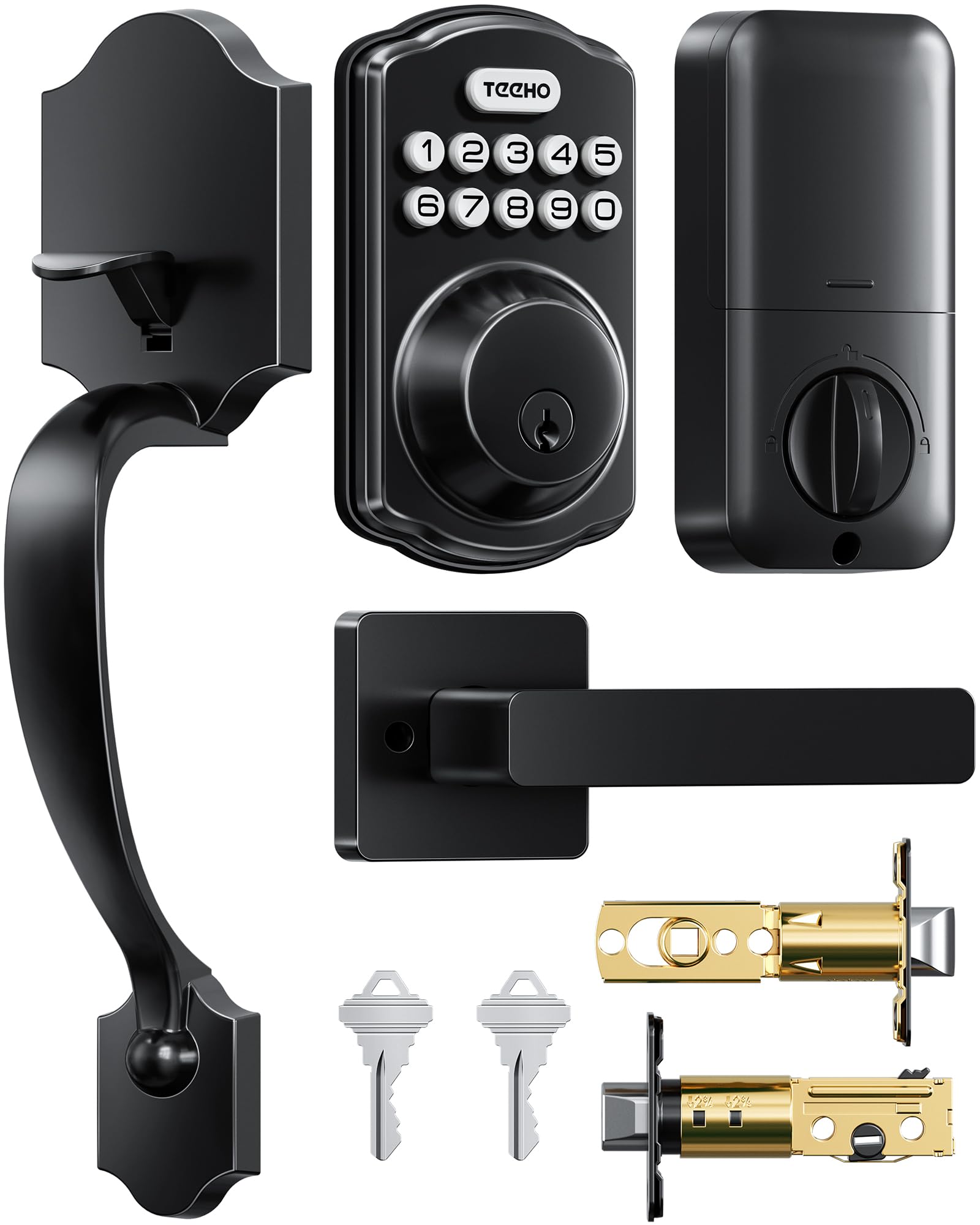
Security Rating: BHMA Grade 3
Locking: Auto-lock and one-touch lock
Code Features: Anti-peep entry and one-time code
Special Mode: Passage mode
Material: Zinc alloy
Finish: Matte black
Installation: Easy, DIY-friendly
The TK001H is the more feature-dense of the two. Its zinc alloy body and matte black finish give it a heavier, more substantial feel than a plastic-shelled budget lock, and the Grade 3 rating puts it in the same residential security class as the DESLOC. Anti-peep input lets a user add random digits around the real code so a bystander cannot read the sequence from wear or from watching fingers, and the one-time code covers guests, cleaners and deliveries without leaving a permanent credential behind.
Auto-lock and one-touch lock are the practical core here. Auto-lock closes the bolt after a set delay so a door left pulled shut does not stay open, while one-touch locking lets someone leaving in a hurry secure the door without entering a code. Passage mode disables the latch for a stretch of time, which suits a party, a move or a household where the door is in constant use. Installation is designed to reuse existing door prep, so the swap from a mechanical deadbolt is a screwdriver job rather than a carpentry one.
Trade-off: The feature set and zinc alloy build push the price to roughly double the DESLOC, so buyers who only need code entry pay for anti-peep, passage mode and a heavier body they may never use.
Check the TEEHO TK001H price on Amazon
DESLOC C100 Keyless Entry Door Lock
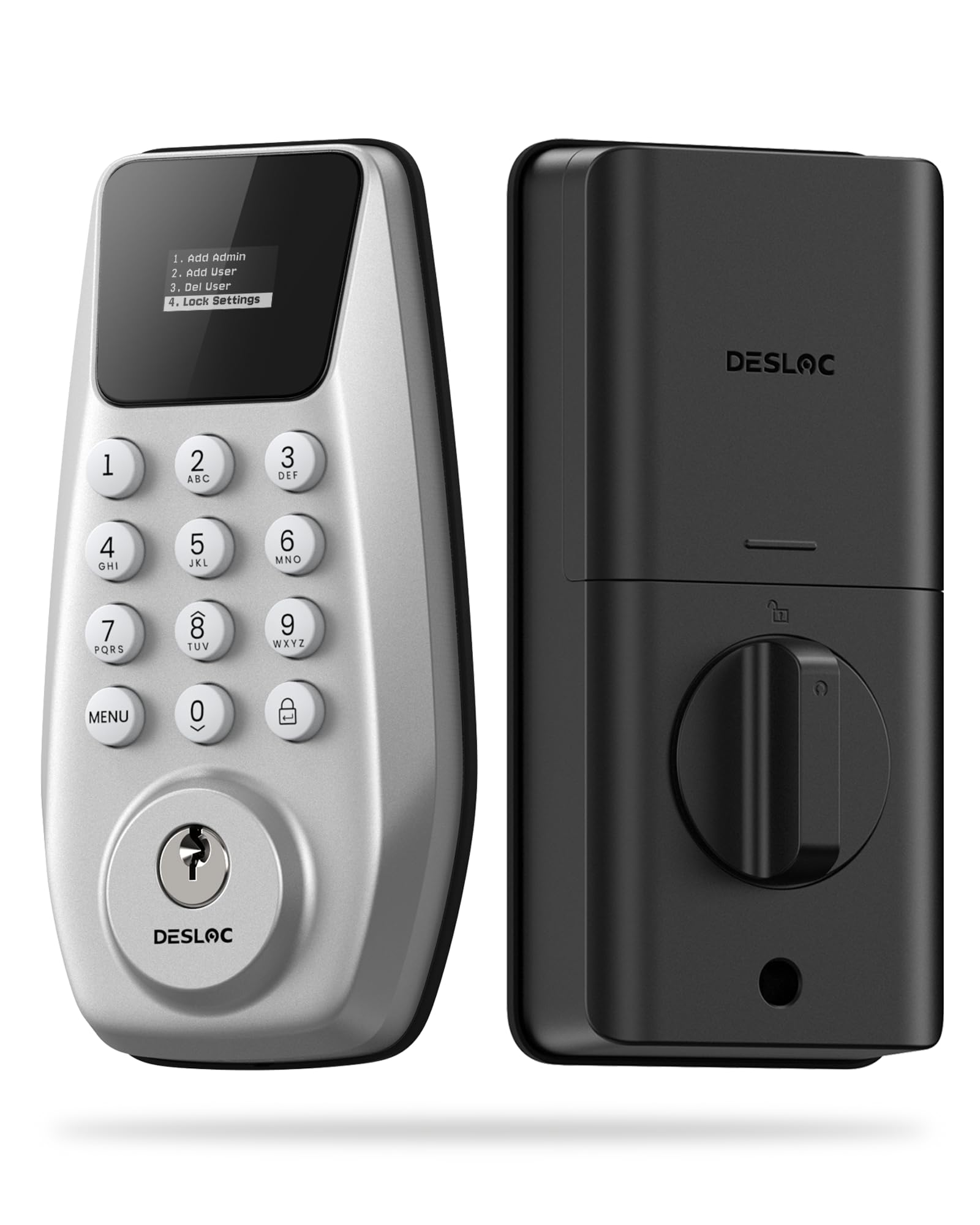
Security Rating: BHMA Grade 3
User Codes: 100 customizable codes
One-Time Codes: 4
Battery Life: 12 months
Weather Rating: IP54
Display: Visual display
Finish: Silver
Installation: Easy, DIY-friendly
The C100 is built around capacity and clarity rather than extras. One hundred customizable user codes is a large allowance for a residential lock, covering a family, a rental turnover, a small office or a tradesperson rotation without anyone sharing a number. Four one-time codes handle the short-term visitor, and auto-lock covers the door that gets pushed shut and forgotten. The visual display is the differentiator: programming happens on the lock itself with prompts on screen rather than through a phone app or a memorized button dance.
The IP54 rating matters for a front door that faces weather. It certifies resistance to dust and to splashing water, which is the realistic exposure for a covered entry rather than a submerged one. Twelve months of battery life keeps servicing to once a year, and the Grade 3 rating keeps the security class level with the TEEHO. The silver finish is the visible compromise in the build — it reads lighter and more utilitarian than the matte black TEEHO.
Trade-off: The lower price shows in the shell and finish rather than the lock mechanism, and the C100 skips anti-peep input and passage mode, so buyers who want those conveniences need to look elsewhere.
Check the DESLOC C100 price on Amazon
TEEHO TK001H vs DESLOC C100 Side by Side
| Feature | TEEHO TK001H | DESLOC C100 |
|---|---|---|
| Security rating | BHMA Grade 3 | BHMA Grade 3 |
| Locking | Auto-lock and one-touch lock | Auto-lock |
| User codes | Not listed as a count; supports one-time codes | 100 customizable |
| One-time codes | Yes | 4 |
| Anti-peep input | Yes | No |
| Passage mode | Yes | No |
| Display | No | Visual display |
| Weather rating | Not listed | IP54 |
| Battery life | Not listed | 12 months |
| Material | Zinc alloy | Not listed |
| Finish | Matte black | Silver |
| Price tier | Mid-range | Budget |
The table makes the split clear. Both locks carry the same BHMA Grade 3 security rating, so the decision is not about which one is meaningfully harder to defeat. Everything that separates them sits in convenience, capacity and build feel.
The TEEHO wins on daily ergonomics. One-touch lock, anti-peep entry and passage mode are the features a household actually touches every week, and the zinc alloy body with matte black finish is the one that looks like it belongs on a front door rather than a back gate. The DESLOC answers with capacity: one hundred codes is far more than most homes need, but it is the right tool for a rental, a shared entry or anyone managing turnover. The visual display also removes the most common frustration with keyless locks, which is programming them blind.
Power and weather favor the DESLOC on paper. A stated twelve-month battery life and an IP54 rating give a buyer something concrete to plan around, while the TEEHO name does not state either figure. That does not mean the TEEHO is weak in service, only that the DESLOC is the one making a promise a buyer can hold it to.
Build and price pull in opposite directions. The TEEHO’s zinc alloy construction justifies its mid-range position; the DESLOC’s budget price buys the same security grade in a lighter shell. Neither is a bad trade, but they suit different buyers.
Which Should You Buy?
Choose the TEEHO TK001H if the lock goes on a primary front door and the household wants the conveniences that make keyless entry feel normal — one-touch locking on the way out, anti-peep entry in public view, and a passage mode for high-traffic days. The zinc alloy body and matte black finish support that role, and the higher price is the cost of the extras.
Choose the DESLOC C100 if budget is the deciding factor or the lock is managing many people. One hundred codes plus four one-time codes suit a rental, a shared entrance or a small business, the visual display makes setup simple, and the stated battery life and IP54 rating give a clear maintenance picture. It is also the better pick for a door where a lighter silver finish is acceptable.
FAQ
-
Is the TEEHO TK001H better than the DESLOC C100?
Neither is better across the board. The TEEHO carries more convenience features and a zinc alloy body; the DESLOC carries more code capacity, a visual display, a stated battery life and a lower price. The right one depends on whether the buyer values daily ergonomics or budget and capacity. -
Do both locks carry the same security rating?
Yes. Both the TEEHO TK001H and the DESLOC C100 are rated BHMA Grade 3, the residential security class. Buyers comparing them should decide on features and build rather than on the rating. -
Which lock is easier to program?
The DESLOC C100 has the edge for first-time setup because its visual display walks through programming on the lock itself. The TEEHO relies on its keypad and one-time code workflow without a screen. -
Can either lock be used on a rental property?
The DESLOC C100 suits rentals well because its one hundred customizable codes can be reassigned between tenants without rekeying hardware. The TEEHO’s one-time codes cover short stays, but its code capacity is not stated as a large number. -
Does the DESLOC C100 handle weather?
It carries an IP54 rating, which covers dust and splashing water — realistic for a covered front entry. The TEEHO does not state a weather rating, so buyers in exposed locations should weigh that gap. -
How often does the DESLOC C100 need new batteries?
The stated battery life is twelve months, which keeps servicing to an annual routine. The TEEHO does not state a battery life figure. -
Which one suits a household with children or frequent guests?
The TEEHO’s one-touch lock and passage mode make it the friendlier daily lock for a busy family. The DESLOC’s large code list is more useful when many different people need their own entry number.
Bottom Line
For a primary front door where the household wants keyless entry to feel effortless, the TEEHO TK001H is the pick: same Grade 3 security as its rival, plus one-touch locking, anti-peep entry, passage mode and a zinc alloy body. The DESLOC C100 remains the smarter buy for rentals, shared entries and tight budgets, where its hundred codes, visual display and stated battery life do more work than the TEEHO’s extras.
