Why there are Amazon links here: Brave Review is paid a commission for qualifying Amazon purchases made through the links below. Your price does not change, and using our links is entirely optional. How this works
Best Ten Year Sealed Battery Alarms for Long-Life, Low-Maintenance Protection
Ten-year sealed battery alarms end the twice-a-year battery swap and the late-night chirp that comes with it. This roundup covers five picks that fit different homes: hardwired houses that want a sealed backup, rentals and apartments that need no-wire installation, and budget buyers replacing a single battery. The overview table below shows each pick’s key spec and best use, so a reader can shortlist in under a minute and then jump to the full review.
Overview of the Picks
| Product | Key Spec | Best Use | Price Tier |
|---|---|---|---|
| First Alert Hardwire Smoke Alarm with 10-Year Battery Backup | Hardwired with sealed backup | Whole-home hardwired replacement | Premium |
| First Alert/BRK Interconnected Hardwired SMI105-AC 6-Pack | Interconnected, 6-pack | New builds and full-home retrofits | Mid-range |
| First Alert 10-Year Battery Combination Smoke & CO Alarm | Battery-only, smoke plus CO | Apartments and rentals | Budget |
| ULTRA LIFE 10-Year Smoke Alarm Battery U9VL-X | Replacement battery only | Refreshing an existing alarm | Budget |
| X-Sense Photoelectric Smoke Alarm SD2J0AX 3-Pack | No-wire, photoelectric, 3-pack | Kitchens and multi-unit coverage | Mid-range |
1. First Alert Hardwire Smoke Alarm with 10-Year Battery Backup

Type: Hardwired smoke alarm
Power Source: AC hardwire with 10-year sealed battery backup
Battery Life: 10 years
Installation: Hardwired
Best For: Homes already wired for alarms
First Alert Hardwire Smoke Alarm with 10-Year Battery Backup
Check the current price on Amazon
This alarm is built for a home that already has alarm wiring in the ceiling. The hardwire connection keeps it running on household power, while the sealed battery takes over during an outage and lasts the full ten-year span. The sealed design means no annual battery swap and no loose battery to lose. It suits homeowners replacing an aging hardwired unit who want the wiring to stay and the maintenance to drop.
The pick earns its place for anyone who wants a single, dependable unit rather than a multi-pack. The trade-off is that it only works where wiring already exists, so a renter or a home without alarm wiring cannot use it without an electrician.
2. First Alert/BRK Brands Interconnected Hardwired SMI105-AC 6-Pack
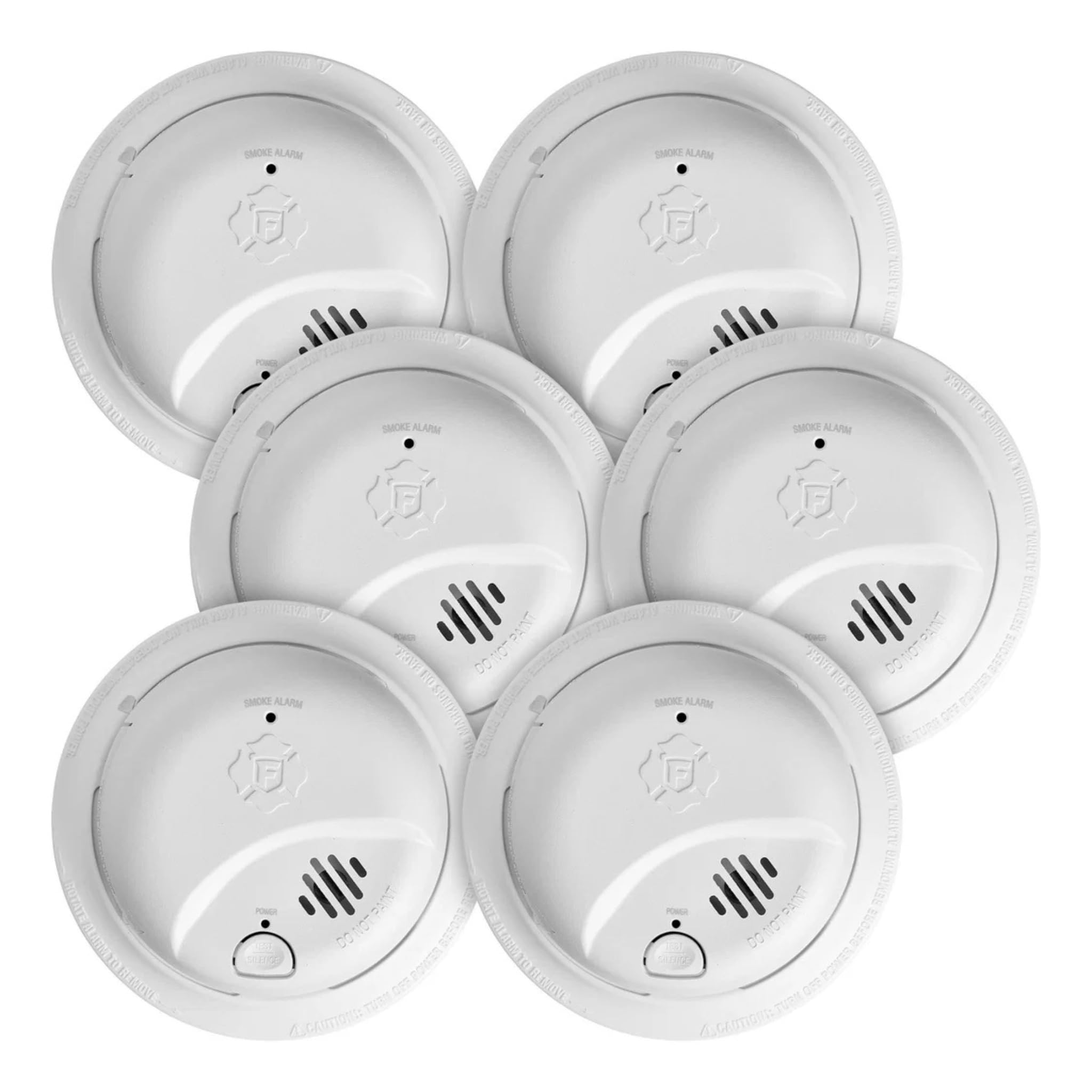
Type: Interconnected hardwired smoke alarm
Power Source: AC hardwire with 10-year battery backup
Battery Life: 10 years
Quantity: 6-pack
Installation: Hardwired, interconnected
Check the current price on Amazon
This six-pack covers a whole house in one order. Interconnected alarms talk to each other, so when one sounds, the rest follow — a real benefit in a larger home where a bedroom alarm might otherwise go unheard. Each unit is hardwired with a sealed ten-year backup, so the set runs as a system rather than a collection of independent alarms. It fits builders, landlords, and homeowners doing a full replacement in one pass.
The pick suits a buyer who needs coverage for several rooms and wants them linked. The trade-off is scale: a six-pack is overkill for a small apartment, and the interconnected wiring has to be in place for the linking to work.
3. First Alert 10-Year Battery Combination Smoke & Carbon Monoxide Alarm

Type: Combination smoke and carbon monoxide alarm
Power Source: 10-year sealed battery
Battery Life: 10 years
Installation: Battery-only, no wiring
Best For: Apartments, rentals, and bedrooms
First Alert 10-Year Battery Combination Smoke & Carbon Monoxide Alarm
Check the current price on Amazon
This unit handles two hazards in one device: smoke and carbon monoxide. The sealed battery runs the full ten years, so there is no wiring to run and no annual battery change. That makes it a natural fit for apartments, rentals, and any room where adding a hardwired alarm is impractical. One device on the ceiling covers both risks, which keeps the installation simple.
It is the most popular pick in this roundup for good reason — it is the easiest path to full protection without an electrician. The trade-off is that a battery-only unit depends entirely on that sealed cell, so the end-of-life signal matters and the whole alarm gets replaced when the battery expires.
4. ULTRA LIFE 10-Year Smoke Alarm Battery U9VL-X

Type: Replacement smoke alarm battery
Battery Life: 10 years
Model: U9VL-X
Intended Use: Powering an existing smoke alarm
Best For: Refreshing a compatible alarm
ULTRA LIFE, 10 year, smoke alarm battery, U9VL-X
Check the current price on Amazon
This is not an alarm — it is the battery that goes inside one. The U9VL-X is a ten-year cell meant to replace the power source in an existing smoke alarm that takes this type. For a household with a compatible alarm that still has life in the sensor, swapping in a long-life battery is far cheaper than a new unit. It suits a buyer who already knows the alarm’s battery type and just needs the power side sorted.
The pick earns its place as the lowest-cost way to extend an alarm already on the ceiling. The trade-off is compatibility: it only fits alarms that accept this cell, and a sealed alarm with a built-in battery cannot use it at all.
5. X-Sense Photoelectric Smoke Alarm SD2J0AX 3-Pack
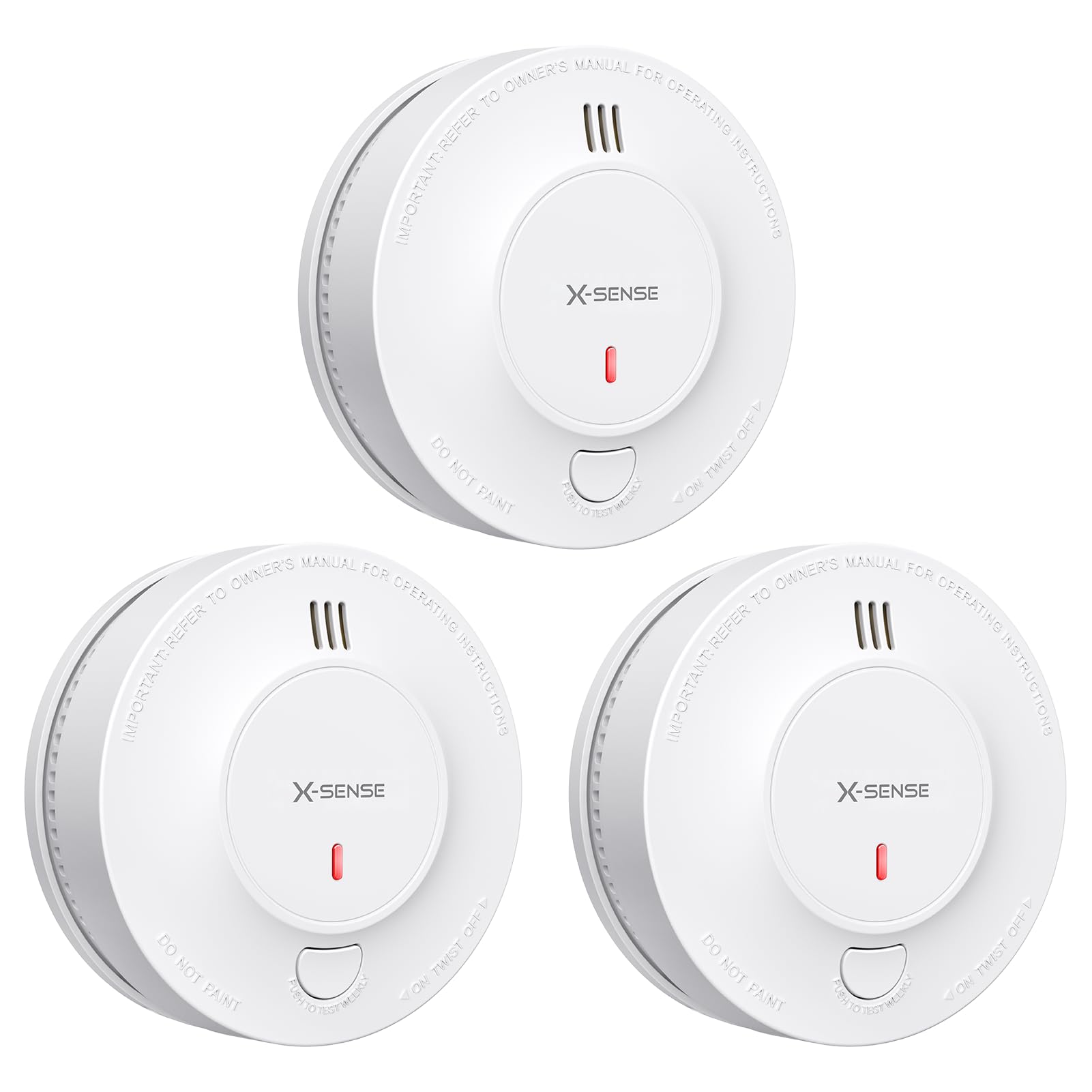
Type: Photoelectric smoke alarm
Power Source: 10-year sealed battery
Battery Life: 10 years
Certification: UL 217
Quantity: 3-pack
Installation: No-wire
Check the current price on Amazon
This three-pack uses photoelectric sensing, which is the type less prone to false alarms from cooking smoke. A one-button hush silences a nuisance alert without pulling the unit down, and a self-test checks the alarm is working. The sealed battery lasts ten years and the no-wire install means no electrician. It suits a kitchen-adjacent install and a buyer covering several rooms at once.
The pick earns its place for households that set off alarms while cooking and want fewer interruptions. The trade-off is that photoelectric sensing is slower on fast-flaming fires than ionization, so a home wanting broad coverage may pair it with another type.
Before You Buy
- Power source: Decide whether the home has alarm wiring. Hardwired picks need existing wiring; battery-only picks install anywhere.
- Battery type: A sealed ten-year battery is built in and replaced with the alarm. A replacement cell like the U9VL-X only fits alarms that accept it.
- Coverage: A single unit suits one room; a multi-pack or interconnected set covers a whole home and links the alarms.
- Sensor type: Photoelectric sensing reduces cooking nuisance alarms; combination units add carbon monoxide coverage.
- Certification: Look for a UL 217 mark on smoke alarms as a baseline safety signal.
- Installation: No-wire units mount without an electrician; hardwired and interconnected units need wiring in place.
- End of life: Sealed-battery alarms signal when the battery expires, and the whole unit is replaced at that point.
Frequently Asked Questions
-
What does a ten-year sealed battery alarm mean?
The battery is built into the alarm and is designed to last the life of the unit, so there is no annual battery change. When the battery reaches end of life, the alarm signals it and the whole device is replaced. -
Can a sealed battery alarm be hardwired?
Yes. Some models run on household power with a sealed battery as backup, so they keep working during an outage without a battery swap. -
Is a battery-only alarm as good as a hardwired one?
A battery-only alarm protects just as well on smoke detection, but it depends entirely on its sealed cell. A hardwired unit with backup has two power sources. -
Does a replacement ten-year battery work in any alarm?
No. A replacement cell only fits alarms that accept that battery type. Sealed alarms with a built-in battery cannot use a replacement cell at all. -
Where should a combination smoke and CO alarm go?
Combination units suit bedrooms and living areas where both hazards matter. A battery-only model installs without wiring, which makes it practical for rentals. -
How many alarms does a home need?
Coverage depends on the home’s size and layout. A multi-pack or interconnected set covers several rooms and links the alarms so one sounds them all.
Bottom Line
For most buyers, the First Alert 10-Year Battery Combination Smoke & Carbon Monoxide Alarm is the top pick: it covers smoke and CO in one device, installs without wiring, and needs no battery changes for a decade. Homeowners with existing wiring should look at the First Alert hardwired model, while a full-home replacement points to the six-pack. Check the current price on Amazon before deciding.