Why there are Amazon links here: Brave Review is paid a commission for qualifying Amazon purchases made through the links below. Your price does not change, and using our links is entirely optional. How this works
Veise KS04 Keypad Door Lock: Keyless Entry Without the Smart-Home Bill
The Veise KS04 keypad door lock is a battery-powered, zinc alloy handle lock built for front doors and bedroom doors that need keyless entry without Wi-Fi, an app, or a hub. It suits renters, landlords, and households that want codes instead of spare keys — and it is a poor fit for anyone who expects remote unlocking from a phone. This review covers the specifications, how each feature works in daily use, where the lock falls short, and who should buy it.
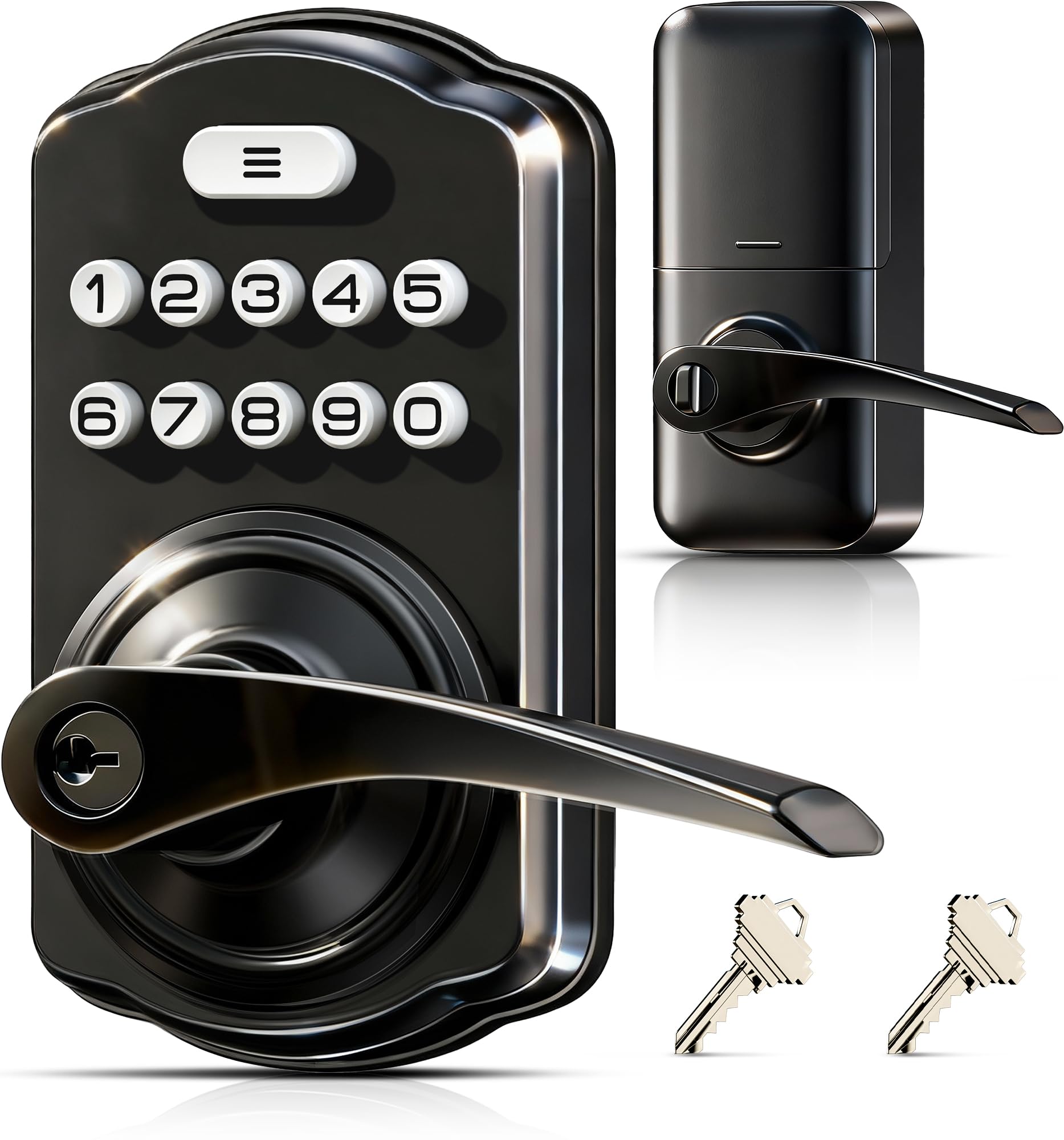
Features and Specifications
Type: Keypad door lock with lever handle
Intended Use: Front door and bedroom door
Access Method: PIN code entry, keyless
Code Capacity: 20 PIN codes, including one-time codes
Convenience Features: Auto lock, passage mode, low battery alert
Material: Zinc alloy handle
Finish: Matte Black
Installation: Easy install, standard door prep
The headline number here is 20 PIN codes. That is a lot for a residential lock at this price, and it changes who the product is for. A household of four might use four codes; the remaining slots let a homeowner issue temporary codes to a dog walker, a cleaner, a contractor, or a visiting relative and then delete them without touching anyone else’s access.
The one-time code feature is the second useful piece. A single-use code lets a delivery driver or a one-off visitor get in once and then stops working, which removes the usual awkwardness of remembering to delete a guest code afterward. Combined with auto lock, the lock is designed around the idea that doors should relock themselves rather than depend on the last person through remembering to do it.
The matte black zinc alloy handle sets the build expectation. Zinc alloy is the standard material for residential handle hardware in this price bracket — heavier and more rigid than plated steel or plastic-bodied handles, and finished to resist the wear that shows up first on high-traffic levers. Matte black hides fingerprints better than polished finishes, which matters on a front door.
Build and Hardware
The KS04 is a mechanical keypad lock, not a smart lock. There is no Wi-Fi radio, no Bluetooth pairing, no app, and no cloud account. Codes are programmed at the keypad itself. For a certain kind of buyer that is the entire appeal: nothing to configure on a phone, nothing to reconnect after a router reboot, and nothing that stops working when the internet does.
The zinc alloy handle carries the daily load. Every push, pull, and turn of a lever wears the finish and the internal mechanism, and a metal handle body holds up better than the coated plastic found on the cheapest keypad locks. The matte black finish is the practical choice for an exterior door because it does not show smudges the way brushed nickel or chrome does.
Installation is pitched as easy, and the category supports that. A keypad handle lock of this type replaces an existing knob or lever set using the same door prep — the two bore holes and the latch cutout already in the door. Buyers replacing an old handle set should expect a screwdriver job rather than a locksmith visit, though anyone cutting a fresh hole in a solid door should still expect to measure carefully.
Trade-off: A keypad-only lock with no app or wireless radio cannot be unlocked remotely, monitored, or given a code from another city, so buyers who want phone control or entry logs need a smart lock instead.
Check the current price on Amazon
Codes, Auto Lock and Passage Mode
Twenty codes is the feature that separates the KS04 from a basic single-code keypad. The practical setup is one permanent code per household member plus a rotating set of temporary codes for help, guests, and services. When a cleaner stops working for the household, that code gets deleted and nobody else’s access changes.
One-time codes handle the short-term case. A code issued for a single entry works once and then expires, which is the right tool for a delivery, a house sitter’s first visit, or a contractor who needs in and out on one day. The alternative — handing over a permanent code and remembering to remove it — is exactly the kind of task that gets forgotten.
Auto lock is the feature that quietly changes household habits. The lock relocks itself after entry rather than waiting for someone to remember, which closes the gap that burglars actually exploit: the door that was left unlocked. Buyers with children or with a habit of leaving for work in a hurry tend to value this more than any other feature on the list.
Passage mode is the counterweight. It disables auto lock so the door can be opened freely without a code — useful during a party, while moving furniture, or in a household where the door is in near-constant use for a stretch of time. The caution is that passage mode is a state the lock stays in until it is turned off, so it needs to be treated as a temporary setting rather than a default.
Low battery alert rounds out the electronics. A keypad lock that dies without warning is a lockout, so the alert is less a convenience than a necessity, and its presence on a budget lock is worth noting.
Power and Maintenance
The lock runs on batteries, as all keypad handle locks of this type do, and the low battery alert is the maintenance signal that matters. The sensible routine is to replace batteries on a schedule the alert prompts rather than waiting for a failure, and to keep a physical key accessible as a backup — the KS04 is a keypad lock with a keyed override, so a dead battery is an inconvenience rather than a lockout.
Maintenance beyond batteries is minimal. The zinc alloy handle and matte finish need only occasional cleaning; abrasive polishes and solvents are the usual way finishes get ruined, and a damp cloth is enough. The keypad surface should be wiped rather than scrubbed, since repeated hard cleaning is what wears the markings on any membrane or button keypad.
There is one habit worth flagging for shared codes. A keypad shows wear on the buttons that get pressed most, and over years of use that pattern can hint at which digits appear in a code. Rotating codes periodically, and using the full 20 slots rather than reusing the same four digits, is the low-effort way to keep the keypad from telling a story.
Trade-off: Battery-powered electronics mean the lock depends on a consumable, and buyers who want zero maintenance should weigh that against the convenience of keyless entry.
Who It Suits and Who It Does Not
The KS04 fits three buyer types well. The first is the household that wants to stop hiding a spare key and stop cutting copies for every new arrival. The second is the landlord or short-term rental host who needs per-person codes and one-time access without installing a subscription smart lock. The third is the privacy-minded buyer who wants keyless convenience with no app, no account, and no device on the network.
It also fits the bedroom-door use case named in the product itself. A keypad lock on an interior door gives privacy and controlled access without a key, and auto lock and passage mode both make sense in that setting.
It is not for buyers who want to unlock the door from a phone, check who came in and when, or issue a code remotely. Those are smart-lock functions, and no amount of keypad programming substitutes for them. It is also not the right pick for anyone unwilling to change batteries or keep a backup key on hand.
FAQ
-
Does the Veise KS04 need Wi-Fi or an app?
No. The KS04 is a standalone keypad lock. Codes are programmed at the keypad, and the lock needs no router, hub, or phone to operate. -
How many codes can the KS04 store?
It stores 20 PIN codes, and the set includes one-time codes for single-use access. -
What is a one-time code used for?
A one-time code grants a single entry and then stops working. It suits deliveries, contractors, and short visits where a permanent code would be excessive. -
What does auto lock do?
Auto lock relocks the door automatically after entry, so the door does not stay unlocked because someone forgot to lock it. -
What is passage mode on a keypad lock?
Passage mode disables auto lock so the door can be opened without a code — useful during parties, moves, or periods of heavy traffic. It stays on until switched off. -
Will the lock warn before the batteries die?
Yes. The KS04 has a low battery alert, which gives notice before the keypad stops responding. -
Can the KS04 be used on a bedroom door?
Yes. The product is intended for front door and bedroom door use, and passage mode and auto lock both work for interior doors. -
Is the handle metal?
The handle is zinc alloy with a matte black finish, which is more rigid than plastic-bodied handles and hides fingerprints well. -
How hard is installation?
The lock is designed for easy install and replaces an existing handle set using standard door prep. A fresh installation in a door with no existing bore holes is a more careful measuring job. -
Is a backup key included?
The KS04 is a keypad lock with a keyed override, so a physical key provides access if the electronics or batteries fail.
Bottom Line
The Veise KS04 keypad door lock is the right buy for anyone who wants keyless entry, 20 programmable codes, one-time access, and auto lock without paying for a smart lock or handing over a Wi-Fi password. The zinc alloy handle and matte black finish hold up to daily front-door use, and the absence of an app is a feature for buyers who want the door to work when the internet does not. Buyers who need remote unlocking or entry history should look at a connected smart lock instead.