Why there are Amazon links here: Brave Review is paid a commission for qualifying Amazon purchases made through the links below. Your price does not change, and using our links is entirely optional. How this works
Veise VE012W-B Smart Wi-Fi Deadbolt Lock with Handle Set: The No-Hub Front Door Upgrade
The Veise VE012W-B is a smart deadbolt and handle set aimed at homeowners who want fingerprint entry, app control, and voice commands without adding a hub to the setup. This review breaks down what the lock’s name actually promises — Wi-Fi, fingerprint, two levers, auto lock, IP55 weather resistance, a backlit keypad — and where the package falls short. Buyers deciding whether this is the right front-door lock for their household should read the specification section first, then the trade-offs.
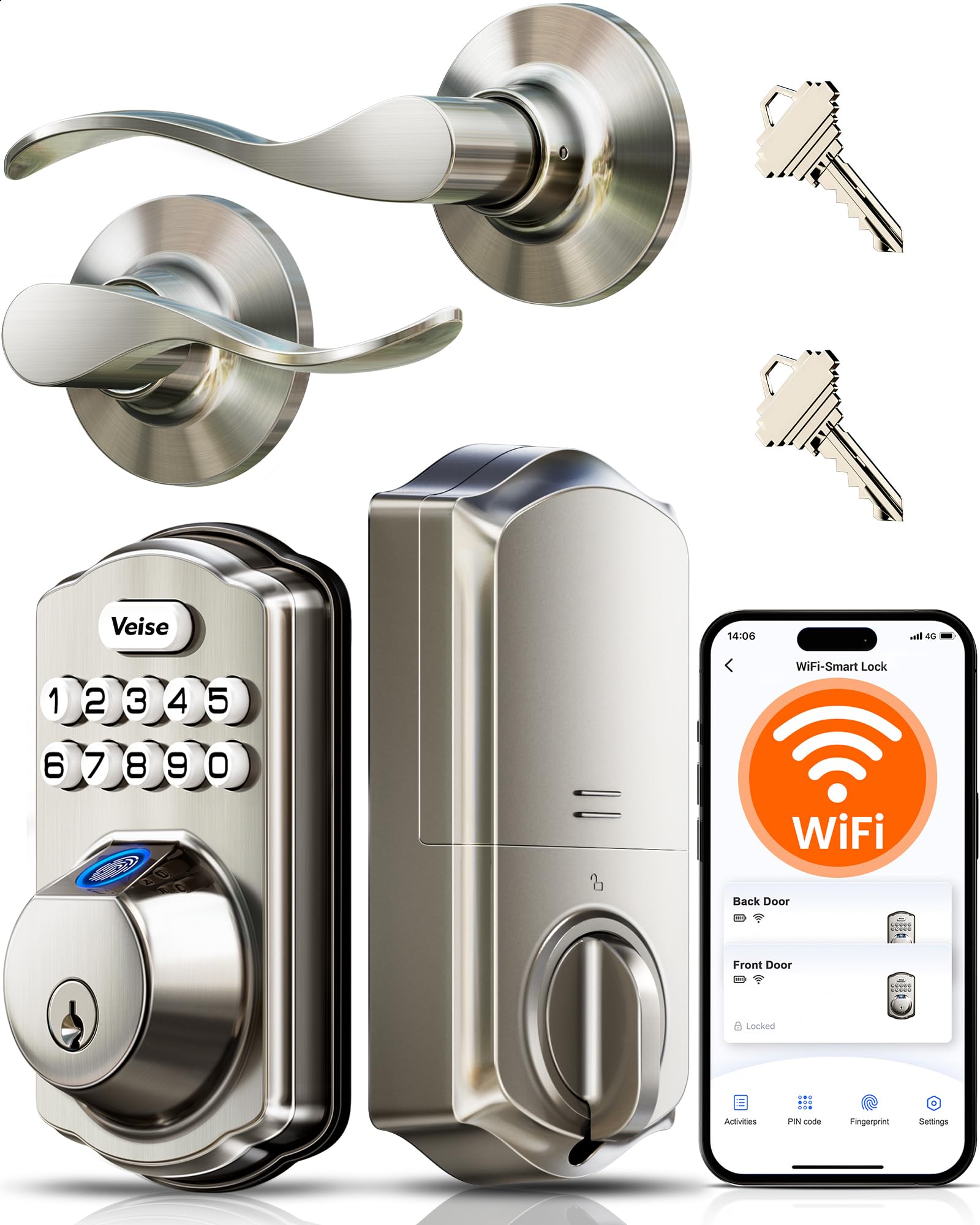
Features and Specifications
Type: Smart Wi-Fi deadbolt with integrated handle set
Connectivity: Wi-Fi, no hub required
Entry Methods: Fingerprint, backlit keypad, app, remote, physical key
Handle Set: Two levers included
Locking: Auto lock function
Weather Rating: IP55 waterproof
Finish: Satin Nickel
Intended Use: Front door
The headline feature here is the "no hub needed" claim. Most smart locks at this level either require a separate bridge to reach Wi-Fi or lean on a Bluetooth-only connection that stops working once the homeowner leaves the driveway. A lock that talks directly to the router removes a piece of hardware, an extra power outlet, and one more app to manage — a real simplification for a front door that the whole household uses.
The second notable element is the handle set. Many smart deadbolts are sold as the bolt alone, which leaves the existing handle and its finish mismatched. Pairing two levers with the deadbolt in a single satin nickel finish gives the door a coherent look and spares the buyer a separate hardware purchase.
A backlit keypad rounds out the entry options for anyone who does not want to rely on a phone or a fingerprint. The IP55 rating is the figure to note for an exterior door: it indicates protection against dust ingress and water jets, which is the relevant standard for a lock exposed to rain and hose-down, though it is not a claim of full submersion resistance.
Build and Hardware
The satin nickel finish is the practical choice for a front door. It hides fingerprints better than polished finishes and resists the visible tarnishing that plated brass can develop in coastal or humid climates. A deadbolt and handle set that share a finish also means the door reads as one piece of hardware rather than a bolt bolted onto an older handle.
Two levers in the box is a detail worth pausing on. It suggests the set is designed for a door where both sides of the hardware are being replaced at once, which is the right way to install matching finish anyway. Buyers replacing only the deadbolt and keeping an existing handle should confirm the lever style and backset will line up with the door’s existing prep before ordering.
The physical key override is the quiet safety net in this package. Any smart lock that depends entirely on electronics carries a risk when the battery dies or the Wi-Fi drops, and a keyed cylinder gives the household a way in that does not depend on either. That cylinder is also the part most worth checking for quality on delivery, since it is the component a locksmith would be called to service.
Trade-off: The all-in-one deadbolt-and-handle package is convenient, but it locks the buyer into Veise’s lever styling and finish across the whole door rather than letting an existing handle set stay in place.
Check the current price on Amazon
Entry Methods and Access Control
Fingerprint entry is the feature that changes daily use most. For a household with children, older relatives, or anyone who routinely has their hands full at the door, a fingerprint reader removes the need to dig for a key or thumb a code in the rain. It also avoids the weak-point of keypad-only locks: shared codes that get passed around and never changed.
The backlit keypad matters more than it first appears. A keypad that is not illuminated is nearly useless after dark, and a front door is exactly where people arrive after sunset. Backlighting turns a code entry from a fumble into a two-second action, and it is one of those features buyers only notice when it is missing.
App and remote control extend the lock beyond the doorstep. The useful application is not gimmickry but guest and contractor access — letting someone in remotely, or issuing a temporary code, without cutting a physical key. Voice control through a smart speaker fits the same pattern: handy for checking lock status from inside the house, less essential than fingerprint entry for the actual job of getting through the door.
Auto lock is the feature that quietly improves security more than any other. A door that relocks itself after closing removes the single most common homeowner failure — forgetting to lock up. The setting is worth configuring deliberately on installation rather than leaving at whatever default the app applies, since the delay window needs to suit how the household actually moves through the door.
Trade-off: A fingerprint reader and backlit keypad add convenience, but they also add electronics at the most weather-exposed point of the door, so buyers in extreme climates should weigh long-term reliability against the feature set.
Power, Connectivity, and Maintenance
Wi-Fi without a hub is the defining convenience of this lock, but it also means the lock’s radio is doing more work than a Bluetooth-only unit. That has a direct bearing on battery life: direct Wi-Fi connections draw more power than a low-energy bridge setup, so the batteries will need replacing more often than on a simpler lock. Keeping spare batteries on hand and watching the app’s low-battery warning is the practical routine.
The IP55 rating sets the maintenance expectations. Dust and water jets are covered, which suits a covered porch or an exposed front door in most climates. It does not mean the lock should be hosed down directly or left in standing water, and buyers in salt-air coastal locations should expect the satin nickel finish to need occasional cleaning to stay looking new.
Maintenance itself is minimal by design. There is no hub to reboot, no bridge to keep powered, and no separate app for a bridge. The tasks that remain are the ordinary ones: fresh batteries, a wipe of the keypad and fingerprint sensor, and a periodic check that the deadbolt throws freely in the door frame. A stiff bolt is a door-alignment problem, not a lock problem, and addressing it early prevents motor strain.
The app is the one part of the system that lives outside the hardware, and it is worth setting up fully on day one — naming users, assigning fingerprints, and configuring auto lock — rather than leaving defaults in place. A smart lock that is half-configured behaves like a dumb lock with extra steps.
Trade-off: Direct Wi-Fi convenience comes at the cost of more frequent battery changes than a hub-based or Bluetooth-only lock would demand.
Who It Suits and Who It Does Not
This lock suits a household that wants fingerprint entry as the primary way in, a backlit keypad as backup, and app access for guests — all without buying a hub. It also suits a buyer replacing the whole front-door hardware set in one go and wanting a matched satin nickel finish.
It is not the right pick for a renter who cannot swap the handle set, or for a buyer who wants the absolute longest battery intervals and is willing to accept a hub to get them. Nor is it aimed at anyone who wants a bare deadbolt to pair with existing hardware.
FAQ
-
Does the Veise VE012W-B need a hub or bridge?
No. The lock connects directly over Wi-Fi, which is the central selling point of this model — no separate bridge device and no extra app for one. -
Can the door still be opened if the battery dies?
The lock includes a physical key override, so a dead battery or a Wi-Fi outage does not lock the household out. -
What does IP55 mean for a front door lock?
It indicates protection against dust ingress and water jets, which covers rain and typical exterior exposure. It is not a rating for full submersion. -
How many entry methods does the lock offer?
Fingerprint, backlit keypad, app, remote, and a physical key — five routes in, which is more than most locks at this level provide. -
Does it work with voice assistants?
The product name lists voice control alongside app and remote control, so it is designed to work with a smart speaker setup in the home. -
Is the handle set included?
Yes. Two levers ship with the deadbolt, which is why the package is described as a handle set rather than a deadbolt alone. -
Will the satin nickel finish match existing door hardware?
Satin nickel is a common finish and generally blends well, but buyers keeping an existing handle should confirm the lever style matches before ordering. -
Does the lock relock itself?
Yes. Auto lock is built in, and the delay window can be configured in the app so the door relocks after closing. -
Is this lock suitable for a rental property?
Only with landlord approval. Replacing the full handle set is a permanent hardware change, and renters usually need permission first. -
How often will the batteries need changing?
More often than on a hub-based or Bluetooth-only lock, because the direct Wi-Fi radio draws more power. The app’s low-battery alert is the signal to swap them.
Bottom Line
The Veise VE012W-B Smart Wi-Fi Deadbolt Lock with Handle Set earns its place on a front door by combining fingerprint entry, a backlit keypad, app and voice control, and auto lock into one no-hub package with a matched satin nickel handle set. The trade-offs are real — more frequent battery changes than a hub-based lock, and a hardware package that replaces the whole door’s furniture — but for a household that wants keyless convenience without extra bridge hardware, it is a coherent, complete front-door upgrade.