Why there are Amazon links here: Brave Review is paid a commission for qualifying Amazon purchases made through the links below. Your price does not change, and using our links is entirely optional. How this works
Veise VE012W Smart Lock Review: Keyless Entry for the Front Door on a Budget
The Veise VE012W is a WiFi fingerprint deadbolt aimed at the buyer who wants keyless entry and app control on a front door without paying flagship prices. It covers the essentials: fingerprint unlock, a keypad, built-in WiFi for remote access, and voice control through Alexa and Google. This review walks through the specifications, what each one means in daily use, and where the budget build shows its limits.
Features and Specifications
Type: WiFi fingerprint smart lock (keypad deadbolt)
Connectivity: Built-in WiFi (no hub named in the product name)
Voice Assistants: Alexa and Google compatible
Entry Methods: Fingerprint, keypad code, app remote
Alerts: Real-time notifications, low battery alarm
Finish: Matte Black
Intended Use: Front door
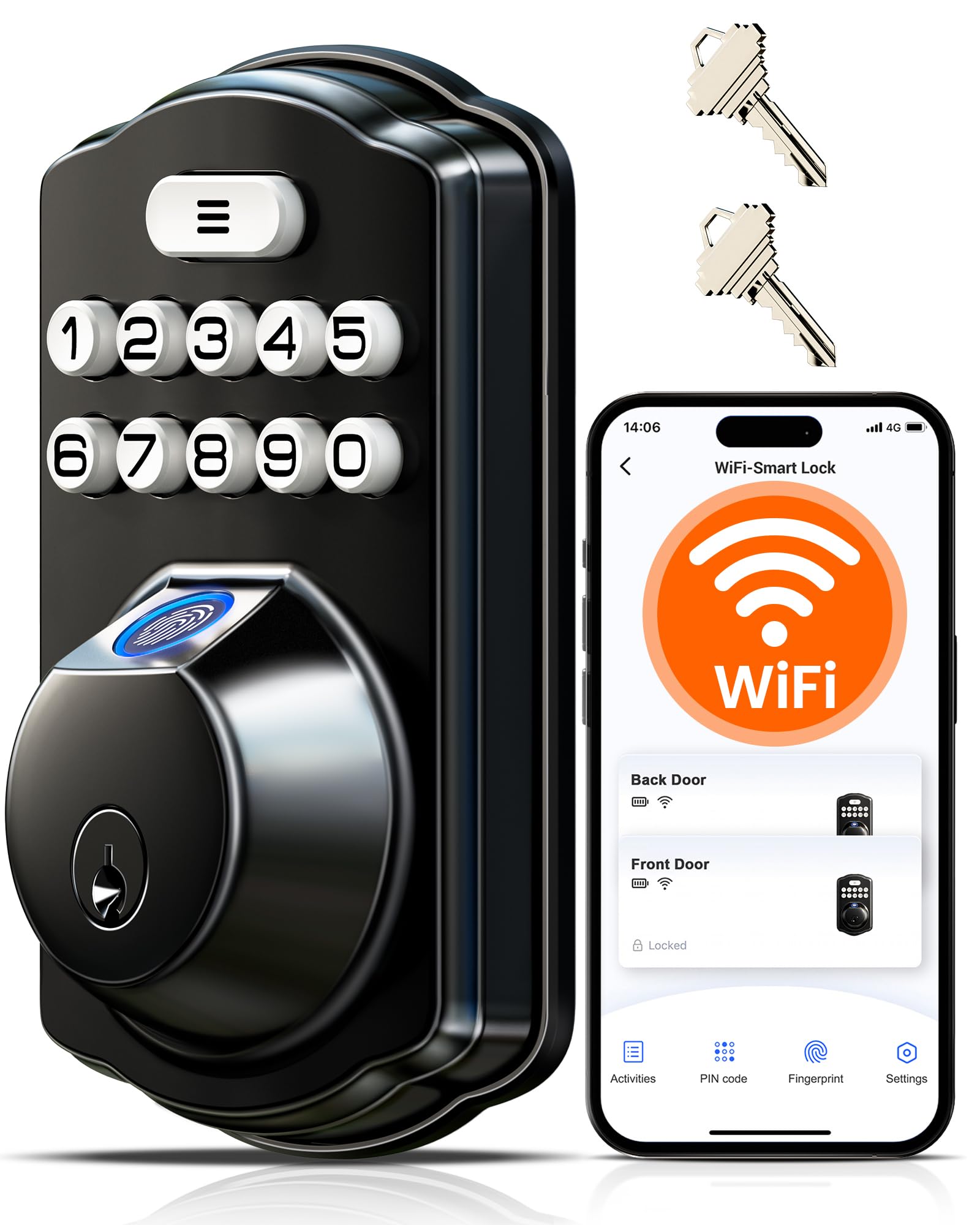
The headline here is built-in WiFi. Many locks in this price bracket need a separate bridge or hub to reach the internet, and the VE012W does not — the radio is inside the lock, so remote unlock and push alerts work as soon as the lock is paired to the Veise app and the home network. That single decision removes one purchase and one point of failure from the setup.
The fingerprint reader and keypad sit alongside app control, so the lock covers three everyday scenarios: a finger for the person who lives there, a code for a guest or a dog walker, and the app for letting someone in from another city. The matte black finish is a deliberate style choice rather than a neutral one, and it suits dark hardware, modern doors and painted trim better than it suits bright brass or satin nickel schemes.
Trade-off: At this price the lock is a value-first build, so buyers should expect a plastic-heavy interior and a fingerprint sensor that favors convenience over the instant, first-try accuracy of premium readers.
Check the current price on Amazon
How the VE012W Is Built
The exterior is a keypad deadbolt with a fingerprint sensor integrated into the housing, finished in matte black. The interior half holds the batteries, the motor that throws the bolt, and the WiFi radio. Because the radio lives inside the lock rather than in a separate bridge, the interior piece is a little bulkier than a plain electronic deadbolt — worth checking against the door’s interior trim and the swing of the door before ordering.
The deadbolt format matters for fit. This is a replacement for a standard deadbolt, not a handle-set lock, so it drops into the same cutout a conventional deadbolt uses. Buyers replacing an existing deadbolt on a standard-prepared door are in the simplest position; buyers with an unusual door prep, a metal frame or a narrow stile should confirm compatibility before buying.
The matte black finish is the kind that shows fingerprints and dust more than lighter finishes, particularly around the keypad. It is a cosmetic issue rather than a functional one, but it is the sort of thing that annoys some owners within the first month.
Power, Connectivity and Maintenance
The lock runs on batteries, and the low battery alarm is the feature that makes that arrangement tolerable. A smart lock that dies without warning locks the owner out or leaves the door unsecured, so an alarm that fires early enough to swap cells is not a luxury — it is the difference between a convenient lock and a liability. Buyers should treat the alarm as a prompt, not a countdown, and keep spare batteries on hand.
Built-in WiFi is the feature that separates this lock from cheaper hub-dependent models. It means the lock talks to the router directly, so real-time alerts arrive without a bridge in the middle and Alexa and Google routines can include the lock without extra hardware. The trade-off of an always-connected lock is battery drain: WiFi radios are thirsty, and a lock that streams alerts will go through cells faster than a Bluetooth-only deadbolt.
Maintenance is minimal beyond batteries. The keypad and fingerprint sensor benefit from an occasional wipe, and the finish benefits from not being scrubbed with anything abrasive. The app is where codes and fingerprints get managed, so the lock’s usefulness is tied to the quality of that app over time — a reasonable concern for any budget smart-home brand.
Fingerprint and Keypad Entry
The fingerprint reader is the feature most buyers will use daily, and it is the one where expectations need calibrating. On a lock at this price, the sensor is typically a capacitive reader that works well with clean, dry, well-placed fingers and struggles with wet hands, gloves or a hurried press. Enrolling the same finger twice, from slightly different angles, is the standard trick for improving reliability.
The keypad covers the cases the fingerprint reader cannot: a visitor without an enrolled finger, a contractor who needs temporary access, or a family member whose finger will not register on a cold morning. Codes are managed in the app, which is also where temporary or one-time access gets set up.
The caution with any keypad is the same one that applies to all code-based entry: shared codes spread, and a code that is not rotated is a key that never gets changed. The app makes rotation easy, and buyers should actually use that.
Trade-off: The fingerprint sensor is the weakest link in daily use — reliable enough for most fingers on most days, but not the match-on-first-try experience of a premium reader.
App Control and Smart Home Integration
The Veise app is the control center: remote unlock, code management, fingerprint enrollment, alert history and battery status. Remote unlock is the feature that justifies WiFi for many buyers — letting a guest in, or checking that the door is locked, without being home.
Alexa and Google compatibility extends that control to voice, so a routine or a spoken command can handle the lock alongside lights and thermostats. Voice control of a lock is convenient but should be treated with the same caution as any smart-home access point: account security matters, and a shared voice assistant account is a shared key.
Real-time alerts are the quiet workhorse. A notification when the door unlocks is useful for parents, for rentals, and for anyone who wants to know when the housekeeper or the dog walker arrives. The value of the alerts depends on the phone’s notification settings, so buyers should confirm the app is allowed to push through battery-saving restrictions.
Who the VE012W Suits — and Who It Does Not
This lock suits the buyer who wants keyless entry, app control and voice integration on a front door without spending flagship money. It fits a standard deadbolt prep, a home with decent WiFi at the door, and a household that will actually use the app to manage codes and fingerprints.
It does not suit buyers who need a certified, insurance-grade lock, who want a fingerprint reader that works every time with wet or gloved hands, or who have an unusual door prep that needs confirming first. Buyers who want premium materials and a metal interior should look higher up the range.
Trade-off: The budget price buys capability rather than polish — the feature list is complete, but the materials, sensor and app refinement are where the savings show.
See the Veise VE012W on Amazon
FAQ
-
Does the Veise VE012W need a hub or bridge?
No. The product name specifies built-in WiFi, so the lock connects to the home network directly. Alexa and Google control work without a separate bridge. -
Can the VE012W be used without WiFi?
The lock’s core functions — fingerprint and keypad entry — do not depend on WiFi. Remote app access, real-time alerts and voice control do, so a WiFi outage narrows the lock to local entry until the network returns. -
How many ways are there to unlock the VE012W?
The product name lists fingerprint, keypad code and app remote entry. A physical key backup is standard for deadbolt-format locks, and buyers should confirm the keyed override in the listing before relying on it. -
Does the VE012W work with Alexa and Google?
Yes. The product name lists Alexa and Google compatibility, so the lock can be included in voice routines alongside other smart-home devices. -
What happens when the batteries run low?
The lock carries a low battery alarm, which notifies the owner before the cells die. Buyers should replace batteries promptly when the alarm fires rather than waiting for the lock to fail. -
Will the VE012W fit an existing deadbolt hole?
It is a keypad deadbolt, so it is designed to replace a standard deadbolt in the same prep. Doors with unusual preps, metal frames or narrow stiles should be checked against the listing’s compatibility details before ordering. -
Is the matte black finish durable outdoors?
Matte black is a popular exterior finish, but it shows dust and fingerprints more than lighter finishes. An occasional wipe keeps it looking sharp; abrasive cleaners should be avoided. -
Can temporary codes be created for guests?
Code management happens in the Veise app, which is where temporary and shared access is set up. Buyers should rotate guest codes after the visit rather than leaving them active. -
Does the lock send alerts when the door is unlocked?
Yes. Real-time alerts are part of the feature set, and they arrive through the app. Phone battery-saving settings should allow the app to push notifications. -
Is the VE012W a good fit for a rental property?
The combination of keypad codes, remote unlock and real-time alerts suits rental and short-stay use well. The budget build and app dependency are the considerations for a host managing multiple doors.
Bottom Line
The Veise VE012W is the smart lock for the buyer who wants the full feature list — fingerprint, keypad, WiFi, voice control and alerts — on a front door without paying flagship prices. Built-in WiFi is the standout decision, since it removes the hub that many budget locks require, and the matte black finish gives it a modern look. The trade-off is honest: the fingerprint sensor and interior materials are value-grade, so buyers who need first-try-every-time reliability or premium hardware should spend more. For everyone else, it is a sensible, capable starting point.
