Why there are Amazon links here: Brave Review is paid a commission for qualifying Amazon purchases made through the links below. Your price does not change, and using our links is entirely optional. How this works
WALIDummy Solar Fake Camera: A Deterrent That Never Blinks
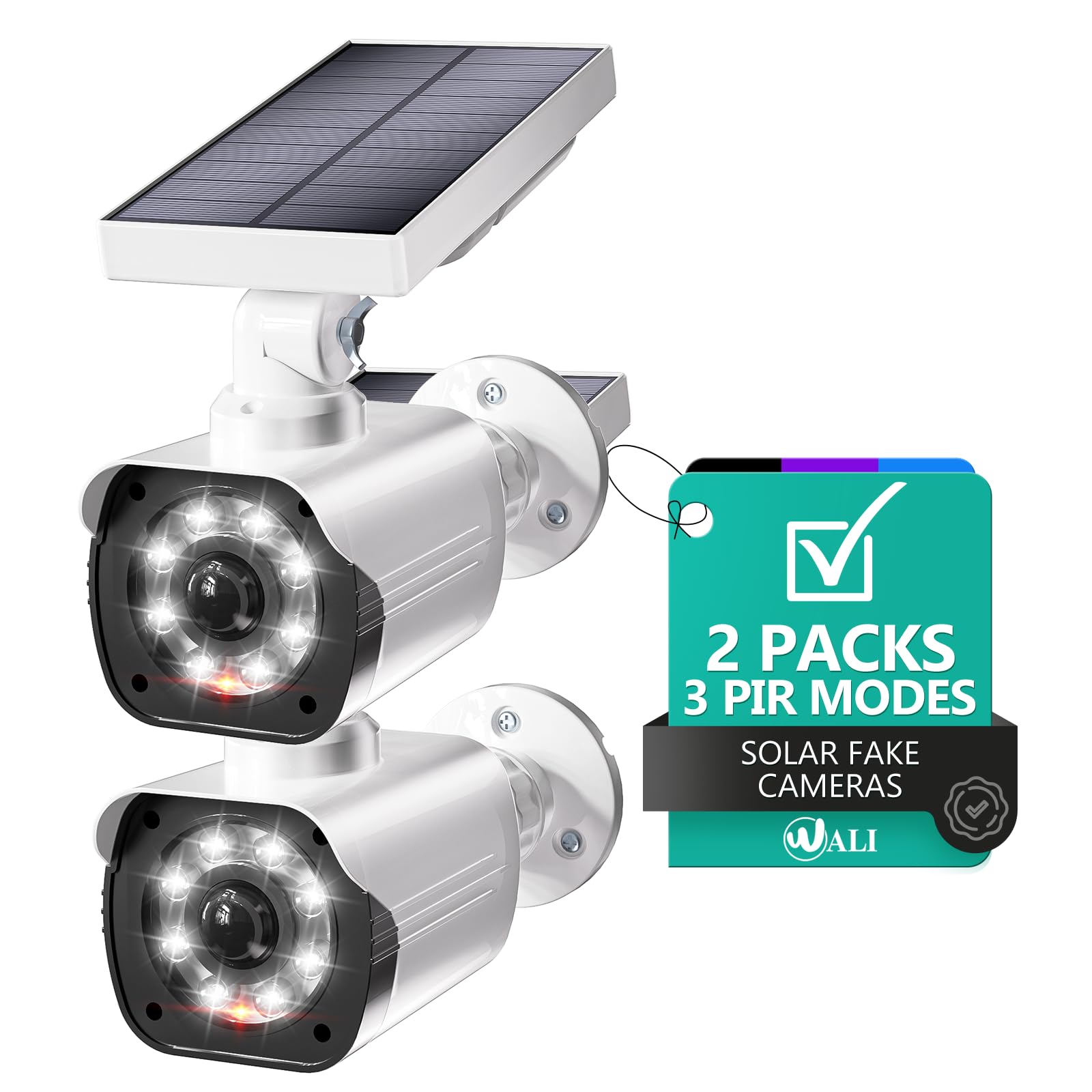
The WALIDummy solar fake camera is a two-pack of simulated security cameras built to look convincing on a wall, fence, or eave without wiring, batteries, or a monthly bill. It suits homeowners and renters who want a visible deterrent over a driveway, back door, or shed at a budget price. This review covers what the cameras are made for, how the solar panel and motion floodlight fit together, and where a dummy unit stops being enough. The next step is a quick check of the current price through the link below.
Features and Specifications
Product Type: Simulated (dummy) security camera, 2-pack
Intended Use: Outdoor, wall or eave mounting
Power Source: Solar panel with simulated wireless operation
Housing: White weatherproof body
Notable Extras: Motion sensor floodlight and warning sticker included
Look: Realistic dome-and-arm styling sized to read as a live camera
The core idea here is appearance. A dummy camera only works if a passing stranger glances up and decides the house is watched, so the body, the lens housing, and the mounting arm all need to look like the real thing from street level. WALIDummy leans on a larger solar panel than many fake units carry, which does two jobs: it sells the "wireless, self-powered" look and it gives the housing a wider, more industrial silhouette.
The floodlight and motion sensor are the second layer. A camera that appears to react when someone walks past is far more persuasive than a static box, and the light itself adds a practical deterrent after dark. The included warning sticker completes the picture, since signage is the cheapest deterrent of all and pairs naturally with a visible unit.
Build and Appearance
The housing is white, weatherproof, and shaped to mimic a wireless outdoor cam with a separate solar panel on top. White is the right call for most homes: it blends against fascia, soffit, and light siding, and it photographs as a genuine consumer security product rather than a prop. The simulated wireless design means there is no cable to run, which is the entire practical appeal of a dummy unit.
Buyers should expect plastic construction at this price tier, and plastic ages in direct sun. A unit mounted under an eave or on a north-facing wall will hold its look far longer than one baking on an exposed south-facing fence. The realistic look is a street-level effect, not a close-up one — anyone within arm’s reach will spot the seams and the absence of a real lens.
Power and the Motion Floodlight
The solar panel is the headline feature, and it is larger than the token panels on many fake cameras. That matters because the panel has to run the motion sensor and the floodlight, not just sit there looking authentic. A bigger panel gathers more light through the day, which keeps the light responsive on overcast mornings and short winter afternoons.
There is a limit worth naming plainly. A simulated camera has no battery bank to speak of compared with a real solar cam, so the floodlight is a deterrent light, not a security floodlight. It is bright enough to startle and to signal that something reacted, and it is not a substitute for a proper motion floodlight over a dark side yard.
Mounting and Maintenance
Mounting is a screw-and-bracket job on the wall, fence, or eave. Because there is no wiring, installation is a short DIY task rather than an electrician’s visit, and the pair can be split across two sides of a house. The panel needs a spot with reasonable daylight, which is the one placement constraint that should drive where the units go.
Maintenance is minimal but not zero. Dust, pollen, and bird droppings cut solar output, so the panel face needs an occasional wipe, and the floodlight lens benefits from the same treatment. In heavy snow or leaf-fall seasons, a quick check that the panel is clear keeps the motion light working.
The Trade-off
Trade-off: A dummy camera deters the casual opportunist and does nothing against someone who looks closely or has already decided to risk it, so it belongs alongside real security measures, not instead of them.
Who It Suits and Who It Does Not
This 2-pack fits renters who cannot drill for wired cameras, homeowners covering a shed or side gate where a full camera system is overkill, and anyone who wants a visible layer of deterrence for very little money. It also suits households that already have real cameras and want to extend the appearance of coverage to a second entrance. Two units for a budget outlay is the value proposition, and the larger solar panel and motion light are what separate it from the plain plastic shells sold in the same aisle.
It is not for anyone who needs evidence. There is no recording, no app, no footage, and no night vision — a dummy camera cannot identify a face or a plate. It is also a poor fit for a buyer who wants a genuinely bright security floodlight, or for an exposed location where plastic will take years of direct sun and weather. Those buyers should look at a real solar security camera instead.
FAQ
-
Is the WALIDummy solar fake camera actually a working camera?
No. It is a simulated camera — a realistic-looking shell with a solar panel and a motion-triggered floodlight. It does not record video, connect to Wi-Fi, or send alerts. -
Does the solar panel do anything on a fake camera?
Yes. The panel powers the motion sensor and the floodlight, which is why the unit appears to react when someone walks past. A larger panel keeps that response working through cloudy stretches. -
How many cameras come in the pack?
Two. The product is sold as a 2-pack, so the pair can cover two sides of a house, a front door and a back gate, or one home and one outbuilding. -
Is it weatherproof enough for rain and snow?
The housing is described as weatherproof and built for outdoor mounting. As with any plastic outdoor unit, sheltered spots under an eave last longer than fully exposed walls. -
Does it need wiring or batteries?
No wiring is required, and the design is self-contained with the solar panel on top. That is the main reason buyers choose a dummy unit over a real camera. -
Will the motion floodlight light up a dark driveway?
It lights up enough to signal that something reacted, which is the deterrent job. It is not a substitute for a proper security floodlight over a large dark area. -
Does it come with a warning sign?
Yes, a warning sticker is included. Pairing the sticker with a visible camera is the most effective way to use a dummy unit. -
Can it be mounted on a fence or shed?
Yes. The bracket suits walls, fences, and eaves, and because there is no cable, placement is limited mainly by access to daylight for the panel. -
Is a fake camera legal to use?
Visible dummy cameras are widely used as deterrents and are generally lawful on private property. Local rules vary, so check any HOA or rental agreement before mounting. -
Who should not buy this?
Anyone who needs footage, alerts, or identification. A dummy camera is a visual deterrent only; buyers who need evidence should choose a real solar security camera.
Bottom Line
The WALIDummy solar fake camera 2-pack is the right buy for a household that wants a convincing, self-powered-looking deterrent over two outdoor spots without spending on wiring or a subscription. The larger solar panel and motion floodlight do the persuading, the white weatherproof housing blends with most exteriors, and the pair covers more ground than a single unit. It will not record a thing, so it works best as one layer beside real locks, lighting, and — where it matters — an actual camera. Buyers ready to add that layer can check the current price on Amazon.
