Why there are Amazon links here: Brave Review is paid a commission for qualifying Amazon purchases made through the links below. Your price does not change, and using our links is entirely optional. How this works
Best Whole House Backup Considerations for Power Outages and Storms
Whole house backup is a decision about fuel, capacity and installation as much as it is about a box on a shelf. This guide covers five systems that span the range: battery-based solar generators that plug into a transfer setup and automatic gas generators that start themselves. It suits homeowners who want to keep a few critical circuits alive, buyers building toward whole-home coverage, and anyone weighing a portable battery against a permanently installed generator. The overview table below puts every pick side by side so the choice can be made in under a minute.
Overview of the Picks
| Product | Key Spec | Best Use | Price Tier |
|---|---|---|---|
| GROWATT HELIOS 3600 Home Battery Backup Combo | 7200W AC output, LFP, expandable to 36kWh | Expandable battery backup with a double voltage hub | Premium |
| Generac 10kW Whole Home Generator | 16-circuit transfer switch, cellular capability | Budget automatic gas backup | Mid-range |
| Generac Guardian 14kW Home Generator | Natural gas or propane, WiFi monitoring | Larger automatic gas backup with remote monitoring | Premium |
| OSCAL PowerMax 6000 Solar Generator | 6000W split phase, 9000W peak, 3 solar panels | Portable split-phase power with solar charging | Mid-range |
| EF ECOFLOW DELTA Pro 3 with 2 Extra Batteries | 12kWh expandable to 48kWh, 4000W AC output | Maximum battery capacity for long outages | Premium |
GROWATT HELIOS 3600 Home Battery Backup Combo
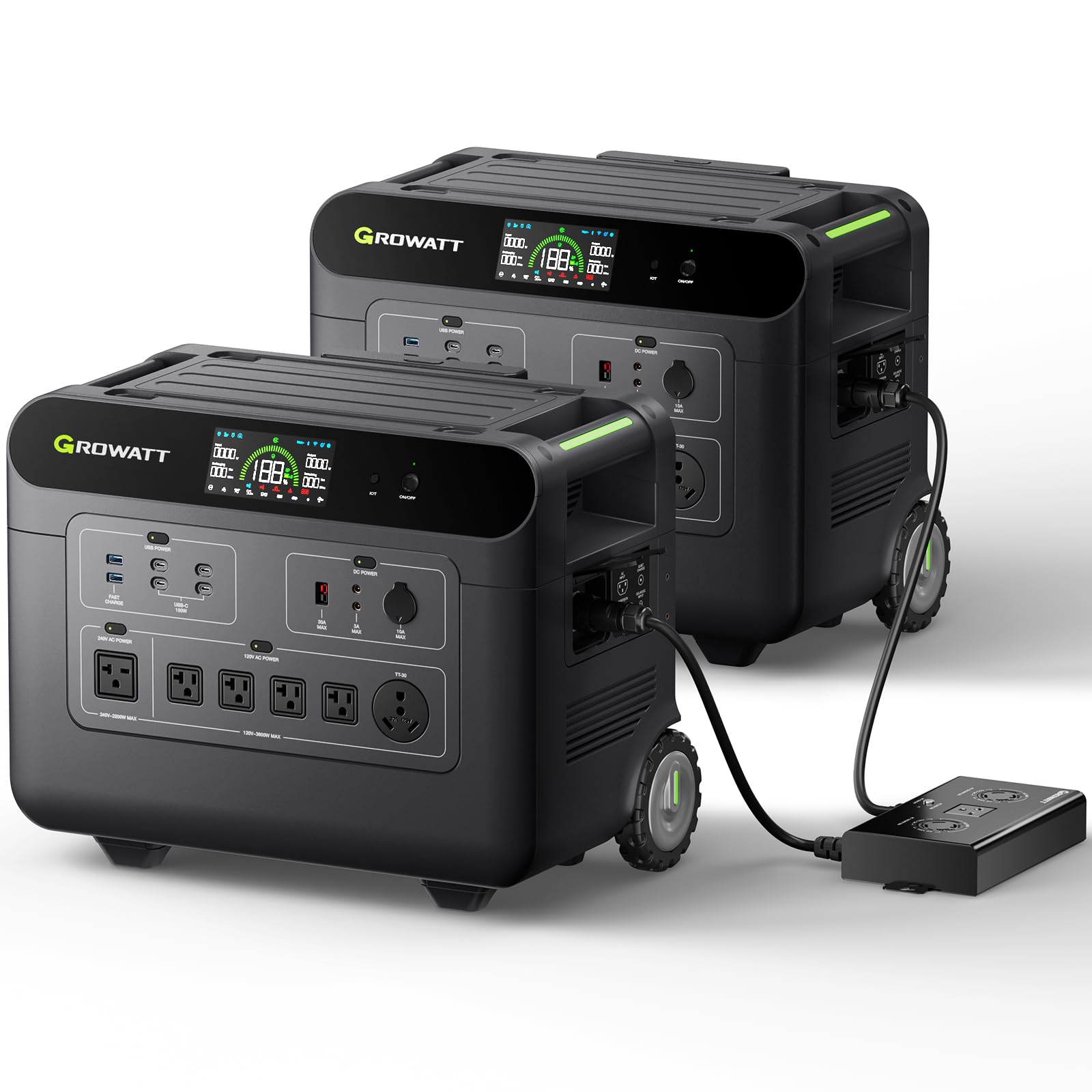
Output: 7200W AC
Voltage: 120V/240V
Battery type: LFP
Capacity: 7200Wh, expandable to 36kWh
Included: Double Voltage Hub
Intended use: Home backup, RVs, outdoor camping
This is a battery-first system built around lithium iron phosphate cells, a chemistry chosen for long service life and stable behavior under repeated cycling. The 7200W AC output and 120V/240V support mean it can feed both standard household circuits and heavier 240V loads through the included Double Voltage Hub. Expansion to 36kWh is the headline: capacity can grow as needs grow, rather than forcing a single large purchase up front. It is aimed at homeowners who want quiet, exhaust-free backup without running a fuel line.
The pick earns its place for buyers who plan to add batteries over time and want a system that doubles as RV or camping power. The trade-off is that battery systems at this level demand planning around charging — solar input or grid recharge — and the initial capacity is modest next to the expansion ceiling, so a buyer expecting whole-home runtime on day one may be disappointed.
Check the current price on Amazon
Generac 10kW Whole Home Generator
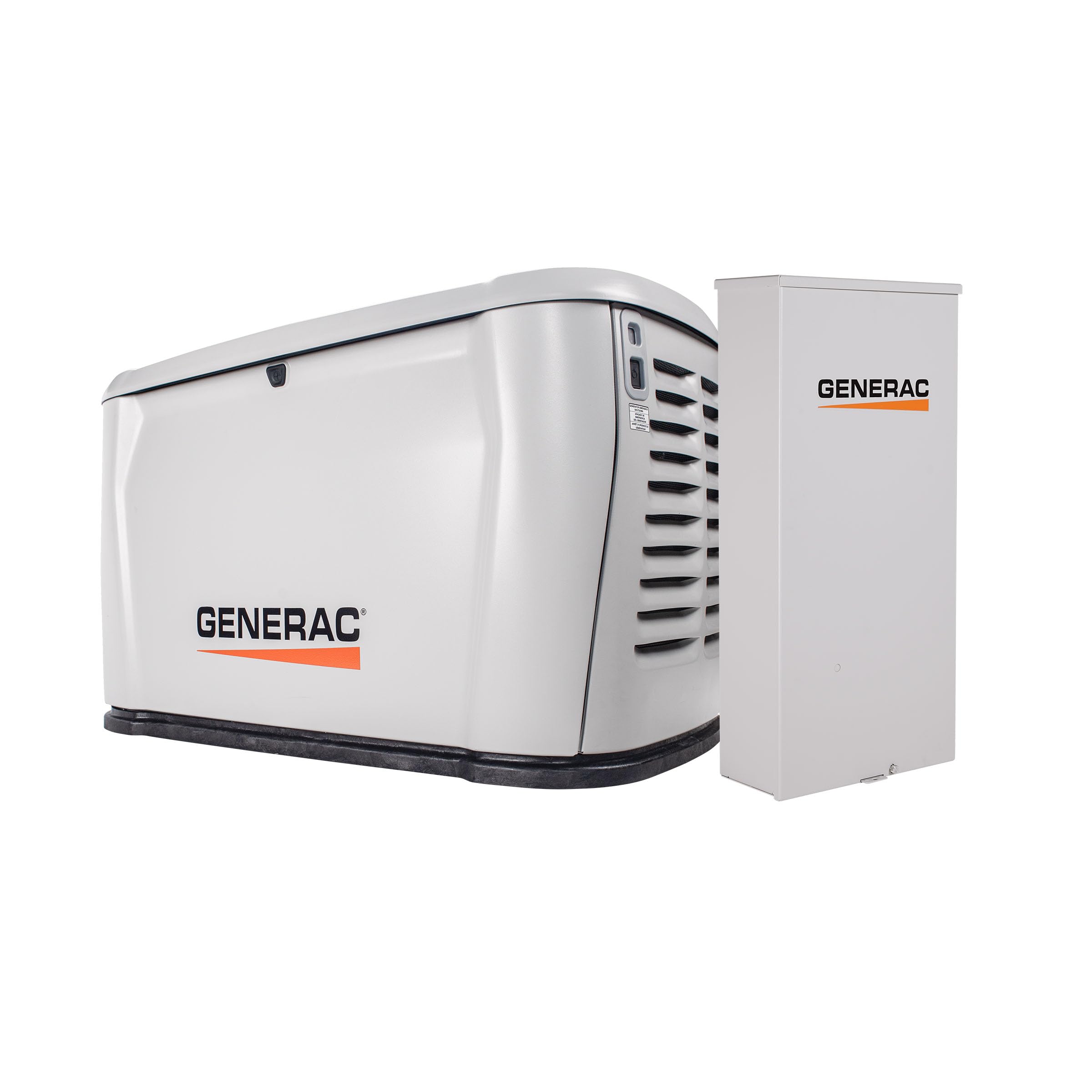
Type: Automatic standby generator
Fuel: Outdoor gas or propane
Transfer switch: 16 circuits
Monitoring: Cellular capability
Intended use: Whole home outage protection
This is a permanently installed standby generator that runs on natural gas or propane and starts on its own when the grid drops. The 16-circuit automatic transfer switch is the practical heart of the package: it decides which circuits get power, so the system protects a defined set of loads rather than the entire panel. Cellular capability adds remote visibility, useful for a second home or a property that sits empty for stretches.
It suits buyers who want hands-off backup and have a gas supply already at the house. The trade-off is that a 10kW unit with a 16-circuit switch is a critical-loads solution, not true whole-home coverage — heavy draws like electric heat or a large AC system will need to be managed or left off the switch.
Check the current price on Amazon
Generac Guardian 14kW Home Generator
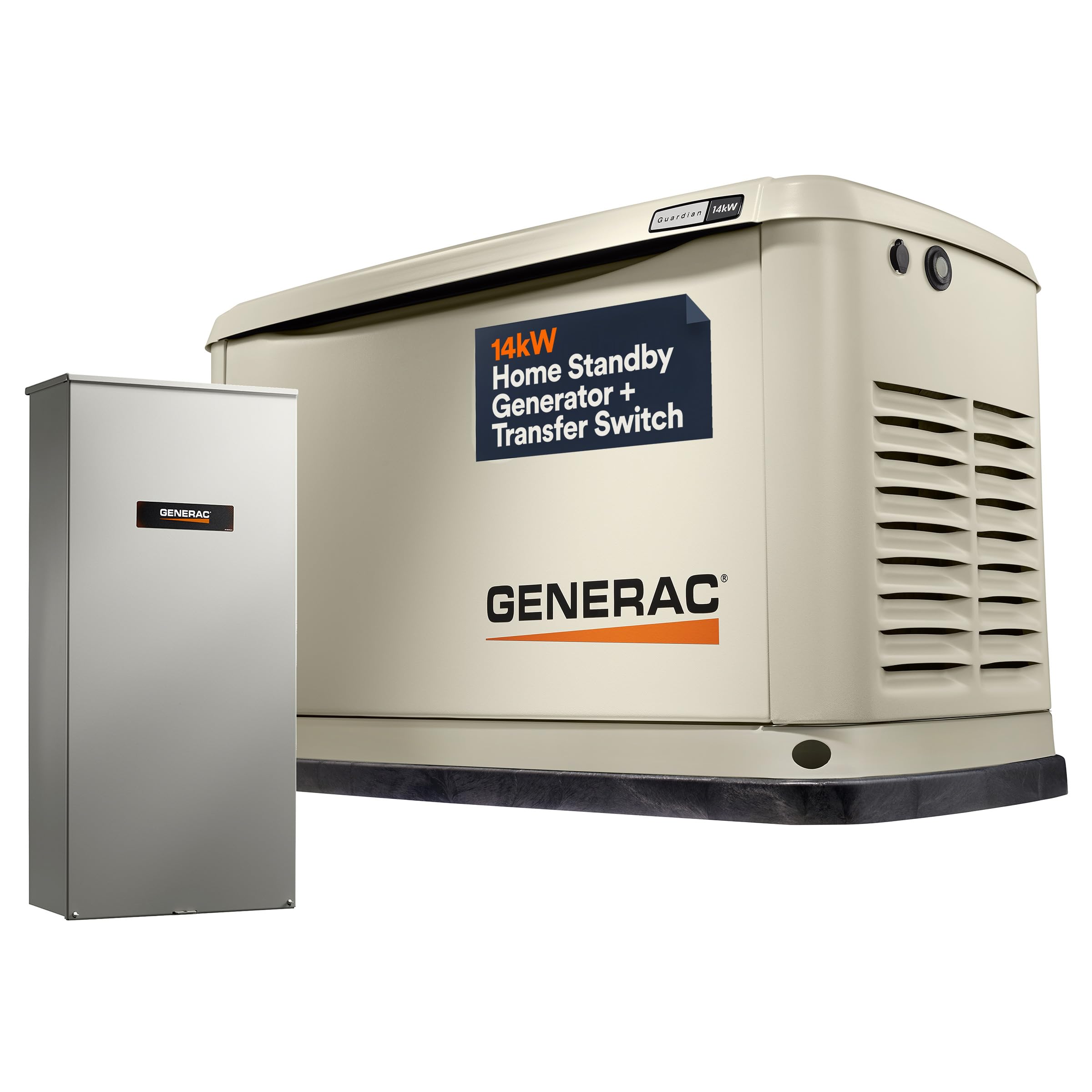
Type: Automatic standby generator
Fuel: Natural gas or propane
Connectivity: WiFi enabled
Included: Transfer switch
Monitoring: WiFi monitoring
Intended use: Whole home outage and storm protection
The Guardian steps up in output over the 10kW model and pairs it with WiFi monitoring, so status and run information can be checked from a phone rather than by walking outside. Like the smaller unit it runs on natural gas or propane and switches over automatically, and the included transfer switch keeps the install to one package. The higher output makes it a better fit for homes with larger loads on the protected circuits.
It is the pick for buyers who want automatic gas backup with more headroom and remote monitoring built in. The trade-off is price and installation: a larger standby unit costs more up front and still requires a fuel supply and a professional hookup, so the total outlay sits well above the sticker.
Check the current price on Amazon
OSCAL PowerMax 6000 Solar Generator
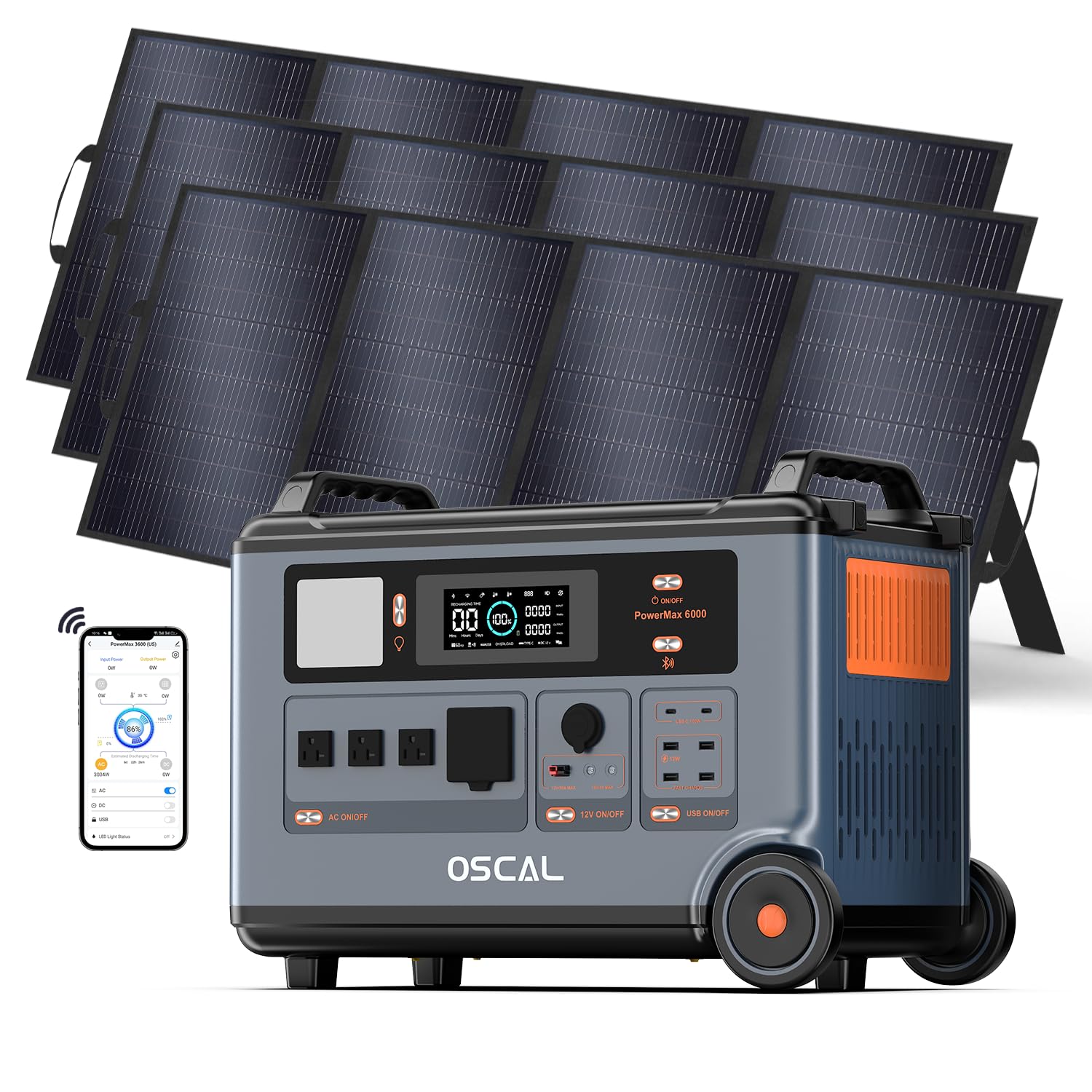
Output: 6000W AC, 9000W peak
Voltage: 120V/240V split phase
Charging: 2200W AC, 2400W solar
Included: 3×400W solar panels
Intended use: Home emergency backup, battery backup
This is a portable solar generator with split-phase 120V/240V output, which lets it feed 240V appliances that single-voltage portables cannot touch. The 9000W peak rating covers surge loads like a well pump or compressor starting up, while 6000W continuous handles the running draw. Three 400W solar panels ship in the box, so the system can recharge without grid power — a real advantage in an outage that drags on.
It fits buyers who want one box that covers home emergencies and still rolls out for camping or job sites. The trade-off is that panels need sun and space, and a portable unit at this output is heavy enough that it is best treated as semi-permanent once positioned.
Check the current price on Amazon
EF ECOFLOW DELTA Pro 3 with 2 Extra Batteries

Output: 4000W AC
Voltage: 120/240V
Capacity: 12kWh, expandable to 48kWh
Included: DELTA Pro 3 with 2 extra batteries
Intended use: Home use, camping, emergencies, power outages, RV
This package bundles the DELTA Pro 3 with two extra batteries for 12kWh out of the box, with expansion up to 48kWh. That capacity is the point: it is built for long outages where runtime matters more than peak output. The 120/240V output keeps it compatible with household circuits and RV hookups, and the portable format means it can move between a home panel and a campsite.
It suits buyers who want the largest battery reserve in this group and are willing to pay for it. The trade-off is the price tier and the weight of a 12kWh stack — this is a system to plan a permanent spot for, and the lower 4000W output means heavy simultaneous loads need to be staggered.
Check the current price on Amazon
Before You Buy
- Fuel source: Battery systems recharge from solar or the grid; gas generators need natural gas or propane on site.
- Capacity vs. output: A high kWh figure means longer runtime, while a high wattage figure means more appliances at once — the two are not the same.
- Transfer method: An automatic transfer switch defines which circuits get backup; battery systems often need a manual or add-on transfer setup.
- Installation: Standby generators require a fuel line, permits and a professional hookup; portable batteries do not.
- Voltage: 120/240V split-phase output is needed for well pumps, dryers and other 240V loads.
- Noise and exhaust: Battery systems run silent indoors; gas generators must sit outdoors and produce exhaust.
- Maintenance: Gas units need exercise runs and fuel checks; batteries need periodic recharging and cool storage.
Frequently Asked Questions
-
What is the biggest whole house backup consideration?
Fuel and capacity. A gas generator needs a supply line and professional install, while a battery system needs a way to recharge and enough kWh to ride out the outage. -
Can a solar generator run a whole house?
Not the entire panel at once. Split-phase models can power 240V appliances and a set of circuits, but heavy loads usually need to be staggered or managed. -
Is a standby generator better than a battery?
A standby generator runs indefinitely as long as fuel flows; a battery is silent and exhaust-free but limited by stored capacity. The right choice depends on outage length and whether gas is available. -
How much capacity is needed for an outage?
It depends on which circuits are backed up and for how long. Critical-load setups need far less than an attempt at full-home coverage. -
Can these systems be expanded later?
Some can. The GROWATT and ECOFLOW picks both list expansion capacity, which lets a buyer start smaller and add batteries over time. -
Do battery backups need special wiring?
They can feed circuits directly, but tying into a home panel typically requires a transfer switch or inlet so the system does not backfeed the grid.
Bottom Line
The right whole house backup pick comes down to fuel and runtime: buyers with gas at the house get hands-off coverage from the Generac Guardian 14kW, while buyers who want silent, expandable battery power should start with the GROWATT HELIOS 3600 Home Battery Backup Combo and grow capacity over time.