Why there are Amazon links here: Brave Review is paid a commission for qualifying Amazon purchases made through the links below. Your price does not change, and using our links is entirely optional. How this works
Best WiFi Calling Setup for a Weak Signal Area: 5 Range Extenders That Keep Calls Connected
WiFi calling only works as well as the WiFi reaching the phone, so a weak signal area usually means a dead zone indoors rather than a carrier problem. The picks below are range extenders that bridge the gap between the router and the rooms where calls drop, and each one suits a different size of home and budget. Renters in a single apartment, homeowners covering a whole floor, and anyone working from a back bedroom will all find a match here. The overview table below sorts all five by key spec, best use, and price tier so a decision can be made in under a minute.
Overview of the Picks
| Product | Key Spec | Best Use | Price Tier |
|---|---|---|---|
| TP-Link AC1200 WiFi Extender (RE315) | 1.2Gbps, up to 1600 sq.ft, 32 devices | Small homes and apartments | Budget |
| WiFi Extender Signal Booster (B0HG9GGV77) | 1200Mbps, up to 5000 sq.ft, 35 devices | Mid-size homes | Budget |
| Home WiFi Extender Signal Booster (B0HCNHDVYY) | 1200Mbps, 12880 sq.ft, 105 devices | Large open-plan spaces | Mid-range |
| 2026 WiFi Extender (B0HH84ZBHG) | 15888 sq.ft, 55+ devices, 1-tap setup | Very large homes, easy install | Mid-range |
| TP-Link AC1900 WiFi Range Extender (RE550) | Up to 2200 sq.ft, 32 devices, Gigabit port | Heavy streaming and wired devices | Premium |
TP-Link AC1200 WiFi Extender (RE315)

Speed: 1.2Gbps dual band
Coverage: Up to 1600 sq.ft
Devices: Up to 32
Compatibility: EasyMesh
Ports: One Ethernet
Bands: 5GHz and 2.4GHz
TP-Link AC1200 WiFi Extender (RE315)
This is a compact dual-band extender built to sit in a wall outlet and repeat the router’s signal into one weak room. The 1.2Gbps combined throughput is enough for WiFi calling plus streaming on a few phones at once, and EasyMesh compatibility means it can join a mesh network rather than run as a lone repeater. The single Ethernet port is useful for a desk phone or a laptop that needs a steadier connection than WiFi offers. It suits apartments, small houses, and anyone who wants a set-and-forget fix for one bad corner.
The RE315 earns its place as the budget default because it covers the typical weak-signal problem — a bedroom or home office separated from the router by a wall — without overpaying for coverage the space cannot use. Buyers with a large multi-floor home will find 1600 sq.ft and 32 devices too tight, and the single Ethernet port limits wired expansion.
Trade-off: The compact coverage ceiling means it fixes one weak room well but struggles to blanket a whole floor.
WiFi Extender Signal Booster (B0HG9GGV77)

Speed: 1200Mbps dual band
Coverage: Up to 5000 sq.ft
Devices: Up to 35
Bands: 5G and 2.4GHz
Ports: Ethernet
WiFi Extender Signal Booster (B0HG9GGV77)
This repeater targets mid-size homes where the router cannot reach the far end of the house. The 1200Mbps dual-band radio handles voice calls and video without obvious lag, and the Ethernet port gives one wired device a stable link. Coverage is rated for up to 5000 sq.ft and 35 devices, which fits a family home with phones, tablets, and a smart TV sharing the network. It is aimed at buyers who want more reach than a small outlet extender provides but do not need a mesh system.
The pick makes sense for a two-story house where calls drop in the upstairs bedrooms. The stated coverage is generous for the price tier, so expectations should stay realistic: a single repeater placed at the edge of the router’s range extends the signal, but it does not create bandwidth the router never had. Buyers in a very large or masonry-heavy home may still find dead spots.
Trade-off: The budget build and single-unit design mean placement matters more than the headline coverage number suggests.
Home WiFi Extender Signal Booster (B0HCNHDVYY)
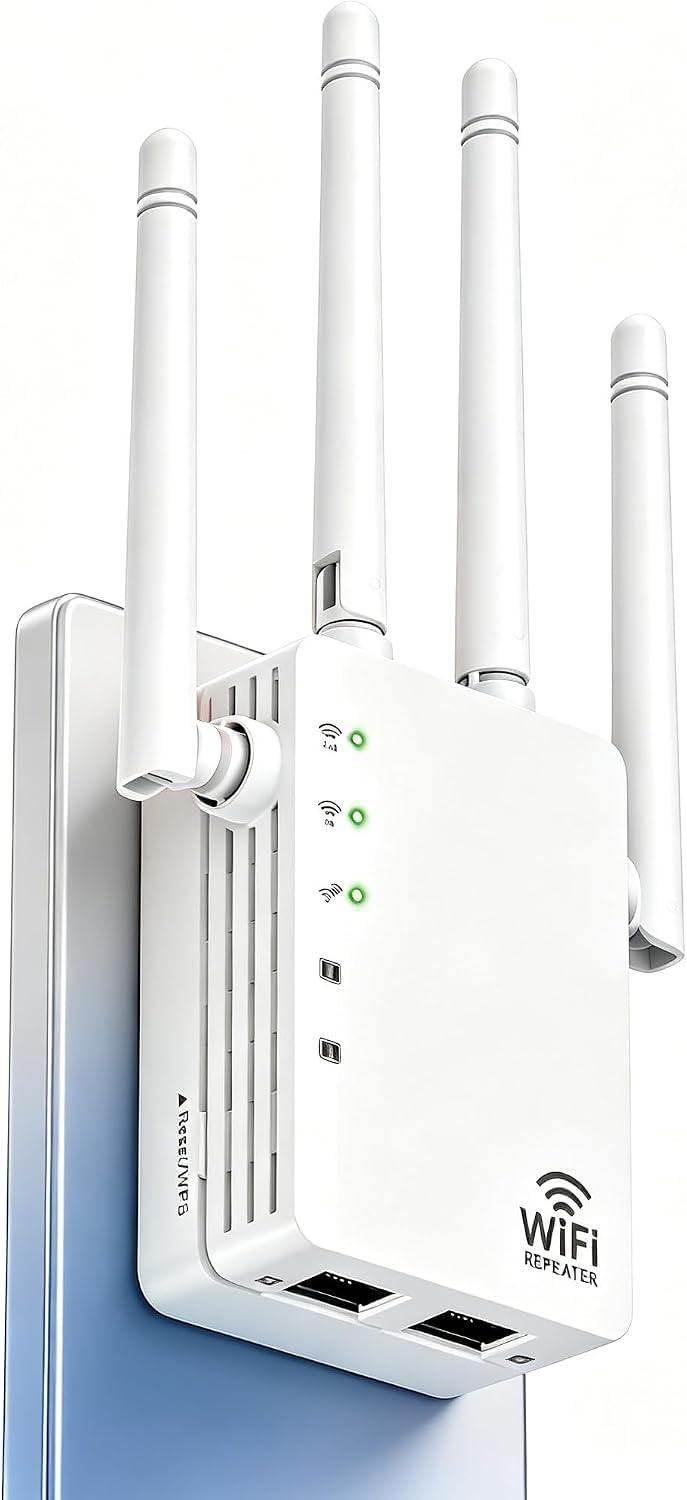
Speed: 1200Mbps
Coverage: Up to 12880 sq.ft
Devices: Up to 105
Setup: 1-key
Band: 5.0G
Home WiFi Extender Signal Booster (B0HCNHDVYY)
This extender is pitched at larger properties, with a 1200Mbps radio and a device count rated for a busy household. The one-key setup is the draw for buyers who do not want to fiddle with admin pages, and the 5.0G band keeps newer phones and laptops on the faster lane. It is built for open-plan homes, small offices, and anyone tired of walking toward the router to take a call. The mid-range price tier buys more reach and capacity than the budget picks.
The pick fits a buyer with a big living space and many connected devices who wants a straightforward install. The very high coverage claim deserves a caveat: no single repeater realistically blankets a space that size through interior walls, so it works best as one node in a larger setup. Buyers in a compact apartment will be paying for capacity they cannot use.
Trade-off: The headline coverage figure outpaces what one unit delivers in a walled home, so it suits large spaces only when expectations are set accordingly.
2026 WiFi Extender (B0HH84ZBHG)
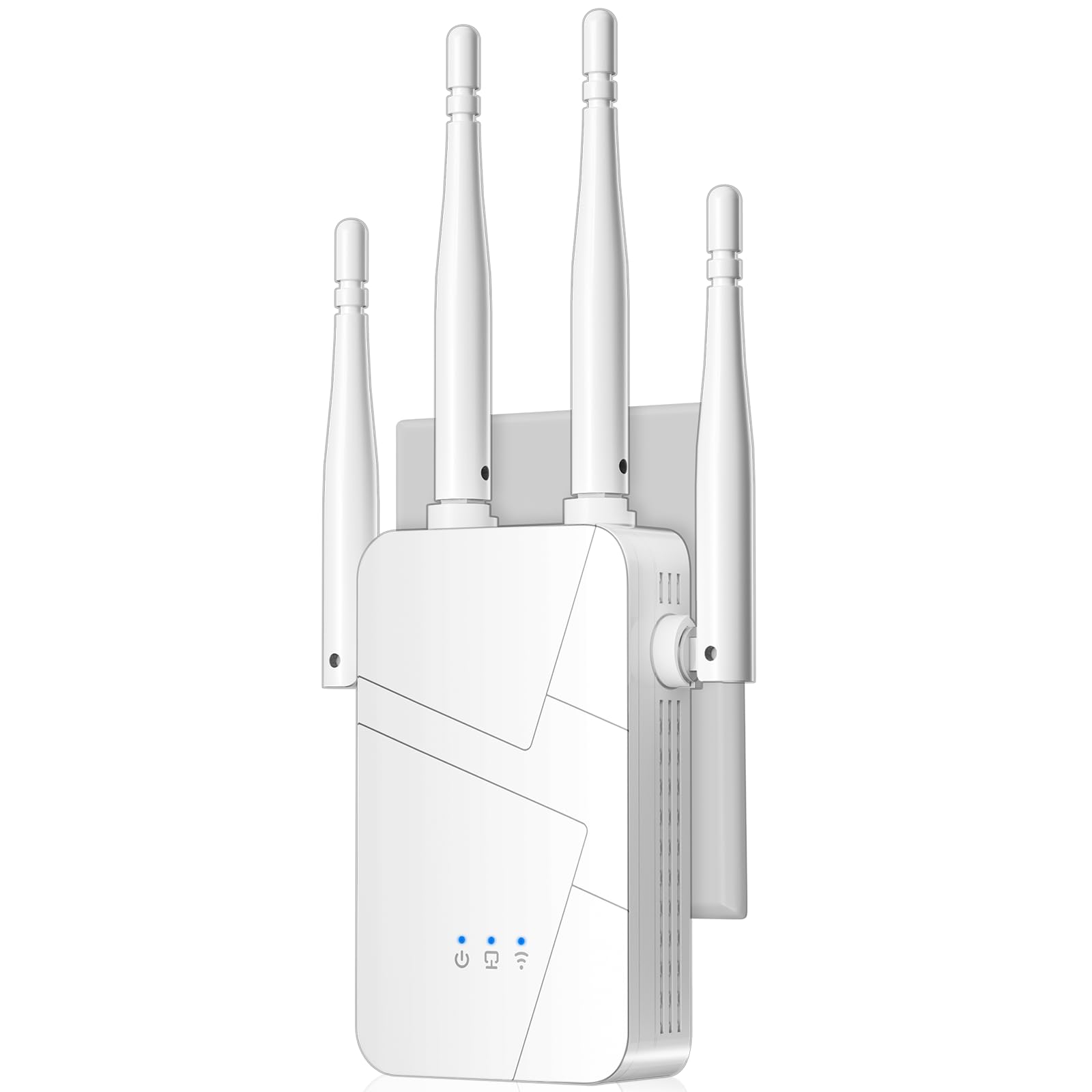
Coverage: Up to 15888 sq.ft
Devices: 55+
Setup: 1-tap
Type: Mesh Wi-Fi repeater
Function: Long-range signal amplifier
2026 WiFi Extender (B0HH84ZBHG)
This model leans on a mesh-style design and a one-tap setup, aimed at buyers who want the widest reach in the lineup without a complicated install. The device count supports a large household of phones, laptops, and smart-home gear, and the long-range amplifier is meant to push signal into outbuildings or far rooms. The mesh label suggests it can cooperate with other nodes rather than run as a standalone repeater. It suits very large homes and buyers who value quick setup over deep configuration.
The pick earns a spot for its ease of install and its capacity for many devices, which matters in a home where WiFi calling competes with streaming and gaming. The marketing-forward naming means buyers should treat the coverage figure as a best case in open space. In a masonry home or a multi-floor layout, real-world reach will be shorter, and a second unit may be needed.
Trade-off: The aggressive coverage claim and mesh branding invite high expectations that a single repeater in a walled home will not fully meet.
TP-Link AC1900 WiFi Range Extender (RE550)
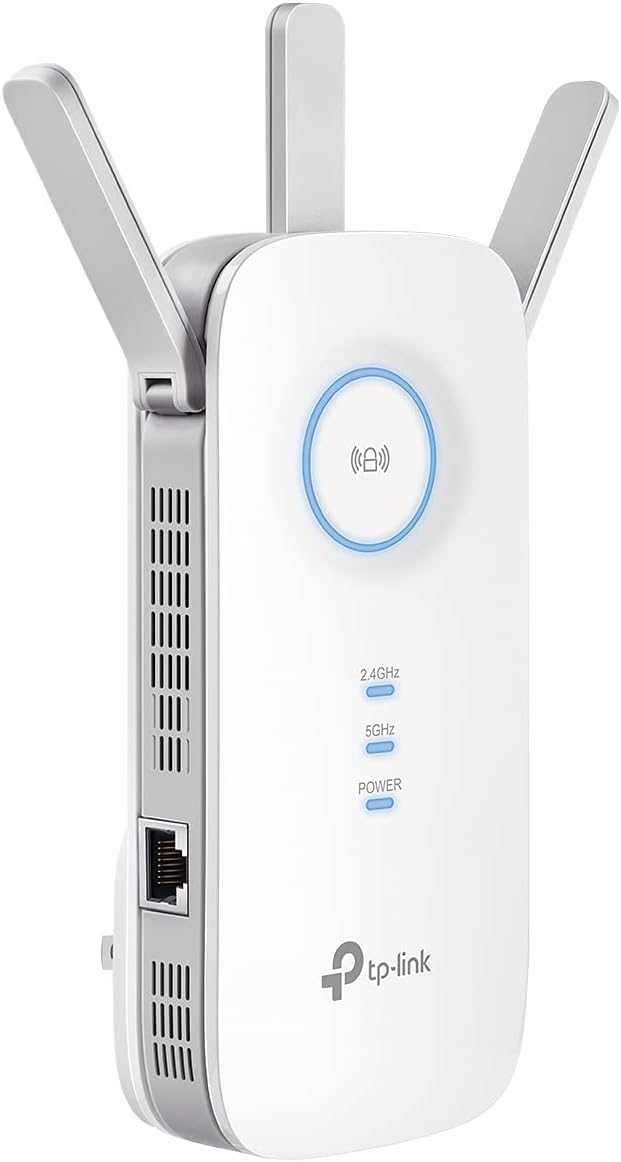
Speed: AC1900 dual band
Coverage: Up to 2200 sq.ft
Devices: Up to 32
Port: Gigabit Ethernet
Setup: App
Compatibility: EasyMesh
TP-Link AC1900 WiFi Range Extender (RE550)
The RE550 is the premium pick, and the Gigabit Ethernet port is the reason: it gives a wired device a full-speed link instead of the slower 10/100 port common on budget extenders. The AC1900 dual-band radio and EasyMesh support mean it can anchor a mesh network or extend an existing one, and app setup keeps configuration on a phone. It covers up to 2200 sq.ft and 32 devices, which fits a home office or a floor of a house. It suits buyers who run a desktop, console, or desk phone alongside WiFi calling.
The pick justifies its premium tier with the wired throughput and the app-managed setup, both of which matter for anyone who needs a reliable connection for work calls. The 32-device cap is modest for a large family, and the coverage figure is smaller than the budget picks on paper — a reminder that the premium here is build quality and ports, not raw reach. Buyers wanting maximum square footage on a budget should look lower in the list.
Trade-off: The premium price buys a Gigabit port and app setup rather than the largest coverage, so it is a poor fit for buyers who only need raw range.
Before You Buy
- Placement: A repeater must sit where the router’s signal is still usable, roughly halfway to the dead zone, or it repeats a weak signal.
- Coverage claims: Square-footage figures assume open space; interior walls, floors, and masonry cut real-world reach significantly.
- Compatibility: EasyMesh models work best with a matching mesh router, while standalone repeaters work with any router but create a separate network name.
- Ports: A Gigabit Ethernet port matters for wired devices; budget extenders often ship with slower ports.
- Device count: Match the rated device count to the household, since phones, TVs, and smart gear all share the same radio.
- Band: A 5GHz band carries faster traffic for WiFi calling, while 2.4GHz reaches farther through walls.
- Setup method: App or one-tap setup suits non-technical buyers; manual setups offer more control but take longer.
Frequently Asked Questions
-
Does a WiFi extender fix WiFi calling in a weak signal area?
Yes, if the dead zone is caused by weak WiFi rather than a weak cellular signal. The extender bridges the gap so the phone holds a stable WiFi connection for calls. -
Where should the extender be placed for WiFi calling?
Roughly halfway between the router and the room where calls drop, in a spot where the router’s signal is still strong. Placing it in the dead zone repeats an already-weak signal. -
Will a WiFi extender slow down the connection?
A repeater typically halves throughput on the repeated band because it receives and retransmits on the same radio. A wired or mesh backhaul avoids most of that loss. -
Do all five extenders work with any router?
The standalone repeaters work with any router, while the EasyMesh models pair best with a compatible mesh router. Mixing brands can limit mesh features. -
How many devices can one extender handle for calls?
The rated counts range from 32 to 105 devices across these picks. A household with many phones and smart devices should lean toward the higher-capacity models. -
Is a Gigabit Ethernet port worth paying more for?
It matters for wired devices like a desktop or console that need full speed. For WiFi calling alone, the wireless radio does the work and the port is a bonus.
Bottom Line
For most buyers fixing a weak signal area for WiFi calling, the TP-Link AC1200 WiFi Extender (RE315) is the safest starting point: it is affordable, EasyMesh-ready, and sized for the single dead room where calls usually drop. Buyers covering a larger home should step up to the TP-Link AC1900 (RE550) for its Gigabit port and app setup, or the high-capacity models above when many devices share the network.
