Why there are Amazon links here: Brave Review is paid a commission for qualifying Amazon purchases made through the links below. Your price does not change, and using our links is entirely optional. How this works
Best WiFi Extender for a House with Thick Walls Upstairs
Thick walls upstairs are the classic dead-zone problem: the signal leaves the router fine, then dies inside brick, plaster, and lath before it reaches the back bedroom. This roundup covers five fixes, from a cheap single-room booster to a full mesh replacement. It suits renters who need one room covered, homeowners ready to replace the router entirely, and anyone stuck with a long hallway between the modem and the far bedroom. The overview table below shows which pick fits which job.
The Picks at a Glance
| Product | Key Spec | Best Use | Price Tier |
|---|---|---|---|
| TP-Link AC1200 WiFi Extender (RE315) | Up to 1,600 sq ft, 32 devices, EasyMesh | Single room or hallway coverage | Budget |
| WiFi Extender Signal Booster, 18,000 Sq Ft | 65+ devices, 1-tap setup, Ethernet port | One-floor coverage on a budget | Budget |
| TP-Link Deco X55 AX3000 Mesh System (3-Pack) | WiFi 6, 3 Gigabit ports per unit, Ethernet backhaul | Whole-house replacement | Premium |
| New WiFi Extender Signal Booster, 15,715 sq ft | 5 working modes, Ethernet port | Flexible placement in odd layouts | Budget |
| 2026 Upgraded WiFi Extender, 18,000 Sq Ft | Works with 99% of routers, 15X amplifier claim | Plug-and-play for a single dead room | Budget |
1. TP-Link AC1200 WiFi Extender Dual Band (RE315)
Type: Dual-band wall-plug extender
Speed Class: AC1200 (1.2 Gbps combined)
Coverage Claim: Up to 1,600 sq ft
Device Load: Up to 32 devices
Mesh Support: EasyMesh compatible
Ports: One Ethernet port

TP-Link AC1200 WiFi Extender Dual Band (RE315) is the recognizable name in this group and the safest bet for a buyer who wants a known brand at a low price. It plugs straight into a wall outlet, rebroadcasts the existing 2.4GHz and 5GHz bands, and adds a single Ethernet port for a wired device like a TV or desktop. EasyMesh compatibility means it can join a compatible mesh network later instead of becoming e-waste.
Trade-off: The 1,600 sq ft figure assumes open space, so a thick-walled upstairs room will get less reach than the box suggests, and one unit rarely covers more than a room or a short hallway.
2. WiFi Extender Signal Booster for Home, Covers Up to 18,000 Sq Ft
Type: Wall-plug wireless repeater
Coverage Claim: Up to 18,000 sq ft
Device Load: Supports 65+ devices
Setup: One-tap setup
Ports: Ethernet port
Extras: Dead-zone elimination, buffering reduction
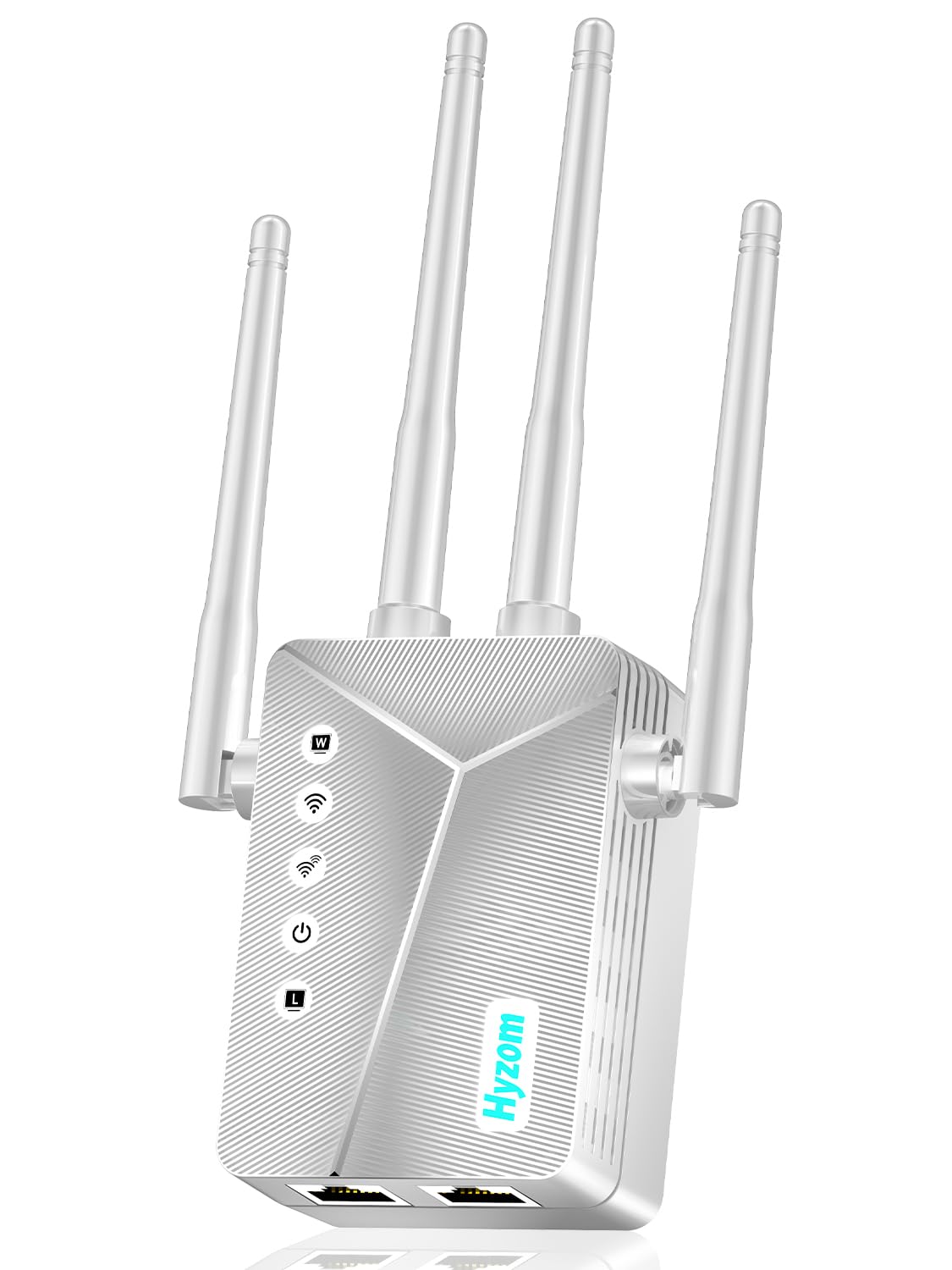
WiFi Extender Signal Booster for Home, Covers Up to 18,000 Sq Ft targets the buyer who wants maximum claimed coverage for minimum money. The one-tap setup is the real draw: press the pairing button, wait for the indicator, and the extender clones the existing network name. The Ethernet port is useful for a wired printer or streaming box in the room where the extender sits.
Trade-off: The 18,000 sq ft coverage claim is marketing arithmetic, not a realistic result through brick and plaster, and a repeater at this price tier typically halves throughput on the extended band.
3. TP-Link Deco X55 AX3000 WiFi 6 Mesh System (3-Pack)
Type: Mesh WiFi system, three units
Standard: WiFi 6 (AX3000)
Coverage Claim: Up to 6,500 sq ft
Ports: Three Gigabit ports per unit
Backhaul: Supports Ethernet backhaul
Function: Replaces the router and extender

TP-Link Deco X55 AX3000 WiFi 6 Mesh System (3-Pack) is the pick for a house where extending has already failed once. Instead of rebroadcasting a weak signal, three units form one network with a single name, so devices hand off cleanly between floors. The three Gigabit ports per unit and Ethernet backhaul support are the killer feature for thick walls: a cable between units bypasses the masonry entirely.
Trade-off: This is the most expensive option here and the most involved to set up, and buyers who only need one bedroom covered will pay for coverage they never use.
4. New WiFi Extender Signal Booster for Home, 15,715 Sq Ft
Type: Wall-plug repeater with multiple modes
Coverage Claim: Up to 15,715 sq ft
Modes: Five working modes
Ports: Ethernet port
Function: Signal amplification and access point use

New WiFi Extender Signal Booster for Home, 15,715 Sq Ft stands out for its five working modes, which give a buyer more placement options than a plain repeater. Access point mode in particular is worth knowing about: run a cable from the router to this unit and it broadcasts a fresh, full-strength signal instead of repeating a weak one. That makes it a reasonable middle path for a thick-walled upstairs room near a cable run.
Trade-off: Five modes mean more setup decisions, and the documentation for budget repeaters in this class is often thin, so a buyer unfamiliar with networking may need trial and error to pick the right mode.
5. 2026 Upgraded WiFi Extender for Home, Up to 18000Sq.ft
Type: Wall-plug wireless repeater
Coverage Claim: Up to 18,000 sq ft
Compatibility: Works with 99% of routers
Speed Claim: 15X faster signal amplification
Ports: Ethernet port

2026 Upgraded WiFi Extender for Home, Up to 18000Sq.ft is the newest listing of the group and the simplest to describe: plug it in near the dead zone, pair it with the existing router, and let it rebroadcast. Broad router compatibility is the selling point, since it is designed to work with whatever equipment is already in the house rather than locking a buyer into one brand. The Ethernet port gives one wired device a stable connection.
Trade-off: "15X faster" is a relative claim with no baseline stated, and as a brand-new listing it has the least track record of the five, so a buyer should treat the coverage figure as optimistic.
Before You Buy
- Wall material: Signal loss through brick, plaster, and lath is severe; a repeater must sit in a room with decent existing signal, not in the dead room itself.
- Placement: The extender needs halfway-between positioning. Plugging it into the far bedroom wall, where signal is already weak, produces a weak rebroadcast.
- Ethernet backhaul: If a cable can reach the upstairs room, a unit with a Ethernet port and access point mode beats any wireless repeater through thick walls.
- Compatibility: EasyMesh support matters if the household may build a mesh later; broad router compatibility matters if the existing router stays.
- Device count: A household with many phones, TVs, and smart devices needs a higher device load rating than a single-laptop setup.
- Coverage claims: Treat square-footage numbers as best-case open-space figures and size down for masonry walls.
- Setup effort: One-tap pairing suits non-technical buyers; multi-mode units reward someone willing to read the manual.
Frequently Asked Questions
-
Will a WiFi extender work through thick upstairs walls?
Yes, but only if it is placed where the existing signal is still usable. An extender repeats what it receives, so it cannot rescue a room the router never reaches. -
Is a mesh system better than an extender for a thick-walled house?
Generally yes. Mesh units hand off between nodes and support wired backhaul, which sidesteps masonry entirely. A single extender is cheaper but limited to one area. -
Where should the extender be plugged in?
Roughly halfway between the router and the dead zone, in a spot with a strong existing signal. An outlet in the affected room itself is usually the wrong choice. -
Does an extender slow down the connection?
A wireless repeater typically reduces throughput on the extended network because it receives and retransmits on the same radio. Wired backhaul avoids most of that penalty. -
How many extenders does an upstairs need?
One unit per problem room or short hallway is the usual starting point. A whole floor behind thick walls generally calls for a multi-unit mesh system instead. -
Do these work with any router?
Most do, and the listings here emphasize broad compatibility. EasyMesh support is the feature to check if the household plans to add mesh nodes later.
Bottom Line
For a house with thick walls upstairs, the TP-Link Deco X55 AX3000 Mesh System is the pick that solves the problem rather than patching it, because Ethernet backhaul and clean handoffs beat any repeater through masonry. Buyers who need one room covered and nothing more should start with the TP-Link RE315 and save the rest of the budget.
