Why there are Amazon links here: Brave Review is paid a commission for qualifying Amazon purchases made through the links below. Your price does not change, and using our links is entirely optional. How this works
YoLink Water Leak Sensor vs GoveeLife Wireless Smart Sensor: Alarm Kit Against Automation
The YoLink water leak sensor vs GoveeLife wireless smart sensor is not a close call once the job is clear. One is a leak-and-freeze alarm kit built to cover a whole house and shout when water appears. The other is a small contact sensor that feeds a GoveeLife automation setup and stays quiet.
Buyers protecting a basement, laundry room or water heater should read the YoLink block first. Buyers already running GoveeLife gear and wanting another trigger for routines should read the GoveeLife block first. The table below settles the rest in under a minute.
The Picks at a Glance
| Product | Key Spec | Best Use | Price Tier |
|---|---|---|---|
| YoLink Leak and Freeze Sensor 4 Kit (6-Pack + Hub) | LoRa up to 2034 ft, IP67, 105 dB alarm | Whole-home leak and freeze coverage | Premium kit |
| GoveeLife Mini Contact Sensor | 180 ft Bluetooth range, group control | Automation triggers in a GoveeLife home | Budget add-on |
The YoLink kit is the higher spend because it bundles six sensors and the hub that makes them talk. The GoveeLife sensor is a single low-cost puck that leans on Bluetooth and an existing GoveeLife ecosystem.
YoLink Leak and Freeze Sensor 4 Kit (6-Pack + Hub)

Type: Water leak and freeze sensor kit
Connectivity: LoRa YoLink Protocol, up to 2034 ft range
Hub: Included
Rating: IP67
Battery: Up to 5-year life
Alarm: 105 dB
Smart Home: Works with IFTTT
Pack Size: 6 sensors plus hub
The kit is built around range. LoRa is a low-power radio protocol that pushes a signal much further than Wi-Fi or Bluetooth, and the stated 2034-foot figure means sensors can sit in a detached garage, a crawlspace or a far basement corner and still reach the hub. That hub is the reason the kit costs more than a bare sensor: it is the bridge between the sensors and the phone.
IP67 sealing matters in this category. A leak sensor spends its life on a floor near a water heater, under a sink or beside a washing machine, and it has to survive splashes and damp without failing. The 105 dB alarm is loud enough to carry through a house, so a leak announces itself even when nobody is looking at a phone.
The five-year battery claim is the quiet selling point. Six sensors means six batteries to eventually swap, and a long service interval keeps that chore rare.
Trade-off: The kit demands the included hub and a commitment to the YoLink ecosystem, so it is a poor fit for a household that already standardizes on another smart-home platform and wants everything in one app.
Check the current price on Amazon
GoveeLife Mini Contact Sensor
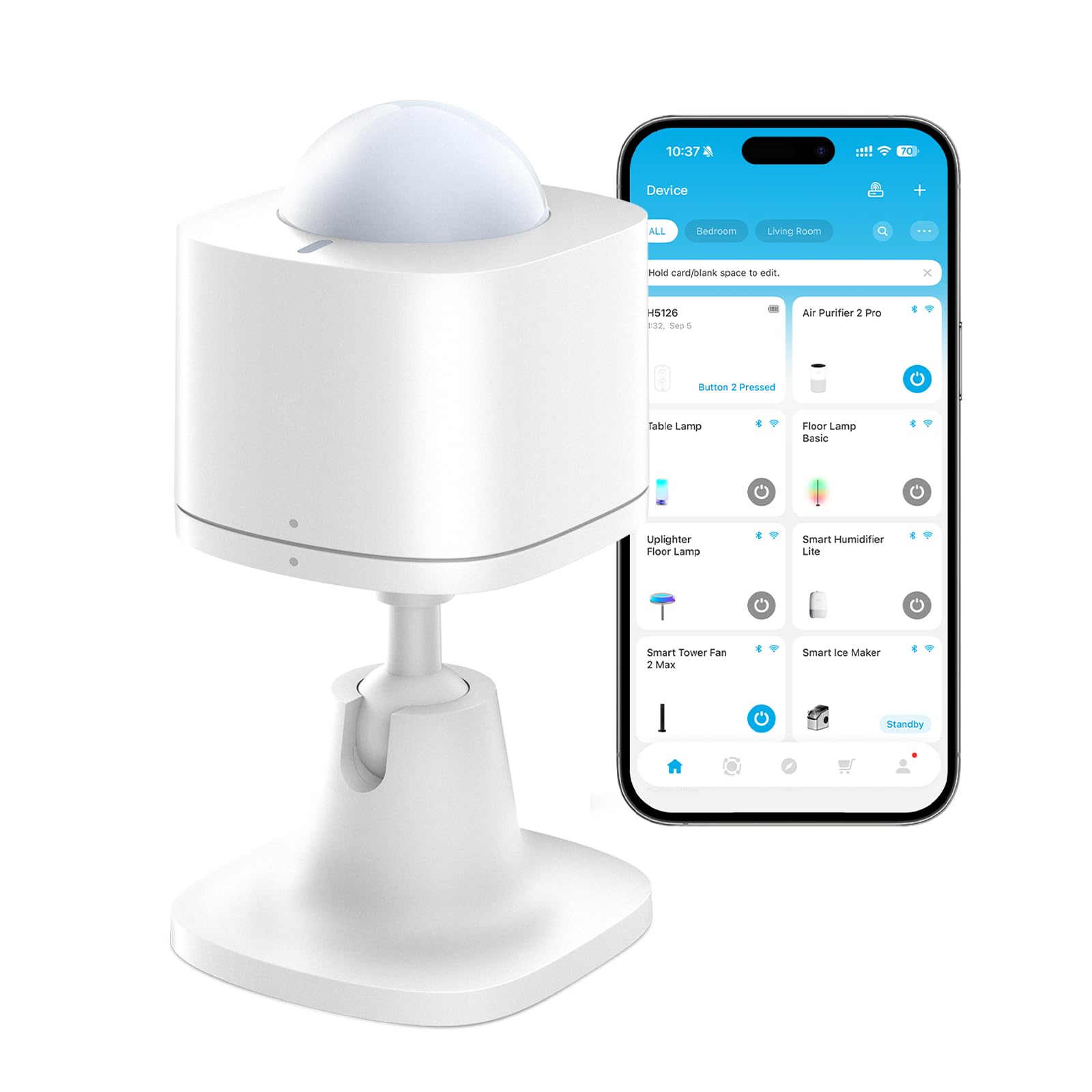
Type: Wireless contact sensor
Connectivity: Bluetooth, 180 ft range
Ecosystem: Supports most GoveeLife products
Control: Group control for multiple devices
Form Factor: Mini
Power: Wireless
This is a contact sensor, not a leak sensor. It reports whether a door, window, cabinet or lid is open or closed, and it does that job as a trigger for GoveeLife automation. The 180-foot Bluetooth range is generous for a home, and the mini body lets it sit on a frame or inside a cabinet without being noticed.
The value depends entirely on what is already in the house. A buyer with GoveeLife lights, plugs or other devices gets a sensor that can join group control and fire routines, which is where the "supports most GoveeLife products" line earns its place. A buyer with no GoveeLife gear gets a small Bluetooth sensor with nothing to command.
Trade-off: Bluetooth range is a fraction of what LoRa offers, and the sensor has no standalone alarm or hub of its own, so it protects nothing unless a GoveeLife setup is already running and the phone stays in range.
Check the current price on Amazon
Side-by-Side Specifications
| Specification | YoLink Leak and Freeze Kit | GoveeLife Mini Contact Sensor |
|---|---|---|
| Primary Job | Water leak and freeze detection | Open/closed contact reporting |
| Protocol | LoRa YoLink | Bluetooth |
| Stated Range | Up to 2034 ft | 180 ft |
| Hub Required | Yes, included | No dedicated hub |
| Sealing | IP67 | Not rated in name |
| Alarm | 105 dB on-unit | None stated |
| Battery | Up to 5 years | Wireless |
| Smart Home | Works with IFTTT | Supports most GoveeLife products |
| Pack Size | 6 sensors + hub | Single mini sensor |
| Price Tier | Premium kit | Budget add-on |
Where the Two Sensors Actually Diverge
Range is the first divider, and it is not marginal. LoRa at up to 2034 feet is designed for structures where Wi-Fi dies at the third wall. Bluetooth at 180 feet is a room-to-room figure that assumes a phone or bridge nearby. A buyer with a long house, a detached garage or a thick foundation wall gets a working system from YoLink and a flaky one from Bluetooth.
The second divider is purpose. YoLink detects water and cold, and it screams at 105 dB when it does. GoveeLife detects position, and it reports silently to an app. These are different jobs, and no amount of automation turns a contact sensor into a flood alarm.
The third divider is ecosystem cost. YoLink ships its own hub and asks the buyer to live inside YoLink, with IFTTT as the outward bridge. GoveeLife asks the buyer to already own GoveeLife devices and treats the sensor as one more input. Neither is wrong; they just point at different households.
Battery life rounds out the picture. Six sensors with a five-year service interval is a genuinely low-maintenance kit, while a single wireless Bluetooth puck is easy to replace but offers no comparable endurance claim in its name.
Which Should You Buy?
Choose the YoLink kit if the goal is protecting a home from water damage, the sensors need to reach far corners, and a loud on-unit alarm plus phone alerts is the point. It suits basements, laundry rooms, water heaters, sumps and vacation properties where nobody is watching.
Choose the GoveeLife sensor if a GoveeLife setup already runs the house and the need is another trigger for routines, such as a cabinet, door or window that should prompt lights or plugs. It is an add-on, not a standalone protector.
FAQ
-
Is the YoLink sensor a leak detector or a contact sensor?
It is a leak and freeze sensor. It watches for water and for low temperature, and it raises a 105 dB alarm while sending mobile app alerts. -
Does the GoveeLife sensor detect water?
No. It is a contact sensor that reports open and closed positions, so it is used for doors, windows and cabinets rather than floods. -
Do either of these need a hub?
The YoLink kit includes its own hub and depends on it. The GoveeLife sensor is Bluetooth-based and works with GoveeLife products rather than a dedicated hub. -
Which has the longer wireless range?
YoLink, by a wide margin. Its LoRa protocol is rated up to 2034 feet, while the GoveeLife sensor is rated at 180 feet over Bluetooth. -
Can the YoLink kit work with other smart-home platforms?
It works with IFTTT, which lets it trigger routines elsewhere. The core system still runs on the YoLink hub and app. -
Is the YoLink kit worth it for a small apartment?
Probably not. Six sensors and a hub are more coverage than a small flat needs, and a single sensor would do the same job for less. -
Can the GoveeLife sensor work without other GoveeLife devices?
It can report status, but its group control and automation value comes from pairing with other GoveeLife products.
Bottom Line
For leak and freeze protection, the YoLink Leak and Freeze Sensor 4 Kit is the pick: six sealed sensors, a hub that reaches across a large property, a loud on-unit alarm and a five-year battery make it a complete system rather than a component. The GoveeLife Mini Contact Sensor is a sensible budget add-on for an existing GoveeLife home, but it does not guard against water. Buyers whose problem is a possible leak should start with the YoLink kit on Amazon.
