Why there are Amazon links here: Brave Review is paid a commission for qualifying Amazon purchases made through the links below. Your price does not change, and using our links is entirely optional. How this works
ZOSIAI 8CH 3K Lite Wired DVR Security Camera System: Four Cameras, One Recorder, No Subscriptions
The ZOSIAI 8CH 3K Lite is a wired, plug-in surveillance kit built around a single 8-channel DVR and four 1080p cameras, aimed at homeowners who want continuous local recording without a monthly cloud bill. It suits someone who can run cable through walls or along eaves and who wants a recorder on the shelf rather than a subscription in the cloud. This review covers what the kit includes, how the pieces fit together, where the spec sheet sets expectations, and which buyers should look elsewhere.
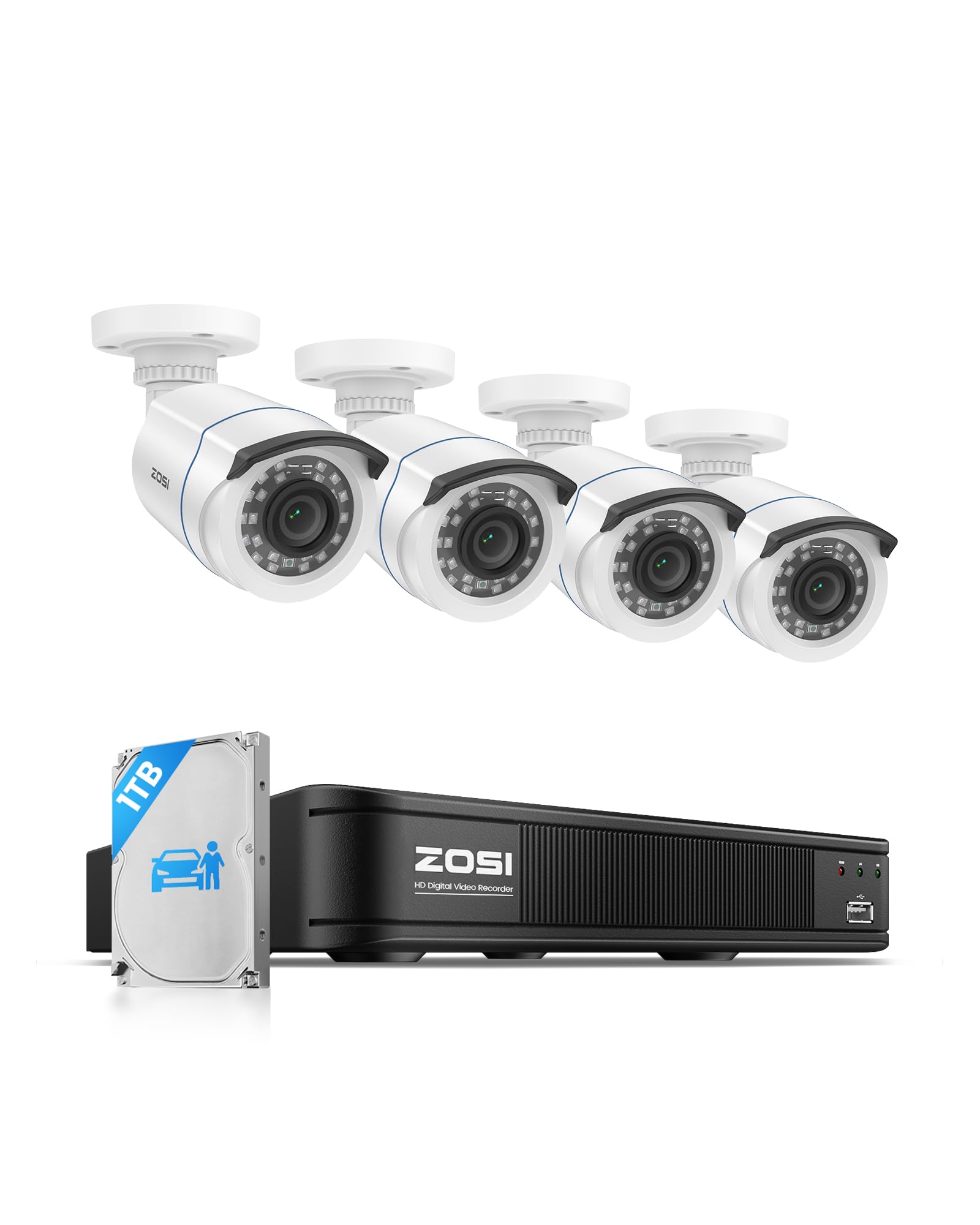
Features and Specifications
Type: Wired DVR surveillance system with four cameras
Recorder: 8-channel DVR, 3K Lite recording class
Cameras: 4 x 1080p wired units
Weatherproofing: IP66 on the cameras
Night Vision: Up to 80ft
Compression: H.265+
Storage: 1TB hard drive preinstalled
Detection: Human and vehicle detection
The headline number is the channel count. An 8-channel recorder ships with four cameras, which leaves four inputs free for later expansion — a garage, a side gate, a back fence line. Buyers who start with a four-channel box usually end up replacing the whole recorder to add a fifth camera; this kit sidesteps that upgrade path.
The second number worth understanding is the "3K Lite" label. It describes the recorder’s recording class rather than the cameras themselves, which are 1080p. The practical read is that the DVR has headroom above the cameras in the box, so a later camera purchase can take advantage of it. Out of the box, the picture coming into the drive is 1080p.
Recorder and Channel Capacity
The DVR is the part that decides how the system feels day to day. Eight channels means eight camera inputs, and with four in use the buyer has room to grow without touching the recorder again. That matters more than it sounds: a wired system’s cost is mostly cable, connectors and time, and re-running cable for a new recorder is the painful part.
H.265+ compression is the other piece of the recorder story. It is a more efficient codec than the older H.264 standard, which means the same 1TB drive holds footage for longer before it overwrites itself. For a buyer who wants a week or two of history rather than a day, that efficiency does real work.
The trade-off here is that a DVR is a fixed-location box. It needs power, a network connection for remote viewing, and a spot where its fan noise and status lights will not annoy anyone. A closet shelf or a utility room is the natural home.
Cameras, Weatherproofing and Night Vision
The four cameras are 1080p wired units rated IP66. That rating is the one to look for outdoors: it means the housing is dust-tight and survives direct spray from any angle, so rain, hose-downs and sprinkler overspray are not a concern. It is not a submersion rating, and it does not make the camera immune to a pressure washer aimed at the lens housing.
Eighty feet of night vision is a generous figure for a consumer kit. It reflects the infrared illuminators built into each camera, and in practice the useful range depends on how much ambient light is around and whether the camera is aimed at a reflective surface. A camera pointed down a long dark driveway will read further than one aimed at a white wall a few feet away.
Wired cameras mean a cable run from each camera back to the DVR. That is the honest cost of this system: no battery swaps, no Wi-Fi dropouts, no charging schedule — but a Saturday with a drill and a cable stapler, or a call to an installer.
Storage and Footage Retention
The 1TB drive comes preinstalled, which removes the most annoying step in setting up a DVR. Buyers do not have to source a surveillance-rated drive separately, open the case and mount it. Plug in, format, and recording starts.
Retention is the number buyers should think about before buying, not after. Four 1080p cameras recording continuously will fill 1TB faster than most people expect, and the drive overwrites the oldest footage once it is full. H.265+ stretches that window considerably, and switching some or all cameras to motion-triggered recording stretches it further. Anyone who wants a month of continuous history from four cameras should plan on a larger drive eventually.
Detection, Alerts and Daily Use
Human and vehicle detection is the feature that separates a usable system from a noisy one. A plain motion trigger fires on a cat, a branch, headlights sweeping across a driveway, or rain on the lens. Filtering for people and cars cuts most of that, which makes phone alerts worth reading instead of muting.
That said, detection quality is the first thing to temper expectations on in a budget-tier kit. These are conventional DVR cameras, not high-end AI units, and detection is tuned to reduce false alarms rather than eliminate them. A buyer who expects zero nuisance alerts will be disappointed; a buyer who expects far fewer than a basic motion system will be satisfied.
Installation and Maintenance
Installation is the deciding factor for most buyers. The kit is wired, so each camera needs a cable run to the recorder, and the recorder needs power and a network link. A single-story home with accessible eaves is a half-day job for a handy homeowner. A two-story house with finished walls is a different proposition.
Maintenance is genuinely light. There are no batteries to change, no solar panels to clean, and no wireless pairing to redo after a router reboot. The occasional job is wiping spiderwebs and dust off the lens hoods and checking that the drive is still recording. The 1TB drive is a mechanical part and will eventually wear out — that is a replacement years down the line, not a monthly chore.
Trade-off: The kit’s value sits in the recorder and the preinstalled drive, so the four bundled cameras are competent 1080p units rather than standout ones — buyers chasing the sharpest possible image should expect to add better cameras to the spare channels later.
Who This System Suits — And Who It Does Not
This kit is a strong fit for a homeowner with a single-family house, accessible cable routes and a preference for local storage over cloud subscriptions. It also suits the buyer who wants a system that works during an internet outage — recording continues to the local drive whether or not the network is up.
It is a poor fit for renters who cannot drill or run cable, for anyone wanting a five-minute screwless setup, and for buyers who expect app-based smart-home integration as a first-class feature rather than a bonus. Anyone who needs crisp identification at long range, such as reading a plate at the end of a long driveway, should budget for better cameras than the bundled ones.
Check the current price and bundle details on Amazon
FAQ
-
What does "3K Lite" mean on this ZOSI DVR?
It describes the recorder’s recording class rather than the cameras. The DVR has headroom above 1080p, so a later camera upgrade can use more of it, but the four cameras in the box record at 1080p. -
Does the ZOSIAI 8CH 3K Lite need a subscription?
No. Recording goes to the 1TB drive inside the DVR, and footage stays local. Remote viewing over the network is part of the system rather than a paid tier. -
Can more cameras be added later?
Yes. The recorder has eight channels and four are in use, leaving four free inputs for extra wired cameras. -
Are the cameras safe outdoors in rain?
The cameras carry an IP66 rating, which covers dust and direct water spray. They are designed for outdoor mounting, though they are not submersible. -
How much footage fits on the 1TB drive?
It depends on how many cameras record and whether recording is continuous or motion-triggered. H.265+ compression and motion-only recording both extend the window considerably; buyers wanting weeks of continuous history from all four cameras should plan on a bigger drive. -
Do the cameras need Wi-Fi?
No. The cameras are wired to the DVR with cable. The recorder itself connects to the network for remote viewing. -
Is night vision really good to 80 feet?
The infrared illuminators are rated to that distance, and real-world reach depends on ambient light and what the camera is aimed at. Open outdoor space reads further than a close reflective wall. -
What is human and vehicle detection for?
It filters alerts so the phone pings for people and cars rather than for every passing cat or swaying branch. It reduces nuisance alerts; it does not eliminate them. -
Can this system be installed without professional help?
A handy homeowner with accessible eaves and a single story can usually manage it. Two-story homes with finished walls often justify an installer for the cable runs. -
What happens when the hard drive fills up?
The DVR overwrites the oldest footage automatically, so recording continues without intervention. Buyers who need to keep specific events should export them before they age out.
Bottom Line
The ZOSIAI 8CH 3K Lite wired DVR system is the right buy for a homeowner who wants four cameras recording to local storage with no subscription, and who values four spare channels and a preinstalled 1TB drive more than the sharpest bundled optics. The cable runs are the real cost — time, not money — and the 1080p cameras are the part to upgrade first if image detail matters. Buyers who cannot run cable, or who want a system out of the box in ten minutes, should look at a wireless kit instead.
