Why there are Amazon links here: Brave Review is paid a commission for qualifying Amazon purchases made through the links below. Your price does not change, and using our links is entirely optional. How this works
Best Books on What a Tenant Can Install Without Permission
Renters who want to hang shelves, mount a TV, swap a faucet, or drill into a wall need to know where permission ends and a lease violation begins. The five books below approach that question from different angles: quick plain-English primers, a full legal reference, and homeowner-side guides that explain property lines and easements. Budget renters, first-time tenants, and anyone planning changes to a unit will each find a match here. The overview table below sorts all five in under a minute.
The Picks at a Glance
| Product | Key Spec | Best Use | Price Tier |
|---|---|---|---|
| Tenant Rights: What Every Renter Should Know | Short plain-language primer | Fast orientation before signing | Budget |
| Understanding Property Lines and Easements | Homeowner-focused property guide | Boundary and easement questions | Budget |
| Every Tenant’s Legal Guide | Comprehensive legal reference | Deep lease and rights research | Mid |
| The Tenant’s Handbook: Know Your Legal Rights | Practical legal knowledge handbook | Everyday renter disputes | Budget |
| The Educated Tenant: What Every Tenant Needs To Know | General tenant education | First-time renters | Budget |
1. Tenant Rights: What Every Renter Should Know
Format: Book
Topic: Tenant rights
Audience: Renters
Approach: Plain-language primer
Price Tier: Budget

Tenant Rights: What Every Renter Should Know
Check the current price on Amazon
This title is built as a short orientation guide rather than a statute-by-statute reference. The name positions it as a what-every-renter-should-know book, which points to broad coverage: leases, deposits, repairs, entry notice, and the general boundaries of what a landlord can restrict. Renters who have never read a lease closely get the vocabulary they need to ask better questions before signing or before picking up a drill.
Its value sits in speed and accessibility. A renter facing a specific question about a wall mount or a bathroom fixture will likely need to follow up with a more detailed source, since a primer’s job is coverage, not depth. The low price makes it an easy first purchase, but the trade-off is that thin, general guides rarely settle a state-specific dispute on their own.
Trade-off: A short, budget primer covers the ground broadly but will not resolve jurisdiction-specific lease language.
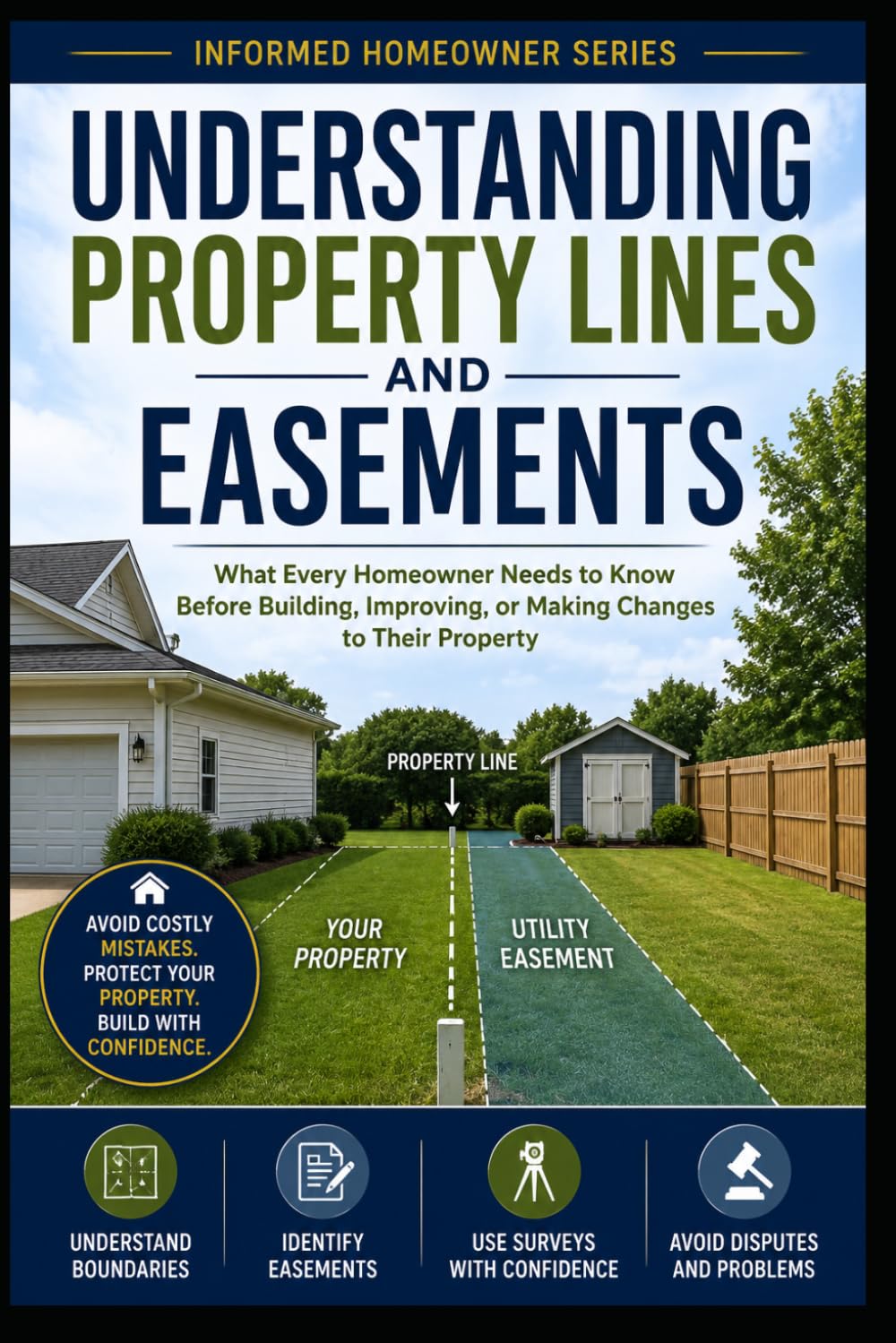
2. Understanding Property Lines and Easements
Format: Book
Series: Informed Homeowner
Topic: Property lines and easements
Audience: Homeowners
Approach: Pre-project reference
Price Tier: Budget
Check the current price on Amazon
This is the odd pick in a tenant-focused list, and it earns its place for renters in houses, duplexes, or units with outdoor space. The name frames it as a pre-project reference for building, improving, or changing a property, with easements and boundary lines as the core subject. A renter planning a fence, a shed, or landscaping near a lot line gets useful context on why those questions are rarely as simple as they look.
The book is written for owners, not renters, so it does not address lease permissions or landlord approval. What it does well is explain the layer underneath: who has rights to which strip of ground and what an easement means for changes nearby. Renters who want to understand a landlord’s caution about a shared driveway or a utility strip will find that explained here.
Trade-off: Written for property owners, so it explains boundaries and easements but not lease terms or tenant permission.
3. Every Tenant’s Legal Guide
Format: Book
Topic: Tenant legal rights
Audience: Renters
Approach: Comprehensive legal reference
Price Tier: Mid
Check the current price on Amazon
This is the heavyweight of the group, and the price reflects it. The title signals a full legal guide rather than a primer, which in practice means structured chapters on leases, deposits, habitability, privacy, repairs, and ending a tenancy. Renters who want one book that answers most questions without buying three will find this the most complete option here.
The depth cuts both ways. A renter with a single narrow question about drilling into a wall has to work through a reference-style layout to find the relevant chapter, and legal guides age as statutes change. For anyone weighing a real dispute or a significant alteration to a unit, though, the extra cost buys substantially more substance than the budget primers.
Trade-off: The most thorough pick here, but a reference-format legal guide costs more and demands more reading effort than a primer.
4. The Tenant’s Handbook: Know Your Legal Rights
Format: Book
Subtitle: Empowering Renters with Practical Legal Knowledge
Topic: Tenant legal rights
Audience: Renters
Approach: Practical handbook
Price Tier: Budget

The Tenant’s Handbook: Know Your Legal Rights: Empowering Renters with Practical Legal Knowledge
Check the current price on Amazon
The subtitle sets the tone: practical legal knowledge for renters, packaged as a handbook. That usually means short sections organized around real situations — a repair that never happens, a deposit that does not come back, a landlord who wants to inspect — rather than a long narrative. Renters who want to look something up quickly and get back to their day are the target audience.
Handbooks trade comprehensiveness for usability, so a reader hunting for a definitive answer on a complicated alteration may come away wanting more. It also sits in the same budget bracket as the other primers, which makes it a reasonable second copy rather than a replacement for a full reference.
Trade-off: Convenient handbook format favors quick lookups over the depth needed for a contested legal question.
5. The Educated Tenant: What Every Tenant Needs To Know
Format: Book
Topic: Tenant education
Audience: Renters
Approach: General guide
Price Tier: Budget
The Educated Tenant: What Every Tenant Needs To Know
Check the current price on Amazon
This one is framed as general tenant education, which makes it the broadest and least specialized of the renter titles here. The name suggests coverage of the whole tenancy arc: finding a place, understanding a lease, living in it, and moving out. First-time renters who want one affordable book to read cover to cover will get the most from it.
Because it aims wide, it is the least likely of the group to answer a precise question about a specific installation or a local rule. Readers who already know the basics will find it repeats ground covered elsewhere. As an entry point at a budget price, though, it does the job of making a new renter harder to surprise.
Trade-off: Broad introductory coverage means less detail on any single topic, including alterations and permissions.
Before You Buy
- Scope: Decide whether the question is about lease permissions (renter titles) or about boundaries and easements (the homeowner title).
- Depth: A primer settles general questions; a full legal guide is the better call before a dispute or a major alteration.
- Jurisdiction: None of these books replaces local statutes or a lawyer’s advice for a specific state or city.
- Format: Handbooks and primers suit quick lookups; reference guides suit sustained reading.
- Currency: Legal guides are revised over time, so check the edition before relying on one.
- Audience: Confirm the book is written for renters if the unit is rented, not for owners.
- Price tier: The budget titles cluster closely, so pick on scope rather than on cost alone.
Frequently Asked Questions
-
Which book is best for a renter planning to mount a TV or drill into a wall?
A full legal guide like Every Tenant’s Legal Guide covers lease terms and landlord restrictions in the most detail, which is the closest these titles get to installation questions. -
Do any of these books cover property lines?
Understanding Property Lines and Easements does, but it is written for owners rather than renters. -
Is a cheap primer enough for a first-time renter?
For general orientation, yes. A primer gives the vocabulary; a reference guide gives the depth. -
Can these books replace legal advice?
No. They explain common rules and rights, but local law and a lawyer’s review govern a specific dispute. -
Which pick suits someone who already knows the basics?
Every Tenant’s Legal Guide, since the primers repeat ground an experienced renter has likely covered. -
Are the renter titles interchangeable?
Not quite. They differ in format and depth — primer, handbook, general guide, and full reference — so match the format to how the book will be used.
Bottom Line
For a renter who wants one book that actually answers the hard questions about what can be changed, hung, or installed, Every Tenant’s Legal Guide is the strongest pick despite the higher price. Renters who want a fast, cheap orientation should start with Tenant Rights: What Every Renter Should Know, and anyone dealing with boundaries or outdoor structures should add Understanding Property Lines and Easements.