Why there are Amazon links here: Brave Review is paid a commission for qualifying Amazon purchases made through the links below. Your price does not change, and using our links is entirely optional. How this works
Best Battery Powered Carbon Monoxide Alarm for a Bedsit
A bedsit packs a sleeping area, a cooking area and sometimes a fuel-burning heater into one small room, so a carbon monoxide alarm belongs on the wall before anything else goes up. This guide covers five battery powered carbon monoxide alarms that suit renters, students and anyone in a compact flat where wiring a mains alarm is not an option. Budget renters get two cheap, simple picks, tech-minded buyers get a display model, and one combined unit covers smoke as well as CO. The overview table below puts all five side by side.
Overview of the Picks
| Product | Key Spec | Best Use | Price Tier |
|---|---|---|---|
| CO400 First Alert Battery Carbon Monoxide Alarm | Battery carbon monoxide alarm | Cheapest no-frills coverage | Budget |
| Digital Backlit Display, LED Status Lights, Loud 85 dB Alarm, Lightweight and Portable for Travel or Home, 5th Edition Kidde Carbon Monoxide Detector, AA Battery-Powered, COBD | Backlit digital display, 85 dB alarm | Readable readings at a glance | Mid |
| LED Status Lights, Loud 85 db Alarm, Lightweight and Portable for Travel or Home, 5th Edition Kidde Carbon Monoxide Detector, AA Battery-Powered, COB | LED status lights, 85 dB alarm | Simple wall or shelf unit | Mid |
| AA Battery Operated, UL 2034 Certified, Mini Small Compact for Home, Low PPM Detection, Early Warning, 735ESY Heiman Carbon Monoxide Detectors, Low-Level Mini Digital Display CO Alarm | Mini size, low-level detection | Tight spaces and early warning | Premium |
| SMCO100 First Alert Battery Combination Smoke & Carbon Monoxide Alarm | Smoke and CO in one unit | One-device coverage in a bedsit | Premium |
CO400 First Alert Battery Carbon Monoxide Alarm
Type: Battery carbon monoxide alarm
Power source: Battery
Brand family: First Alert
Best use: Budget bedsit coverage

CO400 First Alert Battery Carbon Monoxide Alarm
Check the current price on Amazon
This is the plainest alarm in the group and the one most likely to end up in a rented bedsit. It runs on batteries alone, so there is no wiring and no electrician, and the housing is a straightforward wall-mount unit that fits a small room without drawing attention. First Alert builds it as a single-purpose CO alarm, which means it does one job and does it without menus, screens or setup steps. Buyers who want to hang something on the wall, press a test button once a month and forget about it are the target here.
It earns its place as the budget pick because nothing about it is complicated, and that is the point in a bedsit where space and sockets are already tight. The trade-off is the lack of a display: this model gives an alarm and status indication rather than a readable CO figure, so buyers who want to watch levels over time will need to spend more.
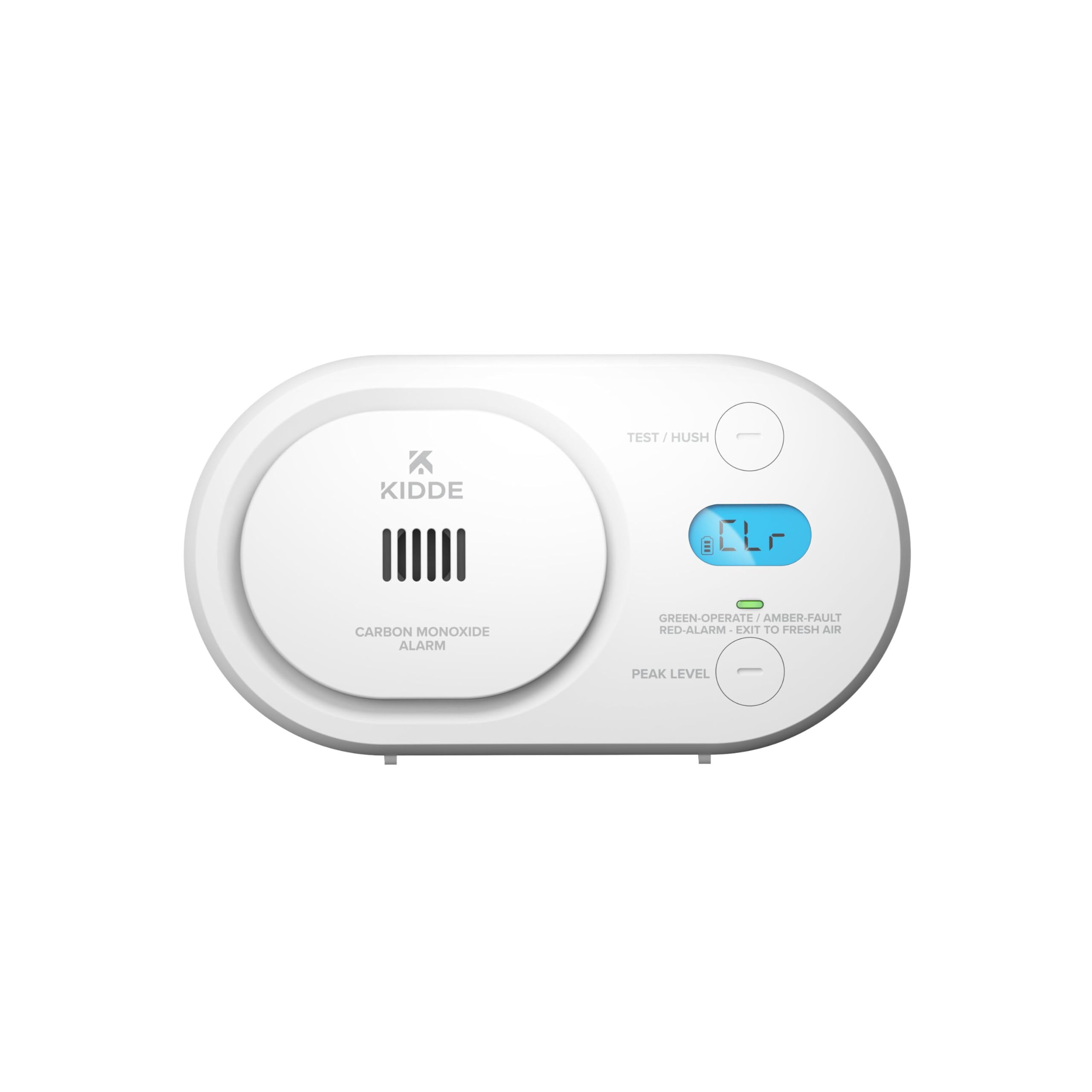
Digital Backlit Display, LED Status Lights, Loud 85 dB Alarm, Lightweight and Portable for Travel or Home, 5th Edition Kidde Carbon Monoxide Detector, AA Battery-Powered, COBD
Type: Battery carbon monoxide detector
Display: Digital backlit
Alarm: 85 dB
Status: LED lights
Power source: AA batteries
Portability: Lightweight, travel or home
Check the current price on Amazon
Kidde’s display model is the pick for anyone who wants to see what the alarm is sensing rather than just hear it. The backlit screen stays readable in a dim bedsit, and the LED status lights give a quick visual check without pressing anything. It runs on AA batteries and is light enough to move between a wall bracket and a bedside table, which suits renters who do not want to drill. The 85 dB alarm is loud enough to wake a sleeper in a small room, and the fifth-edition Kidde platform is the current generation of that line.
This one suits buyers who travel or move often, since the same unit can cover a bedsit and a caravan or a hotel room. The trade-off is price and complexity: a backlit display and status LEDs cost more than a bare alarm, and a screen adds one more thing to think about in a room where simplicity usually wins.
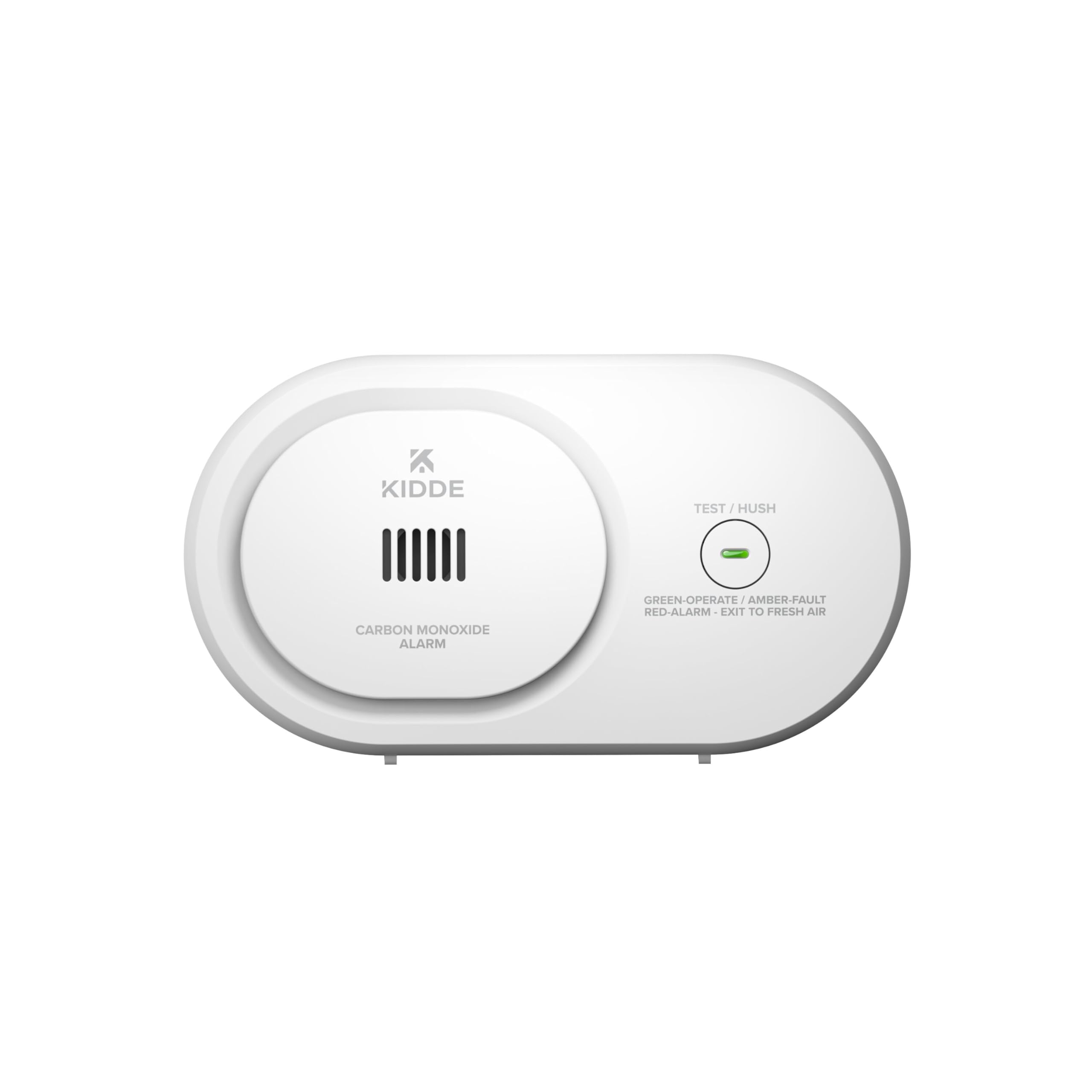
LED Status Lights, Loud 85 db Alarm, Lightweight and Portable for Travel or Home, 5th Edition Kidde Carbon Monoxide Detector, AA Battery-Powered, COB
Type: Battery carbon monoxide detector
Alarm: 85 dB
Status: LED lights
Power source: AA batteries
Portability: Lightweight, travel or home
Check the current price on Amazon
This is the same Kidde fifth-edition platform as the display model, minus the screen. LED status lights carry the information instead, so a glance tells the buyer whether the unit is powered and working. It takes AA batteries, weighs little, and is built to sit on a shelf or hang on a wall, which makes it a good fit for a bedsit where the alarm lives a metre from the bed. The 85 dB alarm is the same loud output as its sibling.
It suits renters who want current-generation Kidde electronics without paying for a display they will rarely read. The trade-off is information: with no screen, this model reports status and alarms rather than CO levels, so buyers who want to track readings should step up to the display version.
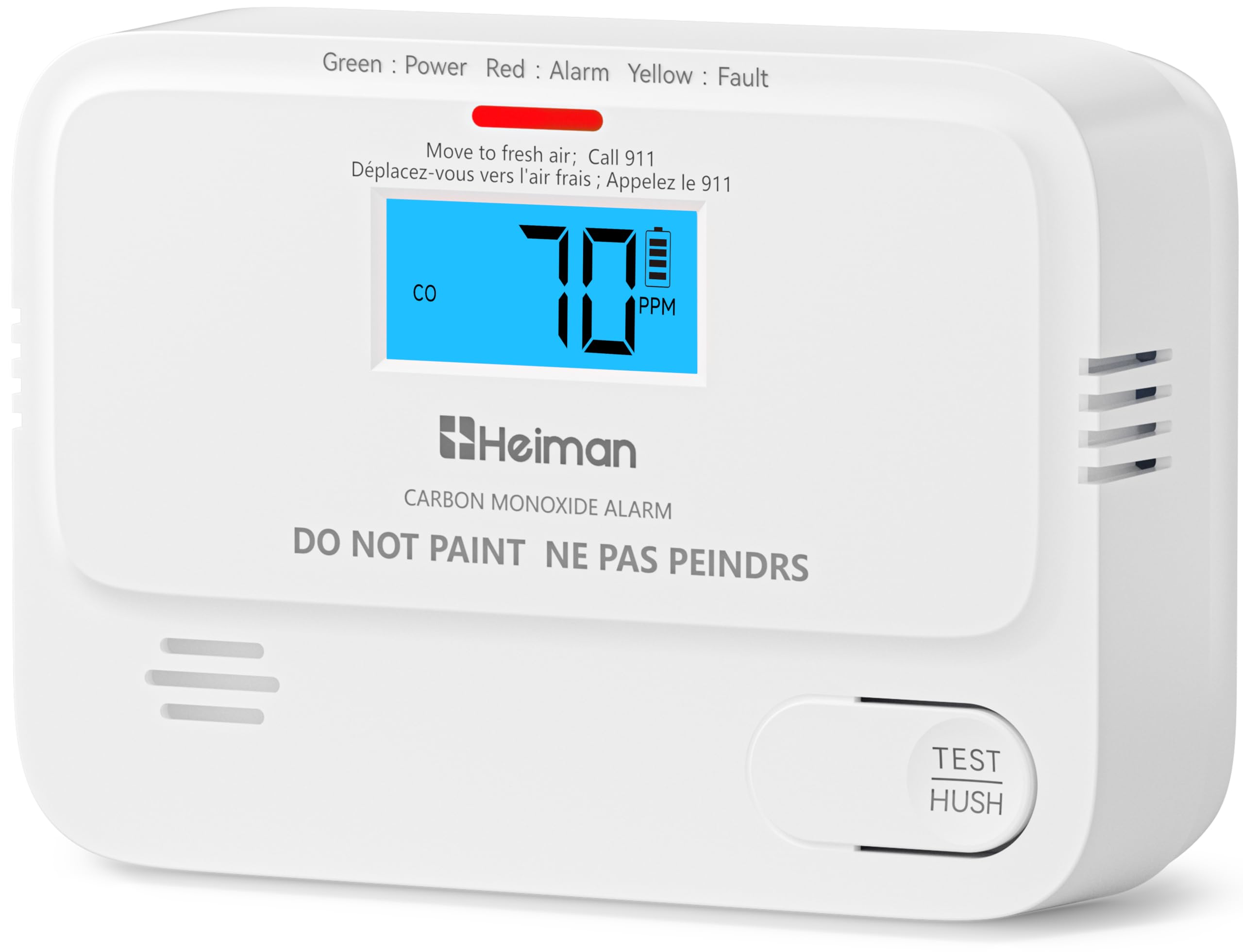
AA Battery Operated, UL 2034 Certified, Mini Small Compact for Home, Low PPM Detection, Early Warning, 735ESY Heiman Carbon Monoxide Detectors, Low-Level Mini Digital Display CO Alarm
Type: Mini digital CO alarm
Certification: UL 2034
Detection: Low PPM, early warning
Display: Mini digital
Power source: AA batteries
Size: Small, compact
Check the current price on Amazon
Heiman’s mini unit is the smallest alarm here and the one built for early warning rather than bare compliance. It is UL 2034 certified, runs on AA batteries, and adds low-level detection so it reacts to smaller CO concentrations before they build into a full alarm event. The mini digital display shows readings in a footprint small enough for a shelf, a windowsill or the narrow wall strip beside a bedsit kitchenette. Buyers who want the earliest possible heads-up from a device that barely takes up space are the audience.
It earns the premium spot on detection range and size, and it is the pick for a bedsit with a gas hob or an old heater where slow leaks are the worry. The trade-off is cost and smallness: it is the priciest single-purpose alarm in the group, and the compact body means a small screen that some buyers will find fiddly to read from across a room.
SMCO100 First Alert Battery Combination Smoke & Carbon Monoxide Alarm
Type: Combination smoke and CO alarm
Power source: Battery
Brand family: First Alert
Best use: One-device coverage

SMCO100 First Alert Battery Combination Smoke & Carbon Monoxide Alarm
Check the current price on Amazon
A bedsit often has room for one alarm, not two, and this First Alert unit covers both risks in a single battery-powered housing. It detects smoke and carbon monoxide together, so a cooking fire and a faulty heater both trigger the same device. Battery operation keeps the install simple, and the First Alert build is the same family as the budget pick above, which means familiar test and hush behaviour. It is the sensible choice for a studio where the kitchen, the bed and the heater share one ceiling.
This pick suits buyers who would otherwise leave a smoke alarm off the list, and it earns its place by closing that gap in one purchase. The trade-off is that combination units cost more than a CO-only alarm, and a single device sited for smoke coverage may sit further from the boiler or hob than a dedicated CO unit would.
Before You Buy
- Power source: Battery-only alarms need no wiring and suit rented bedsits, but the batteries must be replaced on schedule and the test button pressed monthly.
- Placement: A CO alarm belongs near the sleeping area and the fuel-burning appliance, not in a corner behind furniture; a bedsit usually means one unit in the middle of the room.
- Display: A digital screen shows CO readings and helps spot a slow build-up; a screenless model only alerts when levels are already high.
- Certification: Look for a stated standard such as UL 2034 on the box, since that is the marker of a tested CO alarm rather than a generic gas sensor.
- Combination vs single: A smoke-and-CO unit saves wall space in a studio but costs more; a CO-only alarm leaves smoke coverage to a second device.
- Portability: Lightweight travel-friendly models can move between a bedsit, a caravan and a hotel room, which matters for buyers who are not settled.
- Low-level detection: Alarms that react to low CO concentrations give earlier warning, which is worth considering in a room with an old gas fire or hob.
Frequently Asked Questions
-
Where should a CO alarm go in a bedsit?
Near the sleeping area and within reach of the fuel-burning appliance, ideally at head height on a wall or on a shelf where it will not be covered. In a single room, one well-placed unit usually covers the whole space. -
Is a battery powered CO alarm enough for a rented bedsit?
Yes, a battery unit is a practical choice where wiring is not permitted, provided the batteries are fresh and the test button is checked regularly. Many renters prefer it because it leaves no installation work behind. -
Do I need a CO alarm if the bedsit has an electric heater?
A CO alarm is only essential where fuel is burned, such as gas, oil or solid fuel. An all-electric bedsit with no gas hob or fuel appliance has no CO source, though a smoke alarm is still needed. -
What does 85 dB mean on an alarm?
It is the loudness of the alarm tone, and 85 dB is loud enough to wake most sleepers in a small room. A bedsit is small enough that a single 85 dB unit carries through the space. -
Should a bedsit have a combined smoke and CO alarm?
A combination unit is a good fit when there is only room for one device, since it covers both risks. Buyers who already have a smoke alarm can save money with a CO-only model. -
How often do battery CO alarms need attention?
The battery should be replaced on the schedule the manufacturer states, and the test button pressed monthly. The whole unit also has a service life and should be replaced when the manufacturer says so.
Bottom Line
For most bedsits, the CO400 First Alert Battery Carbon Monoxide Alarm is the pick that gets a tested, battery-powered CO alarm on the wall for the least money and the least fuss. Buyers who want a readable display or early low-level warning should look at the Kidde display model or the Heiman mini, and anyone with room for only one device should take the First Alert combination unit.
