Why there are Amazon links here: Brave Review is paid a commission for qualifying Amazon purchases made through the links below. Your price does not change, and using our links is entirely optional. How this works
aosu 2K Solar Security Cameras vs Arlo Essential Outdoor Pan Tilt Zoom: Coverage or Flexibility?
This comparison covers two very different ways to watch the outside of a home: a six-camera solar kit that blankets a property, and a two-camera wired pan-and-tilt pair that moves to follow what it sees. The aosu 2K Solar Security Cameras suit owners who want wide coverage without running power or paying a subscription, while the Arlo Essential Outdoor Pan Tilt Zoom suits smaller properties where one camera needs to cover more ground. The sections below break down power, detection, storage and cost so a buyer can pick in a minute.
The Picks at a Glance
| Product | Key Spec | Best Use | Price Tier |
|---|---|---|---|
| aosu 2K Solar Security Cameras | 6-camera solar kit, 2K, local storage, no subscription | Whole-property coverage | Mid-range |
| Arlo Essential Outdoor Pan Tilt Zoom | 2-camera wired kit, 2K, 360° pan, 180° tilt, auto tracking | Flexible coverage of one or two zones | Budget |
aosuTrue 2K Solar Security Cameras Wireless Outdoor System, 6-Cam-Kit
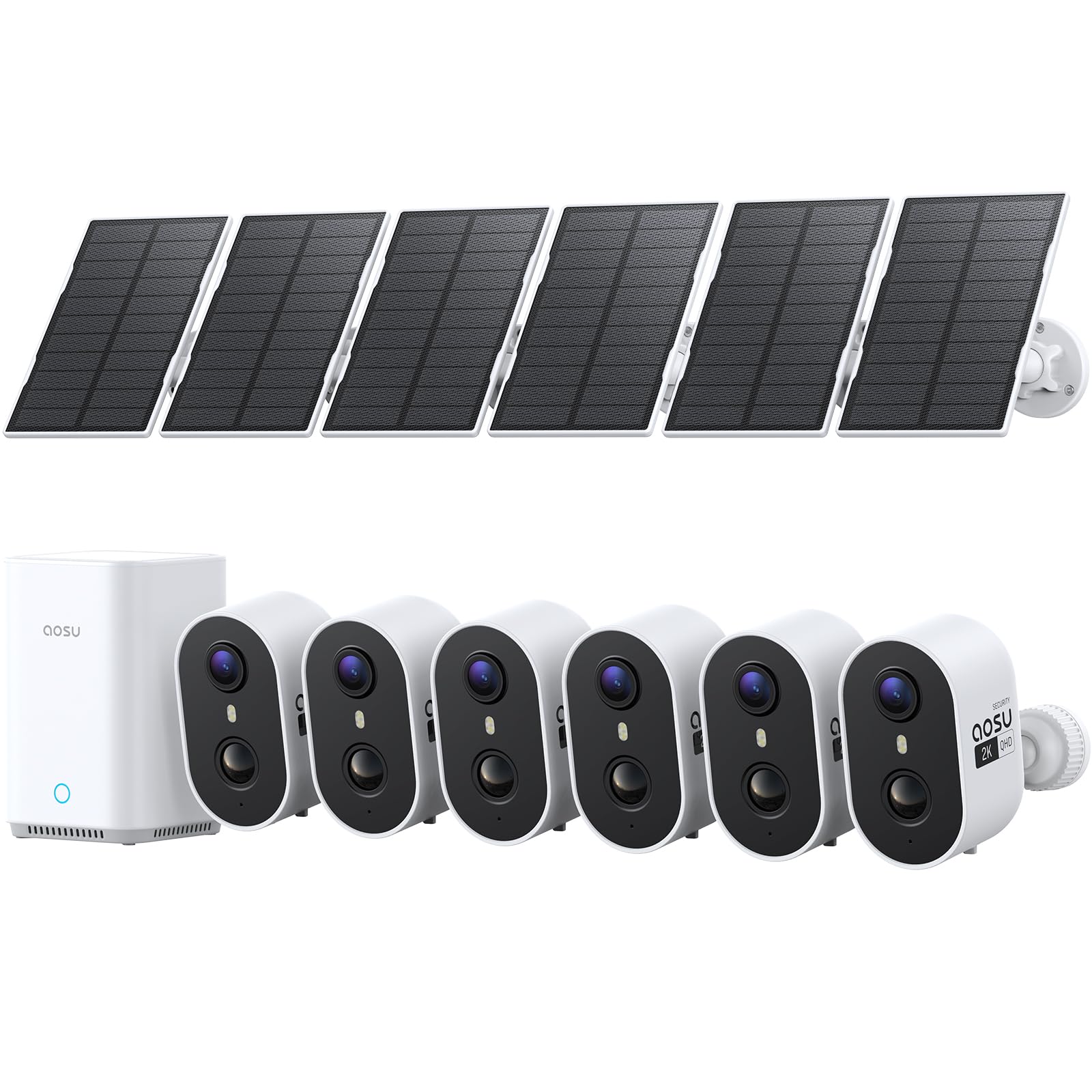
Resolution: 2K HD
Night Vision: Color night vision
Detection: PIR + AI human detection
Tracking: Cross-camera tracking
Storage: Local storage
Subscription: None required
Power: Solar
Kit Size: 6 cameras
This is a coverage system rather than a single camera. Six solar-powered units spread across a yard, driveway, side gate and back door mean fewer blind spots than any one moving camera can offer, and the panels keep the batteries topped up without an electrician. The 2K sensor and color night vision keep detail usable after dark, which matters most for identifying a face or a vehicle.
Cross-camera tracking is the standout feature here. When a person moves from one camera’s field of view into another’s, the system hands the subject off between units, so a single event reads as one continuous trail instead of six disconnected clips. PIR plus AI human detection cuts down on alerts triggered by branches and passing headlights, and local storage keeps recordings on a card in the home rather than in a paid cloud.
The absence of a required subscription is the practical headline. Footage stays on local storage, so there is no monthly bill and no dependence on a server staying online. That said, local storage means the homeowner is responsible for the card, its capacity and its health, and a stolen or damaged camera can take its recordings with it unless the system backs up elsewhere.
Trade-off: Six cameras mean six devices to mount, charge-check and keep clean, and a solar kit this size demands a real installation afternoon rather than a ten-minute setup.
Check the current price on Amazon
Arlo Essential Outdoor Pan Tilt Zoom Security Camera 2K Wired – 2-Cam
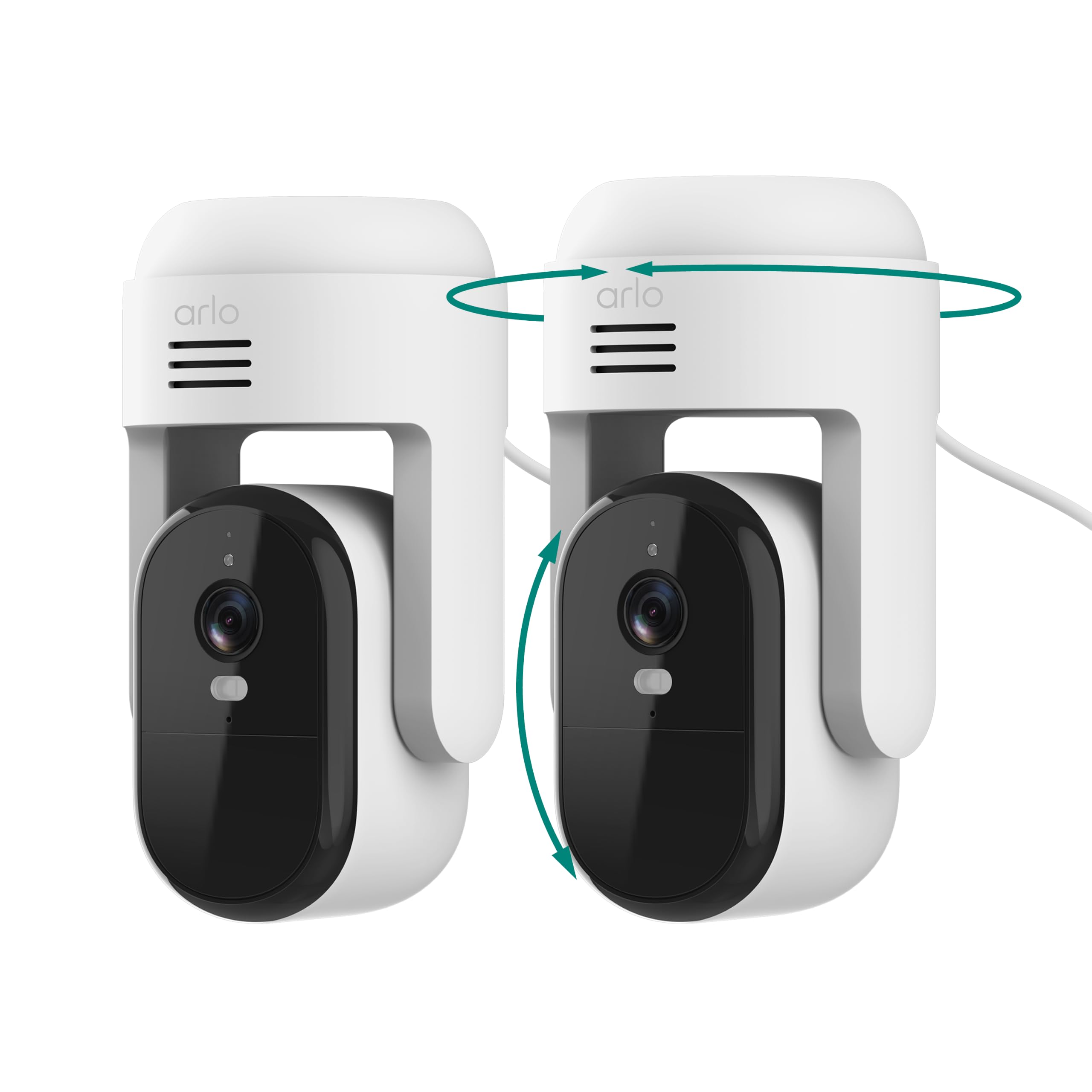
Resolution: 2K
Movement: 360° pan, 180° tilt
Detection: Person, vehicle, package and pet detection
Tracking: Auto motion tracking
Power: Wired
Plan: 1-month Secure plan included
Kit Size: 2 cameras
Where the aosu spreads fixed eyes around a property, this Arlo pair moves. A 360-degree pan and 180-degree tilt let each camera sweep a wide arc, and auto motion tracking turns the lens to follow a subject as it crosses the yard. Two of them cover a front and back approach without the mounting sprawl of a six-camera kit.
The detection list is unusually specific for the money: person, vehicle, package and pet are called out separately, so alerts can be filtered by what actually triggered them. Package detection in particular earns its keep on a front porch. The 2K resolution matches the aosu, and the wired power supply removes any worry about batteries or panel placement, though it does mean a cable run to each camera location.
The included one-month Secure plan is worth noting as a trial rather than a feature. Cloud features and richer alerting typically sit behind that plan once the month ends, so a buyer should decide in advance whether to continue paying or lean on local options. The pan and tilt mechanism is also more to go wrong than a fixed lens, and it draws more power, which is part of why this unit is wired rather than solar.
Trade-off: Two moving cameras cover less total ground than six fixed ones, and the subscription question arrives after the first month rather than never.
Check the current price on Amazon
Side-by-Side Comparison
| Feature | aosu 2K Solar Security Cameras | Arlo Essential Outdoor Pan Tilt Zoom |
|---|---|---|
| Cameras in kit | 6 | 2 |
| Resolution | 2K | 2K |
| Power source | Solar | Wired |
| Movement | Fixed position | 360° pan, 180° tilt |
| Motion tracking | Cross-camera tracking | Auto motion tracking |
| Detection types | PIR + AI human | Person, vehicle, package, pet |
| Night vision | Color | Standard outdoor night vision |
| Storage | Local | Cloud plan included for 1 month |
| Subscription | None required | Secure plan after trial |
| Installation effort | High (six mounts) | Moderate (two cable runs) |
The table makes the split obvious. The aosu wins on raw coverage and on long-term cost, because six cameras and no subscription fee deliver more watched area for a single outlay. The Arlo wins on adaptability and on the granularity of its alerts, since a moving lens can be aimed at whatever matters and package detection is built in.
Power is the second fault line. Solar means no wiring and no electrician, but it also means panel placement, seasonal light and battery health become part of ownership. Wired means a cable run and a nearby outlet, but the camera never asks for a charge and the pan motor always has the current it needs.
Storage is the third. Local storage on the aosu keeps the monthly bill at zero and keeps footage inside the home, at the cost of managing a memory card and accepting that a stolen camera takes its card with it. The Arlo’s included plan hints at where the ongoing value sits, and buyers who dislike subscriptions should weigh that against the trial period.
Which Should You Buy?
Choose the aosu 2K Solar Security Cameras if:
- The property has several distinct zones — driveway, side gate, back door, shed — that all need watching.
- A monthly subscription is a dealbreaker and footage should stay on local storage.
- Running power to six outdoor points is impractical, making solar the only realistic option.
- The priority is a complete record of movement across a property rather than a close look at one spot.
Choose the Arlo Essential Outdoor Pan Tilt Zoom if:
- One or two camera positions can realistically cover the whole area of interest.
- The ability to pan, tilt and auto-track a subject matters more than covering every corner.
- Package, vehicle and pet alerts are wanted as separate, filterable categories.
- A wired connection is available and preferable to panel placement and battery checks.
Neither is a universal answer. A large lot with outbuildings favors the aosu; a compact yard with a single driveway and a front door favors the Arlo.
Frequently Asked Questions
-
Does the aosu kit require a subscription?
No. The system is built around local storage and the product name states no subscription is required, so recordings stay on a local card rather than a paid cloud. -
Can the Arlo cameras work without the Secure plan after the first month?
The one-month Secure plan is included, and cloud-dependent features typically sit behind it. A buyer should confirm which functions remain available on a free tier before committing, since that determines the real long-term cost. -
Which system is better for night recording?
The aosu lists color night vision, which keeps color information in low light and can help with identifying clothing or vehicle color. The Arlo does not advertise color night vision in its name, so buyers who prioritize nighttime detail should weigh that difference. -
Is a solar camera reliable in winter?
Solar panels depend on daylight, and shorter, cloudier days reduce charging. The aosu system is designed around solar power, but buyers in regions with long dark winters should expect to monitor battery levels more closely in the colder months. -
How much installation work does each involve?
The aosu kit means mounting six cameras and positioning six solar panels, which is a substantial afternoon’s work. The Arlo pair needs two mounts and two cable runs to power, which is less hardware but may require routing cable through a wall. -
Which one is easier to expand later?
The aosu already covers six positions, so expansion is less likely to be needed. The Arlo’s two-camera kit leaves room to add units, but each addition carries its own cost and, potentially, its own plan considerations. -
Do moving cameras miss events while they are turned away?
A pan-and-tilt camera can only look in one direction at a time, so an event behind it at the wrong moment may be missed before the motor swings around. Fixed multi-camera systems avoid this by watching every angle simultaneously. -
Which is the better value for a first security setup?
The Arlo kit carries the lower upfront price and fewer devices to manage, which suits a first-time buyer testing a small setup. The aosu costs more but spreads that cost across six cameras and removes subscription fees, which tends to pay off for larger properties.
Bottom Line
For a property with several zones to watch and a firm preference for no monthly fees, the aosuTrue 2K Solar Security Cameras is the stronger pick: six solar cameras, cross-camera tracking and local storage cover more ground for one outlay. The Arlo Essential Outdoor Pan Tilt Zoom remains the smarter choice for a compact yard where one or two moving cameras can see everything, and where package and pet alerts justify the plan question. Match the kit to the size of the property, and the decision makes itself.
