Why there are Amazon links here: Brave Review is paid a commission for qualifying Amazon purchases made through the links below. Your price does not change, and using our links is entirely optional. How this works
ASUS ROG Strix GS-BE12000: A 12Gbps Gaming Router for Crowded Homes
The ASUS ROG Strix GS-BE12000 is a tri-band WiFi 7 gaming router built for households that put a premium on low-latency play and fast local transfers. It is aimed at gamers who run wired consoles and PCs alongside a busy wireless network, and at anyone who wants multi-gigabit ports without stepping up to a flagship price. This review covers what the specifications mean in practice, where the router fits, and the trade-offs a buyer should weigh before ordering.
Features and Specifications
Type: Tri-band WiFi 7 gaming router
Total Throughput: 12Gbps
Wired Ports: Eight 2.5G ports
Coverage: Up to 3,300 sq. ft.
Gaming Features: Game Boost for low-latency gaming and streaming
Security: VPN support
Mesh: Supported
Price Tier: Premium
The headline number here is the 12Gbps aggregate throughput across three bands. In plain terms, that is a lot of wireless capacity — enough that the router is less likely to choke when several devices stream, download and play at once. The WiFi 7 standard behind it is the current generation of wireless, and it is the main reason this unit sits in the premium tier rather than the budget aisle.
The wired side is arguably the more interesting part for gamers. Eight 2.5G ports is an unusually generous count, and it means a buyer can hardwire a gaming PC, a console, a NAS and a streaming box without reaching for a switch. For anyone who has ever run out of LAN ports on a stock router, that alone justifies a closer look.
Build and Design
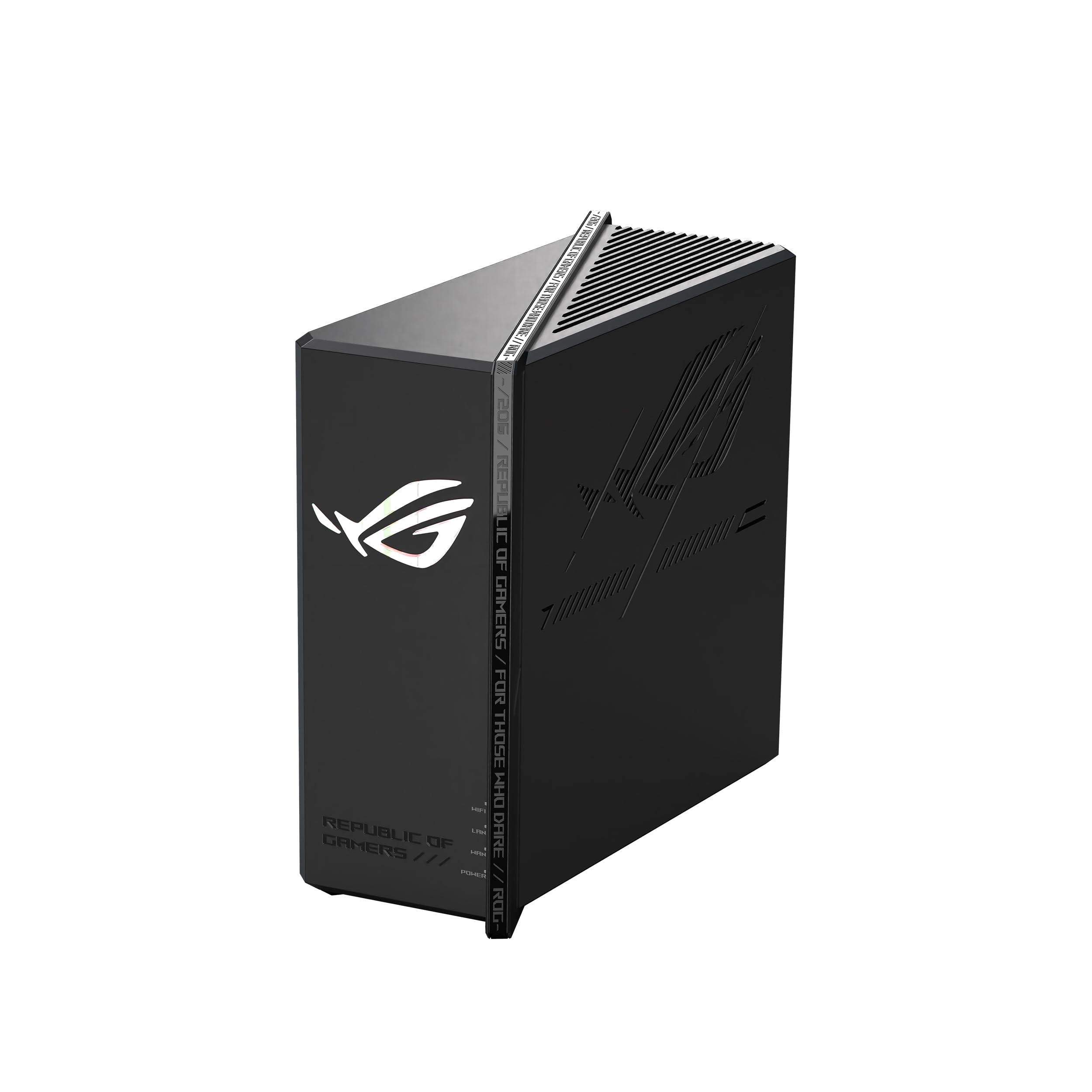
A gaming router at this level is typically a large, aggressively styled box with external antennas and a fair amount of ventilation. Buyers should expect it to take up real shelf or desk space, and it is not the sort of device that hides neatly in a media cabinet. The ROG line leans into that aesthetic deliberately, so the look is a feature rather than an accident.
The practical consequence is placement. A router this size needs airflow and a reasonably central position to make the most of its coverage claim, which means a buyer needs a spot that is both open and out of the way. That is worth planning before the box arrives.
Capacity and Coverage
The 3,300 sq. ft. coverage figure puts this router in the large-home category. In a single-family house with walls and a couple of floors, that is generally enough to reach most rooms without a second node, though thick masonry or a long, narrow layout can still leave dead spots.
The mesh support matters more than the raw coverage number. If the house turns out to be too awkward for one unit, a second compatible node can be added later rather than replacing the whole system. That makes the router a reasonable long-term buy for someone who may expand.
Ports and Wired Performance
Eight 2.5G ports is the standout specification. Multi-gigabit Ethernet is what lets a fast internet plan actually deliver, and it also speeds up local transfers between a PC and a NAS. A buyer paying for a multi-gig plan and plugging into gigabit ports is leaving money on the table; this router avoids that trap.
The port count also changes how a home network is built. Instead of a router plus a separate switch, the GS-BE12000 can act as the hub for a whole desk of wired devices. Fewer boxes, fewer power bricks, and one place to troubleshoot.
Gaming and Latency Features
Game Boost is the router’s low-latency mode for gaming and streaming. The idea is straightforward: prioritize traffic that is sensitive to delay and keep it moving ahead of bulk downloads and background updates. For a household where someone is gaming while someone else streams, that prioritization is the difference between a smooth match and a stutter.
VPN support rounds out the feature set. It is useful for buyers who route traffic through a VPN at the router level rather than per device, though it is a convenience feature rather than a gaming one, and it can cost some throughput depending on the setup.
Trade-off: At this price and size, the GS-BE12000 is more router than a small apartment or a light-use household needs, and the money would be better spent elsewhere.
Who Should Buy the ASUS ROG Strix GS-BE12000
This router suits a specific buyer: a gamer in a larger home who wants wired ports for a PC or console, a fast wireless network for everything else, and headroom for a multi-gig internet plan. It also fits a household where several people compete for bandwidth at the same time and latency actually matters.
It is a poor fit for a studio apartment, a single-person household on a standard plan, or anyone who wants a router that disappears into a cabinet. Those buyers pay for capacity and ports they will never use. The GS-BE12000 rewards a network that can put it to work.
FAQ
-
Is the ASUS ROG Strix GS-BE12000 a WiFi 7 router?
Yes. It is a tri-band WiFi 7 router with 12Gbps of aggregate throughput, which is the current wireless generation and the reason it sits in the premium tier. -
How many Ethernet ports does the GS-BE12000 have?
It has eight 2.5G ports. That is enough to hardwire a gaming PC, a console, a NAS and a streaming device without adding a separate switch. -
What does Game Boost do?
Game Boost prioritizes gaming and streaming traffic to keep latency low when other devices on the network are downloading or streaming at the same time. -
Can the GS-BE12000 cover a large house?
ASUS rates coverage at up to 3,300 sq. ft., which suits most single-family homes. Awkward layouts with thick walls may still need a second mesh node. -
Does the router support mesh networking?
Yes. Mesh support means a second compatible node can be added later to extend coverage instead of replacing the router. -
Is VPN support included?
Yes. VPN support lets a buyer route traffic through a VPN at the router level rather than configuring each device individually. -
Who is this router not for?
Buyers in small apartments, light-use households, or anyone on a standard internet plan will pay for capacity and ports they will not use. -
Does a multi-gig internet plan need this router?
A multi-gig plan benefits from multi-gig ports. Gigabit ports would cap the connection, so the 2.5G ports are what let a fast plan actually deliver. -
Is the GS-BE12000 worth the premium price?
For a gamer with wired devices and a busy network, the port count and WiFi 7 capacity justify the tier. For everyone else, a cheaper router does the job. -
What should a buyer check before ordering?
Confirm the internet plan speed, count the devices that need a wired connection, and pick a central spot with airflow for a router of this size.
Bottom Line
The ASUS ROG Strix GS-BE12000 is a premium gaming router that earns its price for the right household: eight 2.5G ports, tri-band WiFi 7 capacity, and gaming prioritization in one box. Buyers in larger homes with wired devices and a fast plan will get real use out of it. Smaller households should spend less.