Why there are Amazon links here: Brave Review is paid a commission for qualifying Amazon purchases made through the links below. Your price does not change, and using our links is entirely optional. How this works
Portable Power Station 500W: The Budget Backup That Covers the Basics
A portable power station 500W is the smallest class of backup battery that still runs real household appliances, and this 519.48Wh lithium pack is the cheapest credible way into that class. It suits campers, RV owners and anyone who wants a few hours of lights, laptop and fan during an outage. It is not for running a fridge, a heater or anything with a compressor for long. The review below covers the specifications, what they mean in practice, and where this unit falls short.
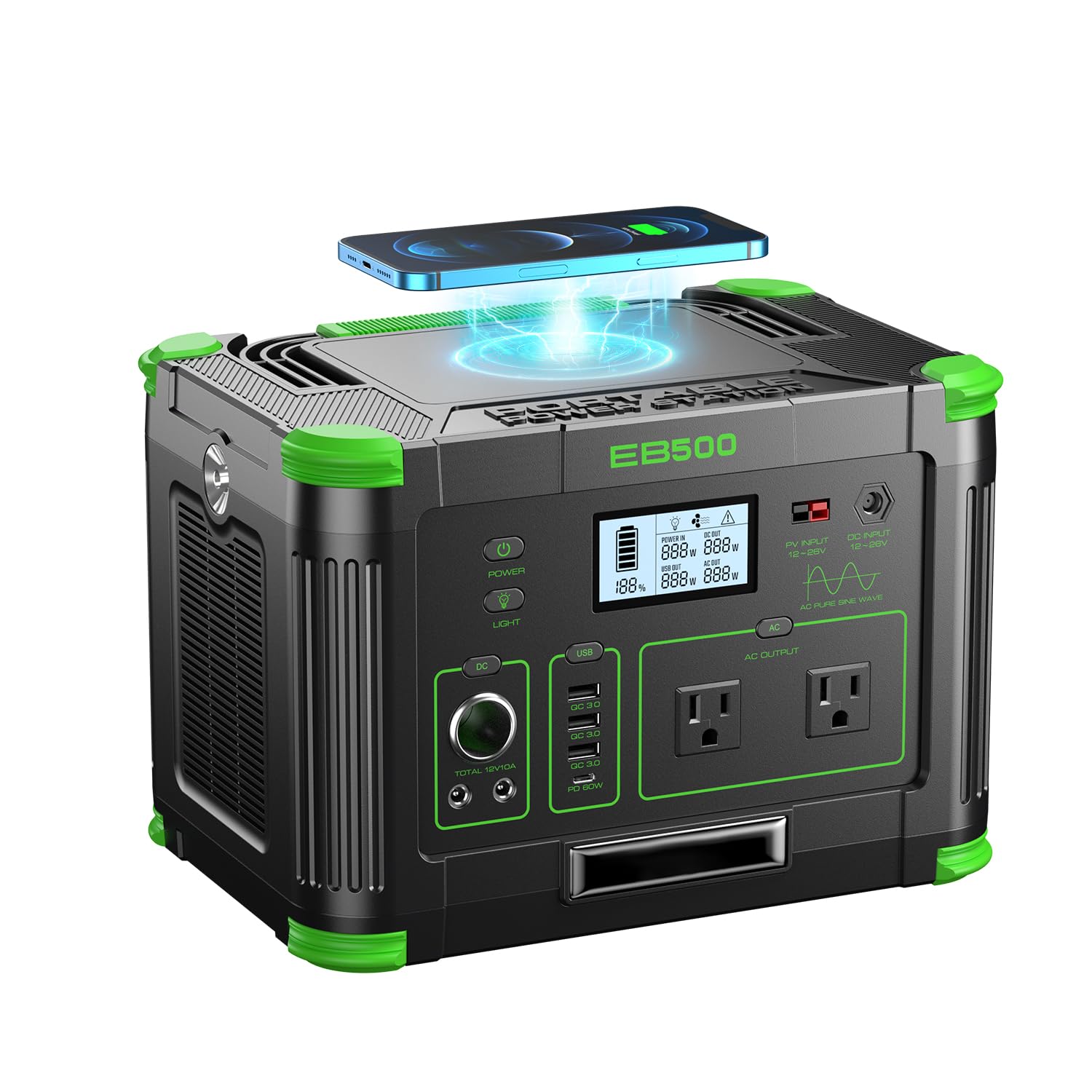
Features and Specifications
Type: Lithium battery pack power supply / portable power station
Rated Output: 500W
Capacity: 519.48Wh (140400mAh)
AC Outlets: 2
USB-C Output: PD 60W
Intended Use: Outdoor RV camping, home outage, emergency backup
Charging Input: Solar generator compatible
These are the facts the listing states, and they are enough to place the unit precisely. The 500W rating is the ceiling on what the inverter can push out at once, while the 519.48Wh figure is the total energy stored — two different numbers that buyers routinely confuse. The 140400mAh rating is the same capacity expressed the way power bank shoppers are used to reading it.
The dual AC outlets are the headline feature. Most batteries in this price bracket give one household socket, so two means a lamp and a laptop can run together without a splitter. The PD 60W USB-C port is the other standout: it will fast-charge a modern laptop or phone directly, no wall adapter needed.
Check the current price on Amazon
Build and Portability
A 500W-class station with roughly half a kilowatt-hour inside is a carry-with-one-hand object, not a backpack item. Lithium chemistry keeps the weight down compared with older sealed-lead designs, which is the main reason this format has replaced the heavy jump-starter boxes of a decade ago. Buyers should expect a solid plastic shell with a carry handle and a footprint about the size of a small cooler.
The trade-off here is ruggedness. Budget stations prioritize cost and weight over weather sealing and impact protection, so this unit belongs in a car trunk or a tent, not strapped to an open trailer in the rain. Buyers who need it to survive dust and splashes should look at a higher price tier.
Capacity and Runtime
519.48Wh is the number that decides what this station can actually do. In plain terms, it will run a phone or a laptop for days, a LED lamp and a fan through an evening, and a small television for a few hours. That covers the realistic emergency scenario: keeping communications, light and a little comfort going while the grid is down.
It will not run a full-size refrigerator, a space heater, a microwave or a coffee maker for meaningful stretches. Those appliances either exceed the 500W inverter limit outright or drain the battery in well under an hour. Buyers whose outage plan centers on keeping food cold need a larger class of station entirely.
Power Output and Ports
The 500W continuous rating sets the ceiling, and the two AC outlets share it. Running a laptop charger and a lamp together is comfortable; running two high-draw devices at once is not. Buyers should add up the wattage printed on the back of anything they plan to plug in before assuming it will work.
The PD 60W USB-C port is the most useful output on the unit for modern buyers. It charges laptops, tablets and phones at their native fast-charge rates and avoids the inefficiency of converting DC to AC and back. Older USB-A ports, where present, handle the smaller devices.
Charging and Solar Input
The listing describes the unit as solar generator compatible, meaning it accepts a panel input for off-grid recharging. Buyers planning to rely on solar should confirm the panel’s voltage and connector match before buying, since mismatched panels are the most common reason a station charges slowly or not at all.
Wall charging is the faster route at home, and the capacity here means a full recharge takes a few hours rather than minutes. Buyers who need the station ready at a moment’s notice should keep it topped up rather than storing it empty.
Trade-off: The low price is bought with a modest inverter ceiling and no meaningful weather sealing, so this station handles lights, screens and small fans well but nothing with a heating element or a compressor.
Who Should Buy It
This station is the right call for three groups. Campers and RV owners who want to run lights, charge devices and keep a fan going overnight will find the capacity comfortably matched to the job. Homeowners in areas with short, infrequent outages get a cheap insurance policy that covers phones, a lamp and a laptop. And buyers who want a large-capacity power bank for tailgates and picnics get two AC outlets and 60W USB-C in one box.
It is the wrong call for anyone planning to back up a refrigerator, a medical device with a high continuous draw, or a whole room. It is also a poor fit for buyers who need the station to live outdoors permanently, since the housing is not built for weather. Those shoppers should budget for a larger, sealed unit.
See the listing and current price on Amazon
FAQ
-
How long will a portable power station 500W run a refrigerator?
It will not run a full-size refrigerator for long. The compressor’s startup surge typically exceeds the 500W inverter limit, and the 519.48Wh capacity would be drained in well under an hour even if it started. This class of station is for lights, screens and small fans. -
What can a 500W power station actually power?
Laptops, phones, LED lamps, fans, a small television, a router and a camera charger all run comfortably. Anything with a heating element — kettles, space heaters, irons — or a compressor is out of scope. -
How long does it take to charge?
Wall charging is the fast option and typically takes a few hours for a pack this size. Solar charging depends entirely on the panel and conditions, and buyers should match the panel to the station’s input before relying on it. -
Can it be charged with a solar panel?
The listing describes it as solar generator compatible, so yes, with a matching panel. Buyers should verify the panel’s voltage and connector type against the station’s input to avoid slow or failed charging. -
Is 519.48Wh enough for a camping trip?
For a weekend of phone, laptop, lamp and fan use, yes. For a group running multiple devices or a powered cooler, no — buyers should size up or bring a second battery. -
What does 140400mAh mean compared with Wh?
They describe the same stored energy in different units. Watt-hours are the more useful figure because appliance ratings are in watts, making runtime easy to estimate. -
Can it run a CPAP machine overnight?
A CPAP without a heated humidifier typically draws well within the 500W limit and can run for a night on this capacity. Heated humidifiers draw far more and shorten runtime sharply. -
Is it safe to leave plugged in?
Lithium stations of this type are designed for standby use, and most buyers keep them topped up between outings. The unit should still be kept out of direct sun and away from moisture. -
Can two AC outlets run at the same time?
Yes, but they share the 500W ceiling. Two low-draw devices are fine; two high-draw devices will trip the inverter. -
Who should not buy this station?
Buyers who need refrigerator backup, whole-room power, or a unit that lives outdoors permanently should look at a larger, sealed model. This one is a budget entry point, not a whole-home solution.
Bottom Line
For buyers who want a portable power station 500W that covers lights, laptops, phones and a fan without spending much, this 519.48Wh lithium pack is the sensible entry point — two AC outlets and 60W USB-C at a budget price. It is not a refrigerator backup and not a weatherproof outdoor fixture, and buyers should be honest with themselves about which of those they need. Anyone whose outage plan stops at screens and lamps will be well served.