Why there are Amazon links here: Brave Review is paid a commission for qualifying Amazon purchases made through the links below. Your price does not change, and using our links is entirely optional. How this works
Best Backup Power on a Small Budget for Outages and Off-Grid Days
Finding the best backup power on a small budget comes down to one question: what actually needs to stay running when the grid drops? The five picks below cover the full range, from a compact UPS that keeps a router alive through a short outage to a portable power station that runs a laptop or CPAP off-grid. Renters who want plug-and-play protection, campers who need quiet power away from an outlet, and anyone building a first emergency kit will all find a match here. The overview table below sorts every pick by key spec and price tier, and the reviews that follow explain who each one is for — and who it is not for.
The Picks at a Glance
| Product | Key Spec | Best Use | Price Tier |
|---|---|---|---|
| CyberPower ST425 Standby UPS | 425VA/260W, 8 outlets | Router and modem backup | Budget |
| Daran Portable Power Station 89.6Wh | 100W (200W peak), LiFePO4 | Pocket-sized charging | Budget |
| DaranEner Portable Power Station 100W | 100W, 89.6Wh, 45W PD | Camping and laptop power | Budget-plus |
| ALLWEI Portable Power Station 300W | 300W, 256Wh, pure sine wave | CPAP and small appliances | Mid |
| APC BE600M1 UPS | 600VA/330W, 490 J surge | Desktop and NAS backup | Mid |
CyberPower ST425 Standby UPS Battery Backup and Surge Protector

Capacity: 425VA / 260W
Outlets: 8
Certification: UL Certified
Form Factor: Compact standby UPS
Type: Battery backup and surge protector
This is the classic entry point into backup power: a standby UPS that sits between the wall outlet and the equipment, switching to battery within a fraction of a second when the power fails. The 425VA/260W rating is sized for light loads — a router, a modem, a small switch, a phone charger — rather than a full desktop setup. Eight outlets mean several low-draw devices can share one unit, and the compact body fits behind a desk or under a shelf. UL certification is the detail that matters most at this price, because a cheap surge device without it is a fire risk rather than protection.
The pick suits renters and apartment dwellers who want internet to survive short outages without installing anything. It is not for anyone hoping to run a desktop PC, a space heater, or a fridge — 260W will not carry them. The trade-off is capacity: this unit is built to bridge brief interruptions and let equipment shut down cleanly, not to run a room for hours.
Daran Portable Power Station 89.6Wh LiFePO4 Battery
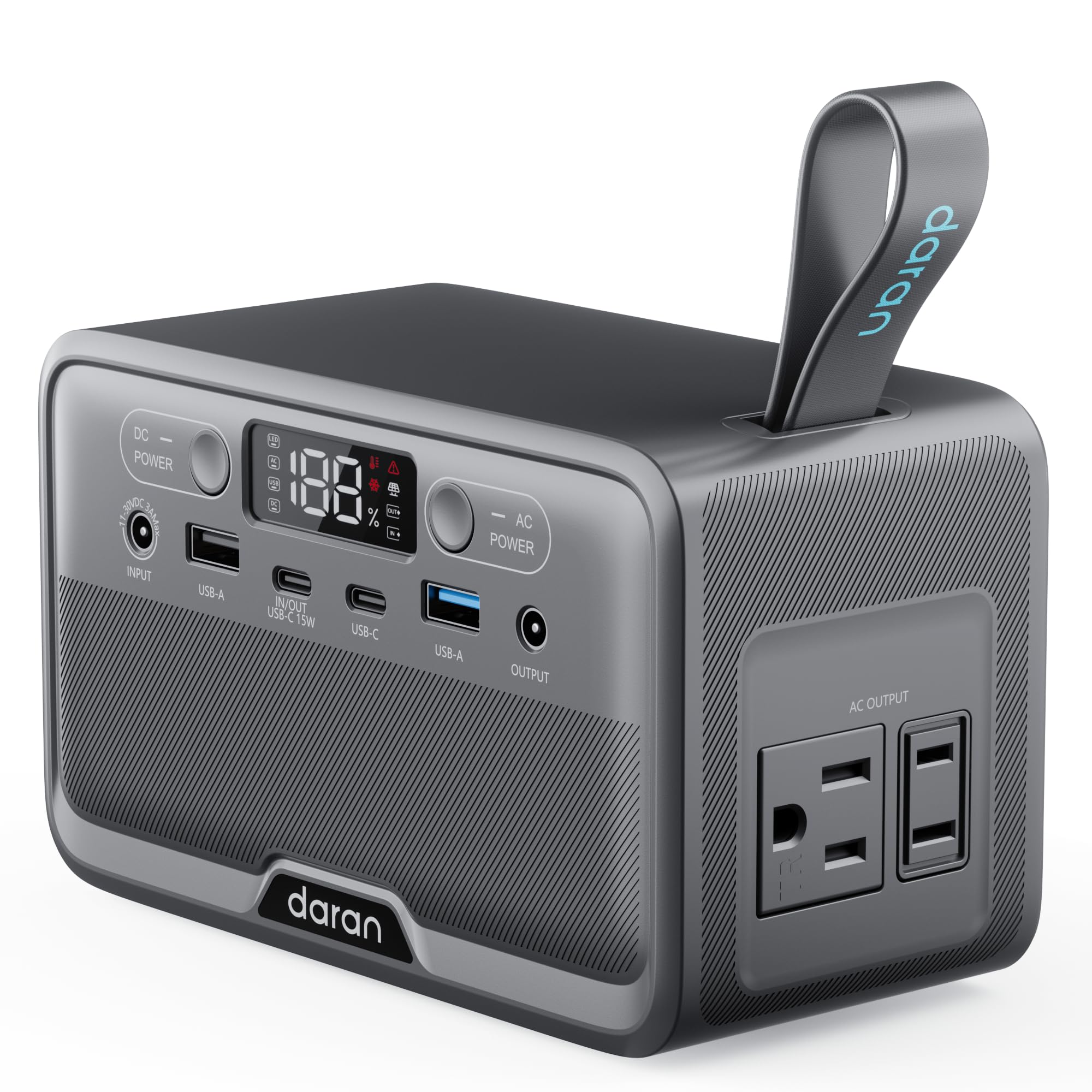
Capacity: 89.6Wh
Output: 100W continuous, 200W peak
Battery Chemistry: LiFePO4
Charging: PD fast charging
AC Outlets: Yes
Solar Input: Solar panel optional
This Daran unit is the smallest true power station in the group, and its appeal is portability plus battery chemistry. LiFePO4 cells are the durable choice — they tolerate more charge cycles and hold up better over years than older lithium formulations. A 100W continuous output with a 200W peak handles a laptop, a fan, lights, and phone charging, and the AC outlet means standard plugs work without adapters. Solar input is optional, so the unit can be topped up off-grid with a panel bought separately.
It suits students, commuters, and campers who want a battery that lives in a backpack and gets used weekly rather than a unit that sits in a closet. It is not for running appliances with motors or heating elements, and the 89.6Wh capacity means a laptop gets a recharge or two, not a workday. The trade-off is headroom: the low continuous wattage rules out almost anything with a compressor or a heating coil.
DaranEner Portable Power Station 100W, 89.6Wh LiFePO4
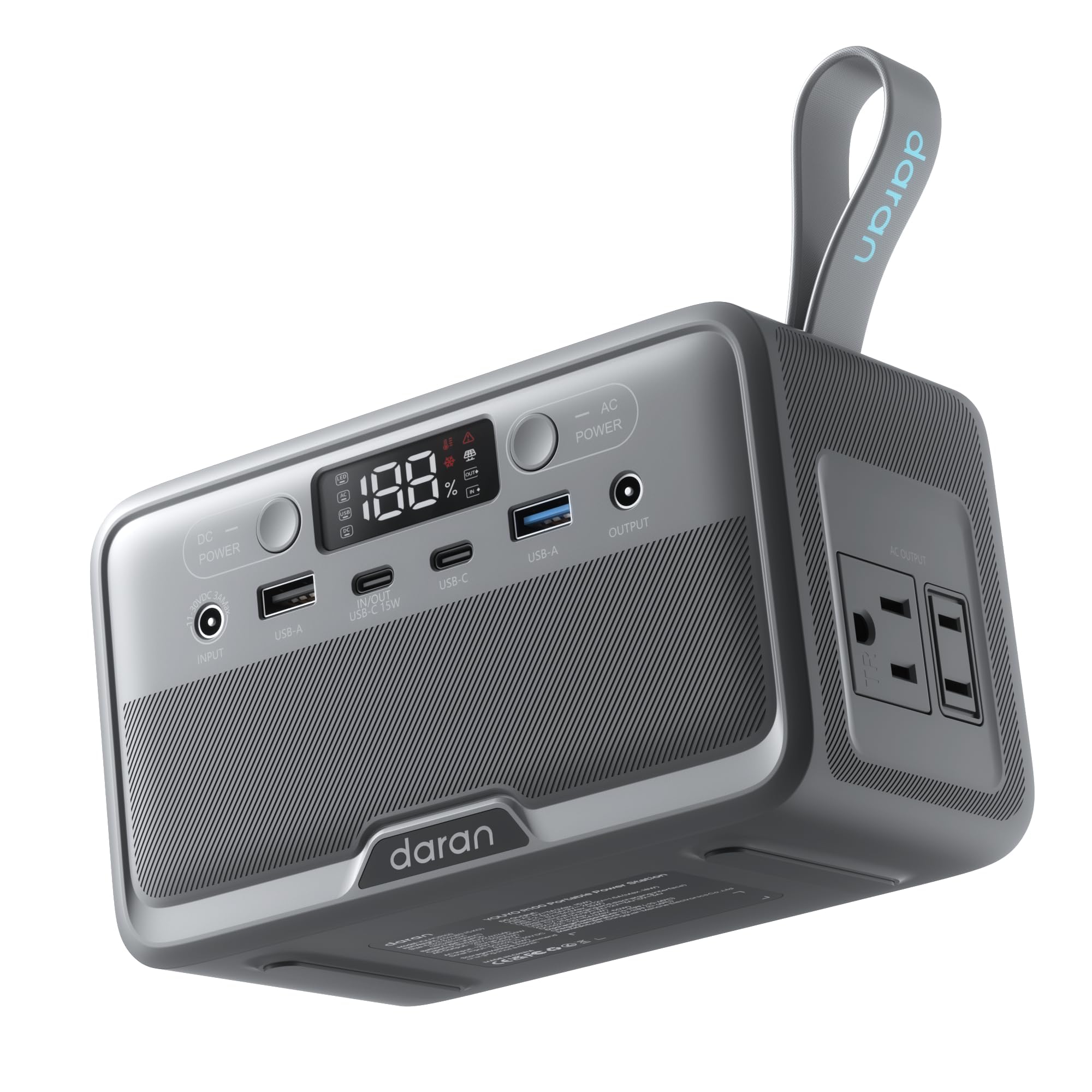
Capacity: 89.6Wh
Output: 100W continuous, 200W peak
Fast Charging: 45W PD
Weight: 2.54 lbs
Battery Chemistry: LiFePO4
AC Outlet: Yes
The DaranEner shares its capacity class with the Daran above but leans harder into charging speed and quiet operation. A 45W PD output is enough to fast-charge a laptop or a tablet directly over USB-C, which cuts down on adapter clutter. At 2.54 lbs it is light enough to carry in one hand, and the fanless, quiet design makes it a reasonable desk companion or tent-side battery. The 200W peak gives brief surges some breathing room for devices that spike on startup.
This is the pick for buyers who want one small battery for both the home desk and the campsite, and who care about charging a laptop quickly. It is not for powering a CPAP overnight or running a mini-fridge — the capacity and continuous wattage are too low. The trade-off is redundancy: two 89.6Wh units in this list means buyers should compare features carefully rather than assume the higher price buys more capacity.
ALLWEI Portable Power Station 300W, 256Wh LiFePO4
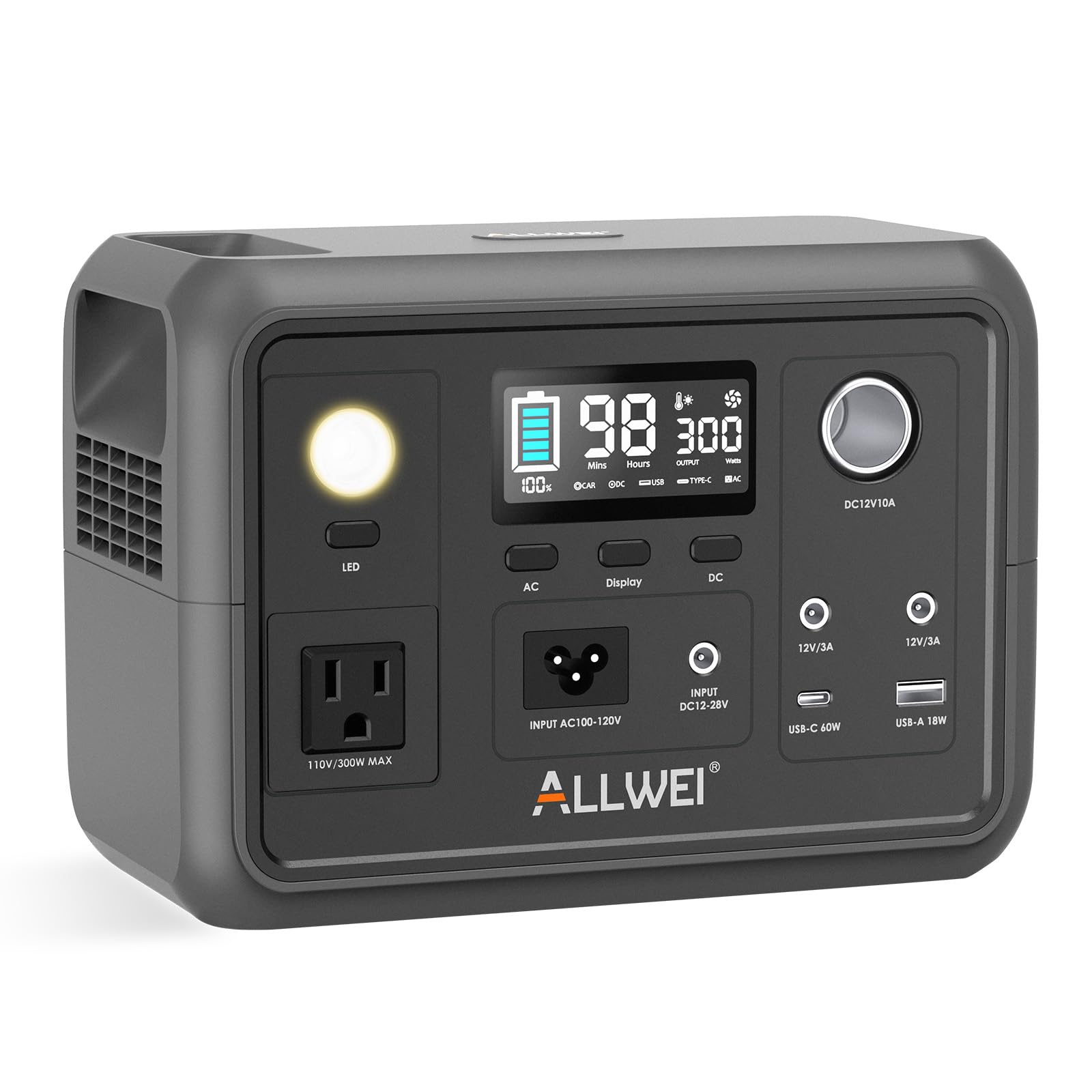
Capacity: 256Wh
Output: 300W
AC Output: Pure sine wave
Fast Charging: PD 60W
Protection: MPPT and BMS
Battery Chemistry: LiFePO4
This ALLWEI unit is the step up that makes real appliances possible. Pure sine wave AC output is the headline feature — it produces clean power that sensitive electronics and medical devices expect, rather than the modified waveform found on cheaper inverters. The 256Wh LiFePO4 battery and 300W output are sized for a CPAP machine, a fan, lights, and laptop charging through a night. MPPT solar charging and a battery management system round out the package for off-grid use.
It suits buyers who need to run a CPAP or another sensitive device through an outage, and campers who want to power small appliances rather than just charge phones. It is not for whole-room backup or anything drawing more than 300W — a coffee maker or microwave is out of reach. The trade-off is size: the larger battery adds bulk and weight compared with the 89.6Wh units, so it is a stay-put or car-camping battery rather than a backpack one.
APC BE600M1 UPS Battery Backup & Surge Protector

Capacity: 600VA / 330W
Runtime: 23 minutes at 100W
Surge Protection: 490 J
USB Charging: Yes
Intended Use: Computer, router, NAS
The APC BE600M1 is the desktop-grade UPS of the group, and its 600VA/330W rating plus 490 joules of surge protection make it the safer home for a computer, a router, and a NAS drive. The stated runtime of 23 minutes at 100W is the number that matters: it is enough to save work, shut a NAS down properly, and ride out short flickers without data loss. A USB charging port adds phone top-ups during an outage, and the form factor is designed to sit under or beside a desk.
This pick suits remote workers and anyone with a home server or network storage who needs clean shutdowns rather than long runtime. It is not for running a desktop and a monitor for hours, and it will not carry appliances — 330W is a ceiling, not a target. The trade-off is that a UPS is tethered to a wall outlet: it protects equipment that is plugged in, and offers nothing once the battery is drained.
Before You Buy
- Capacity and wattage: Match the continuous wattage to the largest device that must run, and treat peak ratings as brief surge headroom only.
- Battery chemistry: LiFePO4 units in this list are the more durable choice for frequent charge cycles; a UPS is built around occasional, short discharges.
- Output type: Pure sine wave matters for CPAP machines and sensitive electronics; modified waveforms can cause problems with some devices.
- Runtime versus portability: A UPS is tethered and sized for minutes; a power station is portable and sized for hours, but neither scales to whole-home backup.
- Solar compatibility: Only the portable stations accept solar input, and panels are sold separately — budget for one if off-grid charging is the plan.
- Outlet count and types: Count AC outlets, USB ports, and USB-C PD wattage against the devices that will actually be plugged in.
- Placement: UPS units need ventilation and a permanent spot near the equipment; power stations need a dry, temperature-stable storage spot between uses.
Frequently Asked Questions
-
What is the best backup power on a small budget for a router?
A compact standby UPS such as the CyberPower ST425 is the cheapest sensible answer — it bridges short outages and keeps internet equipment running without any setup. -
Can a small power station run a CPAP machine?
Yes, if it offers pure sine wave output and enough capacity. The ALLWEI 300W unit is the pick here for that use, while the 89.6Wh models are too small for a full night. -
Is LiFePO4 better than a standard UPS battery?
For frequent charge and discharge cycles, LiFePO4 lasts longer and holds up better over time. A UPS is designed around occasional short discharges, so the chemistry trade-off matters less there. -
How long will a portable power station run a laptop?
An 89.6Wh station typically delivers one to two laptop recharges, while a 256Wh unit stretches further. Actual runtime depends on the laptop’s draw and what else is plugged in. -
Do these units need a solar panel to recharge?
No — all five recharge from a standard wall outlet. Solar input is an optional extra on the portable stations for off-grid top-ups. -
Can a small UPS run a fridge or heater?
No. The wattage ratings on budget UPS units are far below what compressors and heating elements draw, and attempting it will trip the unit or drain it almost instantly.
Bottom Line
For most buyers, the best backup power on a small budget is the APC BE600M1 — it protects a computer, router, and NAS with clean shutdown time and serious surge protection at a mid-tier price. Those who need portable power instead should step up to the ALLWEI 300W for pure sine wave output and CPAP-capable capacity, while the CyberPower ST425 remains the cheapest way to keep internet alive through short outages.
