Why there are Amazon links here: Brave Review is paid a commission for qualifying Amazon purchases made through the links below. Your price does not change, and using our links is entirely optional. How this works
Best Battery for a Garden Office With a Heater: 5 Power Picks That Keep the Shed Warm
Heating a garden office off-grid is a math problem: heaters draw a lot, and batteries store only so much. The five picks below split into two camps — small plug-in space heaters for a shed that already has mains power, and portable power stations for a garden office that has none. Buyers running a short commute down the garden path, remote workers who need a warm desk by 9 a.m., and anyone sizing a battery for a winter workday will all find a match in the overview.
The Picks at a Glance
| Product | Key Spec | Best Use | Price Tier |
|---|---|---|---|
| Amazon Basics Ceramic Space Heater 1500W | 1500W ceramic | Mains-powered garden office | Budget |
| ASNUG 500W PTC Ceramic Heater | 500W PTC ceramic | Small desks and tight corners | Budget |
| Jackery Explorer 300 | 292Wh LiFePO4 | Short heating bursts off-grid | Mid-range |
| DYNESS Portable Power Station | 2048Wh, 2400W | Running a heater for hours | Premium |
| Amazon Basics Mini Ceramic Heater 500W | 500W ceramic, 1.4 lbs | Personal warmth at a desk | Budget |
Amazon Basics Ceramic Space Heater, 1500W

Type: Ceramic space heater
Power: 1500W
Features: Overheat and tip-over protection, thermostat
Oscillation: Non-oscillating
Dimensions: 7.52"D x 6.34"W x 9.45"H
Color: Black
The 1500W ceramic element is the workhorse of the group: it heats a room fast and holds a thermostat setting rather than blasting constantly. The compact black housing fits under a desk or beside a chair without eating floor space, and the tip-over and overheat cutouts matter in a garden office where a door can catch a cable. It is a mains-powered unit, so it needs a battery station or an extension run from the house to work at all.
This is the pick for a garden office that already has power and simply needs proper heat. Buyers who want to leave it running through a workday will find the thermostat does the heavy lifting. The trade-off is that 1500W drains a portable station quickly, so it only makes sense on mains power or with a very large battery.
Trade-off: At 1500W this heater will flatten a small power station in well under an hour, so it is a poor match for off-grid setups.
ASNUG 500W PTC Ceramic Space Heater
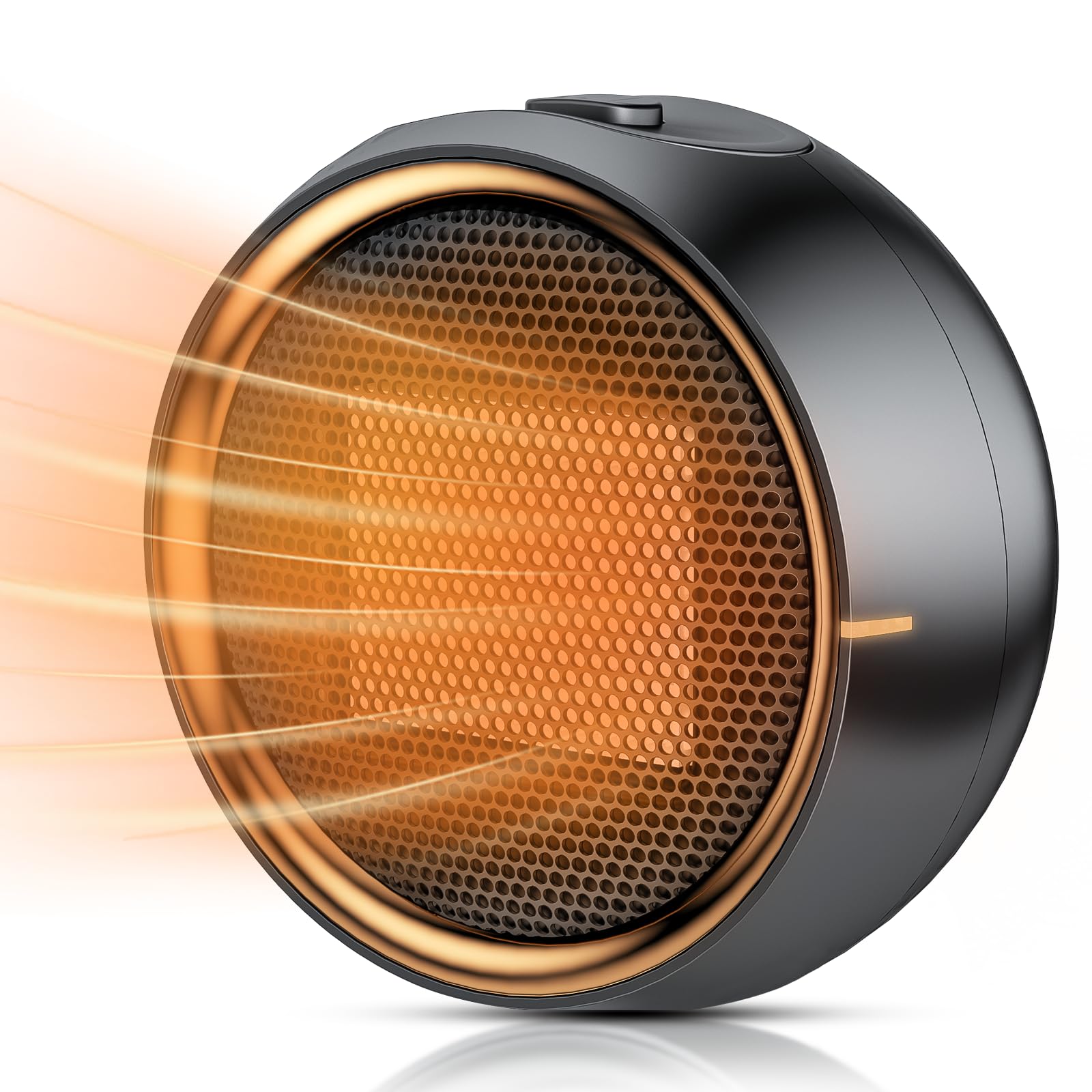
Type: PTC ceramic space heater
Power: 500W
Features: Tip-over and overheat protection
Noise: Quiet operation
Form factor: Small mini desk unit
Intended use: Bathroom, home office, bedroom
The PTC ceramic element is the interesting part here: it heats up quickly and holds its output steadier than a plain wire element, which suits a desk that needs warmth within a minute of switching on. At 500W it draws a third of what the big heater does, so a mid-sized power station can actually carry it. The quiet running and small footprint make it easy to tuck beside a monitor.
This suits a garden office with a modest battery or a single desk that needs spot heat rather than whole-room warmth. It earns its place as the compromise pick between draw and comfort. The trade-off is coverage: 500W warms the person, not the room, so a cold shed with a big footprint will still feel chilly at the far end.
Trade-off: With only 500W of output, this unit provides personal warmth rather than heating a whole garden office.
Jackery Explorer 300 Portable Power Station
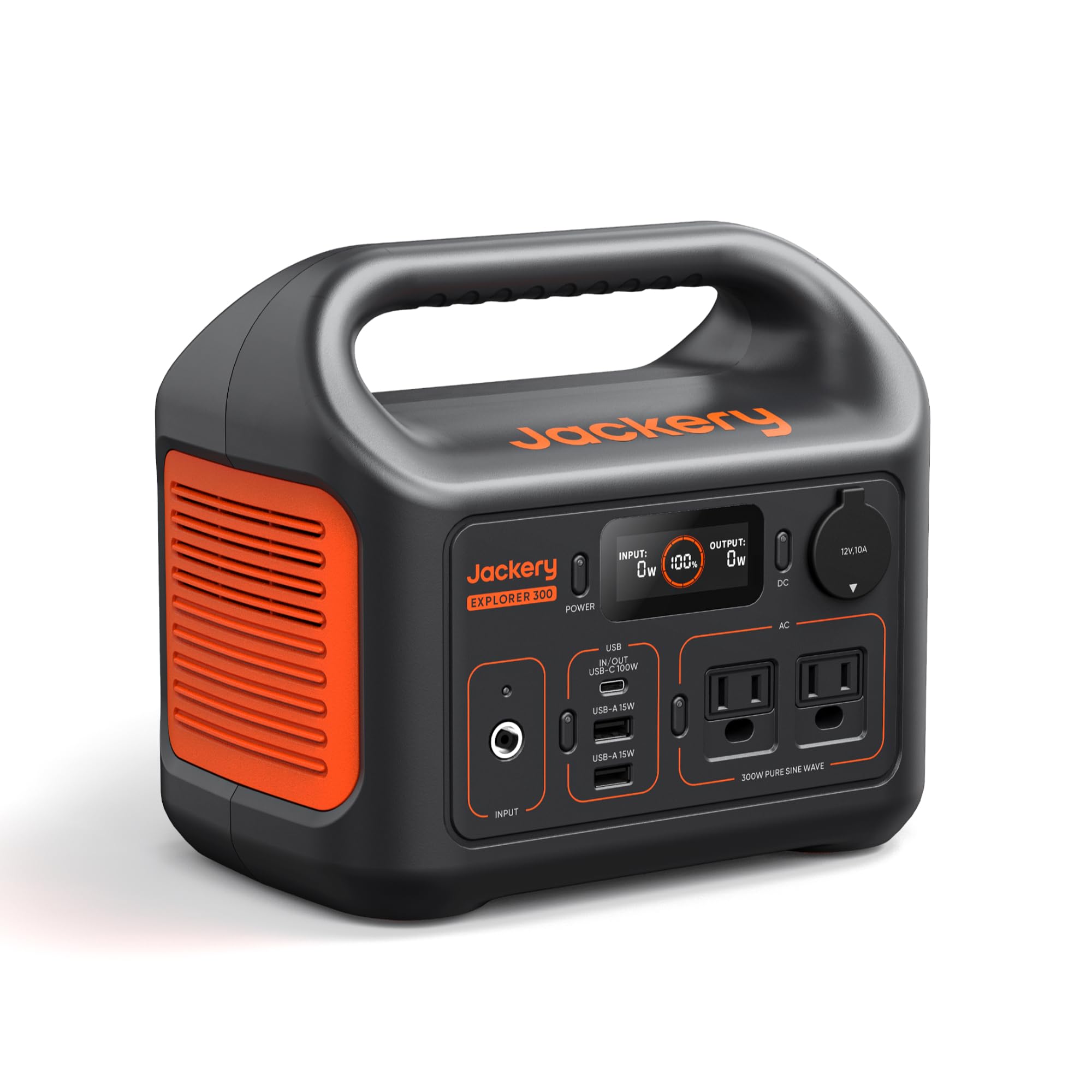
Type: Portable power station
Battery: LiFePO4
Capacity: 292Wh
Solar: Panel optional
Intended use: Outdoors, camping, travel, hunting, blackout backup
The LiFePO4 chemistry is the selling point: it tolerates repeated charge cycles and holds up better than older lithium blends in a shed that swings between hot and cold. At 292Wh the capacity is modest, but paired with a 500W heater it covers short bursts of warmth rather than an all-day burn. The unit is light enough to carry in from the house and can be topped up from an optional solar panel.
This is the pick for a garden office with no mains supply where the heater runs in intervals. It suits buyers who want a battery that doubles as blackout backup for the house. The trade-off is capacity against a heater’s appetite: 292Wh only supports short sessions, so a full winter workday needs either a bigger station or a very small heater.
Trade-off: The 292Wh capacity is small for heating, so expect short bursts of warmth rather than hours of continuous use.
DYNESS Portable Power Station, 2048Wh
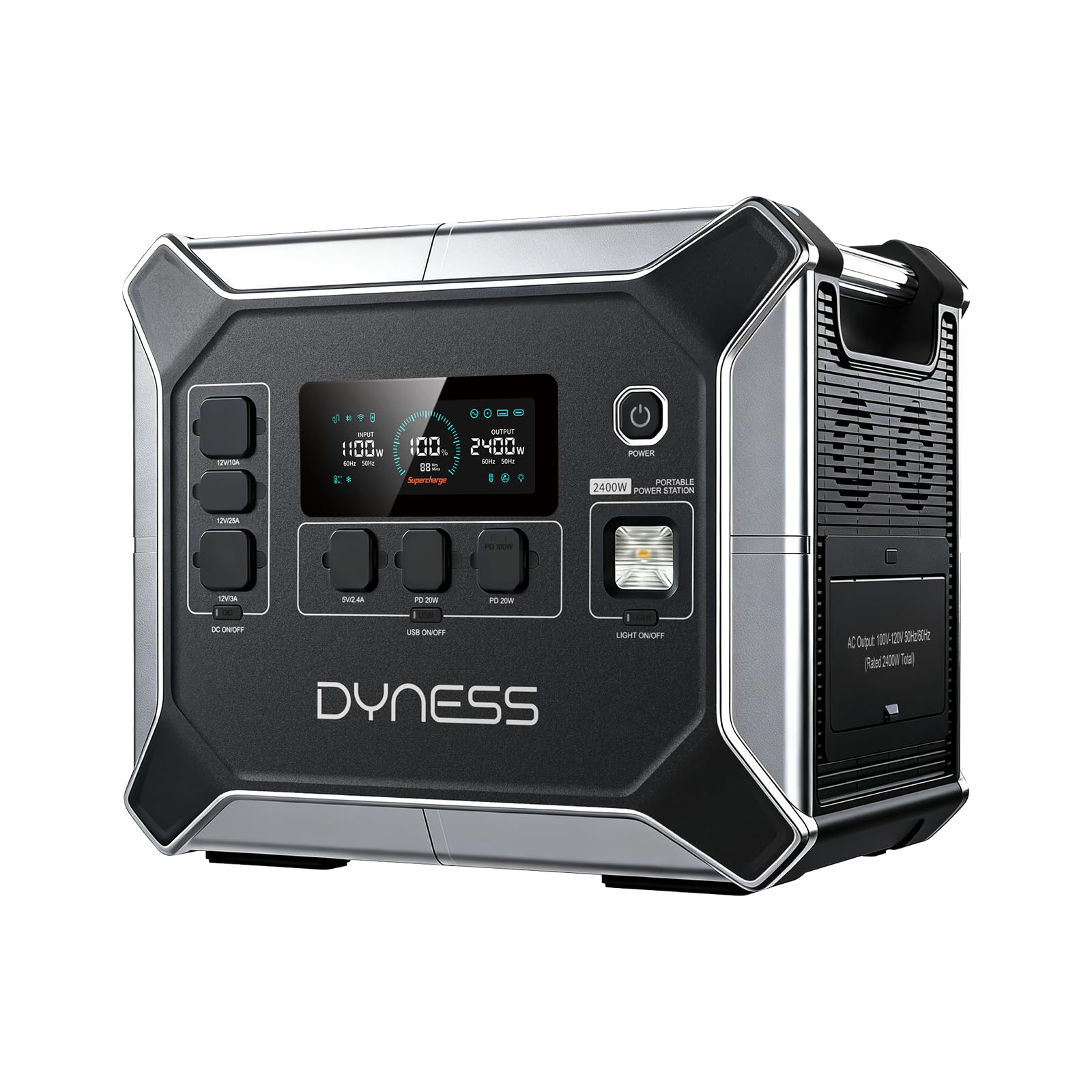
Type: Portable power station
Battery: LiFePO4
Capacity: 2048Wh
Output: 2400W
The headline figure is the 2400W output, which is enough headroom to run a 1500W ceramic heater without pushing the inverter to its limit. The 2048Wh LiFePO4 bank is the largest here by a wide margin, so the heater can run for a meaningful stretch rather than a token burst. It is a substantial unit, built to sit in one place rather than travel.
This is the pick for a garden office that is genuinely off-grid and needs a heater running through a workday. It suits buyers who want one battery to cover heating, a laptop and lighting together. The trade-off is size and cost: this is the premium option, and its bulk means it wants a permanent home in the shed rather than a shelf in the house.
Trade-off: The premium price and heavy build make this a fixed installation rather than a battery that moves between house and garden.
Amazon Basics Mini Ceramic Space Heater, 500W
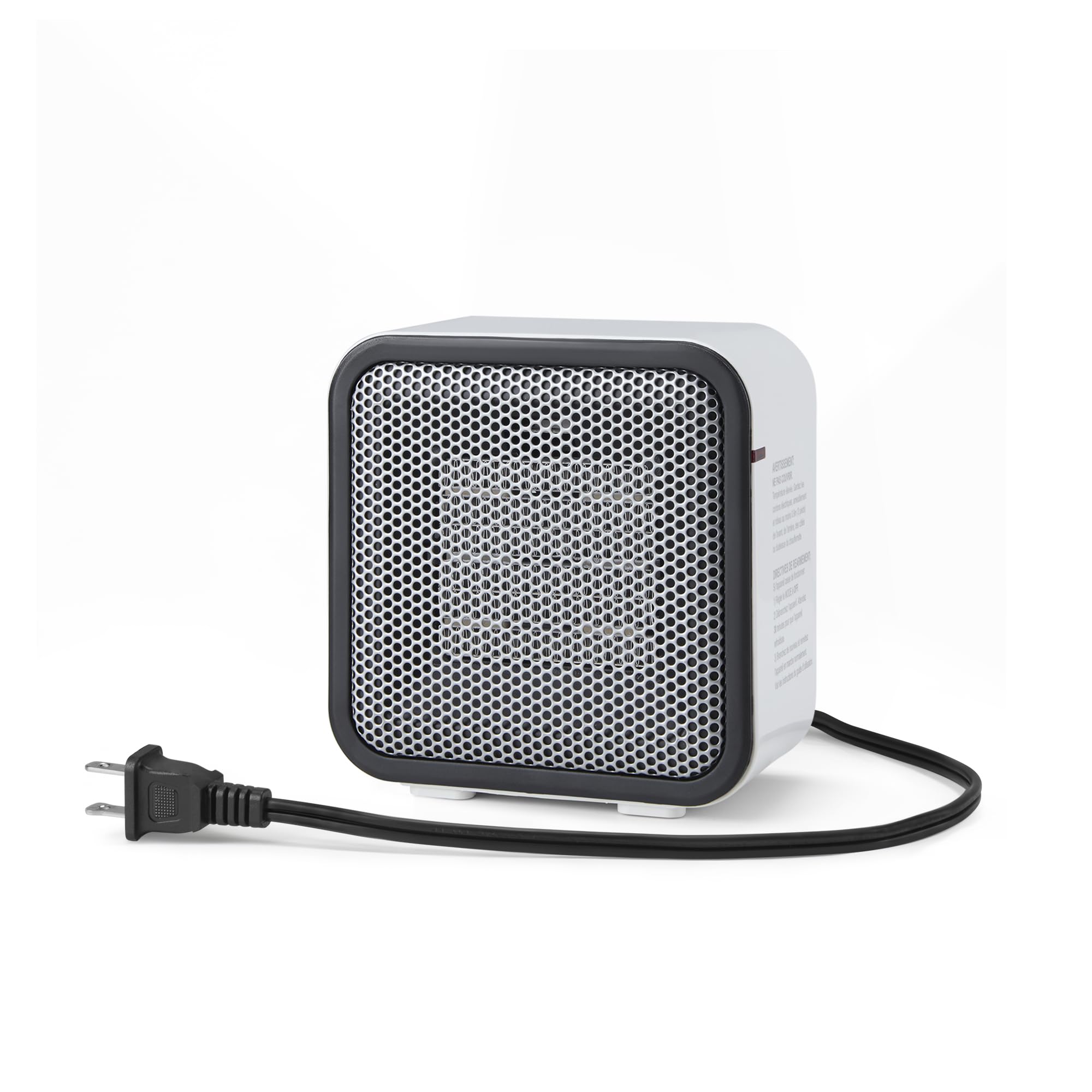
Type: Ceramic space heater
Power: 500W
Weight: 1.4 lbs
Features: Tip-over protection, fast heating
Form factor: Portable mini desk unit
At 1.4 lbs this is the lightest option in the roundup, and the mini format is designed to sit on a desk and blow warm air at the person working. The ceramic element heats fast and the 500W draw is gentle enough for a small battery station to carry. Tip-over protection is included, which matters on a desk where a cable can pull.
This suits a garden office user who wants warmth aimed at the body rather than the room, and who values a heater that can be carried out and stored in a drawer. It earns its place as the cheapest way to take the edge off a cold shed. The trade-off is that it is a personal heater: it will not raise the temperature of the whole office, and the small housing limits how far the warm air reaches.
Trade-off: This is a personal desk heater, so it warms the worker rather than the room and leaves the rest of the shed cold.
Before You Buy
- Power draw: Add up the heater’s wattage and compare it to the battery’s output rating; a 1500W heater needs a station that can deliver that continuously.
- Capacity math: Divide the battery’s watt-hours by the heater’s wattage to estimate run time, then halve it for real-world losses.
- Battery chemistry: LiFePO4 handles repeated cycles and temperature swings better than older lithium blends, which matters in an unheated shed.
- Heater type: Ceramic elements heat up fast and suit short sessions; PTC ceramic holds output steadier for longer desk time.
- Safety features: Tip-over and overheat protection are worth insisting on in a small wooden outbuilding.
- Placement: A non-oscillating unit heats one spot; check the office layout before choosing a directional heater.
- Charging: A solar panel is optional on the Jackery unit, so budget for one if the shed has no mains supply.
Frequently Asked Questions
-
How long will a 2048Wh battery run a 1500W heater?
Roughly an hour of continuous full-power output on paper, less once inverter losses are counted. Lower thermostat settings stretch that considerably. -
Can a 292Wh power station run a space heater?
Only a small 500W unit, and only in short bursts. It is better suited to a desk heater than a room heater. -
Is LiFePO4 better than other lithium batteries for a garden office?
LiFePO4 tolerates repeated cycles and temperature variation well, which suits a shed that gets cold overnight. -
Do I need mains power for a ceramic space heater?
Yes. The plug-in heaters here need a socket, either from the house or from a power station with enough output. -
Will a 500W heater keep a garden office warm?
It keeps the person at the desk warm. Heating the whole room needs the 1500W option or a well-insulated shed. -
Can a power station run a heater and a laptop at once?
A large station like the DYNESS unit has the output headroom; a small one will need the heater switched off to charge a laptop.
Bottom Line
For most garden offices with mains power, the Amazon Basics 1500W Ceramic Space Heater is the straightforward choice: it heats the room, holds a thermostat setting and costs little. For an off-grid shed, the DYNESS 2048Wh Portable Power Station is the only pick here with the capacity and output to run that heater properly — pair the two and the office stays warm through a winter workday. Buyers on a tight budget who just need warm hands at the desk should look at the Amazon Basics Mini 500W instead.
