Why there are Amazon links here: Brave Review is paid a commission for qualifying Amazon purchases made through the links below. Your price does not change, and using our links is entirely optional. How this works
Best WiFi for a House With a Thatched Roof: 5 Systems That Push Signal Through Thick Thatch
A thatched roof is beautiful and brutal on WiFi. The dense reed or straw layer, plus the timber framing under it, blocks and absorbs the signal that a normal indoor router sends upward and outward. The fix is rarely one magic box — it is a system that either blankets the interior in multiple mesh nodes or puts a weatherproof access point outside, under the eaves, where the signal can escape.
This guide covers five picks for three buyer types: the whole-house mesh buyer who wants one simple kit, the large or rural property owner who needs an outdoor bridge, and the budget buyer patching a dead zone. The overview table below lets most readers choose in under a minute.
The Picks at a Glance
| Product | Key Spec | Best Use | Price Tier |
|---|---|---|---|
| TP-Link Deco X55 AX3000 (3-Pack) | Covers up to 6500 sq. ft., WiFi 6, 3 Gigabit ports per unit | Whole-house mesh indoors, wired backhaul ready | Mid |
| WAVLINK AX1800 Outdoor WiFi 6 Extender | IP67, 4x8dBi antennas, up to 256 devices | Outdoor bridge under the eaves or in the yard | Mid |
| Amazon eero Outdoor 7 | IP66, up to 15,000 sq. ft. outdoors, PoE+ adapter included | Premium outdoor coverage and easy app setup | Premium |
| WAVLINK AX3000 Outdoor WiFi 6 Extender | IP67, 4x8dBi antennas, up to 256 devices, active PoE | High-throughput outdoor link for farms and outbuildings | Upper-mid |
| TP-Link AC1200 WiFi Extender (RE315) | Up to 1600 sq. ft., 32 devices, EasyMesh compatible | Budget dead-zone patching near a window or eave | Budget |
1. TP-Link Deco X55 AX3000 WiFi 6 Mesh System (3-Pack)
Type: Mesh WiFi 6 system
Coverage: Up to 6500 sq. ft.
Ports: 3 Gigabit ports per unit
Backhaul: Supports Ethernet backhaul
Units: 3-pack
Replaces: Wireless router and extender

TP-Link Deco X55 AX3000 WiFi 6 Mesh System, Deco X55(3-Pack)
Check the current price on Amazon
The Deco X55 is the sensible starting point for a thatched house because it attacks the problem from inside. Three nodes spread WiFi 6 signal across rooms, so each device is closer to a node and needs less punch to get through walls and the roof structure. Each unit carries three Gigabit ports, which matters in an old house where a single wired run to a node can carry the backhaul and free up the wireless bands.
WiFi 6 handles crowded households better than older standards, and the mesh handoff keeps phones and laptops connected as the reader moves between rooms. The kit replaces both the existing router and any old extender, so the network becomes one name and one management app.
This pick suits buyers in a solid, medium-sized thatched home who want an indoor-first solution and are willing to place a node near an external wall or window facing the garden. It is not for someone who needs coverage in a detached barn or across open ground — that calls for an outdoor unit.
Trade-off: The nodes are indoor-only, so the system cannot push signal into the garden or outbuildings, and a house with very thick internal walls may still need more nodes than the pack provides.
2. WAVLINK AX1800 Outdoor WiFi 6 Extender
Type: Outdoor access point / repeater
Weatherproofing: IP67
Antennas: 4x8dBi
Device Load: Up to 256 devices
Compatibility: Works with Starlink
Power: PoE

WAVLINK AX1800 Outdoor WiFi 6 Extender Long Range, IP67 Weatherproof
Check the current price on Amazon
This is the outdoor half of the thatched-roof equation. Mounted under the eaves or on an outside wall, an IP67-rated unit broadcasts into the garden, patio and yard without the signal ever having to fight through the thatch. The four 8dBi antennas give it reach well beyond what an indoor router can manage, and WiFi 6 keeps throughput respectable for cameras and streaming.
PoE power means a single Ethernet cable carries both data and power, which simplifies installation on an old building where adding sockets outside is awkward. The 256-device rating covers a busy household plus security cameras, and Starlink compatibility makes it a natural fit for rural thatched properties running satellite internet.
It suits buyers with a large garden, a home office in an outbuilding, or a rural property where the internet arrives by satellite. It is not for someone who only needs better coverage inside the house — an indoor mesh handles that with less installation work.
Trade-off: Installation requires running and terminating an Ethernet cable to a PoE source, which is real work on a period property and may need a professional.
3. Amazon eero Outdoor 7 Dual-Band Mesh WiFi Router (1-Pack)
Type: Outdoor mesh WiFi router
Weatherproofing: IP66
Outdoor Coverage: Up to 15,000 sq. ft.
Pack Size: 1-pack
Power: 30W PoE+ adapter included
Bands: Dual-band
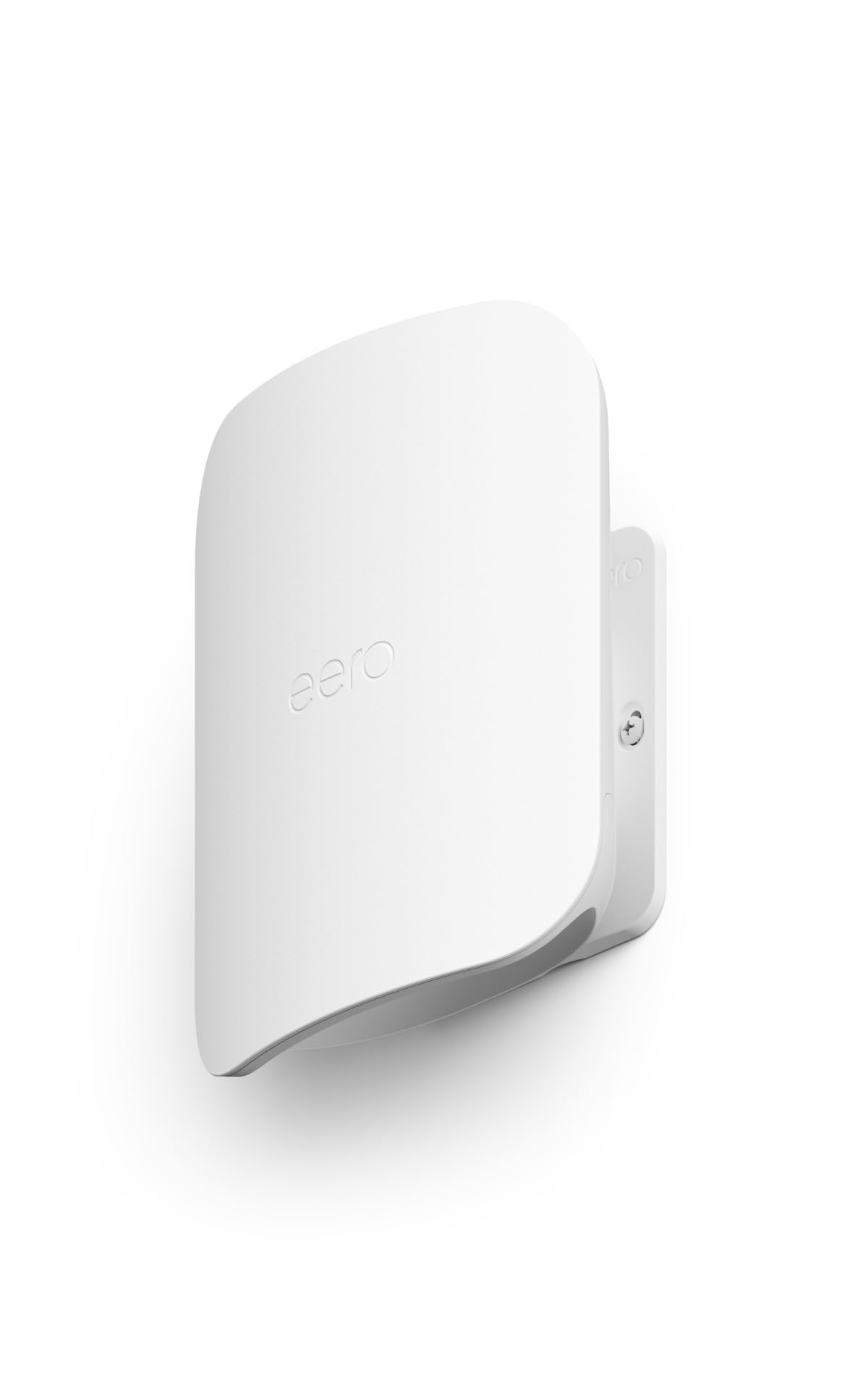
Amazon eero Outdoor 7 dual-band mesh wifi router (newest model)
Check the current price on Amazon
The eero Outdoor 7 is the premium route: a weatherproof mesh node designed to extend an existing eero network outside. Its IP66 rating stands up to rain and dust, and the claimed outdoor coverage is large enough for a substantial garden or courtyard around a thatched property. Because it joins the mesh rather than repeating a single signal, devices move between inside and outside nodes without dropping.
The included 30W PoE+ adapter removes the guesswork from powering it, which is a genuine convenience for anyone who has priced PoE injectors separately. Setup runs through the eero app, so the configuration is simple even for a buyer who has never mounted an access point before.
This pick suits buyers already in the eero ecosystem, or those who want the easiest possible outdoor install and are willing to pay for it. It is not for a buyer on a tight budget, and it is not the right choice for someone who wants a standalone outdoor unit independent of a mesh brand.
Trade-off: The premium price buys convenience and app polish rather than raw spec, and the unit is only worth it if the house already runs an eero mesh.
4. WAVLINK AX3000 Outdoor WiFi 6 Extender
Type: Outdoor WiFi 6 extender / repeater
Weatherproofing: IP67
Antennas: 4x8dBi
Device Load: Up to 256 devices
Power: Active PoE
Compatibility: Starlink, cameras, routers

WAVLINK AX3000 Outdoor WiFi 6 Extender, Outdoor WiFi Repeater
Check the current price on Amazon
This is the higher-throughput sibling of the AX1800 above, aimed at buyers who need more bandwidth outdoors rather than just more reach. The AX3000 class radios and the same four 8dBi antenna array make it a strong choice for a thatched property with outbuildings, a farmyard, or several outdoor cameras that all need a stable link.
Active PoE and the 256-device ceiling mean it can anchor a small outdoor network on its own, and Starlink compatibility keeps it relevant for rural setups. The IP67 housing is built for permanent exposure, so mounting it under the eaves or on a mast is a long-term install rather than a seasonal fix.
It suits buyers running cameras, a home office in a converted barn, or a rental property with extensive grounds. It is not for a buyer who only needs a small garden covered — the AX1800 does that for less — and it is not an indoor solution.
Trade-off: The higher price only pays off if the outdoor network actually carries heavy traffic; for light garden use the cheaper AX1800 covers the same ground.
5. TP-Link AC1200 WiFi Extender (RE315)
Type: Dual-band WiFi extender
Speed Class: AC1200
Coverage: Up to 1600 sq. ft.
Device Load: Up to 32 devices
Ports: One Ethernet port
Compatibility: EasyMesh compatible

TP-Link AC1200 WiFi Extender Dual Band 5GHz/2.4GHz (RE315)
Check the current price on Amazon
The RE315 is the budget patch for a single stubborn dead zone. Placed near a window or an external wall where the main router’s signal is still usable, it rebroadcasts into the room beyond — a practical fix for a bedroom or study in a thatched house where the roof structure swallows the signal.
Dual-band operation lets the extender use the 5GHz band for the link back to the router where conditions allow, and the single Ethernet port can feed a wired device such as a TV or desktop. EasyMesh compatibility means it can join a compatible mesh network rather than sitting as an isolated repeater.
This pick suits renters, guest-room setups, and buyers who need one room fixed rather than a whole-house overhaul. It is not for a large property or a household with dozens of connected devices — the 32-device ceiling and modest coverage make that clear.
Trade-off: As a single extender it can only relay what it receives, so placing it badly leaves the dead zone only half solved, and it will not carry a whole thatched house on its own.
Before You Buy
- Building fabric: Thatch, timber framing and old lath-and-plaster walls absorb signal, so plan for more nodes or an outdoor unit rather than assuming one router will do.
- Mounting point: An outdoor access point works best under the eaves or on a sheltered wall; check that the chosen spot is reachable by cable and within the unit’s weatherproofing comfort zone.
- Power: PoE units need a PoE injector or switch, and the eero includes its adapter while the WAVLINK units do not — budget for that hardware.
- Compatibility: Mesh systems work best within one brand; check whether an extender supports EasyMesh or the mesh platform already in the house.
- Device count: Count phones, laptops, TVs, cameras and smart plugs before choosing — high device loads need the larger outdoor units.
- Cabling: Ethernet backhaul is the most reliable way to beat thick walls, so check whether a cable run to a node or outdoor point is feasible.
- Property type: Rural and satellite-internet homes should confirm Starlink or router compatibility before buying an outdoor extender.
Frequently Asked Questions
-
Why is WiFi so bad in a thatched house?
The thatch layer and the timber structure beneath it absorb and block radio waves, so signal that would normally pass through a modern roof is weakened before it reaches the garden or the far side of the house. -
Is an outdoor access point better than an indoor mesh for a thatched roof?
They solve different problems. Indoor mesh covers the rooms; an outdoor unit covers the garden and outbuildings without fighting the thatch. Many thatched homes benefit from both. -
Can a WiFi extender alone fix a thatched house?
A single budget extender can patch one dead zone, but it cannot cover a whole property. Whole-house coverage needs a mesh kit or a combination of mesh and outdoor hardware. -
Does the weatherproof rating matter if the unit sits under the eaves?
Yes. A sheltered spot reduces exposure, but wind-driven rain still reaches most eaves, so an IP66 or IP67 rating is the safer choice for a permanent install. -
Will an outdoor extender work with satellite internet?
The WAVLINK units list Starlink compatibility, which makes them a practical fit for rural thatched properties. Check the specific model against the router in use before buying. -
How many mesh nodes does a thatched house need?
It depends on floor area and wall thickness. A three-pack suits a medium house, while larger or multi-wing properties usually need more nodes or a wired backhaul to keep speeds up.
Bottom Line
For most thatched homes, the TP-Link Deco X55 AX3000 (3-Pack) is the best starting point — it blankets the interior in WiFi 6 mesh coverage and supports Ethernet backhaul for the rooms the thatch fights hardest. Buyers who also need the garden, outbuildings or a rural yard covered should add a WAVLINK outdoor extender, or choose the eero Outdoor 7 if budget allows and an eero mesh is already in place.
