Why there are Amazon links here: Brave Review is paid a commission for qualifying Amazon purchases made through the links below. Your price does not change, and using our links is entirely optional. How this works
Best Cold Weather Battery for an Outdoor Power Station: 5 Picks That Survive the Cold
Cold drains batteries faster than almost anything else, and a power station that quits at the wrong moment is worse than no power station at all. This guide covers five cold-weather power options: a self-heating lithium battery for off-grid setups, a cold-crank lithium battery for vehicles, a compact portable power station for travel, a small solar generator for backup, and a large home battery for serious capacity. The overview table below puts all five side by side so a reader can shortlist in under a minute, and each review explains who the pick suits and where it falls short.
Overview of the Picks
| Product | Key Spec | Best Use | Price Tier |
|---|---|---|---|
| Renogy 12V 100Ah Self-Heating LiFePO4 | 12V 100Ah, self-heating, IP67 | Off-grid cabin and RV banks | Premium |
| Fire Power COLDWEATHER Lithium Battery | 390 CCA, cold-weather chemistry | Vehicle and equipment starting | Mid-range |
| EBL 2400W Portable Power Station | 1843.2Wh, 2400W AC, LiFePO4 | Whole-home backup | Premium |
| EnginStar Portable Power Station | 296Wh, 300W AC, 80000mAh | Camping and CPAP travel | Budget |
| Wireless Weather Station | 330ft range, backlight display | Monitoring battery conditions | Budget |
Renogy 12V 100Ah Bluetooth Self-Heating Lithium LiFePO4 Deep Cycle Battery

Type: 12V LiFePO4 deep cycle battery
Capacity: 100Ah
Self-Heating: Built-in heating for cold conditions
Cycle Life: 5000+ deep cycles
Ingress Protection: IP67 dust-proof
Connectivity: Bluetooth monitoring
Renogy 12V 100Ah Bluetooth Self-Heating Lithium LiFePO4 Deep Cycle Battery
This is the pick that most directly answers the cold-weather question. The self-heating element warms the cells before charging in subfreezing conditions, which protects the chemistry and lets the battery accept a charge when a standard lithium pack would refuse one. The LiFePO4 build is rated for thousands of deep cycles, and the IP67 rating means dust and splashes are not a concern in a cabin, RV bay, or boat locker. Bluetooth monitoring adds a layer of convenience for checking state of charge without crawling into a compartment.
The battery suits RV owners, cabin owners, and marine users who run a 12V system year-round and need something that keeps working through winter. It earned its place because the heating function is built in rather than bolted on as an accessory. The trade-off is that a heated 100Ah lithium battery sits at the premium end of the price range, and the heating cycle itself draws power, so a long cold snap will eat into usable capacity. Buyers running a small weekend setup may find the feature set exceeds what they need.
Fire Power COLDWEATHER Lithium Battery – 390 CCA HJTX20CH-FP-B-C
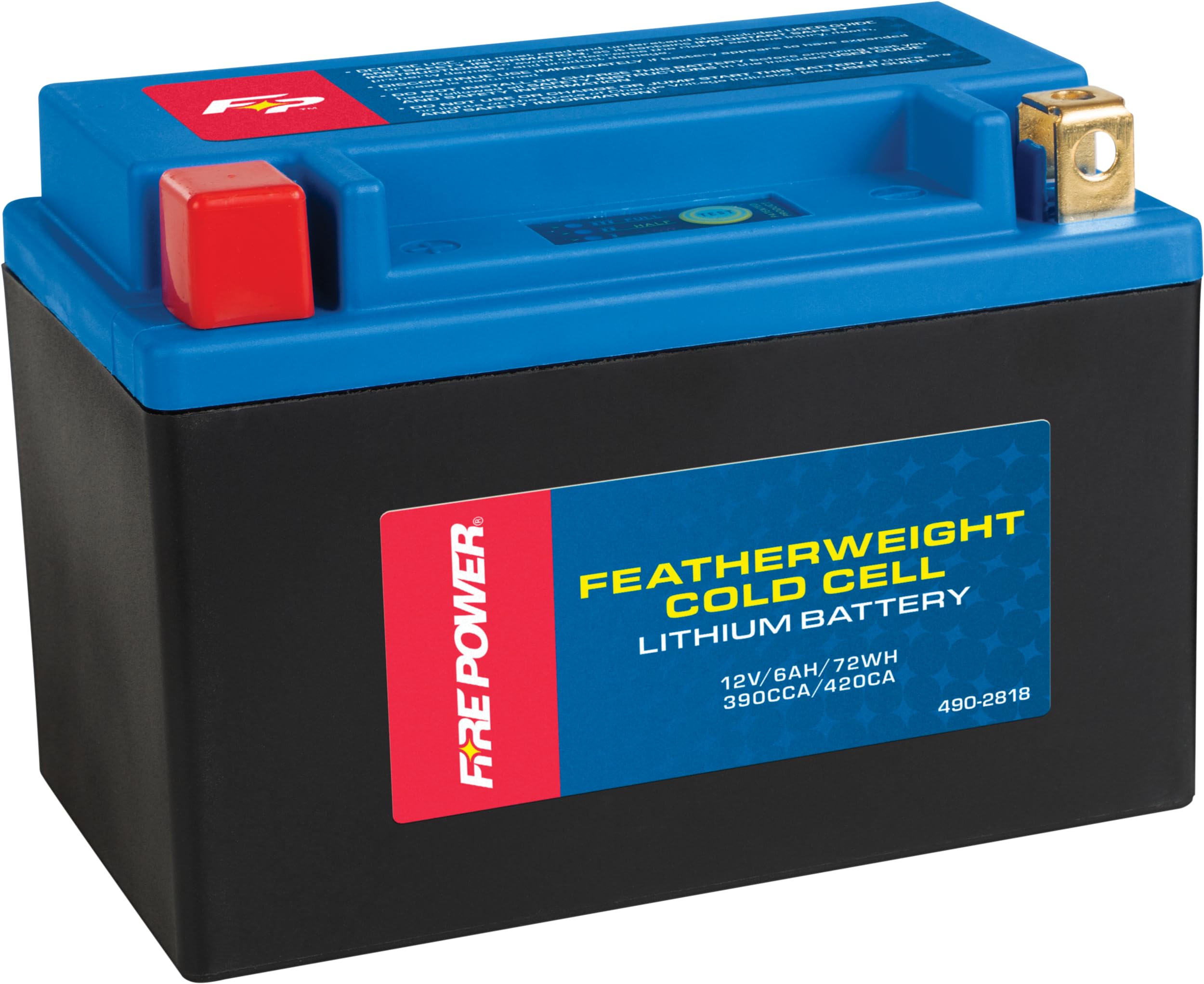
Type: Cold-weather lithium starting battery
Cold Cranking Amps: 390 CCA
Model: HJTX20CH-FP-B-C
Intended Use: Cold-weather engine starting
Chemistry: Lithium
Fire Power COLDWEATHER Lithium Battery – 390 CCA HJTX20CH-FP-B-C
This is a starting battery rather than a deep-cycle storage bank, and that distinction matters. The 390 CCA rating is the number that counts when the temperature drops and an engine needs a hard crank, and the cold-weather chemistry is built to deliver that burst without the sag a conventional lead-acid battery shows in freezing conditions. The compact lithium format also cuts weight compared with an equivalent lead battery, which matters on a snowmobile, ATV, or generator.
The pick suits owners of seasonal equipment — snowmobiles, tractors, generators, and vehicles that sit outside through winter — who need reliable starting rather than long runtime. It earned its place as the only pure cold-crank option on the list. The trade-off is that a starting battery is not a deep-cycle storage battery, so buyers hoping to run a power station or trolling motor off it for hours are looking at the wrong product; it delivers a short, strong burst, not sustained capacity.
EBL 2400W Portable Power Station, 1843.2Wh LiFePO4
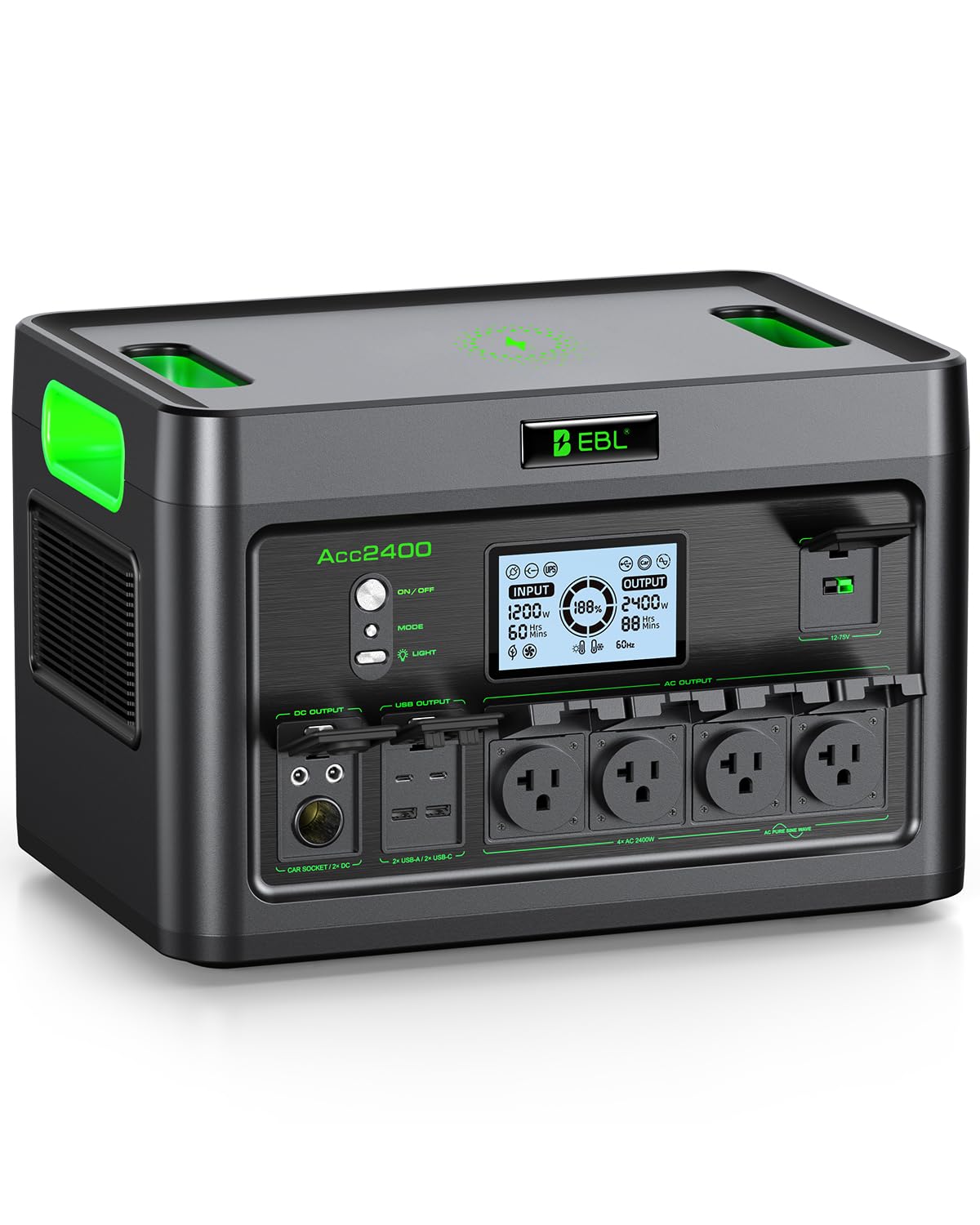
Capacity: 1843.2Wh
AC Output: 2400W
Outlets: 12 total
USB-C: PD 100W
Recharge Time: 2 hours quick charge
Chemistry: LiFePO4
This is the capacity pick. The 1843.2Wh LiFePO4 bank paired with 2400W AC outlets covers refrigerators, heaters, and medical devices during an outage, and the twelve outlets mean a household can run several loads at once without daisy-chaining strips. The 2-hour quick charge is a genuine convenience when a storm warning gives limited notice, and the 100W USB-C PD output handles laptops and phones directly. LiFePO4 chemistry is also the more stable choice for a unit stored in a cold garage.
The station suits homeowners building a blackout plan and cabin owners who want one box that covers most loads. It earned its place as the largest battery here and the best fit for whole-home backup. The trade-off is weight and price: a battery this size is not something to carry up a trail, and the premium tier pricing reflects the capacity. Buyers who only need to top up phones and a CPAP should look at the smaller option below.
EnginStar Portable Power Station 300W 296Wh
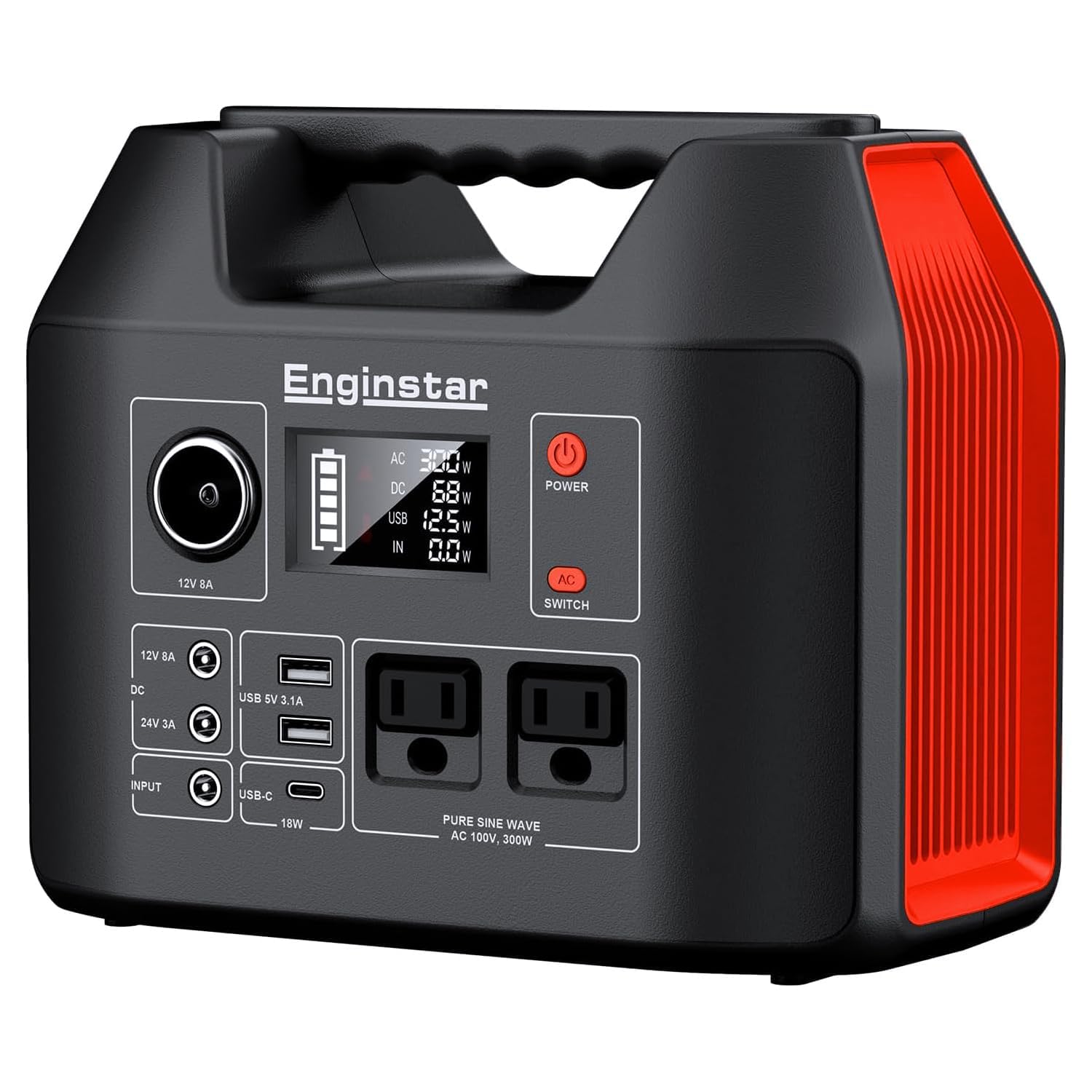
Capacity: 296Wh, 80000mAh
AC Output: 300W pure sine wave
Intended Use: Camping, travel, CPAP, emergency blackout
Power Source: Battery, solar compatible
Portability: Compact travel format
The pure sine wave AC outlet is the headline here, because sensitive electronics like CPAP machines and laptops need clean power rather than a modified wave. The 296Wh capacity is modest but enough for a night of CPAP use, a phone and laptop charge, and a small light or fan. The compact format and 80000mAh rating make it a genuine grab-and-go unit for a car trunk or tent, and solar compatibility extends runtime on longer trips.
The station suits campers, travelers, and CPAP users who need a light backup they can actually carry. It earned its place as the budget and portability pick. The trade-off is capacity: 296Wh will not run a heater or a full-size fridge, and in serious cold the usable output shrinks further, so buyers planning multi-day off-grid trips should size up.
Indoor Outdoor Thermometer Wireless Weather Station
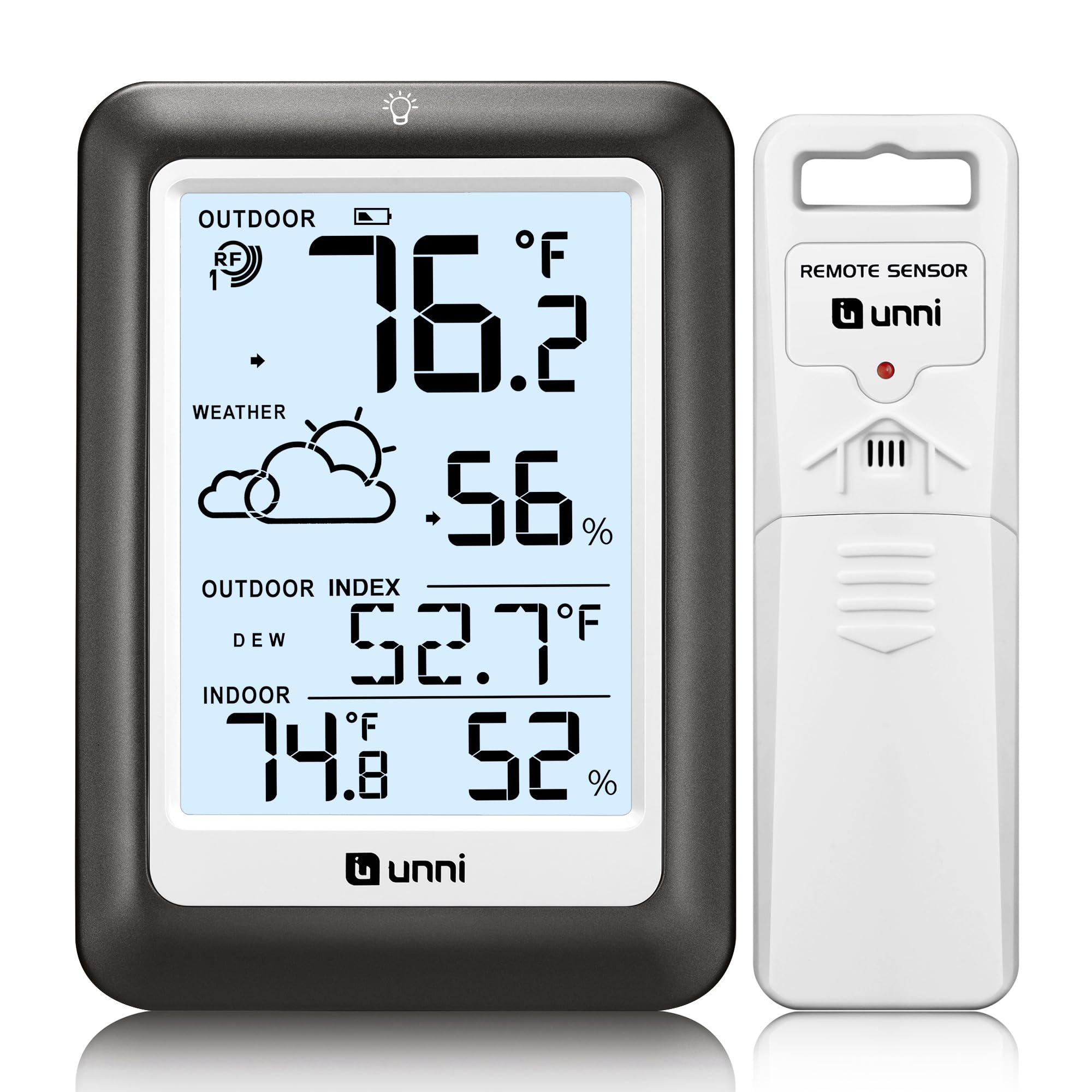
Type: Wireless indoor/outdoor thermometer
Range: 330ft remote sensor
Display: Backlight
Power: Battery powered
Build: Metal black housing
This is the support pick, not a battery, and it belongs on the list for a practical reason: knowing the actual temperature where a battery lives is the difference between a pack that lasts and one that fails early. The remote sensor reaches 330ft, so it can sit in a shed, garage, or battery box while the backlit display stays indoors. The metal black housing is sturdier than the all-plastic units common at this tier.
The station suits anyone running a power station or battery bank in an outbuilding, unheated garage, or cabin who wants to track conditions before a cold night. It earned its place as the cheapest way to protect a much more expensive battery. The trade-off is that it monitors conditions rather than changing them, and the battery-powered design means the unit itself needs occasional battery swaps to keep reporting.
Before You Buy
- Chemistry: LiFePO4 tolerates cold storage better than many older lithium formulations and is the safer choice for a unit kept in a garage or shed.
- Self-Heating: For charging below freezing, a battery with built-in heating protects the cells; without it, charging a cold lithium pack can cause damage.
- Capacity vs. Portability: Bigger watt-hours mean more backup but more weight; match capacity to whether the unit stays put or travels.
- Output Type: Pure sine wave AC is required for CPAP machines and sensitive electronics; check the outlet type before buying.
- Starting vs. Deep Cycle: A cold-crank battery starts engines; a deep-cycle battery runs loads for hours. They are not interchangeable.
- Cold Derating: Expect usable capacity to drop in freezing conditions regardless of chemistry, and plan a margin.
- Monitoring: A remote thermometer in the battery compartment gives early warning before a cold snap damages performance.
Frequently Asked Questions
- Can a lithium power station be used below freezing? Most lithium packs discharge in cold conditions but should not be charged below freezing without heating, which is why self-heating models exist.
- Is LiFePO4 better than lead-acid in cold weather? LiFePO4 generally holds up better and lasts far more cycles, though both lose usable capacity as temperatures fall.
- How much capacity is needed for a winter blackout? A large unit in the 1800Wh class covers a fridge and small loads for hours; a compact 300Wh unit covers phones and a CPAP for a night.
- Do self-heating batteries drain themselves? The heating function draws from the battery, so a long cold spell reduces the capacity available for loads.
- Can a cold-crank battery run a power station? No — a starting battery delivers a short burst, while a power station needs sustained deep-cycle capacity.
- Why include a thermometer in a battery guide? Because temperature is the main variable in cold-weather performance, and a cheap remote sensor protects a costly battery.
Bottom Line
For most buyers asking about the best cold weather battery for an outdoor power station, the Renogy 12V 100Ah Bluetooth Self-Heating LiFePO4 is the top pick: built-in heating, a 5000+ cycle LiFePO4 build, and IP67 protection cover the cold-weather problem directly. Homeowners who need maximum capacity should step up to the EBL 2400W station, while campers and CPAP users are better served by the compact EnginStar unit.
