Why there are Amazon links here: Brave Review is paid a commission for qualifying Amazon purchases made through the links below. Your price does not change, and using our links is entirely optional. How this works
Best Router for a House With a Dead Spot Upstairs and Downstairs
A dead spot upstairs or downstairs usually means one router cannot push signal through floors and walls on its own. The fix is either a stronger single router placed centrally or a mesh system with satellites on the far floors. This guide covers five options for three buyer types: the budget household replacing one old router, the two-story home that needs a satellite on each level, and the large home future-proofing for multi-gig internet. The overview table below puts all five side by side so a pick can be made in under a minute.
Overview of the Picks
| Product | Key Spec | Best Use | Price Tier |
|---|---|---|---|
| NETGEAR Nighthawk R6700AX | AX1800, up to 1,500 sq ft, 4× Gigabit Port | Single-floor or small two-story homes on a budget | Budget |
| TP-Link Archer AX21 V5 | AX1800, Easy Mesh, works with Alexa | Budget pick that can grow into a mesh later | Budget |
| NETGEAR Orbi RBK752P | Tri-band AX5200, router + 1 satellite, up to 5,000 sq ft | Two-story homes with one stubborn dead floor | Mid-range |
| NETGEAR Nighthawk MK63S | AX1800 mesh, router + 2 satellites, up to 4,500 sq ft | Homes needing a satellite on each level | Mid-range |
| NETGEAR Orbi 370 Series (RBE373) | WiFi 7, 2.5 Gig port, router + 2 satellites, up to 6,000 sq ft | Large homes with multi-gig internet | Premium |
1. NETGEAR Nighthawk WiFi 6 Router R6700AX
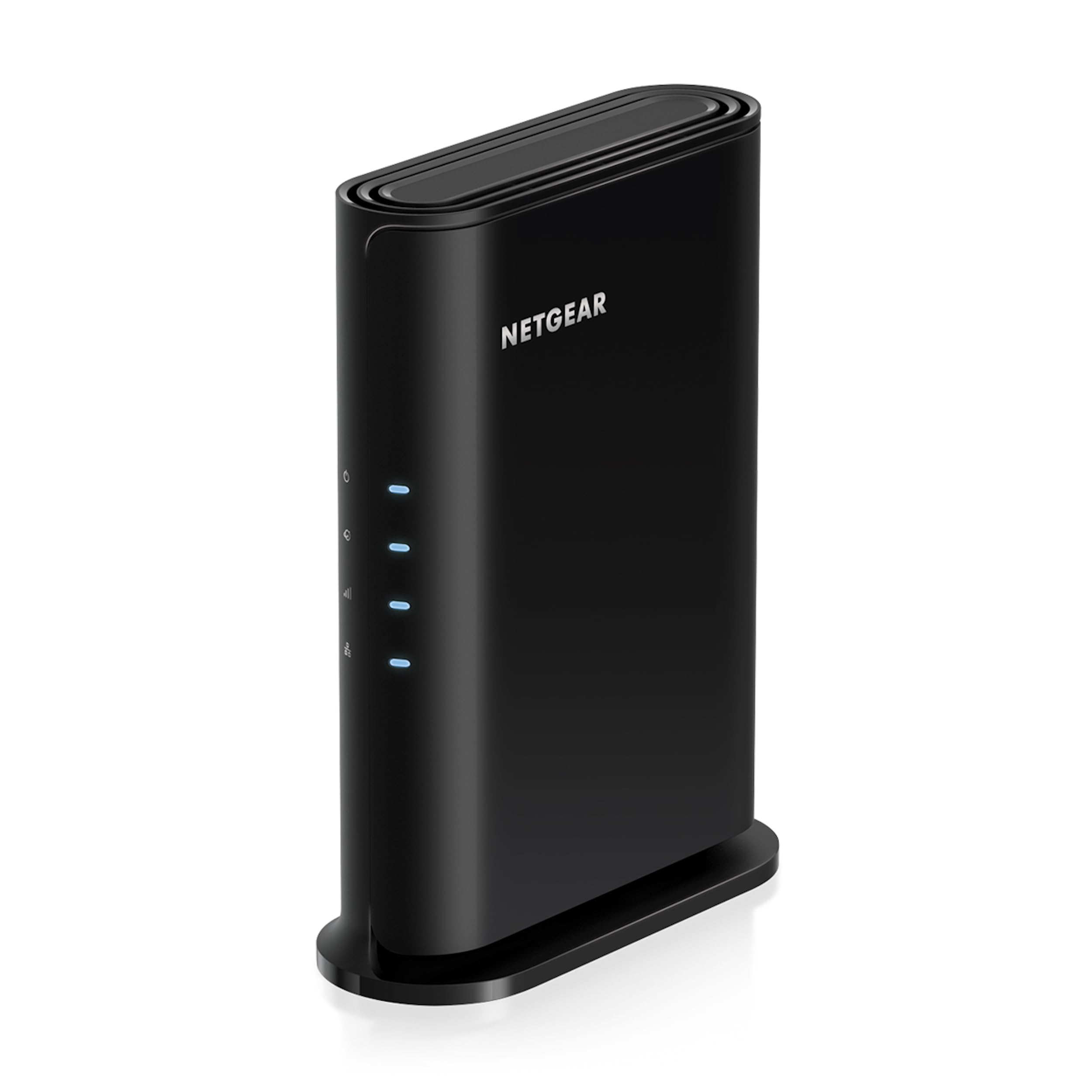
Standard: AX1800 WiFi 6
Bands: Dual band
Rated Speed: Up to 1.8 Gbps
Coverage: Up to 1,500 sq ft
Ports: 4× Gigabit
Device Load: 20 devices
NETGEAR Nighthawk WiFi 6 Router R6700AX
This is the straightforward single-box answer for a smaller home where the dead spot is mild. The four Gigabit ports cover wired devices like a console or desktop, and the AX1800 dual-band radio handles a normal household load of phones, laptops and a streaming stick. Setup is described as easy, and the Nighthawk line is built around a familiar app-driven install. It suits a buyer who wants one device, one power outlet and no satellites to place.
The 1,500 sq ft rating is the catch. In a two-story house that number is optimistic once floors get in the way, so this router earns its place only when the dead spot is close to where the router already sits. Buyers in a long or thick-walled home should look at the mesh picks below instead.
Trade-off: The rated coverage is the smallest of the five, so it will not reach a far upstairs bedroom in a larger two-story home.
2. TP-Link Archer AX21 V5
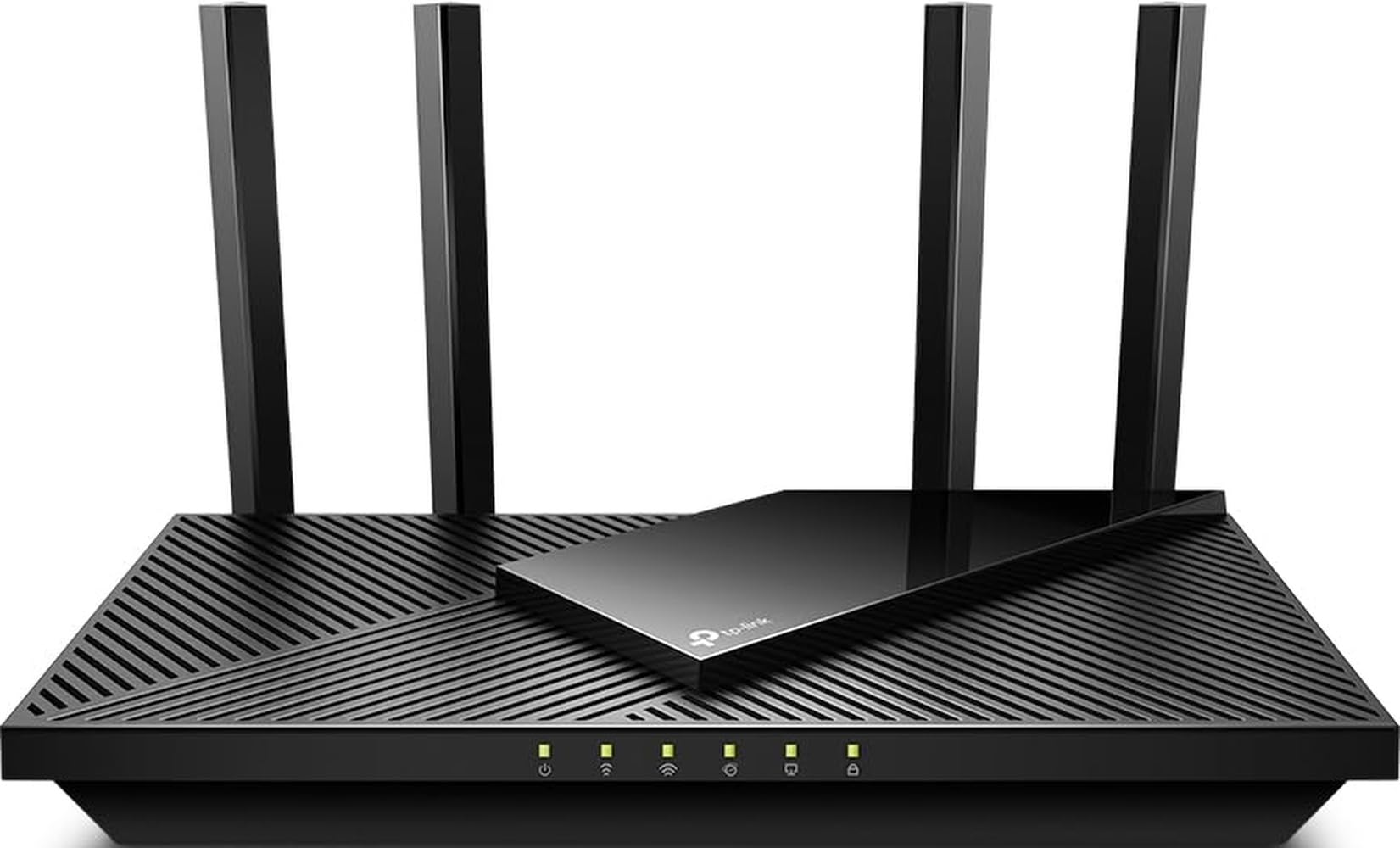
Standard: AX1800 WiFi 6
Bands: Dual band
Ports: Gigabit
Mesh: Easy Mesh compatible
Voice Control: Works with Alexa
Certification: Certified for Humans
The Archer AX21 is the value pick that does not box a buyer in. It runs AX1800 WiFi 6 with Gigabit ports for wired gear, and the Easy Mesh support means a second compatible unit can be added later to reach the dead floor without replacing the router. The Certified for Humans label points at a short, app-guided setup, and Alexa support lets voice commands handle basics like guest access. It is the most popular pick here, which fits a router aimed at first-time WiFi 6 buyers.
The reason to choose it over the Nighthawk above is the upgrade path, not raw coverage. On its own it is still a single router, so a buyer with a hard dead spot upstairs gets relief only after adding a mesh node. That makes it a two-step purchase rather than a one-and-done fix.
Trade-off: A single unit will not cure a serious dead spot on its own; the mesh node is a separate purchase.
3. NETGEAR Orbi Whole Home Tri-Band WiFi 6 Mesh System (RBK752P)

Standard: AX5200 WiFi 6 (802.11ax)
Bands: Tri-band
Coverage: Up to 5,000 sq ft
Device Load: 75 devices
Included: Router + 1 satellite extender
Security: Built-in security features
NETGEAR Orbi Whole Home Tri-Band WiFi 6 Mesh System (RBK752P)
This is the pick for the classic two-story problem: main router downstairs, one satellite upstairs, one network name across both floors. The tri-band design gives the satellite a dedicated path back to the router, which is what keeps speeds steady on the far floor instead of halving them. Coverage is rated to 5,000 sq ft and 75 devices, and the security features are bundled rather than sold separately. It suits a household with a home office or several streamers spread across two levels.
The trade-off is placement work: the satellite needs a spot with decent signal back to the router, which usually means a hallway or landing rather than the dead room itself. Buyers in a very large or multi-wing home may find one satellite is not enough, and adding a second Orbi node costs more than starting with a three-piece kit.
Trade-off: One satellite covers one problem floor well; a second dead zone means buying another node.
4. NETGEAR Nighthawk Advanced Whole Home Mesh WiFi 6 System (MK63S)

Standard: AX1800 WiFi 6
Coverage: Up to 4,500 sq ft
Device Load: 25+ devices
Included: Router + 2 satellite extenders
Security: Armor security included
Type: Whole home mesh system
NETGEAR Nighthawk Advanced Whole Home Mesh WiFi 6 System (MK63S)
Three pieces for the price of one mid-range router is the appeal here: a router plus two satellites, one for each floor with a spare. Coverage is rated to 4,500 sq ft and 25+ devices, and Armor security comes included. AX1800 is a modest standard next to the Orbi’s AX5200, but for web browsing, video calls and streaming it is plenty. This suits a buyer who wants a satellite on the upstairs landing and another at the far end of the ground floor.
The lower device count and dual-band design are the limits. A home full of smart bulbs, cameras and consoles can push past 25+ devices, and dual-band mesh satellites share airtime with client devices, so peak speeds on the far node drop compared with tri-band. It is a coverage fix first and a speed upgrade second.
Trade-off: Dual-band satellites and a 25+ device rating make this a coverage fix, not a high-device-load performer.
5. NETGEAR Orbi 370 Series WiFi 7 Mesh System (RBE373)

Standard: WiFi 7
Speed: Up to 5 Gbps
Coverage: Up to 6,000 sq ft
Device Load: 70 devices
Ports: 2.5 Gig
Included: Router + 2 satellite extenders (3 pack)
Security: Built-in security features
NETGEAR Orbi 370 Series WiFi 7 Mesh System (RBE373)
The premium pick is the one to choose when the dead spot is really a whole-floor problem and the internet plan is fast. WiFi 7 with a 2.5 Gig port means the router will not bottleneck a multi-gig connection, and the three-pack covers up to 6,000 sq ft and 70 devices. Two satellites give real flexibility: one upstairs, one downstairs at the far end. Setup is described as easy, and security features are built in.
The caution is timing and cost. WiFi 7 only pays off with WiFi 7 client devices and a fast plan; on an older laptop or a basic cable tier, most of that capability sits unused. Buyers on a tight budget should take the Orbi RBK752P or the MK63S and put the savings elsewhere.
Trade-off: The highest price tier here only makes sense with multi-gig internet and newer devices to use it.
Before You Buy
- Coverage rating: Match the square footage rating to the whole home, not just the dead room, and expect floors and walls to eat into it.
- Number of satellites: One satellite per problem floor is the rule of thumb; a three-pack covers two floors plus a far corner.
- Standard: WiFi 6 is enough for streaming and calls; WiFi 7 matters only with a fast plan and newer devices.
- Ports: A 2.5 Gig port is needed to avoid capping a multi-gig internet plan; Gigabit ports suit standard cable and fiber tiers.
- Device load: Count phones, laptops, TVs, consoles, cameras and smart plugs before choosing a 20-device router over a 70-device one.
- Security: Bundled security features save a separate subscription, so check what is included before comparing prices.
- Placement: Satellites need a spot with signal back to the router, so plan a hallway or landing rather than the dead room itself.
Frequently Asked Questions
- Will a mesh system fix a dead spot upstairs and downstairs? Yes, when satellites are placed on each floor with a decent link back to the router. A single router rarely reaches both floors in a larger home.
- Is WiFi 7 worth it for a dead spot? Only if the internet plan is multi-gig and devices are new enough to use it. Otherwise a WiFi 6 mesh system fixes the dead spot for less.
- How many satellites are needed for a two-story house? One per problem floor is the usual starting point, which makes a router-plus-two-satellite kit the safest choice for upstairs and downstairs.
- Can a budget router with Easy Mesh be upgraded later? Yes. A mesh-compatible router can be paired with a second unit later, which spreads the cost over two purchases.
- Does a tri-band mesh beat a dual-band mesh? Tri-band gives satellites a dedicated backhaul path, which keeps far-floor speeds steadier under load. Dual-band is cheaper but slows more at the edges.
Bottom Line
For most two-story homes with a dead spot upstairs and downstairs, the NETGEAR Orbi RBK752P is the top pick: tri-band WiFi 6, one satellite for the problem floor and coverage rated to 5,000 sq ft. Buyers on a budget should start with the TP-Link Archer AX21 V5 and add a mesh node later, while large homes with multi-gig internet should go straight to the Orbi 370 Series.
