Why there are Amazon links here: Brave Review is paid a commission for qualifying Amazon purchases made through the links below. Your price does not change, and using our links is entirely optional. How this works
Best Combined Smoke and Heat Alarm for a Bedsit: 5 Picks That Fit Small Rooms
A bedsit packs sleeping, cooking and living into one room, so a single alarm has to cover more ground than it would in a house. This guide covers five detectors that suit that job, from a cheap one-room smoke alarm to interconnected smoke-and-CO kits that link every room in a small flat. It suits renters who cannot hardwire anything, landlords fitting out a studio, and anyone who wants one alarm that covers both smoke and carbon monoxide. The overview table below puts all five side by side so a decision can be made in a minute.
Overview of the Picks
| Product | Key Spec | Best Use | Price Tier |
|---|---|---|---|
| SMI100 First Alert Battery Smoke Alarm | Battery-powered, 1-pack | Cheapest single-room smoke coverage | Budget |
| SMCO100 First Alert Battery Combination Smoke & CO Alarm | Battery, smoke + CO in one unit | One alarm covering both risks | Mid-range |
| X-Sense SC06-W 6-Pack Interconnected | 10-year sealed battery, interconnected, smoke + CO | Whole small flat, no wiring | Premium |
| X-Sense SC07-W 3-Pack Interconnected | 10-year sealed battery, interconnected, LCD display | Linked coverage with a readable display | Upper mid-range |
| Kidde 10SDR Compact Smoke Detector | AA battery, 4-inch body, 85 dB alarm | Tight shelves and small rooms | Budget |
SMI100, 1-Pack First Alert Battery Smoke Alarm
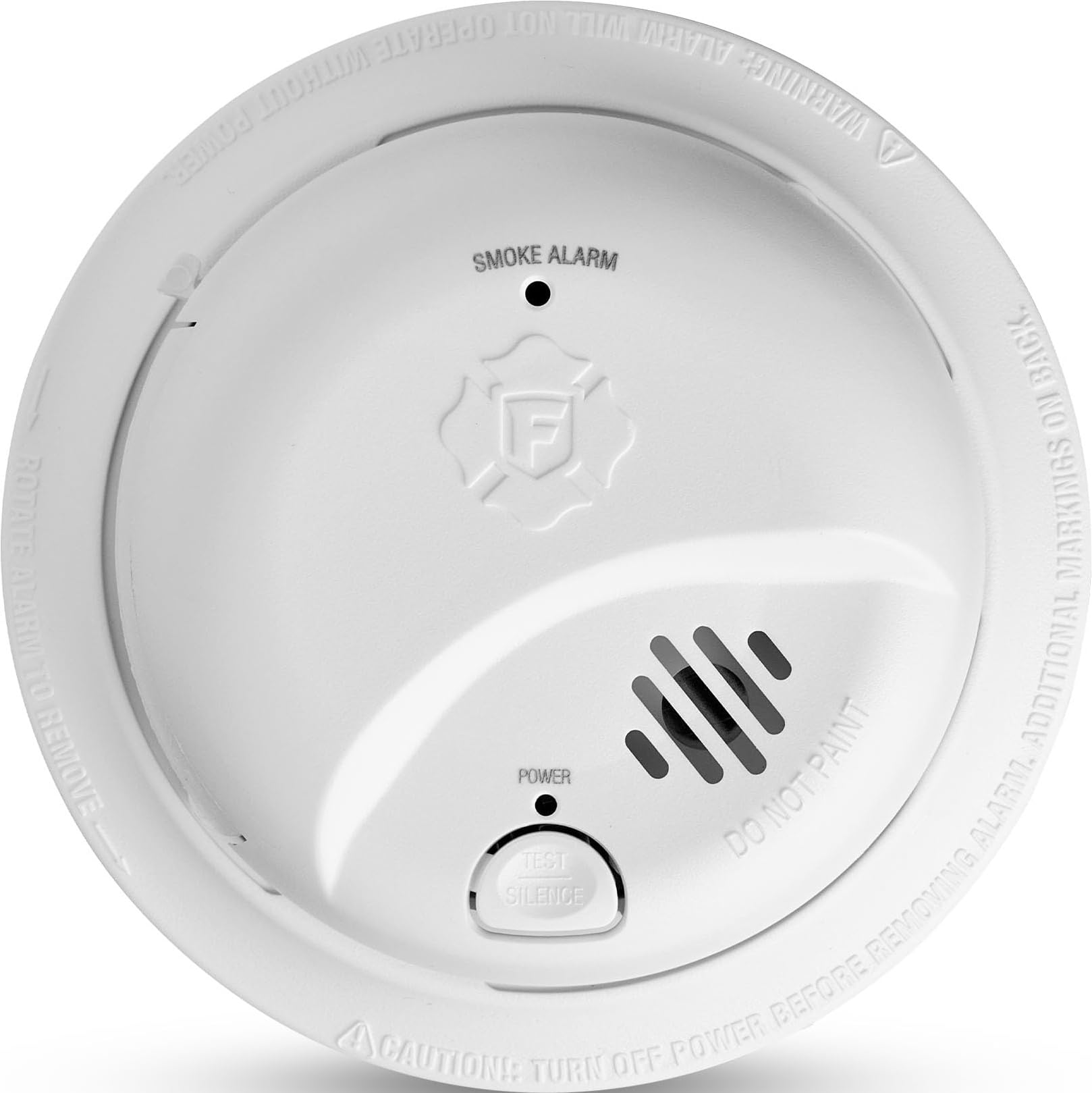
Type: Battery-powered smoke alarm
Pack Size: 1-pack
Brand: First Alert
Power Source: Battery
SMI100, 1-Pack First Alert Battery Smoke Alarm
This is the simplest way to put a smoke alarm in a bedsit: a single battery unit from a well-known alarm brand, with no wiring and no hub. It runs on a battery, so it can be screwed to a ceiling or wall wherever the room allows, including in a rented flat where the tenant cannot touch the mains. It handles smoke only, which makes it a sensible first alarm for a room where the main fire risk is cooking or a forgotten cigarette. The low price means a second unit for a hallway is easy to justify.
It earns its place as the budget pick for a bedsit because the outlay is small and installation is a matter of fitting a battery and mounting the bracket. The trade-off is that it covers smoke alone, so a bedsit with a gas hob or a fuel-burning heater still needs a separate carbon monoxide alarm.
Trade-off: Smoke-only coverage means a second detector is needed wherever gas or solid fuel is burned.
SMCO100 First Alert Battery Combination Smoke & Carbon Monoxide Alarm

Type: Combination smoke and carbon monoxide alarm
Pack Size: 1-pack
Brand: First Alert
Power Source: Battery
SMCO100 First Alert Battery Combination Smoke & Carbon Monoxide Alarm
This unit does two jobs in one housing: it watches for smoke and for carbon monoxide, which is exactly the pairing a bedsit needs when a gas cooker, boiler or space heater sits in the same room someone sleeps in. It is battery-powered, so it needs no electrician and no landlord permission to fit. One alarm on the ceiling covers both risks, which keeps the ceiling clear in a small room. It is the pick for anyone who wants the shortest possible install with the widest coverage.
The case for it is straightforward: a bedsit has one ceiling, and one device that covers both hazards is less clutter and less to maintain than two separate alarms. The trade-off is that it protects one room only, so a bedsit with a separate kitchen or hallway leaves those areas uncovered unless more units are bought.
Trade-off: A single unit protects one room, so a bedsit with a separate kitchen or hall needs extra alarms.
X-Sense 6-Pack Interconnected Smoke and CO Detector, SC06-W
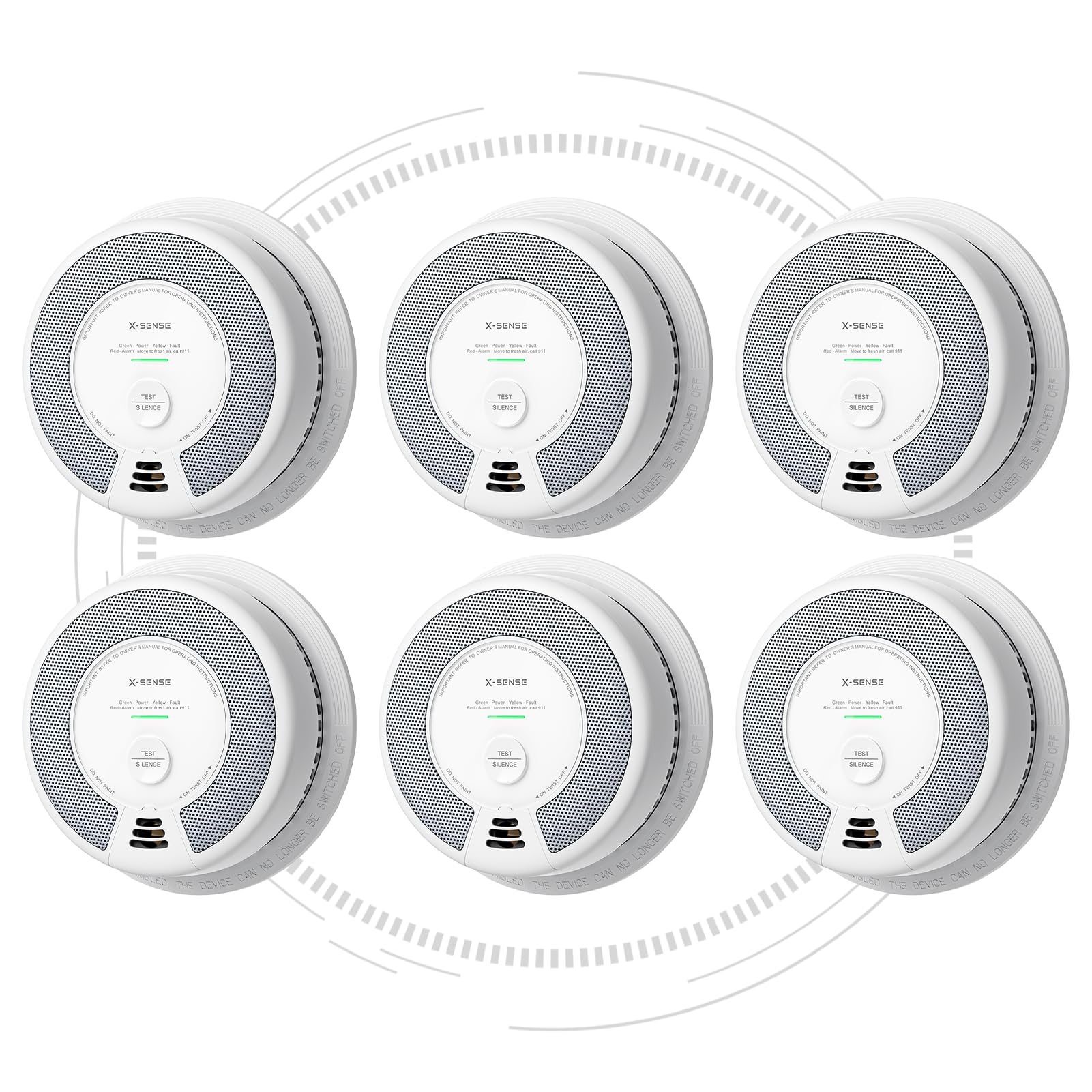
Type: Interconnected combination smoke and CO detector
Pack Size: 6-pack
Power Source: 10-year sealed battery, not hardwired
Certification: UL 217 and UL 2034
Feature: Interconnected alerts
This is the whole-flat option: six interconnected smoke and CO detectors, each on a sealed battery rated to last ten years, with no hardwiring needed. When one alarm triggers, the interconnected alerts sound across the network, so a fire in the kitchen is heard in the sleeping area even with a door closed. The sealed battery removes the annual battery swap and the temptation to borrow the battery for something else. The pack size suits a bedsit that is really a small flat, with a kitchen, a hall and a living-sleeping room to cover.
It earns its place as the premium pick because it turns separate alarms into one system without an electrician, which matters in rented or converted spaces. The trade-off is the outlay: six units is more coverage than a single-room bedsit needs, and the cost is hard to justify unless several rooms genuinely need an alarm.
Trade-off: The six-pack is priced and sized for a multi-room flat, so it is overkill for a true one-room bedsit.
X-Sense Interconnected Smoke and CO Detector, SC07-W, 3-Pack
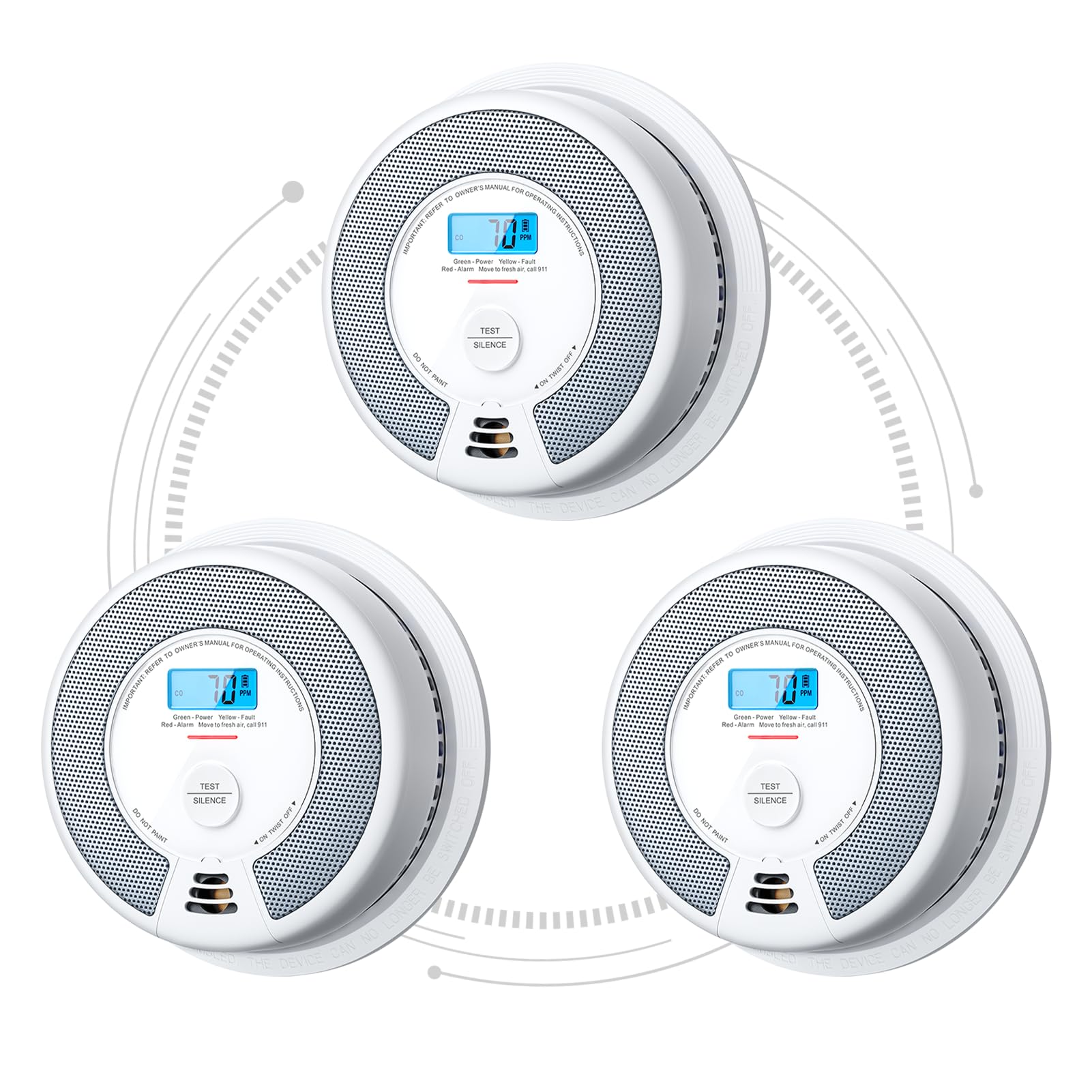
Type: Interconnected combination smoke and CO detector
Pack Size: 3-pack
Power Source: 10-year sealed battery, not hardwired
Certification: UL 217 and UL 2034
Feature: Whole-home interconnected alerts, LCD display
X-Sense Interconnected Smoke and CO Detector, SC07-W, 3-Pack
This three-pack sits between the single unit and the six-pack: enough detectors to link a bedsit’s sleeping area, kitchen and hallway, with the same sealed ten-year battery and interconnected alerts. The LCD display is the difference from the six-pack — it gives a readable readout on the unit itself, which helps when an alarm has sounded and the cause needs checking. It is certified to the smoke and CO standards named in the product title, and it installs without wiring. It suits a bedsit with two or three distinct zones rather than one open room.
It earns its place as the upper mid-range pick because three linked alarms cover the realistic layout of a small flat without paying for units that would sit in a drawer. The trade-off is that the LCD and the interconnection add cost per unit over a plain battery alarm, and a single-room bedsit will not use the linking at all.
Trade-off: Buyers pay a premium for the display and linking that a one-room bedsit cannot put to use.
Kidde Compact Smoke Detector, 10SDR
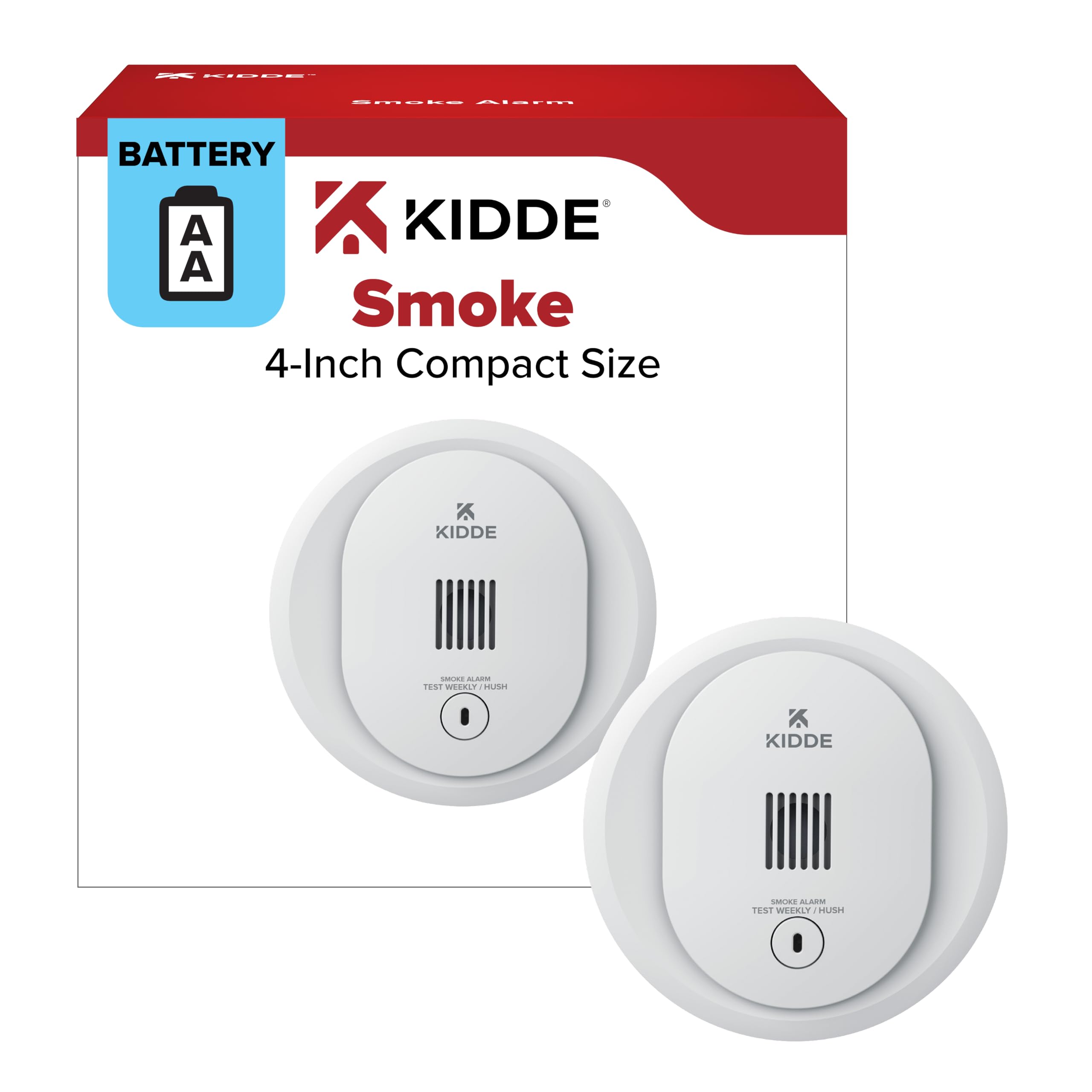
Type: Battery-powered smoke alarm
Size: 4-inch body
Alarm: 85 dB
Power Source: AA battery
Feature: LED status lights
The Kidde 10SDR is built around a 4-inch body, which is small enough to fit on a narrow ceiling strip, above a shelf or in a tight corner where a full-size alarm would look and feel out of place. It runs on AA batteries and puts out an 85 dB alarm, and LED status lights show at a glance that it is powered and working. It is a smoke alarm only, so it covers fire risk rather than carbon monoxide. It suits a bedsit where space is genuinely tight and a compact unit is the difference between fitting an alarm and not fitting one.
It earns its place as the compact pick because the small footprint solves a real problem in bedsits converted from box rooms and alcoves. The trade-off is that the compact body and AA power mean more frequent battery attention than a sealed ten-year unit, and it offers no carbon monoxide coverage.
Trade-off: AA batteries need regular checking, and the unit covers smoke only.
Before You Buy
- Coverage: A smoke-only alarm leaves carbon monoxide uncovered, so a bedsit with gas or a fuel-burning heater needs a combination unit or a second detector.
- Power source: Sealed ten-year batteries mean less maintenance; AA and standard batteries need regular checks and replacement.
- Interconnection: Linked alarms sound together across rooms, which matters when the sleeping area is behind a closed door; single units sound only where they are fitted.
- Size: A compact 4-inch body fits narrow ceilings and tight corners; full-size units need more clear space.
- Installation: Battery units need no wiring and suit renters; hardwired systems need an electrician and, in a rental, the landlord.
- Certification: Check the unit is certified to the relevant smoke and carbon monoxide standards before fitting.
- Mounting: Confirm the bracket suits the ceiling or wall surface in the bedsit, since some converted rooms have awkward finishes.
Frequently Asked Questions
-
Does a bedsit need a combined smoke and heat alarm?
A bedsit concentrates cooking, heating and sleeping in one room, so a combination smoke and carbon monoxide alarm covers the two most likely hazards with one device. A smoke-only alarm is cheaper but leaves gas and fuel-burning risks uncovered. -
Can a battery alarm be fitted in a rented bedsit?
Yes. Battery-powered alarms need no wiring, so they can be mounted without an electrician and removed at the end of a tenancy. Hardwired systems need the landlord’s involvement. -
What does interconnected mean on a smoke alarm?
Interconnected alarms are linked so that when one detects smoke or carbon monoxide, all of them sound. That means an alarm in the kitchen is heard in the sleeping area even with a door closed. -
How many alarms does a bedsit need?
A single open room can be covered by one combination alarm. A bedsit with a separate kitchen, hallway or bathroom usually needs two or three linked units so every zone is covered. -
Is a 10-year sealed battery better than a replaceable one?
A sealed ten-year battery removes the annual battery swap and the risk of a battery being removed and not replaced. Replaceable batteries cost less up front but need regular checking. -
Where should the alarm be mounted in a bedsit?
On the ceiling, central to the room and away from cooking steam and dead-air corners. Combination units should sit near the sleeping area and any fuel-burning appliance.
Bottom Line
For most bedsits, the best combined smoke and heat alarm for a bedsit is the SMCO100 First Alert Battery Combination Smoke & Carbon Monoxide Alarm: one battery unit, no wiring, and both smoke and carbon monoxide covered in the room where someone sleeps. A multi-room flat should step up to the linked X-Sense three-pack, and a true single room on a tight budget can start with the First Alert SMI100.
