Why there are Amazon links here: Brave Review is paid a commission for qualifying Amazon purchases made through the links below. Your price does not change, and using our links is entirely optional. How this works
Best Door Sensor for a Smart Home: 5 Picks for Every Setup
The best door sensor for a smart home is the one that speaks the protocol the home already runs. Zigbee owners, Matter-curious beginners, and Ecobee households each need a different answer, and buying the wrong protocol is the most common mistake in this category. This roundup covers five contact sensors across three ecosystems and two price tiers, with the overview table below pointing straight at the right pick. Readers who know their hub can decide in under a minute.
The Picks at a Glance
| Product | Key Spec | Best Use | Price Tier |
|---|---|---|---|
| SONOFF SenseGuard DW Gen2 4-Pack | Zigbee, tamper proof, 4 sensors | Existing Zigbee hubs | Budget |
| Tapo Door Sensor Starter Kit | Matter compatible, 3 sensors + hub | First smart home setup | Mid-range |
| Wireless Home Automation Sensor 4-Pack | Zigbee, 4 sensors | Cheap multi-door coverage | Budget |
| ecobee Smart Sensor 2-Pack | Ecobee ecosystem, 2 sensors | Ecobee households | Premium |
| 4-in-1 Smart WiFi Door Chime | Plug-in chime, Tuya/Smart Life | Local alerts, no hub | Budget |
1. SONOFF SenseGuard DW Gen2 4-Pack — Best for Zigbee Households
Type: Zigbee door/window contact sensor
Pack Size: 4 sensors
Monitoring: Open/close with phone alerts
Security Feature: Tamper proof
Compatibility: Alexa, Home Assistant, SmartThings
Power Source: Battery (wireless mount)
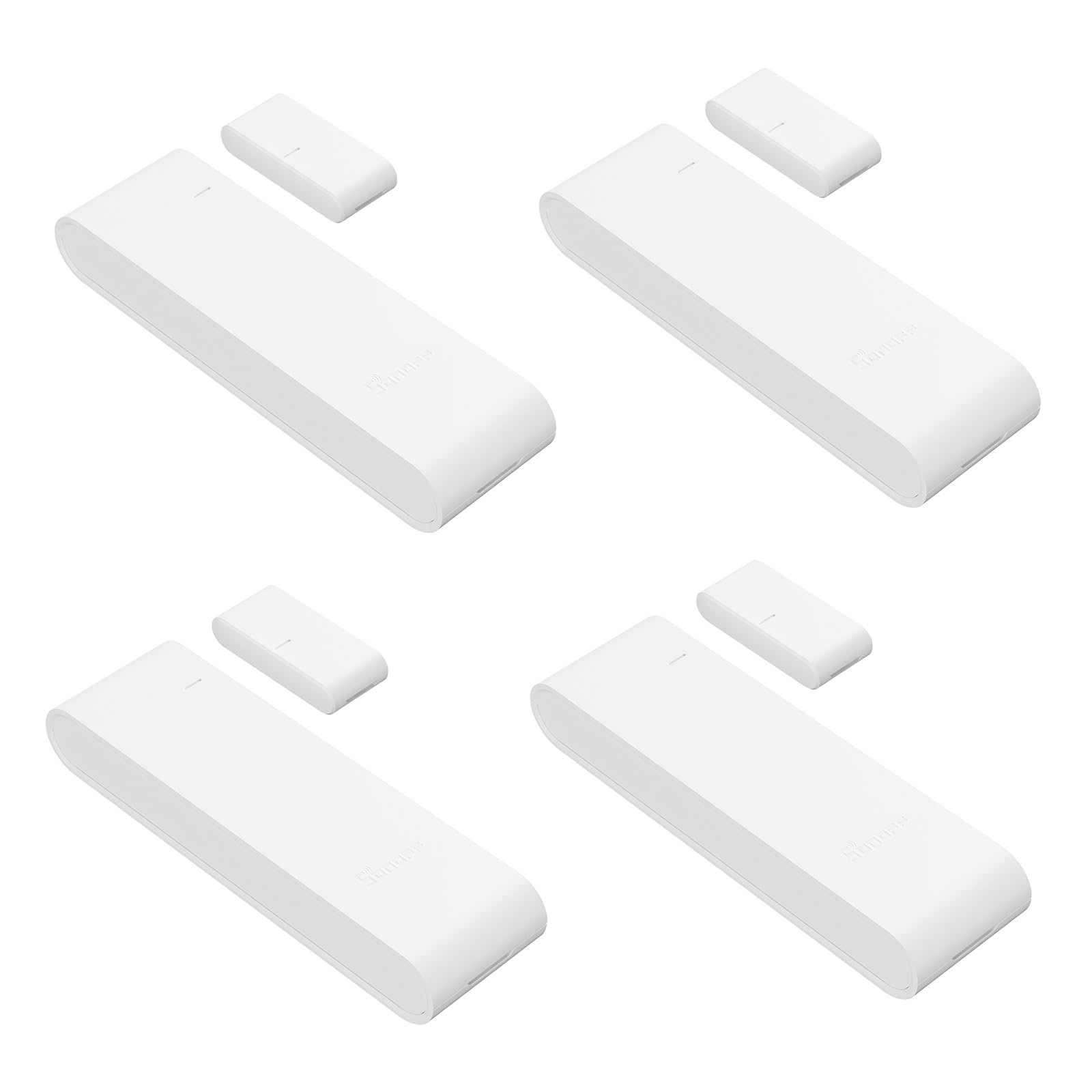
The SONOFF SenseGuard DW Gen2 is a small two-piece contact sensor that mounts on a door or window frame and reports open and closed states over Zigbee. The tamper-proof design means the sensor resists being quietly removed, which matters for anyone using these on exterior entries. Four sensors in one box suit a typical home’s front door, back door, and a pair of ground-floor windows. The units pair to an existing Zigbee coordinator rather than shipping with their own hub.
This is the pick for households already running Home Assistant, SmartThings, or an Alexa Zigbee hub, since the sensors join the mesh without extra hardware. The four-pack pricing lands in budget territory per sensor, which makes covering multiple openings realistic. The catch is that a Zigbee coordinator is mandatory — a buyer with no Zigbee infrastructure gets four sensors that cannot talk to anything.
Trade-off: The pack assumes an existing Zigbee coordinator, so buyers without one face a hidden hub cost before any sensor works.
2. Tapo Door Sensor Starter Kit — Best All-in-One for Beginners
Type: Matter-compatible contact sensor kit
Pack Size: 3 sensors plus 1 hub
Hub Feature: Built-in chime
Automation: Smart automation and real-time notification
Compatibility: Matter ecosystem

The Tapo Starter Kit bundles three contact sensors with a hub that includes a built-in chime, so the whole system works out of the box. Matter compatibility means the kit can join a broader smart home platform rather than locking buyers into one app. The chime adds an audible local alert on top of phone notifications, which is useful for hearing a door open without reaching for a phone. Three sensors cover the main entry points in a small home or apartment.
This kit earns its place as the beginner pick because nothing else is required at checkout — the hub is in the box. Buyers who want Matter support without building a system from scratch get a coherent starting point. The limitation is scale: three sensors go quickly in a larger house, and expanding means buying additional sensors separately.
Trade-off: Three sensors cover a small home, but a larger property will outgrow the kit fast and need add-on sensors at extra cost.
3. Wireless Home Automation Sensor 4-Pack — Best Budget Multi-Door Coverage
Type: Zigbee contact sensor
Pack Size: 4 sensors
Hub: Required (Zigbee hub)
Compatibility: SmartThings, Alexa, Home Assistant
Intended Use: Door and window security
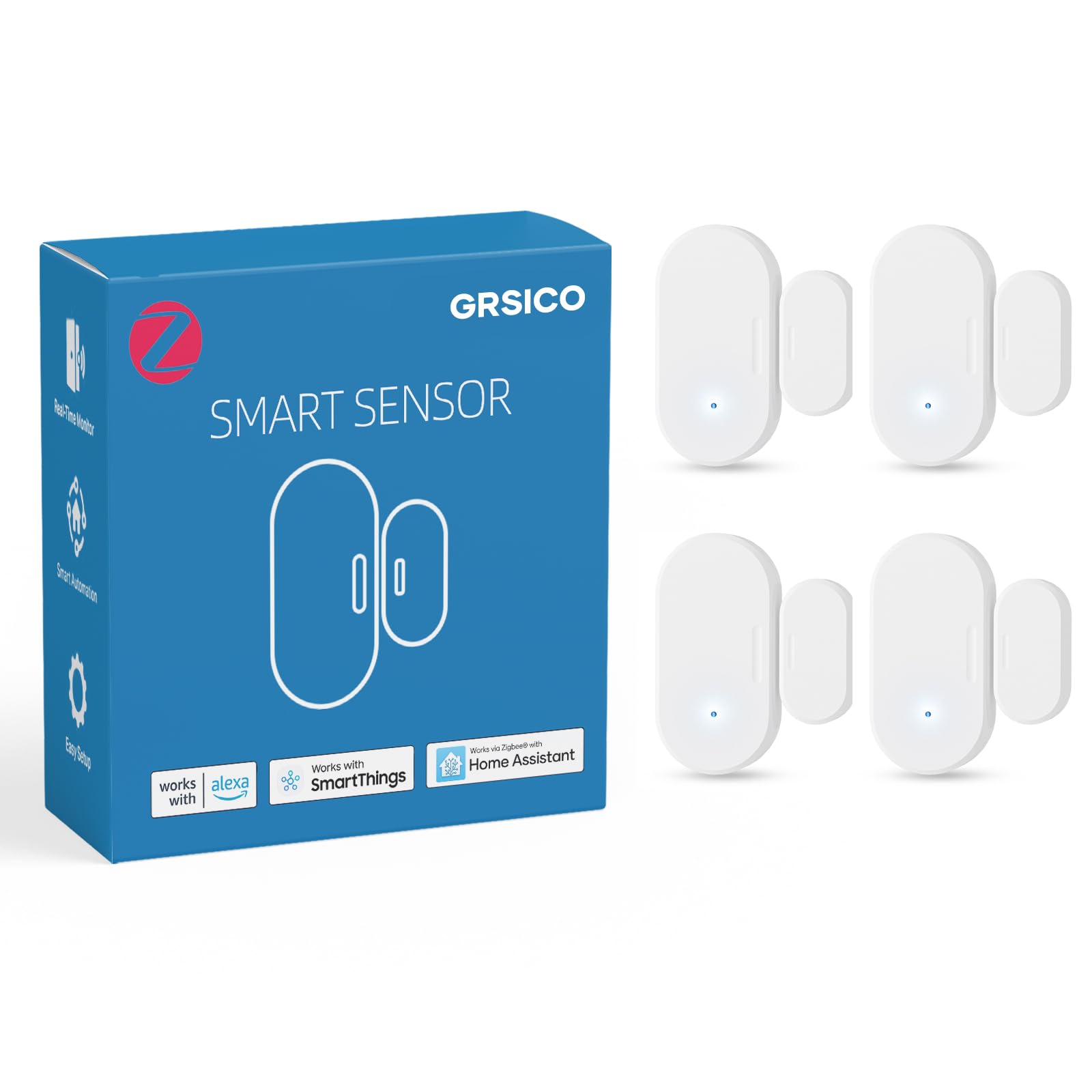
This four-pack is the cheapest route to covering several openings on a Zigbee network, with each sensor reporting open and closed states to SmartThings, Alexa, or Home Assistant. The wireless mount keeps installation simple — no wiring, just mounting tape and pairing. Four sensors at a budget price point make it practical to monitor a whole ground floor rather than just the front door. The design is plain and functional, aimed at buyers who care about coverage per dollar.
The pick suits renters and budget-focused buyers who already own a Zigbee hub and want maximum sensor count for minimum spend. It is not for anyone expecting premium build feel or in-box setup help — this is a volume play. Buyers without a Zigbee hub should look elsewhere, because the sensors cannot operate standalone.
Trade-off: The budget pricing points to basic build quality, and the pack delivers no hub, no chime, and no hand-holding for first-time setup.
4. ecobee Smart Sensor 2-Pack — Best for Ecobee Households
Type: Door and window contact sensor
Pack Size: 2 sensors
Ecosystem: ecobee
Function: Instant open/close alerts
Intended Use: Home security and peace of mind

The ecobee Smart Sensor is built to slot into an existing ecobee setup, sending instant alerts when a monitored door or window opens. The two-pack covers a front and back entry, or a door plus a frequently opened window. Integration with the ecobee app keeps alerts in the same place as thermostat and climate controls, which suits households already standardized on that platform. The hardware is compact and unobtrusive on a frame.
This pick exists for one buyer: the ecobee household that wants door alerts without adding a second ecosystem. It is the premium option here on a per-sensor basis, and that premium buys ecosystem cohesion rather than extra features. Anyone outside the ecobee world should skip it entirely — the sensors are not the value play for a mixed or hub-free home.
Trade-off: The two-pack is the smallest and most expensive per sensor here, and its value collapses outside an ecobee household.
5. 4-in-1 Smart WiFi Door Chime — Best for Local Alerts Without a Hub
Type: Plug-in WiFi door chime and contact sensor
Range: 600FT
Chime Options: 32 chimes, 5 volumes, 3 LED modes
Connectivity: 2.4 GHz WiFi only, Tuya/Smart Life
Expansion: Up to 32 sensors
Installation: Plug-in, no wiring

This unit pairs a door contact with a plug-in chime receiver, so a door opening triggers a loud local alert without any hub in the middle. The 32 chime tones, 5 volume levels, and 3 LED modes give plenty of ways to tune the alert, and the system expands to 32 sensors for whole-home coverage. Setup runs through Tuya or Smart Life over 2.4 GHz WiFi. With no wiring and a simple plug-in receiver, installation is about as easy as this category gets.
It suits parents watching for kids slipping out, shopkeepers monitoring a back entrance, and anyone who wants an audible alert rather than a phone notification. The lack of a hub requirement is the whole appeal. The caution is the 2.4 GHz-only WiFi — homes running a 5 GHz-only network, or with heavy 2.4 GHz congestion, may see unreliable app connectivity.
Trade-off: The 2.4 GHz-only radio limits app reliability on crowded or 5 GHz-only networks, and the chime-centric design offers less automation depth than a true smart-home sensor.
Before You Buy
- Protocol: Zigbee, Matter, ecobee, and WiFi are not interchangeable — match the sensor to the hub or platform already in the home.
- Hub requirement: Three of these five picks need an existing coordinator; only the Tapo kit and the WiFi chime work without prior infrastructure.
- Pack size: Two-packs suit a single entry, while four-packs cover a ground floor; count openings before choosing.
- Alert type: Phone notifications, local chimes, or both — households with kids or hearing concerns often want an audible chime.
- Mounting: All picks here are wireless and tape-mounted, so surface condition and frame clearance matter more than tools.
- Expansion: Check the maximum sensor count if coverage is likely to grow, since the chime system supports far more than the sensor packs.
- Network band: The WiFi chime needs a 2.4 GHz network, a common stumbling block in modern dual-band homes.
Frequently Asked Questions
-
Do door sensors need a hub?
Not all of them. Zigbee and ecobee sensors need their respective coordinator, while the Tapo kit includes its own hub and the WiFi chime connects directly to a router. -
Which door sensor works with Alexa?
The SONOFF pack and the budget Zigbee four-pack both list Alexa compatibility, though both still require a Zigbee coordinator such as an Echo with a built-in hub. -
Can door sensors work without WiFi?
Zigbee sensors communicate over their own mesh, but the hub that receives their signals typically needs a network connection for phone alerts. The plug-in chime is the closest thing here to a fully local alert system. -
How many sensors does a typical home need?
Most homes start with the front and back doors plus one or two ground-floor windows, which puts a four-pack in the sweet spot for coverage. -
Are door sensors renter-friendly?
Yes — every pick here mounts wirelessly with no drilling required, so they can be removed without damaging frames. -
What is the difference between a door sensor and a door chime?
A sensor reports state to a smart platform for automation and alerts, while a chime focuses on an immediate audible sound when a door opens. The WiFi chime here does both.
Bottom Line
For most Zigbee households, the SONOFF SenseGuard DW Gen2 four-pack is the best door sensor for a smart home — four tamper-proof sensors at a budget per-unit price, provided a coordinator already exists. Complete beginners should take the Tapo Door Sensor Starter Kit instead, since the included hub and chime remove every setup barrier.
