Why there are Amazon links here: Brave Review is paid a commission for qualifying Amazon purchases made through the links below. Your price does not change, and using our links is entirely optional. How this works
Best Inverter for an Off Grid Setup for Cabins, RVs, and Whole Homes
The best inverter for an off grid setup is the one sized to the load, the battery bank, and the wiring already in place — not the biggest box on the shelf. This roundup covers five units across the full range: a budget 12V workhorse for trucks and RVs, two mid-size hybrid inverters with built-in MPPT charging, a high-output split-phase model for cabins and farms, and a complete whole-house kit. Cabin and tiny-home owners, RV and truck users, and homeowners building a full off-grid system will each find a fit below. The overview table shows the differences at a glance before the individual reviews.
Overview of the Picks
| Product | Key Spec | Best Use | Price Tier |
|---|---|---|---|
| Glass Top Cover SUMRY Hybrid Solar Inverter | 4000W, DC24V to AC120V, 140A MPPT | Mid-size cabin or workshop | Mid |
| 3000W Pure Sine Wave Inverter with Wired Remote | 3000W, 12V DC to 120V AC, 6000W peak | RV, truck, small solar | Budget |
| SUNGOLDPOWER FR12K-B | 12000W, 48V, 120V/240V split-phase, dual MPPT | Home, cabin, farm | Premium |
| Y&H 4200W Hybrid Solar Inverter | 4200W, DC12V/24V, 100A MPPT, 4000W PV | Home, RV, backup power | Mid |
| ECO WORTHY 10000W Complete Off-Grid Kit | 10KW split-phase, 48V 314Ah, 2950W PV | Whole-house system | Highest |
Glass Top Cover SUMRY Hybrid Solar Inverter, 4000W DC24V to AC120V
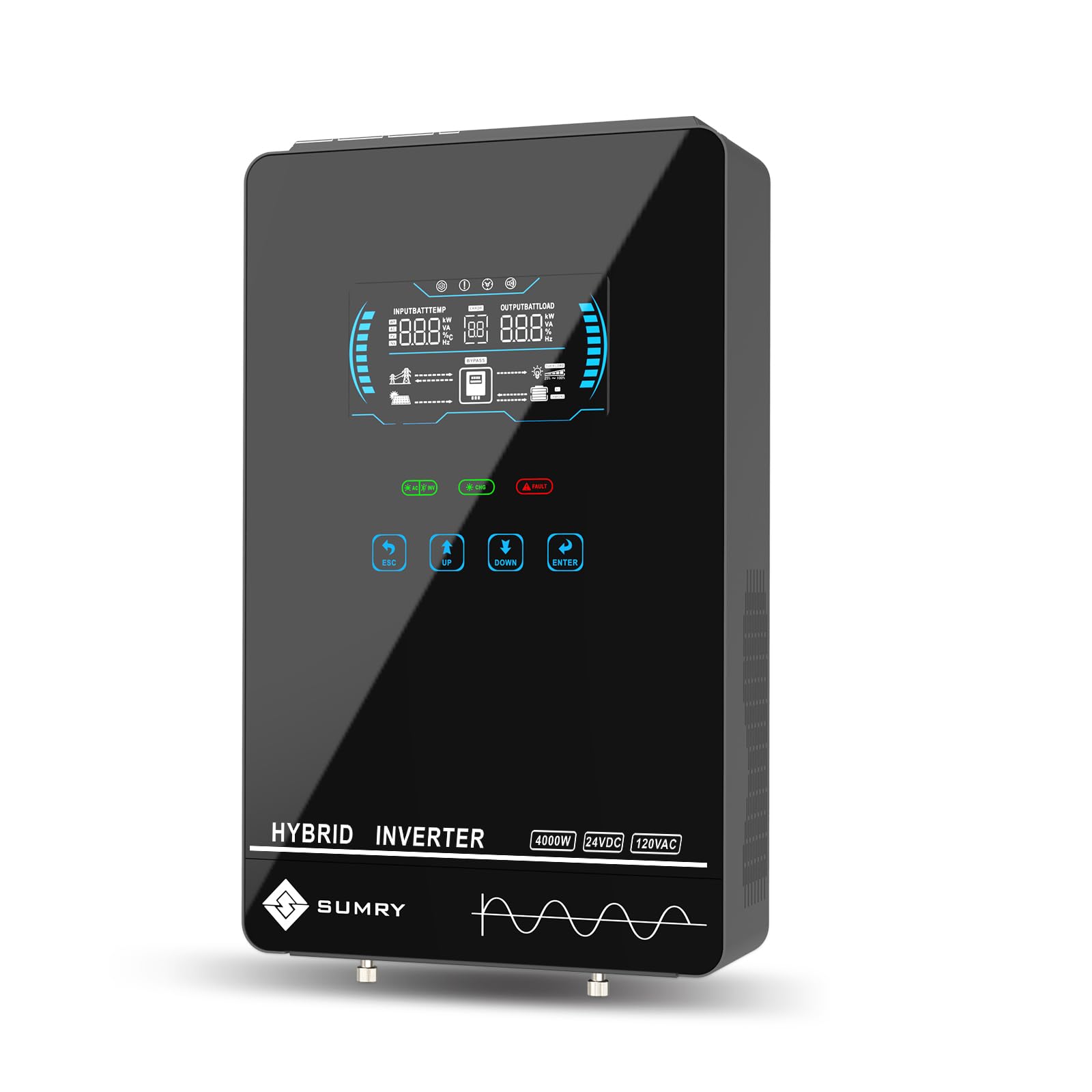
Power Rating: 4000W
Input: DC24V
Output: AC120V pure sine wave
Charge Controller: 140A MPPT
Battery Support: Battery-less, AGM, or lithium
Display: LCD with glass top cover
Glass Top Cover SUMRY Hybrid Solar Inverter, 4000W DC24V to AC120V
This SUMRY unit is a hybrid all-in-one: inverter, 140A MPPT charge controller, and LCD monitoring in a single chassis. The glass top cover protects the display and gives the housing a cleaner look than the usual bare-metal boxes. The 24V DC input pairs with a modest battery bank, and the pure sine wave output runs motors, pumps, and electronics without the buzz that modified sine wave units produce. Battery-less operation is a nice touch for a solar-only daytime setup.
The 140A MPPT controller is generous for this power class and lets a decent PV array charge the bank quickly. It suits a cabin, workshop, or small home with a 24V bank and a load that stays under the 4000W ceiling.
Trade-off: The 24V input limits the battery bank size and cable runs compared with 48V systems, so buyers planning to grow into a large array should start higher up the range.
3000W Pure Sine Wave Inverter with 23 ft Wired Remote

Continuous Power: 3000W
Peak Power: 6000W
Input: 12V DC
Output: 120V AC pure sine wave
Outlets: Dual AC, 20A outlets, USB, hardwire port
Remote: 23 ft wired remote with LCD
3000W Pure Sine Wave Inverter, 12V DC to 120V AC, 6000W Peak
This is a standalone inverter rather than a hybrid, so it pairs with a separate charge controller and battery bank. The 6000W peak rating covers startup surges from fridges, compressors, and power tools that would trip a smaller unit. The mix of dual AC outlets, 20A outlets, USB ports, and a hardwire port means it can feed both plug-in devices and a small breaker panel. The 23 ft wired remote keeps the LCD within reach from the cab or living area.
It suits RV, truck, and small solar users who already have a 12V bank and want a simple, direct inverter with useful output options.
Trade-off: At 12V input the unit draws very high current at full load, so cable gauge and fuse sizing need care — a sloppy install will sag or overheat long before the inverter does.
SUNGOLDPOWER FR12K-B 12000W 48V All-in-One Solar Inverter
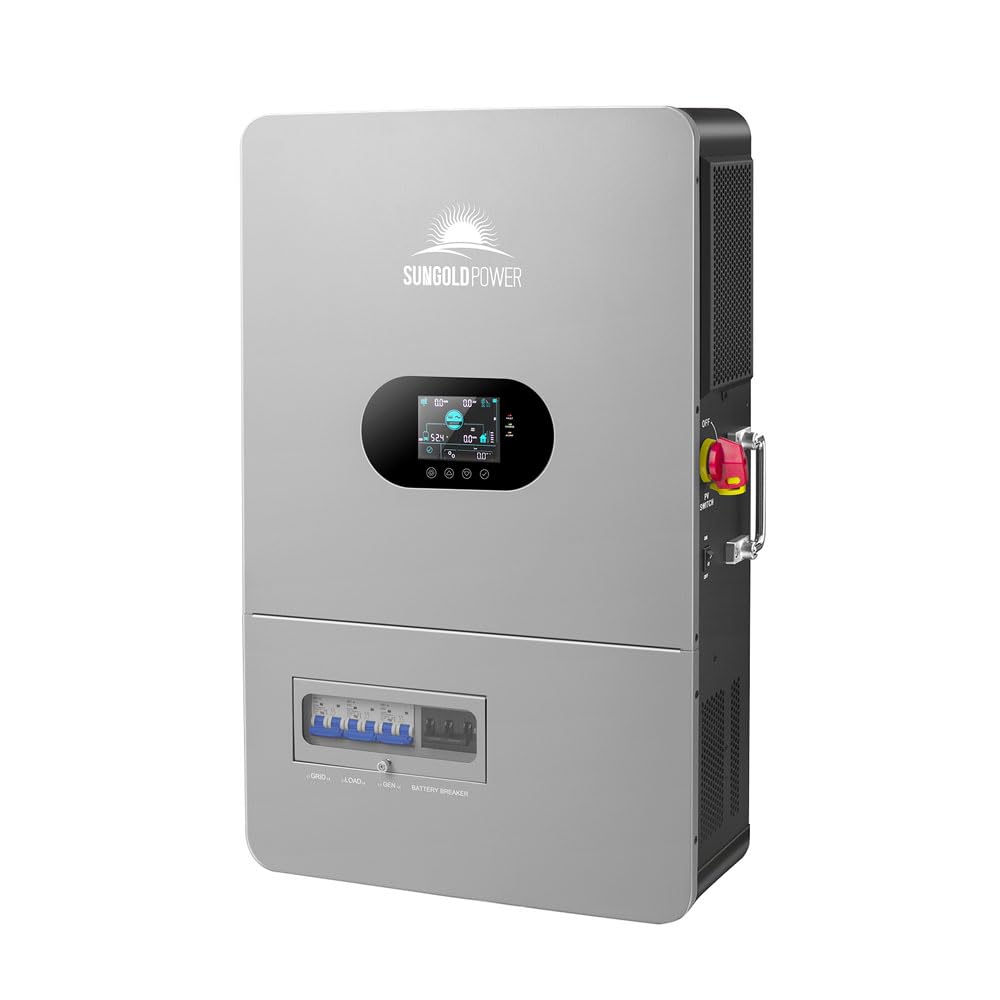
Power Rating: 12000W
Input: 48V DC
Output: 120V/240V split-phase, selectable
Charge Controller: Dual MPPT
PV Input: 13200W
Battery Charger: 200A
SUNGOLDPOWER FR12K-B 12000W 48V All-in-One Solar Inverter
This is a serious whole-property unit built for a 48V bank and a large PV array. The 12000W output with selectable 120V/240V split-phase means it can run well pumps, shop equipment, and household circuits that need 240V, not just 120V loads. Dual MPPT controllers and 13200W of PV input support a big array without forcing everything through one tracker. The 200A battery charger is sized for a substantial bank.
It suits homeowners, cabin owners, and farm operators building a permanent off-grid power system with 240V loads and room for panels.
Trade-off: This is a premium, high-voltage system component — the 48V bank, large array, and split-phase wiring it demands push total install cost well beyond the inverter price alone, and it is overkill for a small cabin.
Y&H 4200W Hybrid Solar Inverter, DC12V/24V Dual Voltage

Power Rating: 4200W
Input: DC12V or 24V dual voltage
Output: AC230V pure sine wave
Charge Controller: Built-in 100A MPPT
Max PV Input: 4000W
Comms: BMS / RS485
Y&H 4200W Hybrid Solar Inverter, DC12V/24V Dual Voltage
The Y&H stands out for its dual 12V/24V input, which lets a buyer start on a 12V bank and step up to 24V without replacing the inverter. The built-in 100A MPPT controller handles up to 4000W of PV, and BMS/RS485 communication lets the unit talk to a lithium battery management system. Pure sine wave output keeps sensitive electronics and appliances happy.
It suits home and RV users who want one hybrid box that covers charging and inverting, with a battery bank that can grow over time.
Trade-off: The AC230V output is aimed at 230V markets and appliances, so buyers in 120V regions need to confirm compatibility before committing — this is not a plug-and-play 120V unit.
ECO WORTHY 10000W Complete Off-Grid Solar Kit
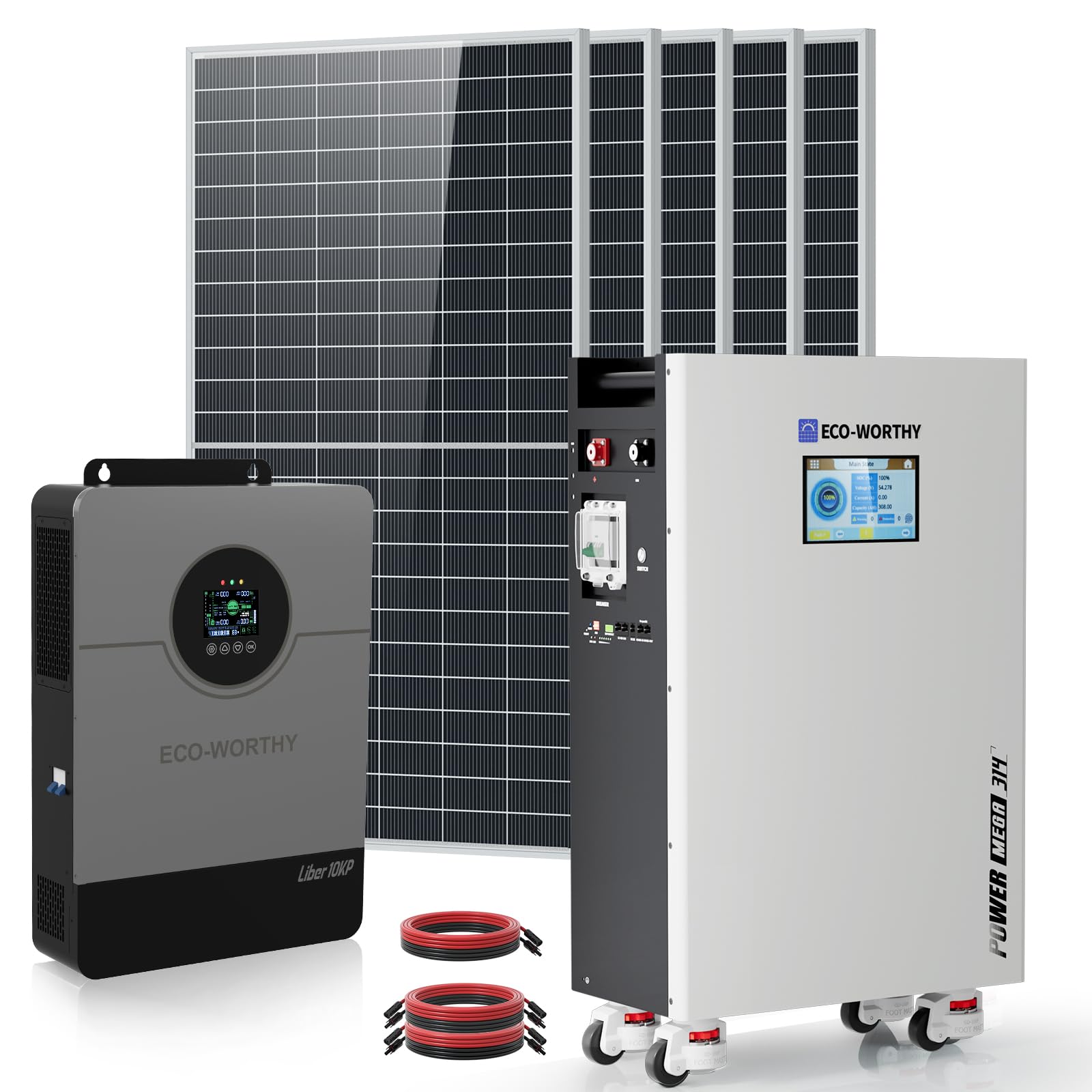
Output: 10000W, 120V/240V split-phase
Battery: 48V 314Ah, 16.1kWh
Solar Input: 2950W PV
System Type: Complete whole-house off-grid kit
Inverter: Split-phase
ECO WORTHY 10000W Complete Off-Grid Solar Panel Kit for Home
This is the only pick that ships as a full system: split-phase inverter, 16.1kWh of 48V storage, and 2950W of solar panels in one package. Buying the pieces together removes the compatibility guesswork that trips up first-time off-grid builders, and the 120V/240V split-phase output supports whole-house circuits. The 16.1kWh bank gives meaningful overnight runtime for a home-scale load.
It suits homeowners who want a complete, matched whole-house off-grid system and would rather not source inverter, battery, and panels separately.
Trade-off: The 2950W PV array is modest for a 16.1kWh bank, so buyers in low-sun regions may need to add panels to recharge fully — and the kit is the most expensive pick here by a wide margin.
Before You Buy
- Battery voltage: Match the inverter input (12V, 24V, or 48V) to the bank; higher voltage means smaller cables and lower current at the same wattage.
- Load size: Add up continuous watts for everything running at once, then leave headroom for startup surges on motors and compressors.
- Output voltage: Confirm 120V, 230V, or split-phase 120V/240V matches the appliances and panel being fed.
- Charge controller: A built-in MPPT controller saves a separate purchase; check its amp rating and max PV input against the planned array.
- Wiring and fusing: Size cables and fuses for the full-load current — undersized wiring is the most common cause of poor performance and heat.
- Expansion room: Buyers planning to grow the array or bank should pick a voltage and controller rating with headroom to spare.
- System completeness: A kit removes compatibility guesswork; separate components allow more customization but require matching every part.
Frequently Asked Questions
-
What size inverter is needed for an off grid setup?
Size to the continuous load plus surge headroom. A small cabin or RV often lands in the 3000W–4200W range, while a whole home with 240V loads needs a split-phase unit in the 10000W–12000W class. -
Is pure sine wave necessary?
Yes for most modern loads. Pure sine wave runs motors, fridges, and electronics cleanly, while modified sine wave can cause buzzing, heat, and unreliable operation. -
Should the inverter have a built-in MPPT controller?
A built-in MPPT controller simplifies the install and saves a separate purchase. Standalone inverters suit buyers who already have a charge controller or want to choose their own. -
What battery voltage is best?
Higher voltage is better for larger systems. 12V suits small RV and truck setups, 24V fits mid-size cabins, and 48V is the norm for whole-home systems because it keeps current and cable size down. -
Can an off grid inverter run a well pump or air conditioner?
Only if its surge rating covers the motor startup. Split-phase units with high peak capacity handle 240V pumps and A/C, while smaller 120V inverters generally cannot. -
Does a complete kit make sense for a first build?
For homeowners who want a matched whole-house system without sourcing parts separately, a kit removes compatibility risk. Buyers who want to customize should build from separate components.
Bottom Line
For most off-grid buyers, the best inverter for an off grid setup is the Glass Top Cover SUMRY Hybrid Solar Inverter — its 4000W output, 140A MPPT controller, and 24V input hit the sweet spot for cabins, workshops, and small homes without the cost or complexity of a whole-house system. Buyers with 240V loads or a full-property plan should step up to the SUNGOLDPOWER FR12K-B, while RV and truck users will find the 3000W wired-remote unit the simplest fit.