Why there are Amazon links here: Brave Review is paid a commission for qualifying Amazon purchases made through the links below. Your price does not change, and using our links is entirely optional. How this works
Best Leak Sensor for a Downstairs Toilet: 5 Picks That Catch Trouble Early
A downstairs toilet sits at the lowest point of the house, which is exactly where water from a failing supply line, a leaking shut-off valve, or a running fill valve ends up first. This guide covers five leak sensors that suit different buyers: renters and budget shoppers who want a simple loud alarm, homeowners who want phone alerts while away, and anyone with a large basement or long pipe run that needs extra range. The overview table below puts every pick side by side so the right one is easy to spot.
Overview of the Picks
| Product | Key Spec | Best Use | Price Tier |
|---|---|---|---|
| 6000 Toilet Leak Detector | Installs in seconds, no tools | Toilet-specific leak and running-toilet detection | Mid |
| Flood Leakage Detection Devices 5 Pack | 5 sensors, 100dB alarm | Covering several spots around the toilet and utility area | Budget |
| YoLink Water Leak Sensor 1 Kit | 4-pack plus hub, app/email/SMS alerts | Remote monitoring across a whole house | Mid |
| GoveeLife Upgraded Smart Water Leak Detector 3 Pack | WiFi, IP67, long range | Smart-home owners wanting app push alerts | Mid |
| Zircon Leak Alert Water Leak Detector | Loud 90dB alarm, no setup | A cheap first line of defense by the toilet base | Budget |
6000 Toilet Leak Detector – Installs in Seconds, No Tools Required

Type: Toilet-mounted leak detector
Installation: No tools required
Detection: Leaks and running toilets
Alerts: Visual and audible
Best Use: Downstairs toilet water problems
6000 Toilet Leak Detector – Installs in Seconds, No Tools Required
This pick is built specifically for the toilet rather than for general floor flooding, which makes it the most targeted option in the lineup. It installs in seconds with no tools, so a homeowner or renter can set it up without touching the plumbing. The alerts are both visual and audible, which helps in a small downstairs bathroom where a loud alarm might not carry. It also watches for running toilets, one of the quietest causes of high water bills.
The unit suits buyers whose main worry is the toilet itself — a slow fill valve, a leaking tank, or a supply connection that drips under the bowl. It earns its place because nothing else here is designed around toilet behavior. The trade-off is that a toilet-mounted detector is not the right tool for a flooded floor from a nearby sink or washing machine, so it should not be the only sensor in a utility-heavy basement.
Trade-off: Buyers who need broad floor coverage around the toilet will get more from a multi-sensor pack than from this single-purpose unit.
Flood Leakage Detection Devices for Pipe/Drain/Sink/Faucet Drip Alert, 5 Pack

Type: Standalone water leak detectors
Pack Size: 5 sensors
Alarm: 100dB water sensor alarm
Intended Use: Pipe, drain, sink, faucet drip, floor flooding
Rooms: Bathroom, kitchen, toilet, laundry room, basement
This five-pack is the coverage play: the sensors are standalone, so they simply sit where water would collect and sound a 100dB alarm when they get wet. Because five units come in the box, the downstairs toilet can get one, the laundry room another, and the remaining three can guard under the sink, by the water heater, or along a basement wall. The 100dB rating is loud enough to be heard through a floor, which matters when the toilet is in a basement.
It suits buyers who want several protection points without paying per sensor. The pack earns its spot as the practical choice for a whole lower level. The trade-off is that these are local alarms only — no app, no phone alert — so a sensor will not help anyone who is away from the house when a leak starts.
Trade-off: There is no remote notification, so the alarm only works if someone is home to hear it.
YoLink Water Leak Sensor 1 Kit: 4-Pack + Hub

Type: Smart leak sensor kit with hub
Alerts: Mobile app, email, SMS
Battery: Up to 5-year battery
Protocol: LoRa YoLink, up to 2034 feet
Integration: Works with IFTTT
Pack Size: 4 sensors plus hub
This kit is the remote-monitoring answer, and its range is the standout feature. The LoRa YoLink protocol is rated up to 2034 feet, which is enough to reach a detached garage, a far basement corner, or a downstairs toilet that sits well away from the router. Alerts arrive by mobile app, email, and SMS, and the sensors work with IFTTT for buyers who want to trigger other devices. The included hub is what makes that long-range communication possible, and the batteries are rated up to five years.
It suits homeowners who travel, landlords monitoring a rental, or anyone whose downstairs toilet is in a space they do not check daily. It earns its place as the most capable alerting option here. The trade-off is that the hub is a required piece of hardware — buyers who want a plug-and-play sensor with no extra device will find this kit more involved than a standalone alarm.
Trade-off: The kit depends on its hub, so setup is more involved than dropping a standalone alarm on the floor.
GoveeLife Upgraded Smart Water Leak Detector, 3 Pack
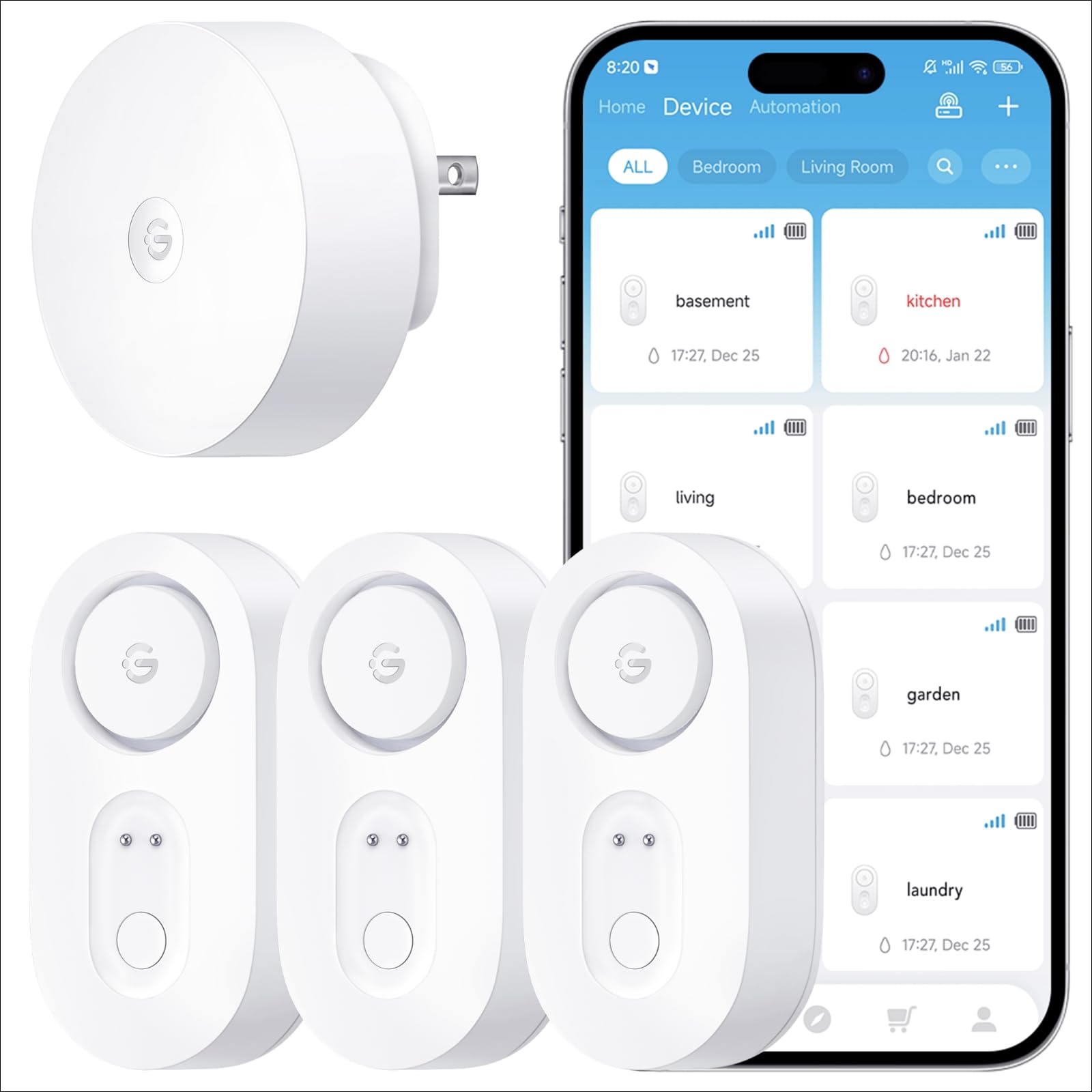
Type: WiFi smart water leak detector
Range: Up to 1804ft ultra-long range
Alerts: SMS, email, app push
Battery: 5-year battery life
Rating: IP67
Pack Size: 3 sensors
This three-pack leans on WiFi rather than a separate hub, and the range is rated up to 1804 feet. Alerts go out by SMS, email, and app push, so a leak in the downstairs toilet reaches a phone anywhere. The IP67 rating means the sensor body tolerates splashes and damp floors, and the battery is rated for five years. GoveeLife also lists a fast response with a high alarm, which helps when a supply line lets go suddenly.
It suits smart-home buyers who already run WiFi devices and want phone alerts without adding another hub to the shelf. It earns its place as the simplest route to remote notifications in this lineup. The trade-off is that WiFi-only sensors are tied to the home network — a router outage or a weak signal in a basement corner can leave the sensor unable to send anything.
Trade-off: WiFi dependence means a network outage or a dead zone can silence the phone alerts.
Zircon Leak Alert Water Leak Detector, Loud 90 dB Water Alarm
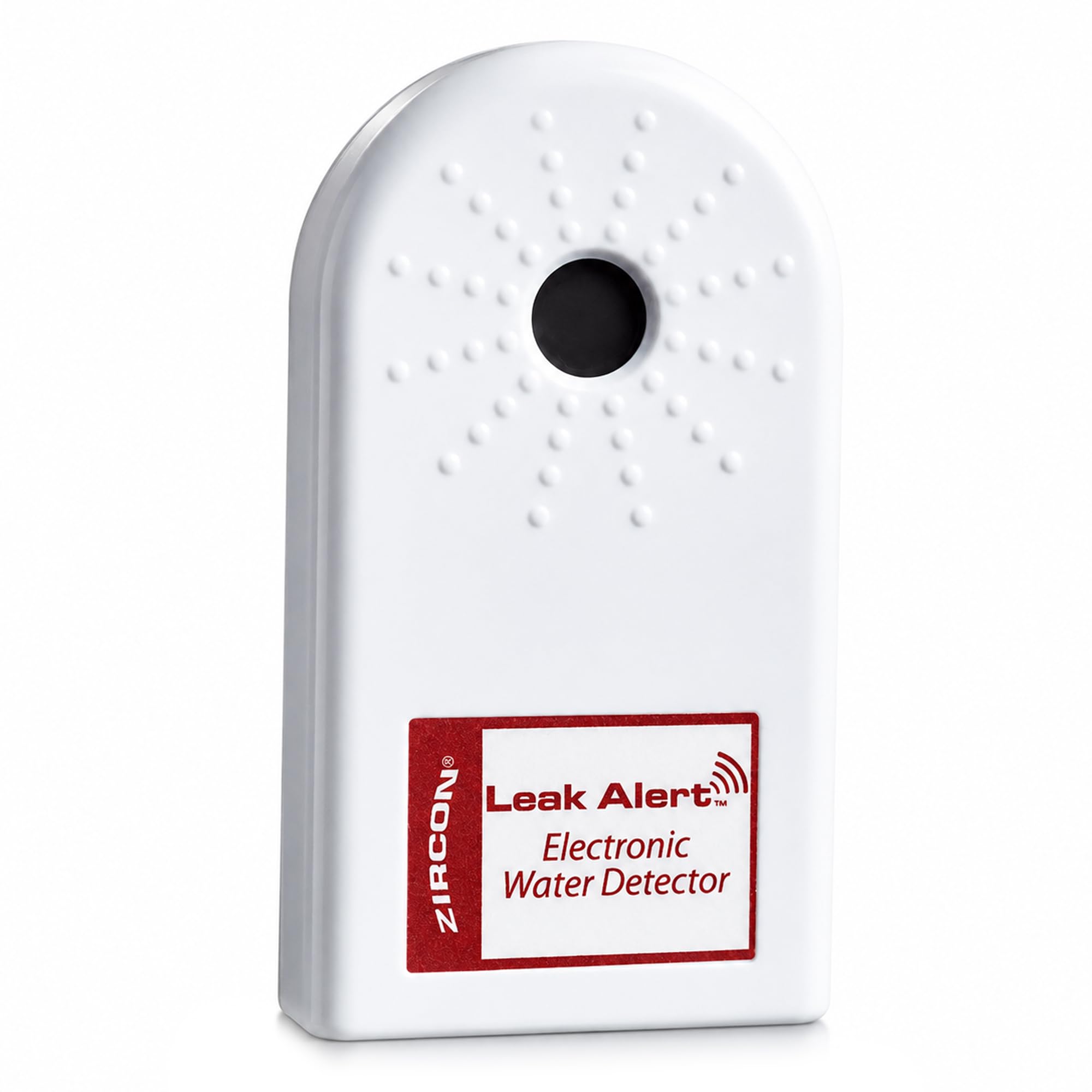
Type: Standalone water leak detector
Alarm: Loud 90 dB water alarm
Setup: No setup required
Intended Use: Water heaters, appliances, plumbing fixtures
Best Use: A cheap first sensor by the toilet base
This is the budget entry, and it keeps things simple: no setup, no app, no hub. It sits near a water heater, appliance, or plumbing fixture and sounds a 90dB alarm when water reaches it. For a downstairs toilet, that means placing it beside the base or behind the bowl where a slow leak would pool first. The Zircon name carries some weight with buyers who have used its tools before.
It suits renters, first-time buyers, and anyone who wants a single inexpensive sensor as a starting point. It earns its place as the lowest-cost way to get an audible warning at the toilet. The trade-off is that one sensor covers one spot and only makes a local sound, so it is a starting point rather than a whole-basement solution.
Trade-off: A single local alarm covers one spot and cannot notify anyone who is not within earshot.
Before You Buy
- Coverage: One sensor guards one low spot; a downstairs toilet plus a laundry area usually needs two or more.
- Alert type: Standalone alarms work only when someone is home, while app, email, and SMS alerts reach a phone anywhere.
- Range and connectivity: Long-range and WiFi options help in basements or detached spaces; standalone units need no network at all.
- Battery life: Check the rated battery life before mounting a sensor in a hard-to-reach spot behind a toilet.
- Water resistance: An IP rating matters in damp bathrooms and on concrete floors that stay humid.
- Placement: Put the sensor where water pools first — beside the toilet base, under the supply valve, or along the lowest floor line.
- Smart-home fit: A hub-based kit or a WiFi model should match the ecosystem already in the house to avoid a second app.
Frequently Asked Questions
-
Where should a leak sensor go in a downstairs toilet?
Place it on the floor beside the toilet base and near the supply valve, since those are the spots where a tank, fill valve, or connection leak pools first. -
Is a smart sensor worth it for one toilet?
A smart sensor is worth it when the house is empty for long stretches or the toilet sits in a basement that is not checked daily, because phone alerts reach the owner anywhere. -
Do these sensors need wiring or tools?
The standalone alarms need no setup or tools, while hub and WiFi kits need a power source, a network connection, and a few minutes in an app. -
Can one sensor protect a whole basement?
No — a single sensor guards one low point, so a basement with a toilet, laundry, and water heater benefits from a multi-pack. -
How long do the batteries last?
The smart kits here are rated up to five years, while standalone alarms vary, so check the battery type before mounting one in a tight space. -
Will a leak sensor detect a running toilet?
The toilet-specific detector covers running toilets, while floor sensors respond to water that has already escaped — so the two solve different problems.
Bottom Line
For most downstairs toilets, the 6000 Toilet Leak Detector is the top pick because it targets the toilet itself, installs without tools, and flags both leaks and running toilets with visual and audible alerts. Buyers who want phone alerts should step up to a smart kit, and anyone covering several spots around a basement is better served by a multi-pack.
