Why there are Amazon links here: Brave Review is paid a commission for qualifying Amazon purchases made through the links below. Your price does not change, and using our links is entirely optional. How this works
Best Mesh System for a House with a Converted Loft
A converted loft is the hardest room in the house to cover: it sits at the top of the building, often behind a fire-rated floor, and a single router downstairs usually gives up before the signal gets there. The five systems below are all built to spread a strong signal across several floors, and each one suits a different buyer. Budget households with an older internet plan should look at the Tenda Nova, mainstream families will be happiest with the eero 6+ or the Deco X55, and anyone future-proofing a big home should read the WiFi 7 picks. The overview table below puts all five side by side so a decision can be made in under a minute.
The Picks at a Glance
| Product | Key Spec | Best Use | Price Tier |
|---|---|---|---|
| Tenda Nova MW6 (3-Pack) | AC1200 dual-band, Gigabit ports | Tight budgets and smaller lofts | Budget |
| TP-Link Deco X55 (3-Pack) | AX3000 WiFi 6, 3 Gigabit ports per unit | Most converted-loft homes | Mid-range |
| Amazon eero 6+ (3-pack) | WiFi 6, supports plans up to a Gigabit | Simple setup and app-first homes | Mid-range |
| TP-Link Deco 7 Pro BE63 (3-Pack) | WiFi 7 BE10000, 4 x 2.5G ports | Heavy device loads and wired backhaul | Upper mid-range |
| NETGEAR Orbi 770 Series (3 Pack) | WiFi 7 tri-band, up to 11 Gbps | Large multi-floor homes with top-tier plans | Premium |
Tenda Nova Mesh WiFi System MW6 (3-Pack)
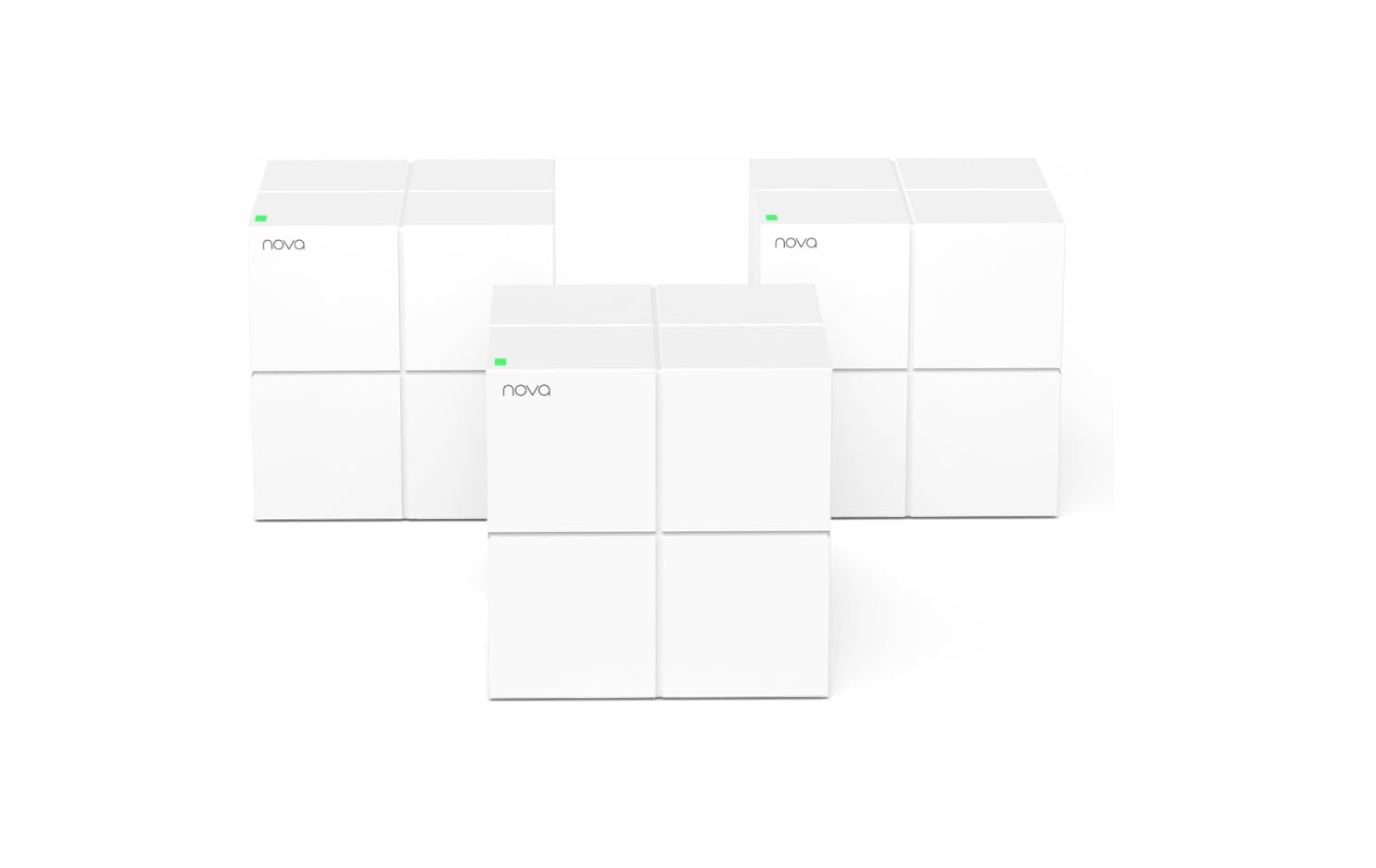
Type: Whole-home mesh system, 3-pack
Standard: AC1200 dual-band
Coverage: Up to 4-6 bedroom houses
Ports: Gigabit Ethernet
Function: Replaces wireless router and WiFi extender
The Tenda Nova MW6 is the entry point into mesh networking, and it is the pick for anyone who wants loft coverage without spending much. Three compact units work as a single network, so a device moving from the kitchen to the converted loft switches nodes without the user noticing. The Gigabit ports mean a wired backhaul is possible if the loft has a cable run, which is the single biggest upgrade for a top-floor room. It is a sensible fit for a household on a standard broadband plan with a handful of phones, a TV and a laptop.
Buyers with a small loft conversion, a modest budget or an older internet package will get the most out of it. It also suits anyone who wants a spare node to place right inside the loft room. Trade-off: AC1200 is an older, slower standard, so this system will bottleneck a fast fibre plan and is not the right choice for heavy 4K streaming or large file transfers.
Check the current price on Amazon
TP-Link Deco X55 AX3000 WiFi 6 Mesh System (3-Pack)

Type: Whole-home mesh system, 3-pack
Standard: AX3000 WiFi 6
Coverage: Up to 6,500 sq. ft.
Ports: 3 Gigabit ports per unit
Function: Replaces wireless router and extender, supports Ethernet backhaul
The Deco X55 is the sweet spot for most converted-loft homes, and it is the pick that balances price against modern performance. WiFi 6 handles the crowded airwaves of a full family house better than older standards, and three Gigabit ports on every unit make wired backhaul easy on any floor. The stated coverage is generous enough for a large house, and the third node can go directly in the loft to serve that room properly. Setup runs through the Deco app, which walks through node placement and network naming.
This is the pick for families on a mid-range fibre plan who want strong loft signal without paying WiFi 7 money. It also suits anyone who can run a cable to the loft, since Ethernet backhaul turns that node into a near-wired connection. Trade-off: WiFi 6 tops out below the newest WiFi 7 hardware, so buyers planning a multi-gigabit plan in the next couple of years may want to spend more now.
Check the current price on Amazon
Amazon eero 6+ Mesh WiFi System (3-pack)
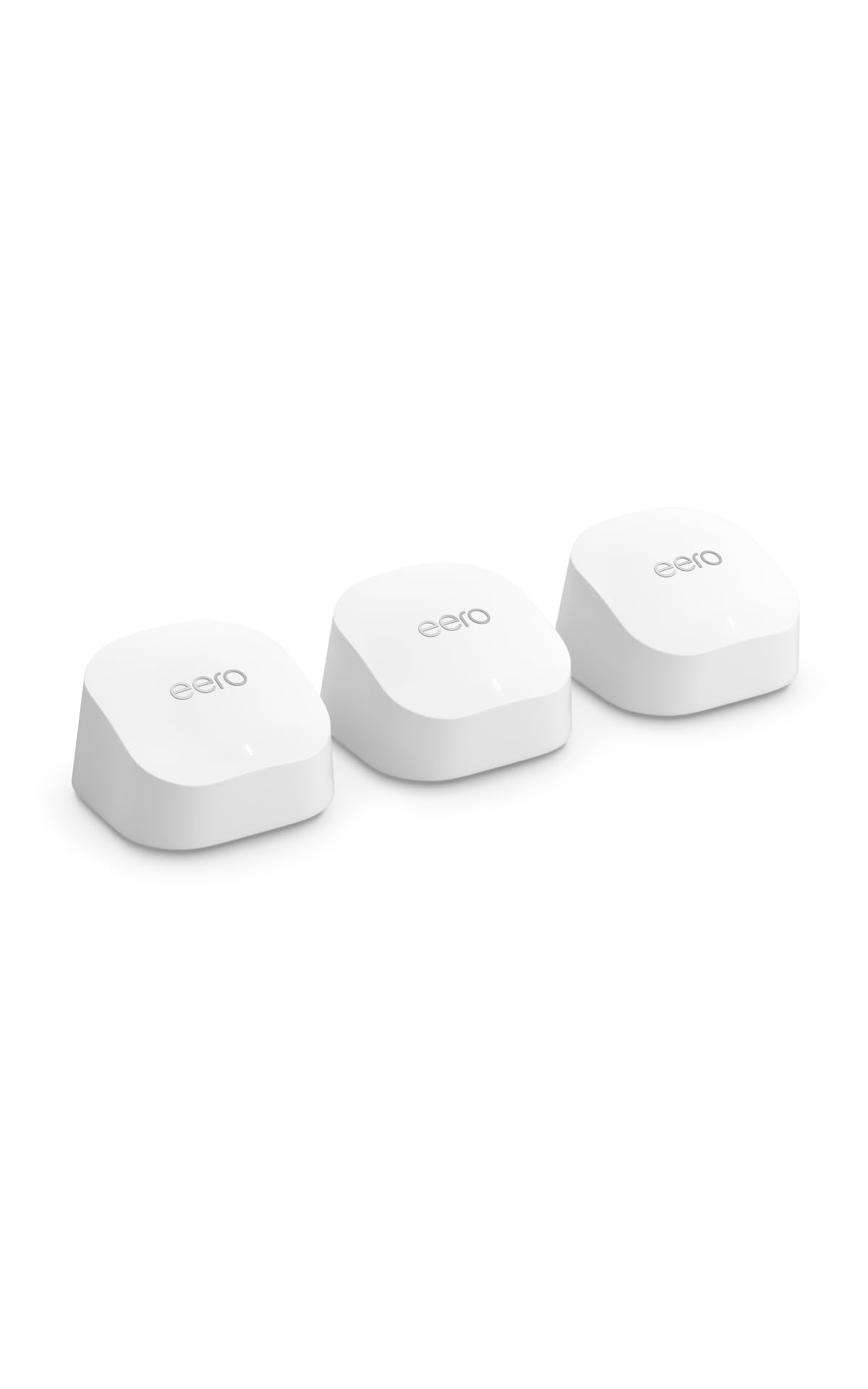
Type: Whole-home mesh system, 3-pack
Standard: WiFi 6
Coverage: Up to 4,500 sq. ft.
Devices: Connects 75+ devices
Plan support: Internet plans up to a Gigabit
The eero 6+ is the simplest system here to live with, and that is its whole pitch. The units are small, understated boxes that sit on a shelf without drawing attention, and the app handles setup, guest access and device management in a few taps. It supports internet plans up to a Gigabit and connects a large number of devices, which covers a typical family with phones, tablets, a console and smart home gear. Three units give enough spread to place one in the loft and keep the rest of the house covered.
Buyers who want a system that just works, with minimal technical fiddling, will appreciate it most. It also suits renters and households that move often, since the compact units pack easily. Trade-off: the eero line leans on the app for nearly every setting, so buyers who like deep manual control over channels and routing will find it restrictive.
Check the current price on Amazon
TP-Link Deco 7 Pro BE63 Tri-Band WiFi 7 Mesh System (3-Pack)
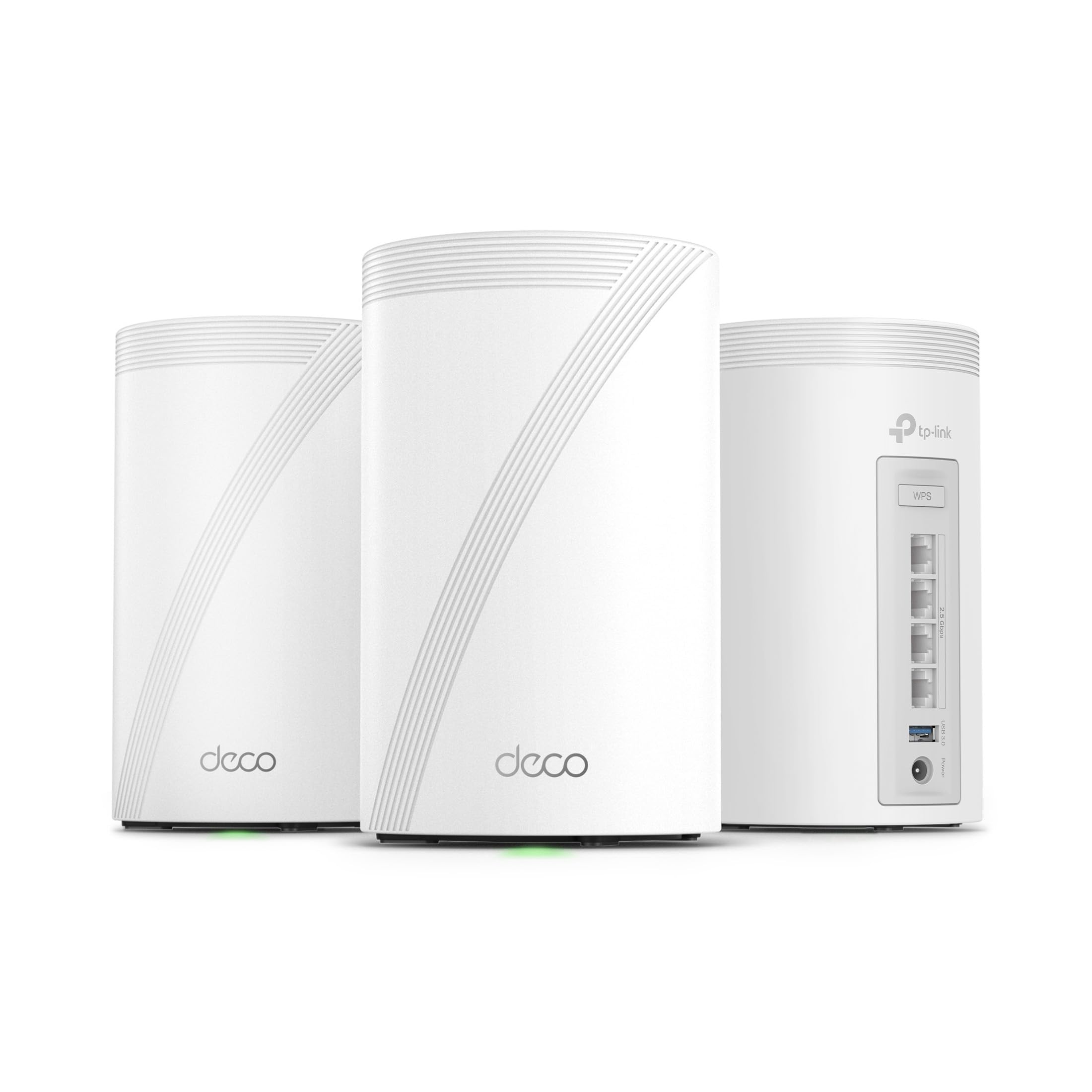
Type: Whole-home mesh system, 3-pack
Standard: WiFi 7 tri-band, BE10000
Coverage: Up to 7,600 sq. ft.
Ports: 4 x 2.5G ports, wired backhaul
Features: VPN, HomeShield, AI-Roaming, 4 x smart internal antennas
The Deco 7 Pro BE63 is the pick for a house that intends to stay fast for years, and it is aimed squarely at heavy use. WiFi 7 tri-band hardware with 2.5G ports on every unit means the network can keep pace with a multi-gigabit plan and with dozens of devices at once. Wired backhaul is supported, which is exactly what a converted loft wants: a cable from the main node to the loft node removes the floor-ceiling barrier entirely. HomeShield and VPN support add network-level security and remote access for households that care about both.
This suits large homes with a fast plan, home offices and families with gamers or remote workers spread across floors. It is also the right call for anyone who can wire the loft and wants that link to run at full speed. Trade-off: it costs noticeably more than WiFi 6 systems, and buyers on a standard broadband plan will pay for speed their connection cannot deliver.
Check the current price on Amazon
NETGEAR Orbi 770 Series WiFi 7 Mesh System (3 Pack)

Type: Whole-home mesh system, 3-pack
Standard: WiFi 7 tri-band, up to 11 Gbps
Coverage: Up to 8,000 sq. ft.
Devices: 100 devices
Ports: 2.5 Gig port
Features: Easy set up, security features, router + 2 satellite extenders
The Orbi 770 is the premium pick, built for the largest and busiest homes on the list. A dedicated tri-band design with WiFi 7 and speeds up to 11 Gbps gives it headroom for a big household, and the stated coverage of up to 8,000 sq. ft. means a converted loft is comfortably inside its reach. The kit is a router plus two satellite extenders, a layout that suits a tall house where one node sits near the entry, one mid-floor and one in the loft. Security features are built in, and setup is designed to be straightforward.
Buyers with a large multi-floor home, a top-tier internet plan and a long list of connected devices will get the most from it. It is also the pick for anyone who wants the fastest available wireless and does not mind paying for it. Trade-off: this is the most expensive system here, and its speed advantage only shows up on premium plans and modern devices, so most households will be overpaying.
Check the current price on Amazon
Before You Buy
- Coverage: Match the stated square footage to the whole house, not just the loft, and plan one node for the loft itself.
- Backhaul: A wired Ethernet run to the loft is the single best upgrade; check that each unit has enough ports for it.
- Standard: WiFi 6 is plenty for most plans; WiFi 7 only pays off with a multi-gigabit connection and newer devices.
- Floor construction: Fire-rated and insulated loft floors block signal, so a node inside the loft beats hoping the signal climbs.
- Device count: Count phones, TVs, consoles, smart plugs and cameras before choosing; busy homes need more headroom.
- Plan speed: A system rated below the broadband plan will cap the whole network, so buy above the plan, not below it.
Frequently Asked Questions
- Will a mesh system reach a converted loft? Yes, if one node is placed inside the loft or the loft node is connected by Ethernet. Relying on signal through a fire-rated floor is unreliable.
- How many nodes does a house with a loft need? Three is the common starting point: one near the router, one mid-house and one in the loft.
- Is WiFi 7 worth it for a loft conversion? Only with a fast multi-gigabit plan and modern devices. Otherwise a WiFi 6 system delivers the same real-world result for less.
- Can a mesh node go in the loft itself? Yes, and it is the recommended placement. The node needs power, and a wired backhaul connection if possible.
- Does a mesh system replace the existing router? Most of these systems do, acting as the main router and replacing both the old router and any extenders.
- What slows a mesh network down the most? Wireless backhaul through thick floors. A cable to the loft node removes that bottleneck.
Bottom Line
For most converted-loft homes the TP-Link Deco X55 is the best mesh system for the job: WiFi 6 performance, three Gigabit ports per unit for wired backhaul and coverage that comfortably includes a top-floor room, all at a mid-range price. Buyers on a tight budget should take the Tenda Nova, and anyone future-proofing a large home with a premium plan should step up to the Deco 7 Pro or the Orbi 770.
