Why there are Amazon links here: Brave Review is paid a commission for qualifying Amazon purchases made through the links below. Your price does not change, and using our links is entirely optional. How this works
Best Monitoring for a Solar Installation: 5 Picks for Every Budget
Solar panels only pay for themselves when the system performs as advertised, and that means measuring it. The right monitoring setup catches a shaded panel, a failing inverter, or a utility billing error before it eats a season of savings. This guide covers five tools for three buyer types: the DIY installer checking panels before they go up, the homeowner who wants whole-home solar and consumption data, and the tinkerer wiring everything into Home Assistant. The overview table below compares all five, and each review explains who a pick suits and who should skip it.
Overview of the Picks
| Product | Key Spec | Best Use | Price Tier |
|---|---|---|---|
| FT-1000W Solar Panel Tester | 1000W max, 80V/35A, Voc/Isc | Testing individual panels before and after install | Budget |
| Emporia Vue 3 | Whole-home real-time, solar and net metering | Homeowners wanting utility-grade whole-home tracking | Premium |
| Refoss EM16P | 16× 60A sensors, open API, no cloud | Home Assistant users avoiding cloud services | Mid |
| Meross Smart Home Energy Monitor | 16× 60A sensors, no subscription | Subscription-free whole-panel monitoring | Mid |
| Digital Watt Meter Analyzer | 4.8–100V, 200A, backlit LCD | Bench testing and small system diagnostics | Budget |
1. FT-1000W Solar Panel Tester MPPT Meter

Max Power: 1000W
Voltage Range: Up to 80V
Current Range: Up to 35A
Measurements: Voc, Isc, open-circuit voltage, short-circuit current
Display: Backlit with data hold
This handheld tester measures a single panel’s open-circuit voltage and short-circuit current, the two readings that reveal whether a module is producing what its label claims. The 80V/35A ceiling covers most residential-size panels, and the backlight plus data hold make readings easy to capture on a roof or in a garage. It suits DIY installers and anyone commissioning a new array panel by panel before wiring it into a string.
The FT-1000W earns its place as the budget pick because it answers the most basic solar question: is this panel good? A homeowner who already owns a full monitoring system may not need it, and it will not track a whole array’s daily output over time. The trade-off is that it is a point-in-time diagnostic tool, not a continuous logger, so it tells the story of a panel at the moment of testing rather than its performance across a season.
2. Emporia Vue 3 Home Energy Monitor
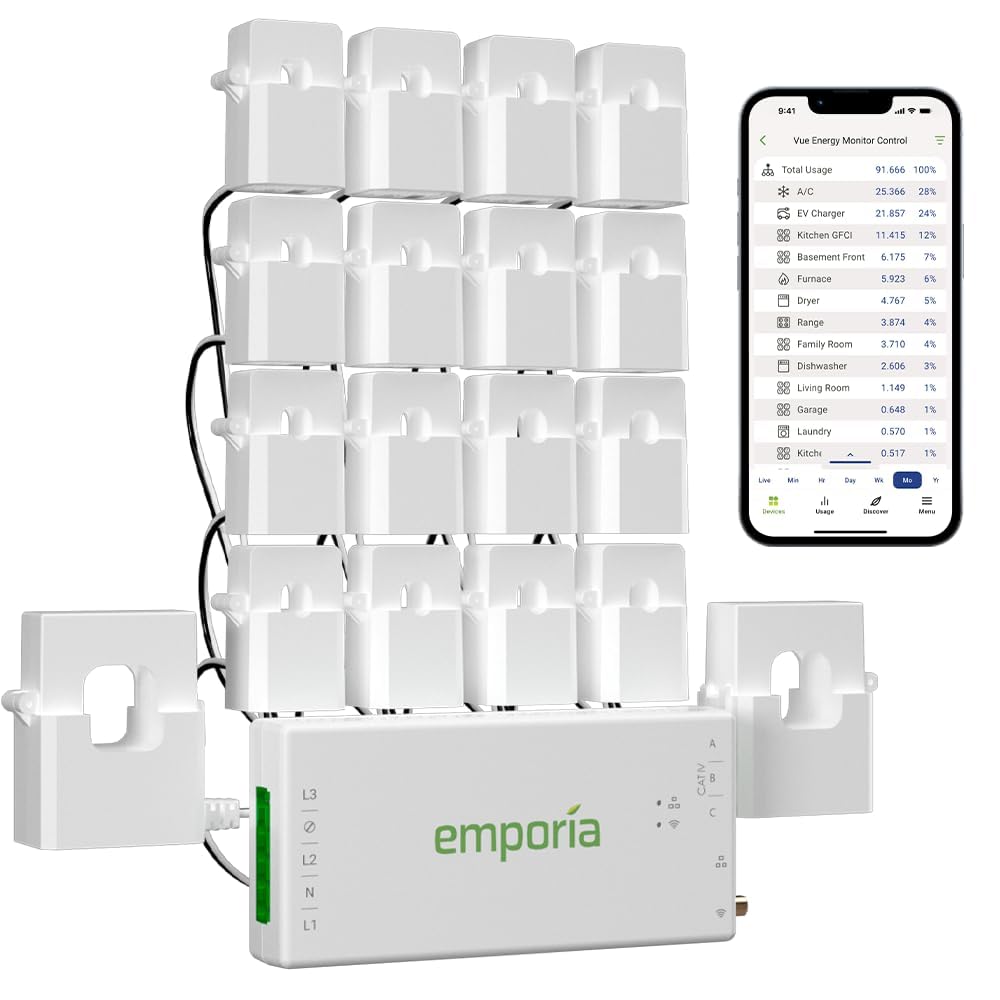
Type: Smart home energy monitor module
Function: Real-time electricity usage and power consumption metering
Solar Support: Solar and net metering
Certification: UL certified
Installation: In-panel module
The Vue 3 installs at the electrical panel and reports real-time consumption, with dedicated support for solar production and net metering so a homeowner can see exactly what the array generates versus what the house draws. UL certification matters here because the unit lives inside a breaker panel, and the smart-home integration lets usage data flow into automation routines. It suits homeowners who want a full picture of solar savings without climbing onto the roof.
This is the premium pick for good reason: it monitors the whole home, not just the panels, so the payback math becomes visible month by month. Buyers on a tight budget or with a tiny system may find it more monitor than they need, and panel-mounted hardware means an electrician or a confident DIYer is the right installer. The trade-off is that the Vue 3 costs more than every other pick here and delivers value only if the homeowner actually reviews the data.
3. Refoss EM16P Smart Home Energy Monitor
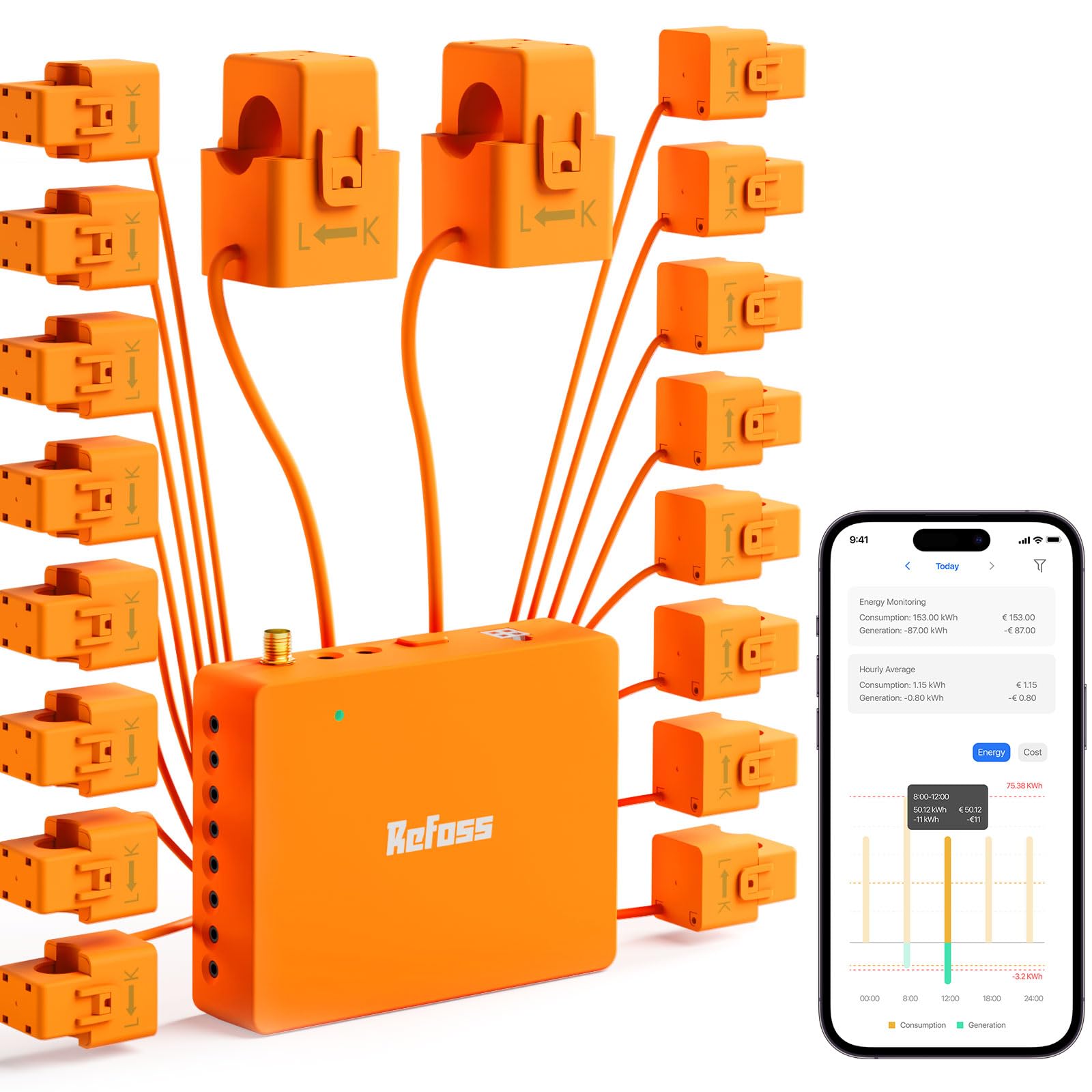
Sensors: 16× 60A circuit sensors
Function: Real-time electricity usage and solar metering
Certification: ETL certified
Integration: Open API, Home Assistant
Cloud: No cloud required
The EM16P brings sixteen 60A current sensors, enough to clamp onto individual circuits and a solar feed at the same time, and its open API plus Home Assistant support make it a favorite for local-only smart homes. ETL certification covers the safety side, and the no-cloud design keeps data on the homeowner’s own network. It suits technical users who already run Home Assistant and want solar metering folded into their dashboards.
This pick earns its spot for the privacy-minded tinkerer who refuses to hand energy data to a vendor. Buyers who want a plug-and-play app experience may find the setup fiddly, and sixteen clamps only help if the panel has room for them. The trade-off is that the Refoss rewards configuration work — the open API is powerful but assumes the buyer enjoys building automations.
4. Meross Smart Home Energy Monitor
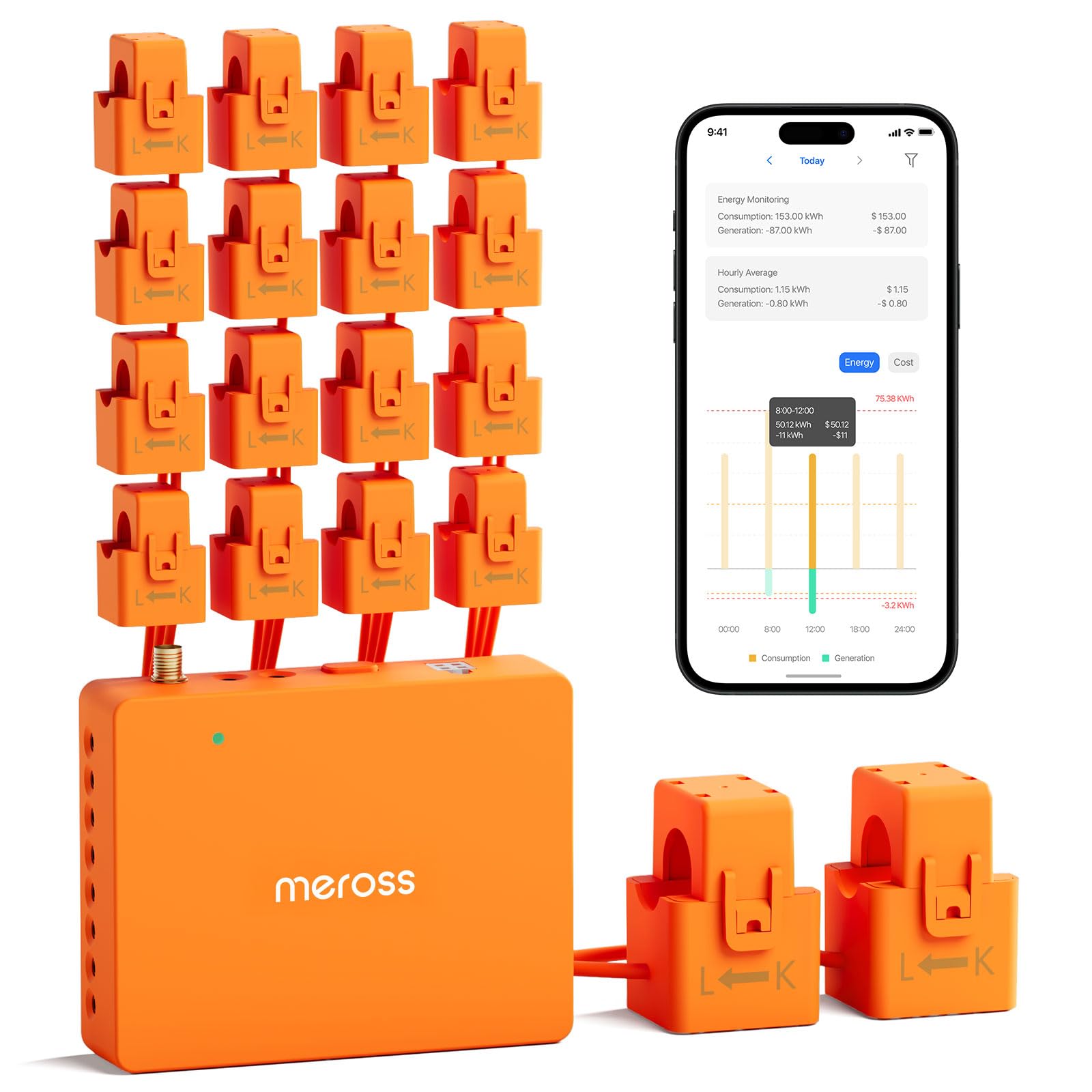
Sensors: 16× 60A CT sensors
Integration: Home Assistant support
Function: Electrical monitoring and solar metering
Subscription: None
Warranty: 2 years
Tracking: Real-time power and cost
The Meross monitor pairs sixteen 60A CT sensors with real-time power and cost tracking, and the absence of a subscription keeps the long-run cost flat. Home Assistant support puts it in the same local-automation camp as the Refoss, while the two-year warranty adds a bit of reassurance for a panel-mounted device. It suits homeowners who want granular circuit data and cost estimates without a monthly fee.
This pick fits buyers who want the Refoss feature set but prefer a brand with a broader smart-home catalog and a stated warranty. The cost-tracking feature is only as good as the tariff entered, so users on complex time-of-use rates should expect some manual tuning. The trade-off is that a no-subscription model often means fewer polished cloud extras, and the Meross leans on the buyer’s own Home Assistant setup for the richest views.
5. Digital Watt Meter Solar Panel Power Analyzer
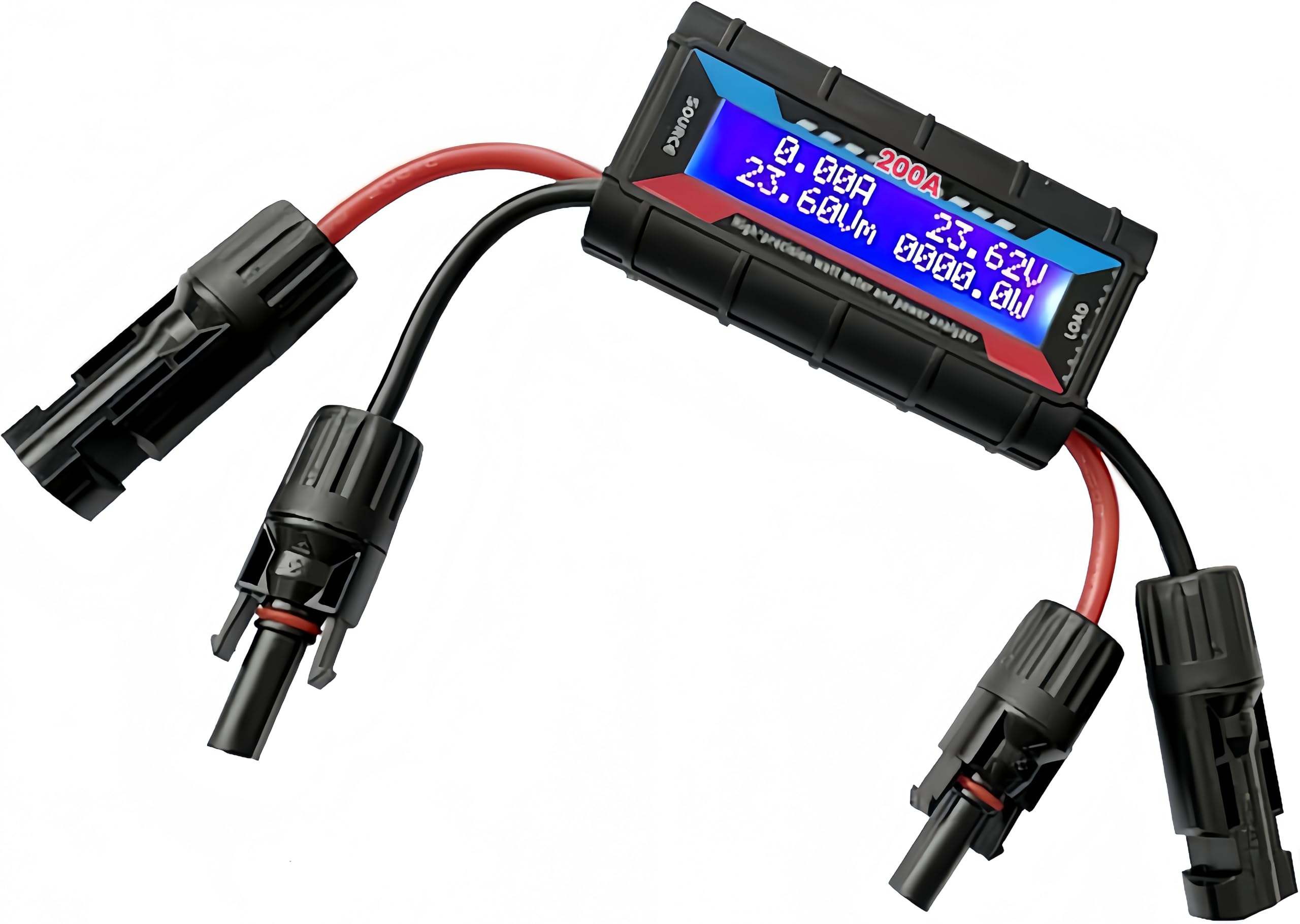
Voltage Range: 4.8–100V
Current Range: Up to 200A
Display: Backlit LCD
Functions: Voltage, current, and power analysis
Intended Use: Solar, wind turbine, RC drone energy systems
This inline meter measures voltage, current, and power across a wide 4.8–100V range with a 200A current ceiling, and the backlit LCD keeps readings legible in dim workshops. Its stated uses span solar panels, wind turbines, and RC drone energy systems, which makes it a general-purpose analyzer rather than a solar-only tool. It suits hobbyists and small-system builders who want a cheap inline readout.
The watt meter earns its place as the second budget pick because it measures power flowing through a circuit rather than just testing a panel in isolation. Buyers who need data logging or app integration should look elsewhere, and the high current rating invites careful wiring on anything beyond a small system. The trade-off is that it is a manual-read device with no memory, so someone must be present to note the numbers.
Before You Buy
- Measurement type: A panel tester checks one module’s Voc and Isc; a whole-home monitor tracks the array and the house together. Match the tool to the question being asked.
- Panel space: Whole-home monitors with CT clamps need room inside the breaker panel for the sensors and the module itself.
- Compatibility: Confirm the monitor supports solar and net metering if the goal is tracking production against consumption, not just usage.
- Certification: For anything installed inside an electrical panel, look for a UL or ETL listing on the product.
- Cloud vs. local: Open API and no-cloud designs suit Home Assistant users; app-first buyers may prefer a simpler cloud setup.
- Subscription cost: A no-subscription monitor keeps lifetime costs predictable, while some platforms charge for advanced features over time.
- Warranty: Panel-mounted electronics run for years, so a stated warranty is worth weighing against a lower price.
Frequently Asked Questions
-
What is the best monitoring for a solar installation overall?
The Emporia Vue 3 is the strongest all-around choice for homeowners who want whole-home solar and net metering data, while the FT-1000W tester covers panel-level checks at a fraction of the cost. -
Do I need a panel tester if I already have a whole-home monitor?
Not necessarily. A whole-home monitor shows array output over time, but a panel tester pinpoints a single underperforming module during installation or troubleshooting. -
Can these monitors track solar production and home usage at the same time?
The Emporia Vue 3, Refoss EM16P, and Meross monitor all list solar metering and net metering support, which lets them compare production against consumption. -
Is a subscription required for whole-home energy monitoring?
Not for the Refoss EM16P or the Meross monitor, both of which list no cloud or no subscription. Buyers should still confirm feature access before committing. -
Will a whole-home monitor work with Home Assistant?
The Refoss EM16P and Meross monitor both list Home Assistant and open API support, making them the better fit for local automation setups. -
How much should a solar monitoring setup cost?
Budget panel testers and inline meters sit at the low end, while whole-home monitors with multiple CT sensors cost several times more. The price tier depends on whether the goal is a one-time check or continuous tracking.
Bottom Line
For most homeowners, the Emporia Vue 3 is the best monitoring for a solar installation because it tracks production, consumption, and net metering in one UL-certified package. DIY installers should pair it with the FT-1000W tester for panel-level checks, and Home Assistant users can save with the Refoss EM16P or Meross monitor.
