Why there are Amazon links here: Brave Review is paid a commission for qualifying Amazon purchases made through the links below. Your price does not change, and using our links is entirely optional. How this works
Best Outdoor Access Point for a Garden
A garden WiFi project fails for one reason more than any other: the signal never makes it past the back wall. The five outdoor access points here are built to fix that, and they split cleanly into three buyer types — the budget buyer covering a patio, the mainstream buyer who wants reliable mesh across a yard, and the buyer future-proofing a large plot with WiFi 7. The overview table below shows the differences at a glance; the reviews explain who each one fits.
Overview of the Picks
| Product | Key Spec | Best Use | Price Tier |
|---|---|---|---|
| TP-Link EAP110-Outdoor V3 | N300 single-band, 200 m coverage | Small gardens on a tight budget | Budget |
| BrosTrend AC1200 Outdoor WiFi Access Point | AC1200 dual band, passive PoE | Simple yard and outbuilding coverage | Budget |
| TP-Link EAP225-Outdoor | AC1200 dual band, IP65, mesh | General garden coverage with roaming | Mid-range |
| TP-Link EAP603-Outdoor | AX1800 WiFi 6, IP65, WPA3 | Busy households wanting modern security | Mid-range |
| TP-Link EAP725-Outdoor | BE5000 WiFi 7, 2.5G port, IP66 | Large plots and future-proof installs | Premium |
TP-Link EAP110-Outdoor V3

Wireless Standard: N300
Bands: Single band
Stated Coverage: Up to 200 meters
Weatherproofing: Outdoor-rated housing
Power: Passive PoE with free PoE injector
Management: Omada SDN, cloud access and Omada app
TP-Link EAP110-Outdoor V3 is the entry point into outdoor networking, and it is honest about what it is. The housing is sealed for outdoor mounting, the injector ships in the box so no separate PoE switch is needed, and the Omada app handles setup without a controller. Coverage is quoted up to 200 meters, which is realistic for a patio, a small lawn or a single outbuilding in line of sight.
This is the pick for a buyer who wants garden WiFi for a phone, a speaker and a camera, and does not need speed for anything heavier. It also suits anyone extending an existing Omada network, since it joins the same management platform as the bigger models.
Trade-off: The single-band N300 radio is the slowest option here, so it will feel tight for streaming or multiple devices at once.
BrosTrend AC1200 Outdoor WiFi Access Point
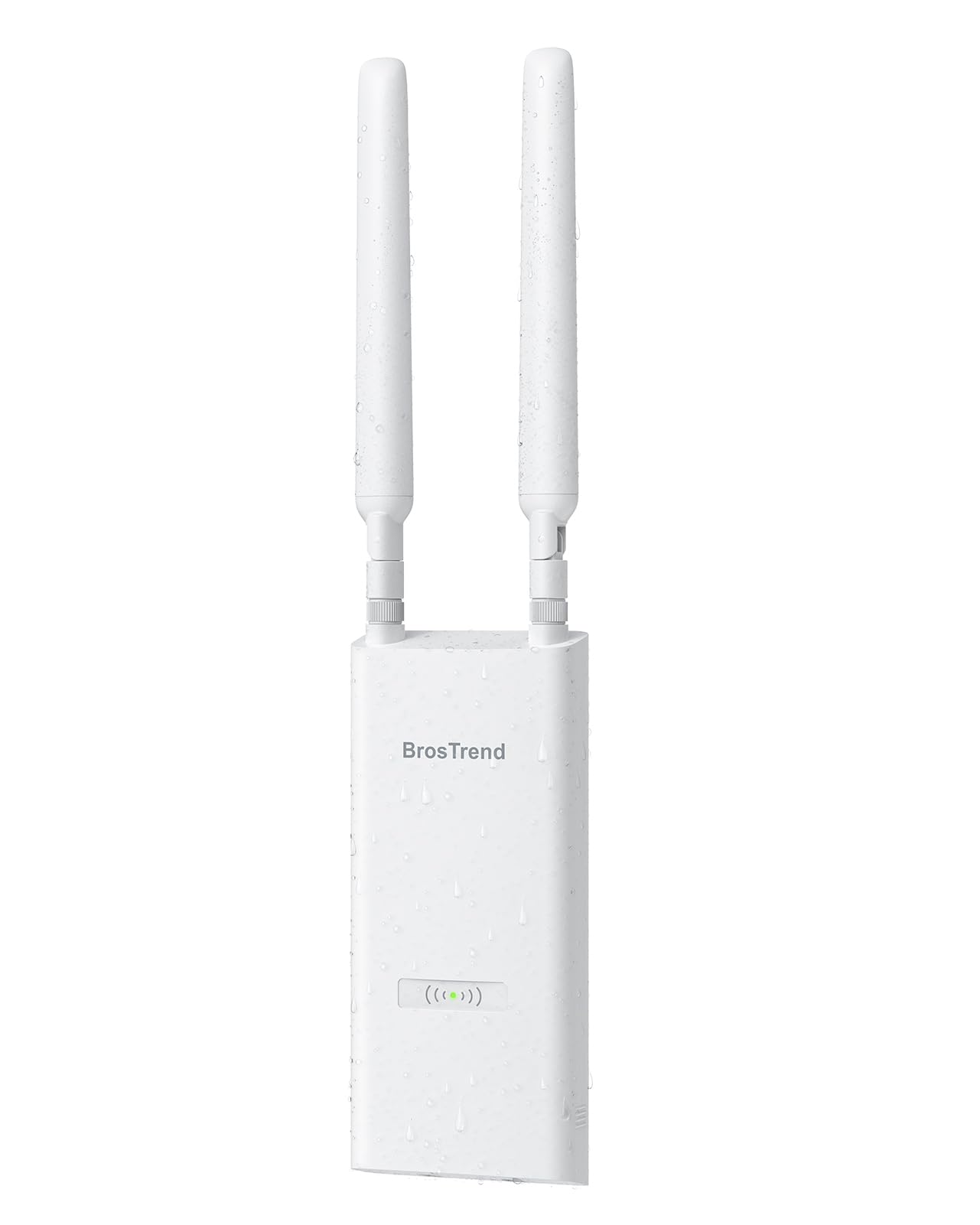
Wireless Standard: AC1200
Bands: Dual band 5GHz and 2.4GHz
Weatherproofing: IP65
Power: Passive PoE injector included
Ports: Gigabit
Intended Use: Yard, farm, barn and IP camera coverage
BrosTrend AC1200 Outdoor WiFi Access Point takes the budget slot but adds the two things the cheapest pick lacks: a 5GHz radio and a gigabit port. The IP65 housing is rated for rain and dust, the passive PoE injector is in the box, and the long-range design targets exactly the jobs named on the label — a yard, a barn, a farm building or an IP camera at the far end of the property.
It is the sensible choice for a buyer who wants dual-band speeds without paying for a managed ecosystem, and for anyone wiring a camera where a single-band link would bottleneck the feed.
Trade-off: This is a standalone access point rather than part of a mesh platform, so buyers wanting seamless roaming across several units will find the managed alternatives easier to live with.
TP-Link EAP225-Outdoor
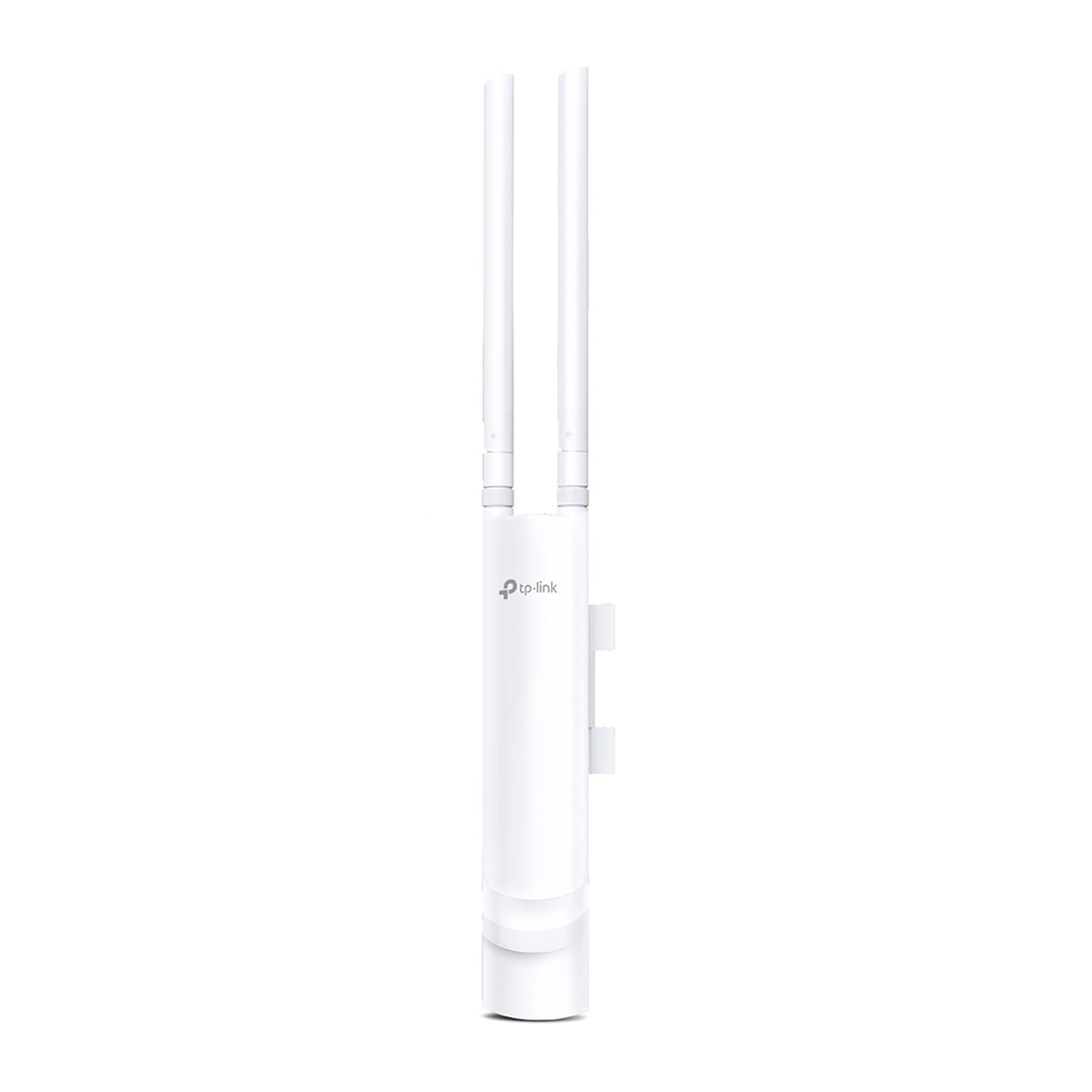
Wireless Standard: AC1200 (WiFi 5)
Bands: Dual band
Weatherproofing: IP65
Power: PoE injector included
Management: Omada managed
Features: Mesh and roaming support
TP-Link EAP225-Outdoor is the default answer for most gardens. The AC1200 dual-band radio handles streaming and cameras comfortably, the IP65 housing survives a full season of weather, and the PoE injector means a single cable carries both data and power. Mesh and roaming support matter more than they sound: a phone walking from the kitchen to the patio hands off cleanly instead of dropping.
It suits the buyer who wants one dependable unit covering a normal back garden, and equally the buyer adding a second or third node to an Omada network later. The popularity reflects that middle-ground appeal.
Trade-off: WiFi 5 is now a generation behind, so a buyer with a WiFi 6 or WiFi 7 router indoors will not get the full benefit of the newer standard outdoors.
TP-Link EAP603-Outdoor
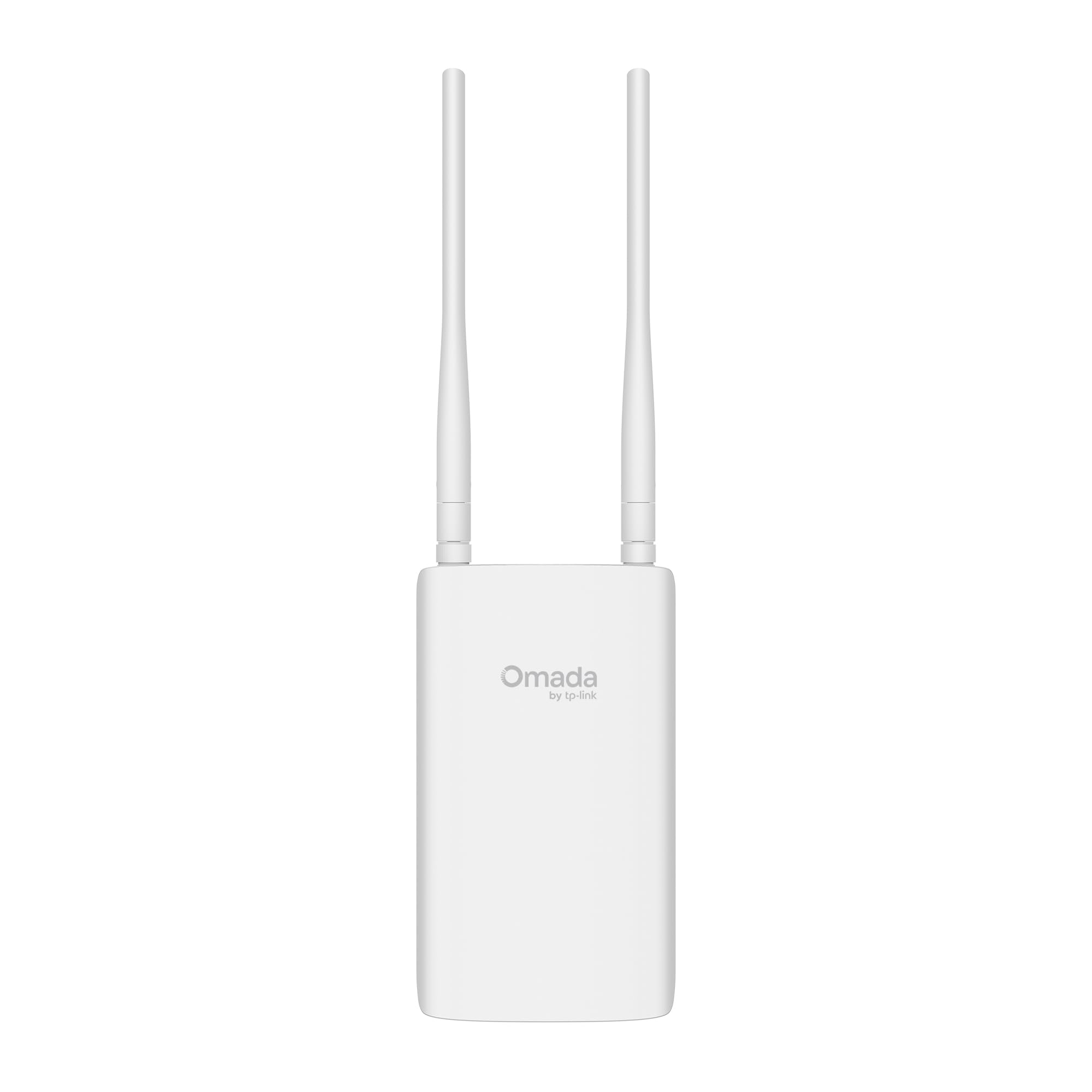
Wireless Standard: AX1800 (WiFi 6)
Bands: Dual band
Weatherproofing: IP65
Power: PoE injector included
Management: Omada managed
Features: Mesh, roaming and WPA3
TP-Link EAP603-Outdoor is the modern mainstream pick. WiFi 6 brings better handling of many devices at once, which is exactly the garden scenario — phones, tablets, cameras, speakers and a smart TV all competing for airtime. WPA3 adds the current security standard, and the IP65 housing and included injector keep the install simple.
The Omada platform is the real draw: mesh and roaming work alongside indoor units, so the garden becomes an extension of the house network rather than a separate one. Buyers with a busy household, or anyone installing cameras and smart devices outdoors, get the most from it.
Trade-off: It costs noticeably more than the WiFi 5 model for a similar coverage footprint, so the upgrade only pays off if the client devices actually support WiFi 6.
TP-Link EAP725-Outdoor
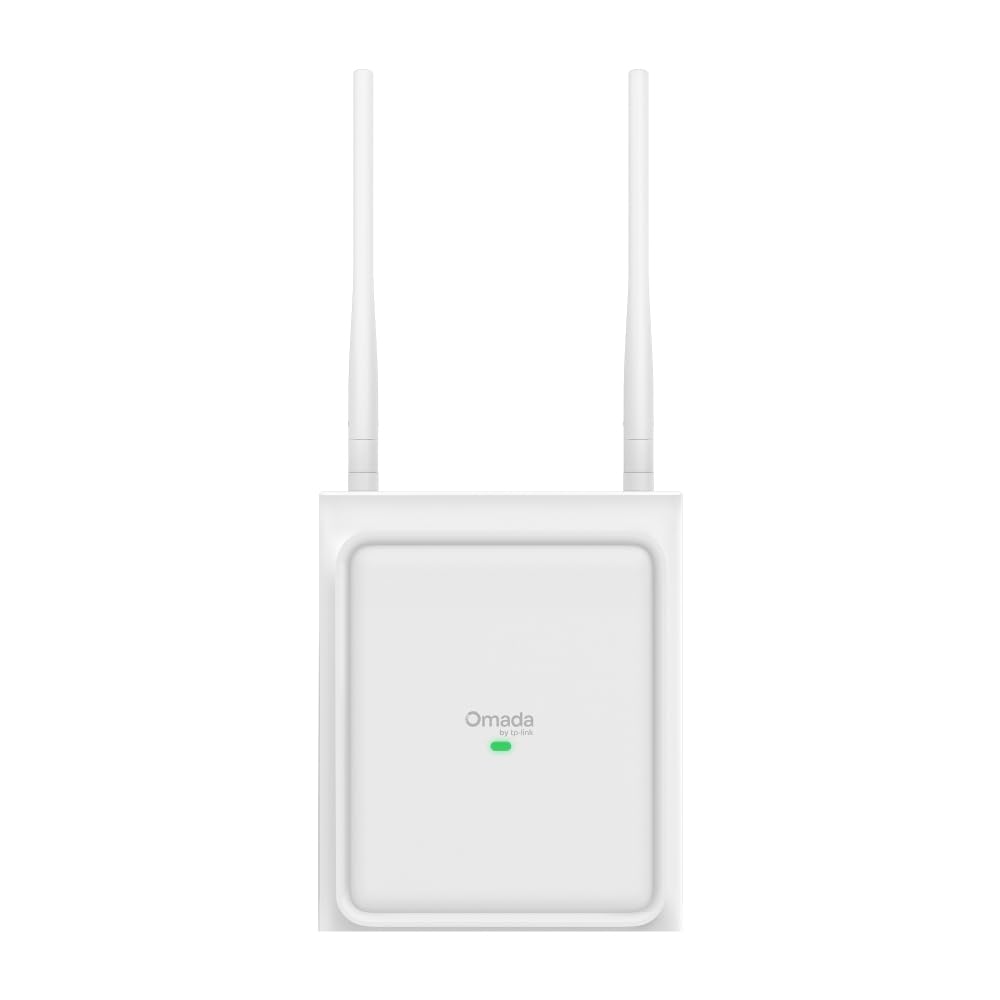
Wireless Standard: BE5000 (WiFi 7)
Bands: Dual band
Weatherproofing: IP66
Ports: 2.5G
Power: PoE powered, injector not included
Management: Omada managed
TP-Link EAP725-Outdoor is the premium option and the only WiFi 7 unit in the group. The BE5000 radio and 2.5G port mean the wired backhaul will not be the bottleneck for years, and the IP66 rating is a step up in sealing — useful on an exposed wall or a coastal garden. It is built for large plots, outbuildings and anyone running a serious camera or smart-home install outdoors.
It suits the buyer who is cabling the garden once and does not want to revisit it, and who already has a WiFi 7 router or plans to add one.
Trade-off: No PoE injector is included, so the buyer must already own a compatible PoE switch or injector — a hidden extra cost on top of the highest price here.
Before You Buy
- Wireless standard: Match the access point to the router indoors. A WiFi 7 unit adds little if the rest of the network is WiFi 5, and an N300 unit will hold back a modern setup.
- Weatherproofing: IP65 covers rain and dust for most gardens; IP66 is worth the step up on exposed or coastal walls.
- Power: Check whether a PoE injector is included. Several units ship with one; the premium WiFi 7 model does not.
- Management platform: Staying inside one ecosystem — Omada here — makes roaming and a single app for every node far easier.
- Cabling: Outdoor access points need a cable run to the mounting point. Plan the route and the switch port before buying.
- Mounting and coverage: Height and line of sight matter more than headline range figures. A unit under an eave facing the lawn beats one buried behind a shed.
- Devices in use: Count cameras, speakers and phones. More devices at once favors WiFi 6 or WiFi 7 over the older standards.
Frequently Asked Questions
-
Does a garden access point need a separate power cable?
No. Every model here is PoE powered, so one Ethernet cable carries both data and power. Four of the five include an injector; the WiFi 7 model requires a compatible PoE switch or injector. -
How much garden can one outdoor access point cover?
Coverage depends on mounting height, obstacles and the standard in use. The entry-level model is quoted up to 200 meters in open conditions, while dual-band units trade some raw reach for speed and device capacity. -
Is WiFi 6 worth it over WiFi 5 for a garden?
It is when many devices connect at once — cameras, phones, speakers and a TV. For a phone and a doorbell, the WiFi 5 model is usually enough. -
Can these units join an existing home network?
The Omada models can be managed alongside other Omada hardware with mesh and roaming. The BrosTrend unit is a standalone access point, which is simpler but less seamless across multiple units. -
Where should the access point be mounted?
Under an eave or on a wall facing the main garden area, with a clear line to the patio and lawn. Higher mounting generally improves reach, provided the cable run stays practical. -
Will an outdoor access point survive winter?
The IP65 and IP66 housings are sealed against rain and dust, which is the relevant protection for outdoor mounting. Buyers in extreme cold should still check the unit’s operating range before committing.
Bottom Line
For most gardens, the TP-Link EAP225-Outdoor is the best outdoor access point for a garden: dual-band AC1200 speed, IP65 sealing, mesh and roaming, and an injector in the box at a mid-range price. Buyers on a tight budget should look at the BrosTrend unit for dual band at a lower outlay, while anyone cabling a large plot for the long term should go straight to the WiFi 7 EAP725-Outdoor.