Why there are Amazon links here: Brave Review is paid a commission for qualifying Amazon purchases made through the links below. Your price does not change, and using our links is entirely optional. How this works
Best Portable Power Station for a Top Floor Flat with No Balcony
A top floor flat with no balcony is a hard place to keep power. Stairs rule out anything heavy, there is no outdoor space for solar panels, and a spare room is usually a spare room. This roundup covers five power stations that a single person can carry up, charge from a wall socket, and store in a cupboard. Renters in walk-ups, remote workers who need a laptop to survive an outage, and anyone in a building with an unreliable supply will find a fit below. The overview table sums up the differences; the reviews explain them.
The Picks at a Glance
| Product | Key Spec | Best Use | Price Tier |
|---|---|---|---|
| BLUETTI Elite 100 V2 | 1024Wh, 1800W, 10ms UPS | Desk backup and light home circuits | Mid |
| EF ECOFLOW Delta 3 | 1024Wh, 1800W, 100W USB-C | Fast-charging all-rounder | Mid |
| Anker SOLIX C2000 Gen 2 | 2048Wh, 2400W | Whole-flat backup in one unit | Premium |
| Jackery Explorer 300 | 292Wh | Small devices and grab-and-go | Budget |
| Portable Power Station 640Wh | 640Wh, 1200W surge, 8 ports | Budget UPS for a workspace | Budget |
BLUETTI Elite 100 V2 Portable Power Station
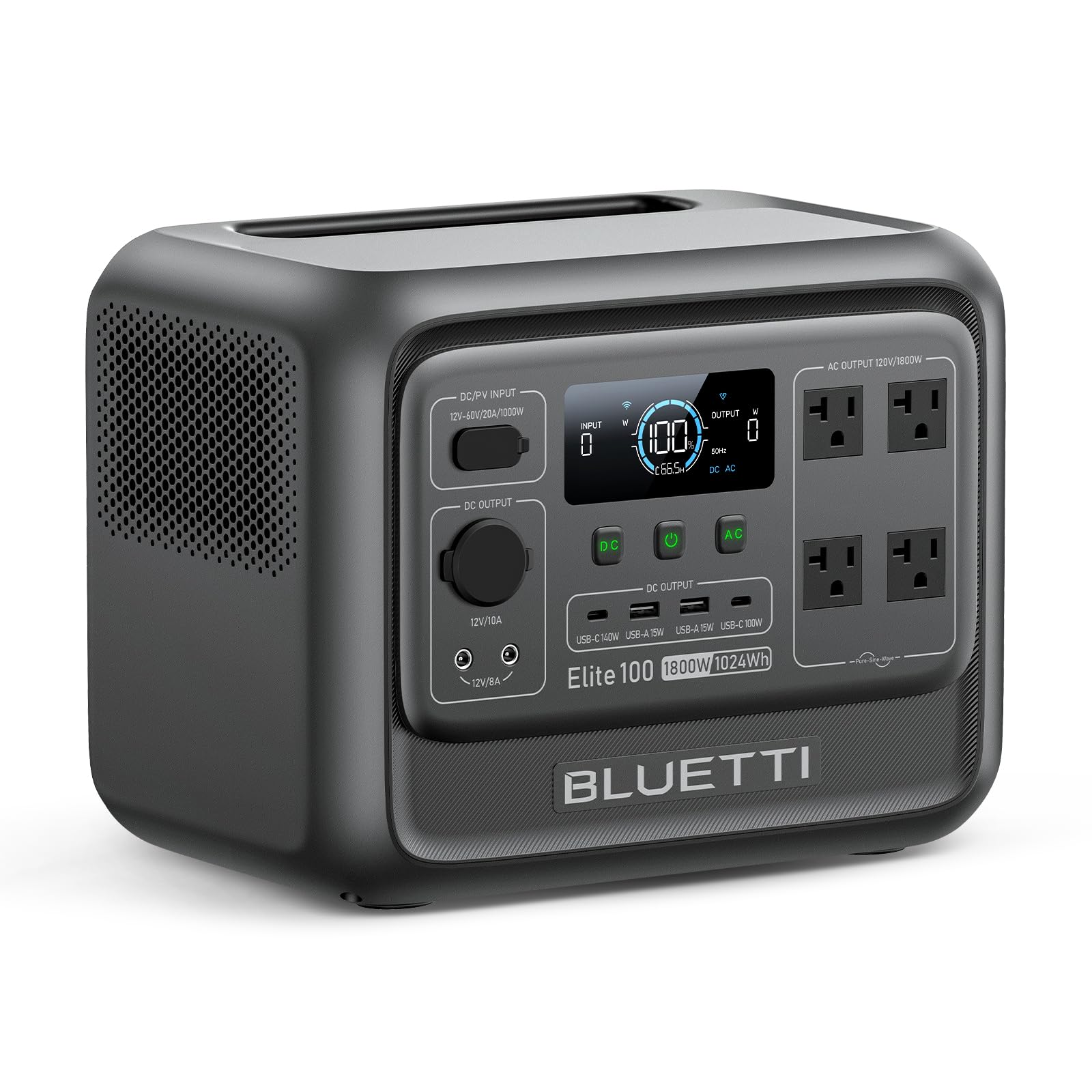
Capacity: 1024Wh
Continuous Output: 1800W
Surge Output: 3600W
Battery Type: LiFePO4
Recharge Time: 0-80% in 45 minutes
Switchover: 10ms UPS
Size Claim: 35% smaller
Check Price on Amazon: https://www.amazon.com/dp/B0F42CSQWG/?tag=wdowd-20
BLUETTI Elite 100 V2 Portable Power Station
The Elite 100 V2 is built around a LiFePO4 battery, the chemistry that lasts longest in a unit left plugged in for years. Its 10ms UPS switchover means a desktop or router keeps running through a brief cut without rebooting. The 35% smaller claim matters most in a flat: this is a unit that fits on a shelf instead of owning a corner of the floor. The 45-minute run to 80% is quick enough to top up between outages rather than leaving it on charge all week.
It suits a top-floor renter who wants one box for a work desk, a router and a lamp, and who values a fast recharge over raw capacity. The trade-off is capacity: 1024Wh covers a workspace for hours, but it will not run a kettle, a heater or a full kitchen circuit for long.
EF ECOFLOW Delta 3 Portable Power Station

Capacity: 1024Wh
Continuous Output: 1800W
USB-C Output: 100W
Battery Type: LiFePO4
Recharge Time: Full charge in 56 minutes
Check Price on Amazon: https://www.amazon.com/dp/B0DCBYMC9D/?tag=wdowd-20
EF ECOFLOW Delta 3 Portable Power Station
The Delta 3 pairs the same 1024Wh LiFePO4 capacity with a full charge in 56 minutes, which is the standout figure here. A 100W USB-C port charges a laptop directly, so a flat with no balcony does not need a power brick for every device. The 1800W AC output handles most small appliances, and the whole unit is designed to live indoors as a permanent backup rather than a camping box.
It fits the remote worker who wants the fastest possible recharge from a single wall socket and a clean USB-C setup for a laptop. The trade-off is that a full-speed recharge pulls a heavy load from one circuit, which is worth checking in an older building before plugging in on a busy ring main.
Anker SOLIX C2000 Gen 2 Portable Power Station
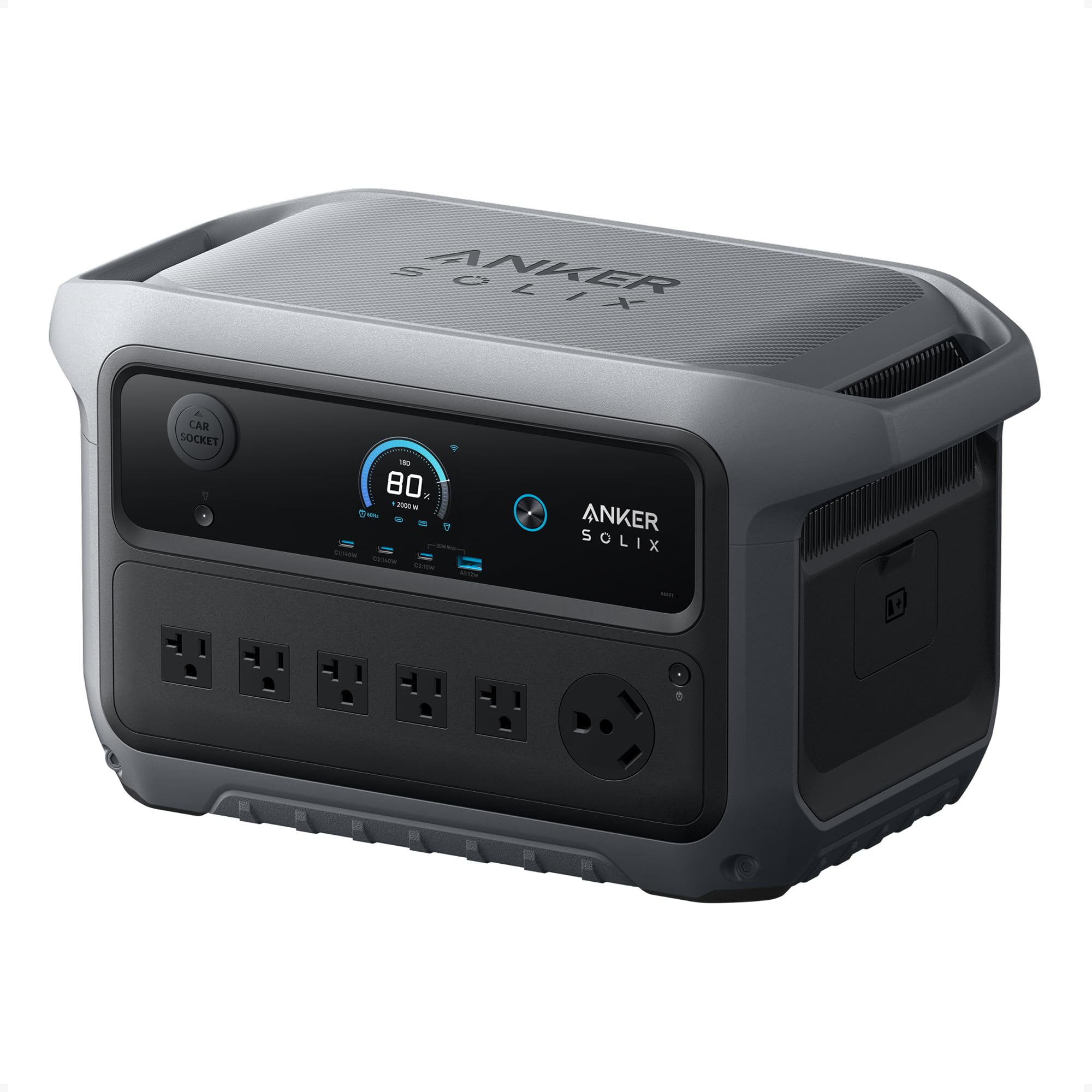
Capacity: 2048Wh
Continuous Output: 2400W
Peak Output: 4000W
Battery Type: LiFePO4
Recharge Time: Full charge in 58 minutes
Intended Use: UPS, outdoor and emergency use
Check Price on Amazon: https://www.amazon.com/dp/B0FVFGL38H/?tag=wdowd-20
Anker SOLIX C2000 Gen 2 Portable Power Station
The C2000 Gen 2 doubles the capacity to 2048Wh and lifts continuous output to 2400W, with a 4000W peak for motors and compressors. That is enough to carry a fridge, a router and lighting through a longer outage, and the LiFePO4 cells are rated for a long service life. The 58-minute full charge keeps it practical in a flat where the unit cannot sit on charge for a whole day.
It suits a top-floor household that wants one serious box instead of several small ones, and has a cupboard or a corner where a larger unit can live. The trade-off is weight: 2048Wh in one case is a two-person lift up several flights, so it needs a permanent home rather than a spot on a high shelf.
Jackery Explorer 300 Portable Power Station
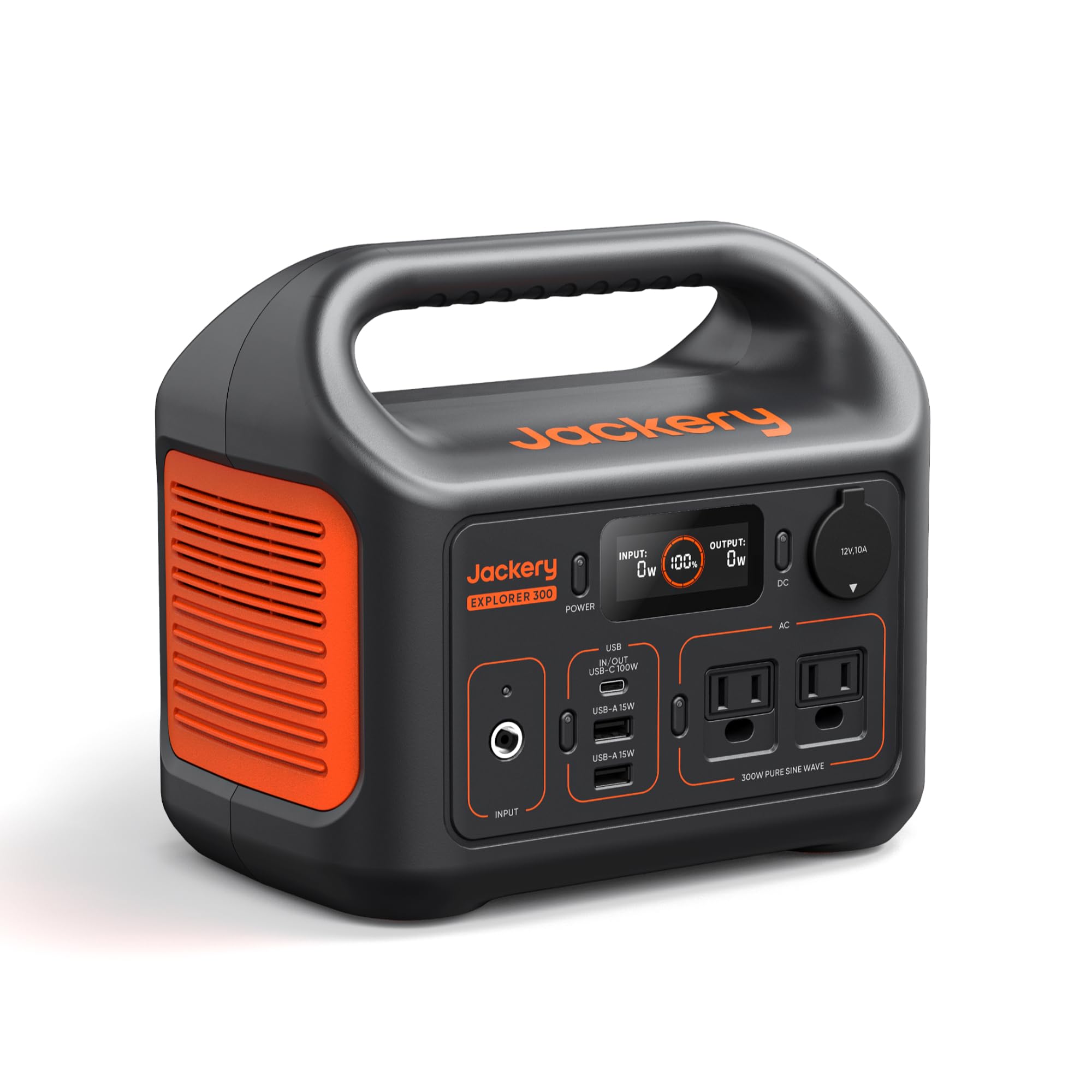
Capacity: 292Wh
Battery Type: LiFePO4
Intended Use: Outdoors, camping, travel, hunting, blackout
Solar: Solar panel optional
Check Price on Amazon: https://www.amazon.com/dp/B082TMBYR6/?tag=wdowd-20
Jackery Explorer 300 Portable Power Station
The Explorer 300 is the small, light option: a 292Wh LiFePO4 pack sized for phones, a laptop, a lamp and a router rather than appliances. The compact shape makes it easy to carry up stairs and easy to store on a shelf, and it works as a grab-and-go unit for travel as well as a flat backup. It is the cheapest way into a branded LiFePO4 station.
It suits a single renter in a small flat who wants a few hours of essentials during a cut and nothing more. The trade-off is headroom: 292Wh will not run a heater, a kettle or a fridge, so anyone planning for a multi-hour outage needs one of the larger picks.
Portable Power Station 640Wh, 1200W Surge
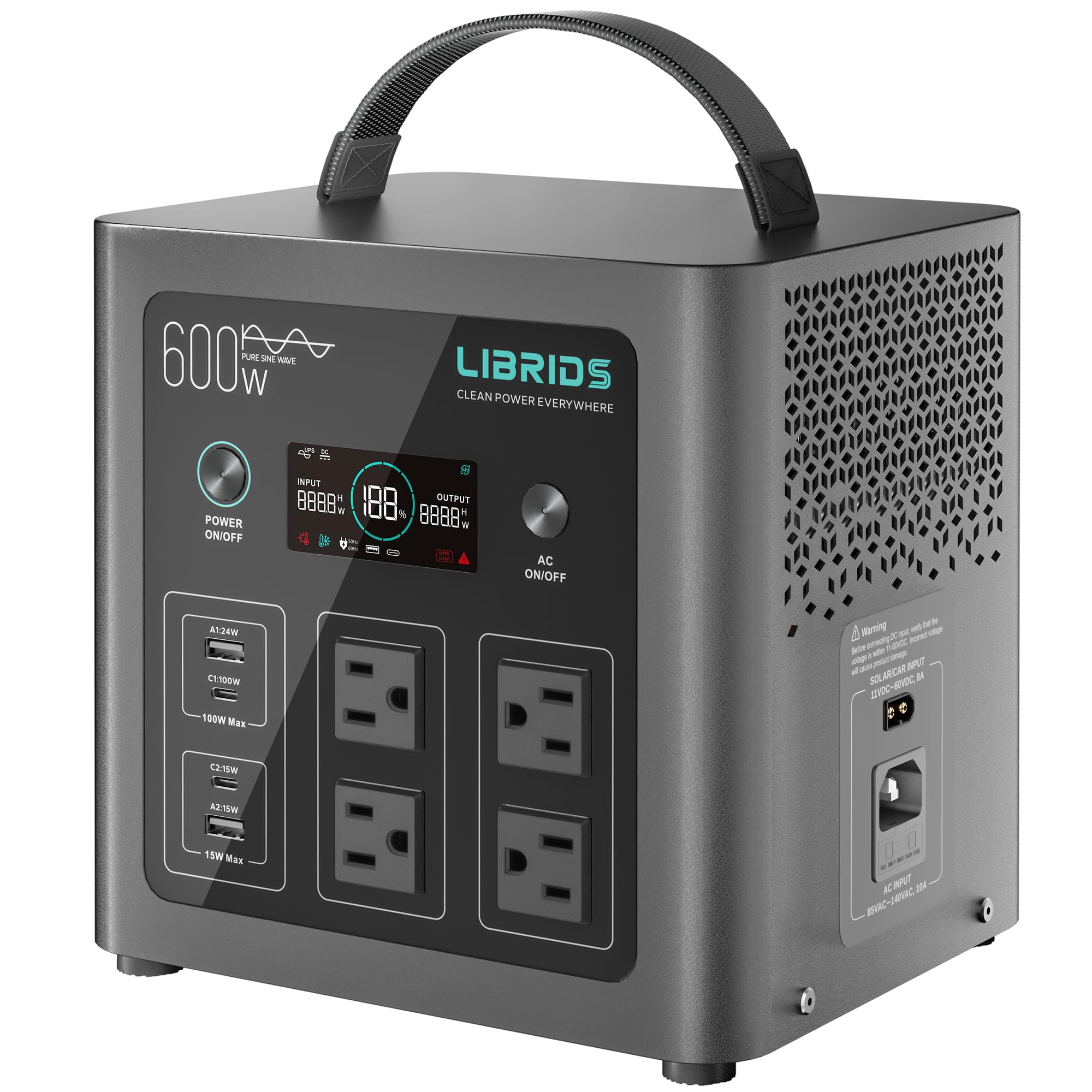
Capacity: 640Wh
Surge Output: 1200W
Battery Type: LiFePO4
Recharge Time: 1.5 hours
Switchover: 10ms UPS
Ports: 8 (4 AC)
Output: Pure sine wave
Build: Metal design
Check Price on Amazon: https://www.amazon.com/dp/B0GSDX8LTM/?tag=wdowd-20
Portable Power Station 640Wh, 1200W Surge
This unit sits between the small and mid picks, with 640Wh, a 1200W surge rating, eight ports and a 10ms UPS mode. The pure sine wave output is the detail that matters for electronics, and the metal housing suggests a sturdier case than the usual plastic shells. A 1.5-hour charge is slower than the mid picks but still workable from a single socket.
It suits a renter who wants UPS protection for a desk and a router plus a few hours of lighting, at a lower price than the 1024Wh stations. The trade-off is a shorter runtime than the mid picks and a slower recharge, so it is a workspace backup rather than a whole-flat solution.
Before You Buy
- Weight and stairs: check the carry weight against the number of flights; anything above 1024Wh is a two-person lift for most people.
- Capacity: match watt-hours to the devices that must stay on, not to the whole flat; a router, laptop and lamp need far less than a fridge.
- Recharge load: fast charging draws a lot from one socket, so confirm the ring main in an older building can take it.
- Solar: with no balcony there is nowhere to mount a panel, so treat solar input as a bonus and plan on wall charging.
- Noise and heat: a unit on charge under a desk gives off heat; leave clearance around it and avoid enclosed cupboards.
- Storage: measure the shelf or cupboard first; larger stations need floor space and permanent ventilation.
- Ports: count the AC outlets and USB-C ports needed before choosing, since a flat with one desk may not need eight.
Frequently Asked Questions
-
Can a power station be used in a top floor flat without a balcony?
Yes. These units charge from a standard wall socket and need no outdoor space; solar input is optional and not required. -
How much capacity is enough for a flat?
A 292Wh unit covers phones and a laptop for hours; 1024Wh covers a workspace and router; 2048Wh is the level that starts to carry a fridge. -
Is it safe to leave a power station plugged in indoors?
LiFePO4 units are designed for indoor standby use, but they should sit on a hard surface with clearance for airflow rather than inside a closed cupboard. -
Will a power station run a heater or kettle?
Only the larger units, and only briefly. Heating appliances drain watt-hours fast, so they are a poor match for any station sized for a flat. -
What does the UPS rating mean for a flat?
A 10ms switchover keeps a desktop, router or NAS running through a brief cut without rebooting, which is the main reason to pick a UPS-capable model. -
Do these units need a solar panel?
No. Every pick here charges from mains power, and a panel is an optional extra that a flat without a balcony cannot easily use anyway.
Bottom Line
For most top-floor flats, the BLUETTI Elite 100 V2 is the best portable power station for a top floor flat with no balcony: 1024Wh of LiFePO4 capacity, a 10ms UPS for the desk and router, a 45-minute run to 80%, and a smaller footprint that suits a shelf. Buyers who need whole-flat backup should step up to the Anker SOLIX C2000 Gen 2, and anyone on a tight budget is better served by the Jackery Explorer 300.
Check Price on Amazon: https://www.amazon.com/dp/B0F42CSQWG/?tag=wdowd-20
