Why there are Amazon links here: Brave Review is paid a commission for qualifying Amazon purchases made through the links below. Your price does not change, and using our links is entirely optional. How this works
Best Presence Detection for Automations for Rooms That Stay Occupied
Motion sensors switch lights off on anyone sitting still. Presence detection fixes that by sensing a person who is breathing, typing or reading rather than moving across the room. This roundup covers five picks that work with Home Assistant and similar platforms, ranging from a bare mmWave module for DIY builders to a multi-zone radar that tracks several people at once.
The picks suit three kinds of buyers: tinkerers who solder and flash their own firmware, smart-home users who want a plug-in sensor with a hub they already own, and households that need room-level automation without touching a config file. The overview table below sorts all five by key spec, best use and price tier so a decision takes under a minute.
Overview of the Picks
| Product | Key Spec | Best Use | Price Tier |
|---|---|---|---|
| Akamatis Human Presence & Light Sensor Litos v3 | mmWave, 2.4 GHz Wi-Fi, adjustable sensitivity | Home Assistant users who want a finished Wi-Fi sensor | Budget |
| Fermion: C4002 mmWave Human Presence Sensor | 10m static / 11m motion, native ESPHome | DIY builders flashing their own ESP32 firmware | Budget |
| 5-in-1 Presence Sensor LWR02 | PIR + mmWave, Matter over Thread, IPX3 | Mixed households that want one sensor to cover several jobs | Mid |
| Aqara Presence Sensor FP400 | 60GHz radar, 8 zones, multi-person tracking | Multi-zone room automation on Thread or Zigbee | Premium |
| Zigbee Human Presence Sensor | mmWave radar, stationary-person detection | Zigbee hub owners who want a cheap finished unit | Budget |
1. Akamatis Human Presence & Light Sensor Litos v3
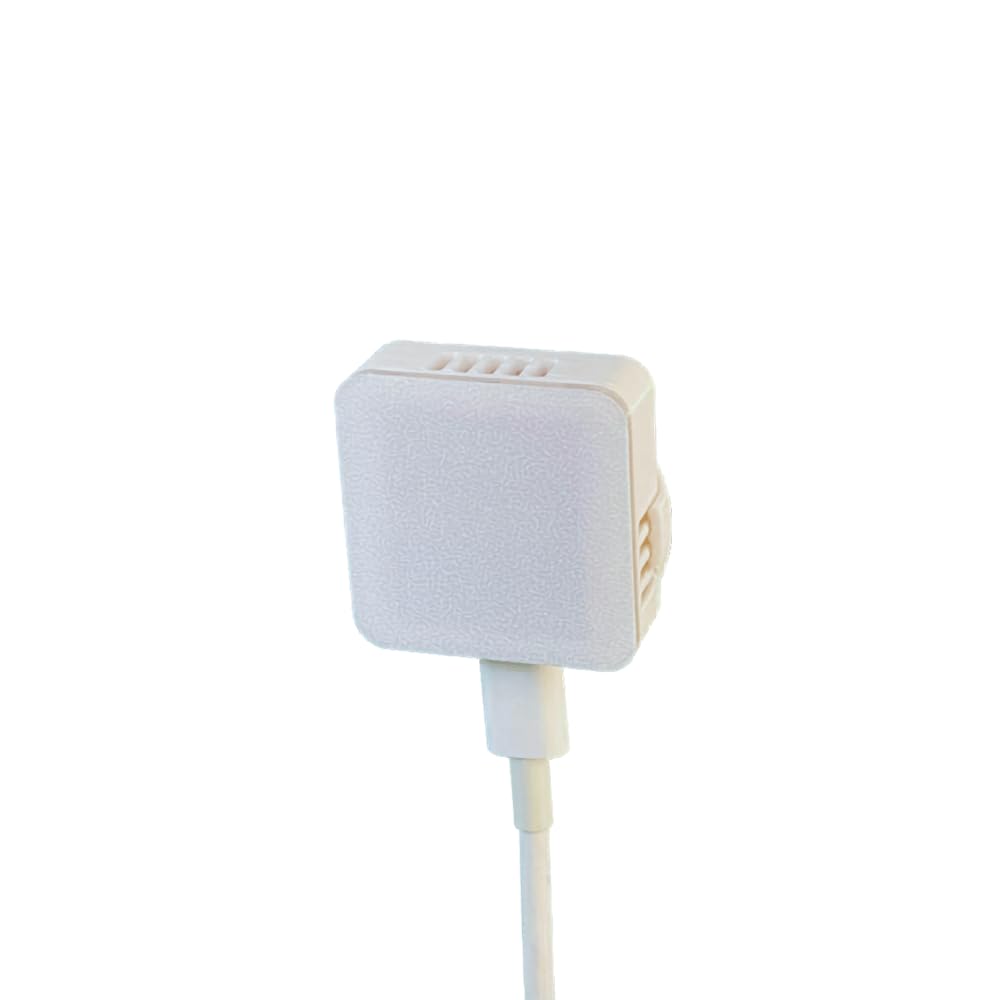
Type: mmWave presence and light sensor
Connectivity: 2.4 GHz Wi-Fi
Sensitivity: Adjustable
Hub requirement: Home Assistant
Finish: White
Pack size: 1
This is a finished sensor rather than a bare board, which is the main reason it earns a place for anyone who wants presence detection without a soldering iron. The mmWave element handles the stationary-person problem that PIR sensors cannot, and the light sensor lets an automation decide whether a lamp is needed at all. Adjustable sensitivity matters in a small flat where a hallway sensor can see through a doorway into the next room. It connects over 2.4 GHz Wi-Fi, so no separate Zigbee or Thread coordinator is required.
The catch is the hub. The name states plainly that it requires Home Assistant, so a household running Alexa or SmartThings alone has no path to it. Buyers already on Home Assistant get a simple Wi-Fi device that joins the network without extra hardware.
Trade-off: Wi-Fi presence sensors keep a constant network connection, which is heavier on a router than a Thread or Zigbee device and worth weighing for anyone with a crowded 2.4 GHz band.
Check the current price on Amazon
2. Fermion: C4002 mmWave Human Presence Sensor
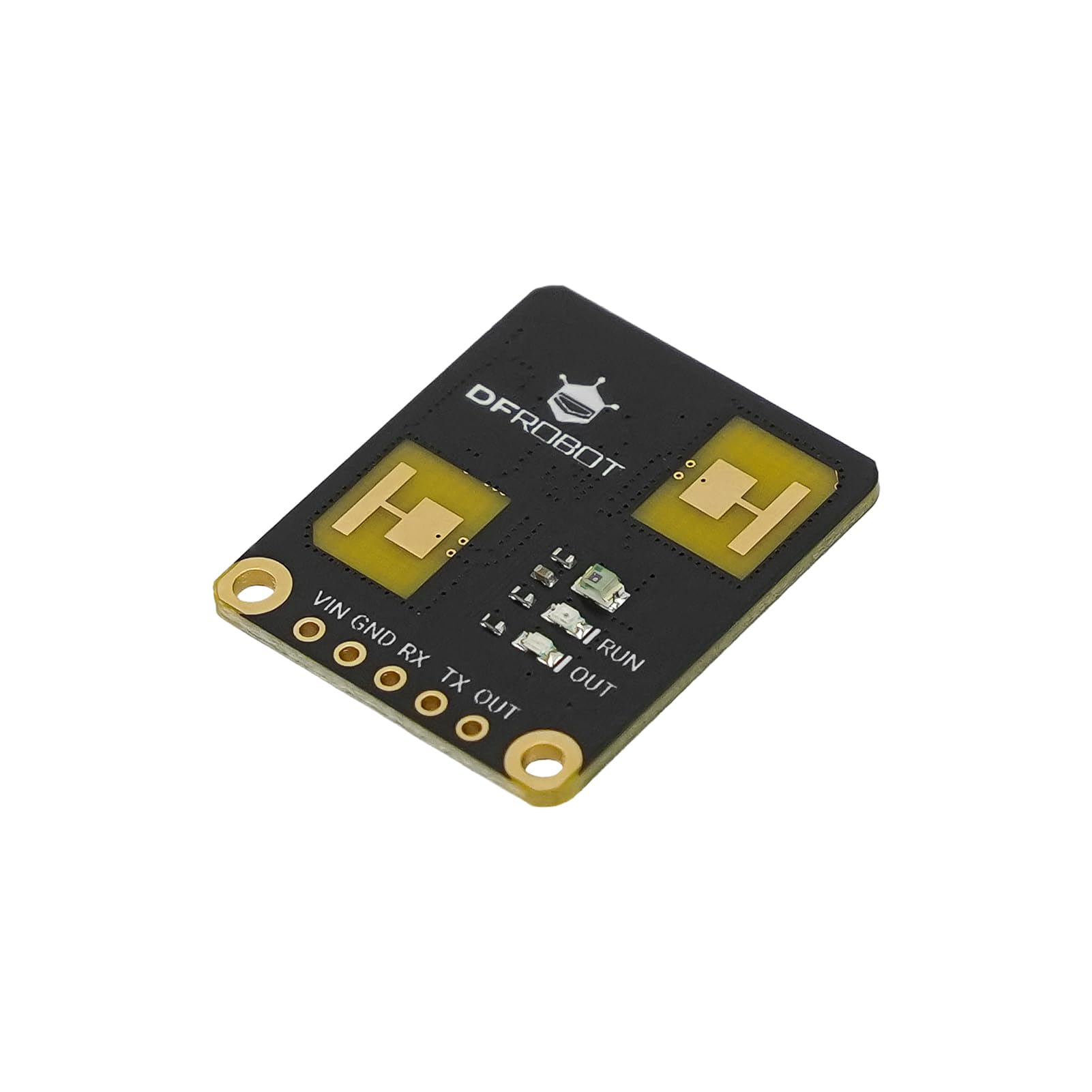
Type: mmWave presence sensor module
Static detection: 10m
Motion detection: 11m
Firmware: Native ESPHome
Platform: Home Assistant
Board support: Arduino and ESP32**
The C4002 is a component, not an appliance. It is built for people who already own an ESP32 or Arduino board and are comfortable flashing firmware through ESPHome. The stated range is generous for a module at this price, with 10m of static detection and 11m for motion, which covers a long living room or an open-plan kitchen from a single ceiling or wall point. Native ESPHome support means it drops into Home Assistant as a local device with no cloud dependency.
The trade-off is everything that is not in the box. There is no enclosure, no power supply and no mounting hardware described, so a buyer is really purchasing a sensor and a project. Anyone who wants to unbox and mount a device in ten minutes should look at the finished units in this list instead.
Trade-off: A bare module demands wiring, a power source and firmware work, so the low price is offset by an evening of setup and a visible board unless the buyer prints or buys an enclosure.
Check the current price on Amazon
3. 5-in-1 Presence Sensor LWR02
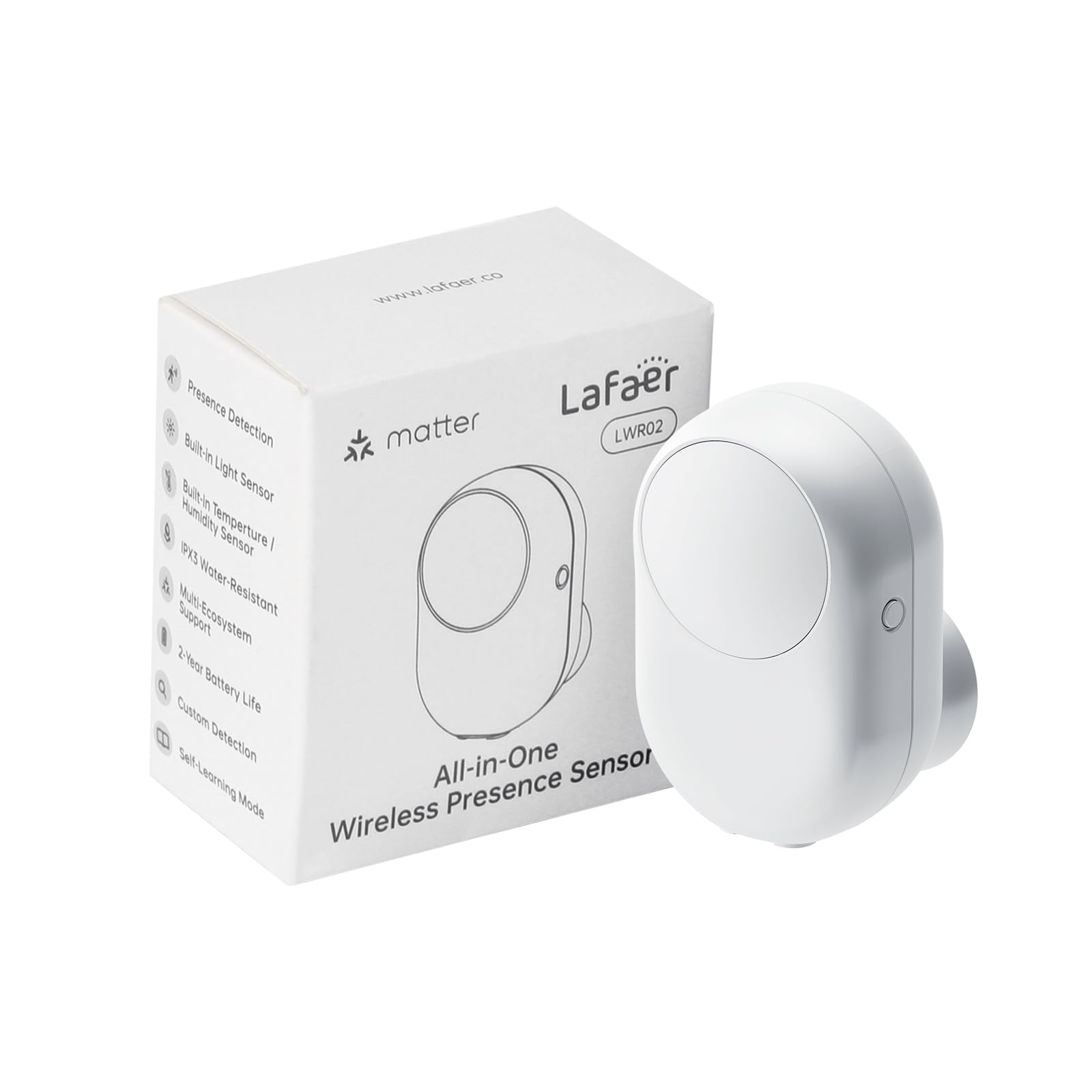
Type: 5-in-1 presence sensor
Sensing: PIR plus mmWave radar
Protocol: Matter over Thread
Weather resistance: IPX3 splash-proof
Power: Battery
Compatibility: Wide smart home support via Matter
The LWR02 combines two sensing technologies in one housing: PIR for fast, unambiguous motion and mmWave radar for the still, seated presence that PIR misses. Pairing them is the sensible way to cut false triggers, because each sensor type covers the other’s blind spot. Matter over Thread means it speaks to Apple Home, Google Home, Home Assistant and other Matter controllers without a proprietary bridge, and the IPX3 rating makes a bathroom or utility room a realistic mounting spot. Battery power removes the need for a socket nearby.
The premium over the budget picks buys the dual-sensor design and the splash resistance, but Matter over Thread still needs a Thread border router in the home. Households without one face an extra purchase before the sensor does anything.
Trade-off: The dual-sensor approach and Matter certification push the price above simpler mmWave units, and a Thread border router is a prerequisite that not every home has.
Check the current price on Amazon
4. Aqara Presence Sensor FP400
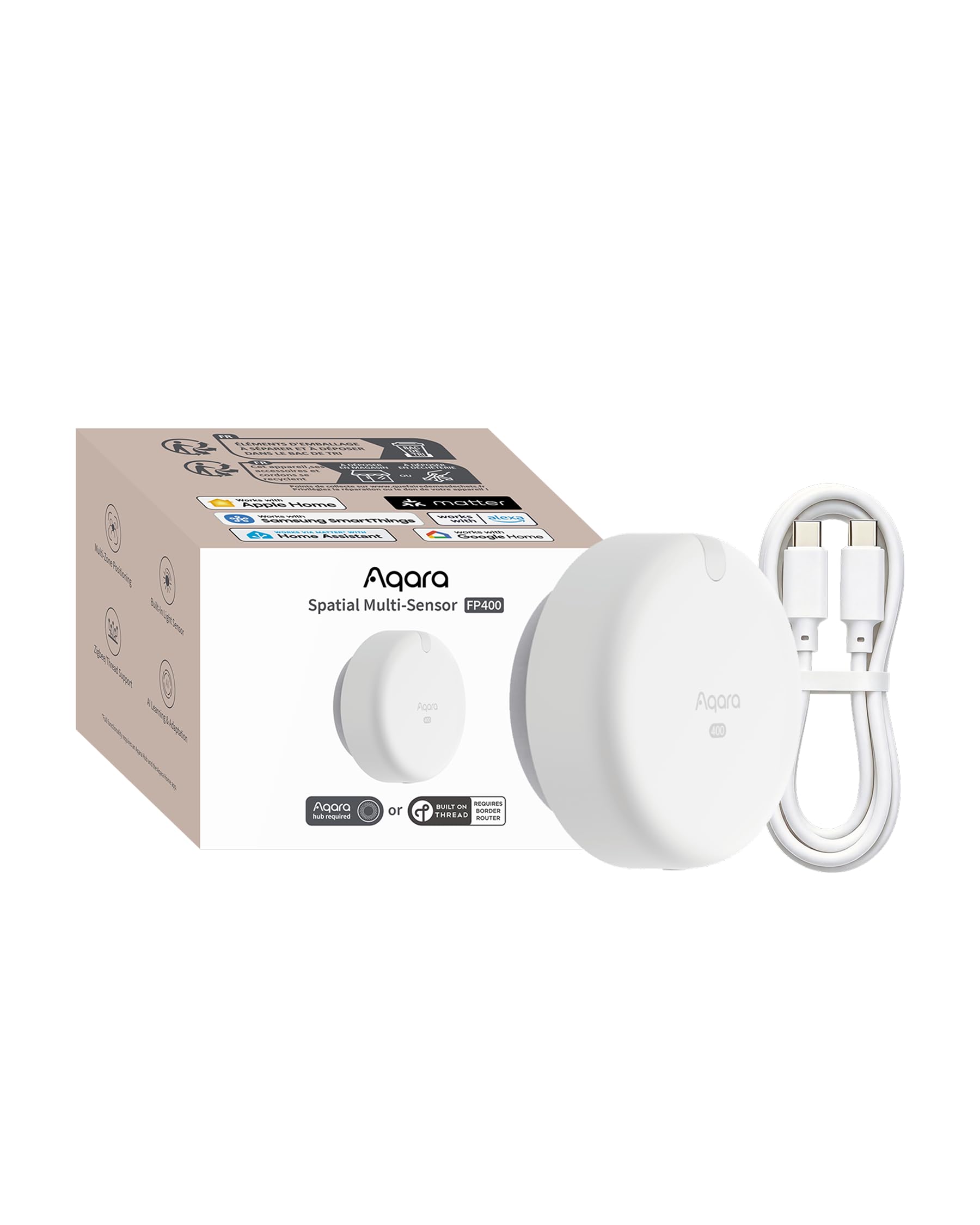
Type: Multi-zone presence sensor
Radar: 60GHz mmWave
Zones: 8
Tracking: Multi-person
Learning: AI spatial learning
Protocols: Thread and Zigbee
Platforms: HomeKit, Home Assistant, Alexa and others
The FP400 is the pick for a room that needs to know where people are, not just whether someone is present. Eight configurable zones and multi-person tracking allow automation that responds to one person entering a desk area while another crosses to the door. The 60GHz radar gives finer spatial resolution than the lower-frequency sensors here, and AI spatial learning is intended to tune the sensor to the shape of the room rather than a fixed detection cone. Dual Thread and Zigbee support means it fits whichever mesh the home already runs, and platform coverage spans HomeKit, Home Assistant and Alexa.
The price puts it firmly in premium territory, and the feature set is only worth paying for if the automation actually uses zones. A simple lights-on-when-occupied rule is handled just as well by a sensor at a quarter of the cost.
Trade-off: Eight zones and person tracking are only useful with automation logic built around them, and the premium price is hard to justify for a single on/off occupancy rule.
Check the current price on Amazon
5. Zigbee Human Presence Sensor
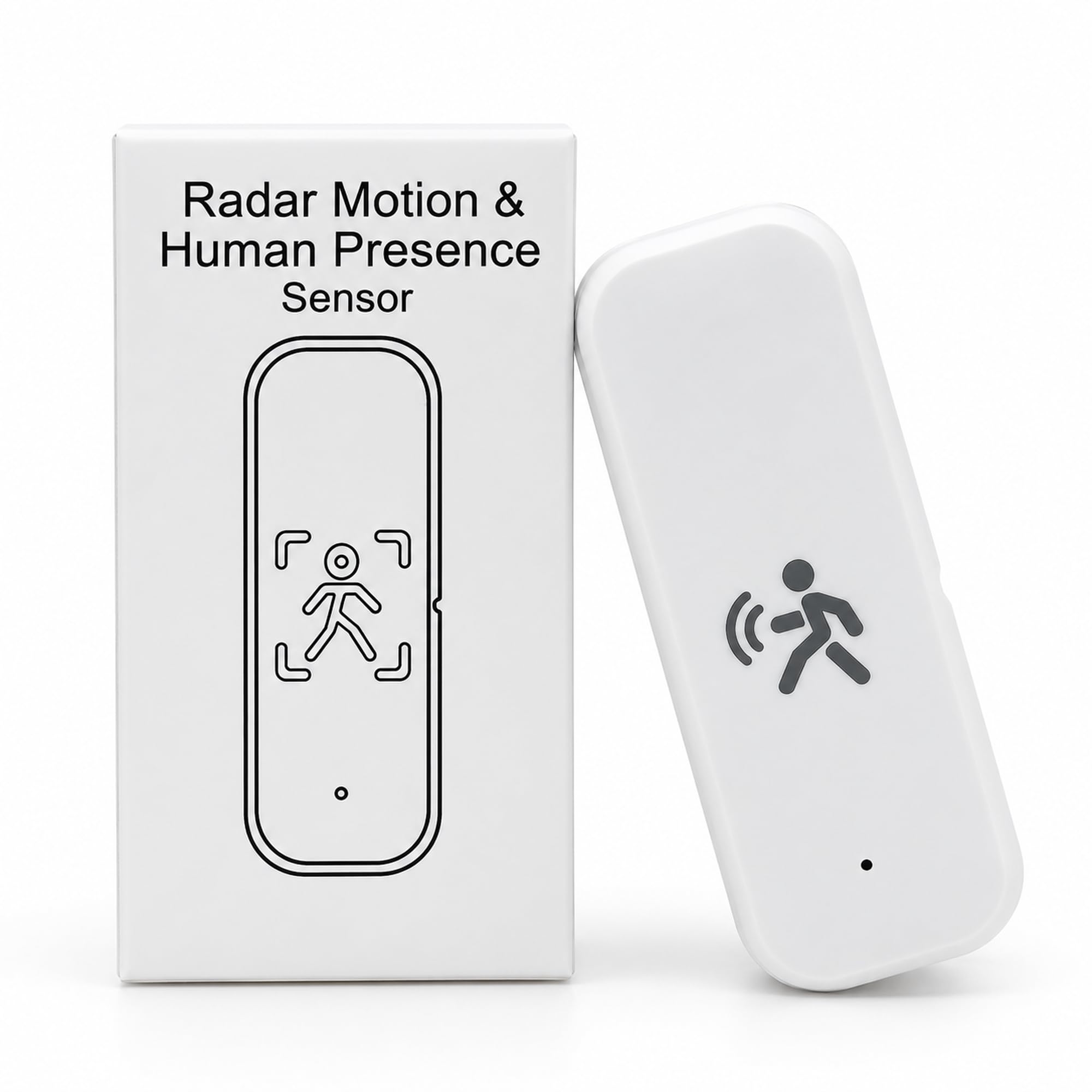
Type: Zigbee presence sensor
Sensing: Millimeter wave radar
Stationary detection: Yes
Platforms: Home Assistant, SmartThings, Hubitat
Hub requirement: Zigbee hub, including Echo devices with a built-in hub
This is the value pick for households already running a Zigbee mesh. It detects a stationary person through millimeter wave radar, which is the whole point of the category, and it works with Home Assistant, SmartThings, Hubitat and Echo devices that have a Zigbee hub built in. No Thread border router and no Wi-Fi pairing are involved, so a home with an Echo and a few Zigbee bulbs can add presence detection with no new infrastructure. At the lowest price in this roundup, it is also the cheapest way to test whether presence-based automation is worth expanding.
The limitation is the mesh. Without a compatible Zigbee hub the sensor is inert, and Zigbee range depends on the strength of the mesh around it, so a detached garage or a far corner may need a repeater. Buyers with no Zigbee devices at all should start elsewhere.
Trade-off: Zigbee range depends on the surrounding mesh, so an isolated room may need a repeater before the sensor is reliable.
Check the current price on Amazon
Before You Buy
- Protocol: Match the sensor to the hub already in the home. Wi-Fi needs no coordinator, Zigbee and Thread need a hub or border router, and Matter over Thread needs a border router.
- Static detection: Presence detection exists to catch people who are still. Confirm the product states stationary or static detection before buying.
- Sensing technology: PIR alone will drop a seated person. mmWave radar or a PIR-plus-radar combination is the safer choice for living rooms and offices.
- Wiring and power: A bare module needs a power source and an enclosure. Battery and mains-powered finished units are the plug-and-play alternative.
- Zone and tracking needs: Multi-zone and multi-person tracking only pay off if the automation logic uses them. Simple occupancy rules do not need the premium tier.
- Environment: A splash-proof rating matters for bathrooms and utility rooms. Standard indoor units suit dry rooms only.
- Mounting position: Radar sees through some thin partitions and struggles with dense metal obstructions. Plan the mounting point before purchase.
Frequently Asked Questions
-
What is the difference between presence detection and motion detection?
Motion sensors react to movement and switch off when a person stops. Presence sensors use radar to detect a stationary person, so lights stay on for someone reading or working at a desk. -
Does presence detection work with Home Assistant?
All five picks here support Home Assistant. Two need it, one uses native ESPHome, and the others connect through Zigbee, Thread or Matter. -
Is mmWave radar better than PIR?
mmWave radar detects still people, which PIR cannot. PIR is cheaper and simpler, so a combined PIR-plus-radar sensor is the most reliable middle ground. -
Which pick is best for a bathroom?
The 5-in-1 Presence Sensor LWR02 is the only pick with a stated splash-proof rating, which makes it the sensible choice for damp rooms. -
Can presence sensors see through walls?
Radar can penetrate some thin materials, and adjustable sensitivity helps limit the detection area. Mounting position and sensitivity settings matter as much as the sensor itself. -
Do these sensors need a subscription?
No. All five work locally through their respective hubs and platforms, with no cloud subscription described.
Bottom Line
For most households, the Akamatis Human Presence & Light Sensor Litos v3 is the best presence detection for automations: it is a finished mmWave sensor with a light sensor and adjustable sensitivity, and it needs only Home Assistant and Wi-Fi. DIY builders should take the Fermion C4002, while the Aqara FP400 earns its premium only where multi-zone tracking is genuinely used.
