Why there are Amazon links here: Brave Review is paid a commission for qualifying Amazon purchases made through the links below. Your price does not change, and using our links is entirely optional. How this works
Best Smart Home for a Listed Building for Reversible, Low-Damage Upgrades
Retrofitting a listed building usually means no new chases in the walls, no visible cabling, and no permanent changes without consent. The best smart home for a listed building therefore leans on devices that sit in an existing socket, swap out a fitting without altering the fabric, or monitor the property without touching it at all. This roundup covers five picks across three buyer profiles: the owner who wants whole-home control without a cloud subscription, the household watching rising energy bills, and the renter or new owner who needs plug-in upgrades that come out again in minutes. The overview table below ranks every pick by what it does and who it fits.
The Picks at a Glance
| Product | Key Spec | Best Use | Price Tier |
|---|---|---|---|
| Home Assistant Green | Local smart home hub, official Home Assistant hardware | Whole-home control without a subscription | Premium |
| Emporia Vue 3 Home Energy Monitor | Real-time electricity usage and solar/net metering module | Understanding consumption before adding devices | Premium |
| Kasa Smart Light Switch HS200 | Single pole, neutral wire required, 2.4GHz Wi-Fi | Replacing an existing wall switch | Budget |
| ecobee Smart Thermostat Enhanced | Programmable Wi-Fi thermostat, Energy Star certified | Heating control with voice assistants | Mid-range |
| Kasa Smart Plug Mini EP25P4 | 15A smart plug, no hub required, HomeKit supported | Plug-in control with zero installation | Budget |
1. Home Assistant Green

Type: Local smart home hub
Platform: Home Assistant
Build: Official Home Assistant hardware
Subscription: None required to run
Connectivity: Local-first automation
Home Assistant Green | Smart Home hub with Advanced Automation | Official Home Assistant Hardware
Check price on Amazon: https://www.amazon.com/dp/B0CXVKSG19/?tag=wdowd-20
Home Assistant Green is a small, fanless hub built to run the Home Assistant platform out of the box, so automation logic lives on the device rather than in a manufacturer’s cloud. It is the official hardware, which means the software and the box are designed together and setup is closer to plugging in an appliance than assembling a server. Because it speaks to many device brands at once, it is the natural brain for a listed property where fittings come from several manufacturers and nothing can be ripped out and replaced wholesale. It suits owners who want one app and one automation engine across the whole house.
The appeal here is longevity: devices can be added or removed over time without changing the controller, which matters when a heritage home is upgraded in slow, consent-friendly stages. It is not for the buyer who wants a five-minute setup and no learning curve, since the platform rewards a little patience. Trade-off: the hub is only as useful as the devices paired to it, so a household unwilling to research compatible sensors and switches will pay premium money for capability it never uses.
2. Emporia Vue 3 Home Energy Monitor
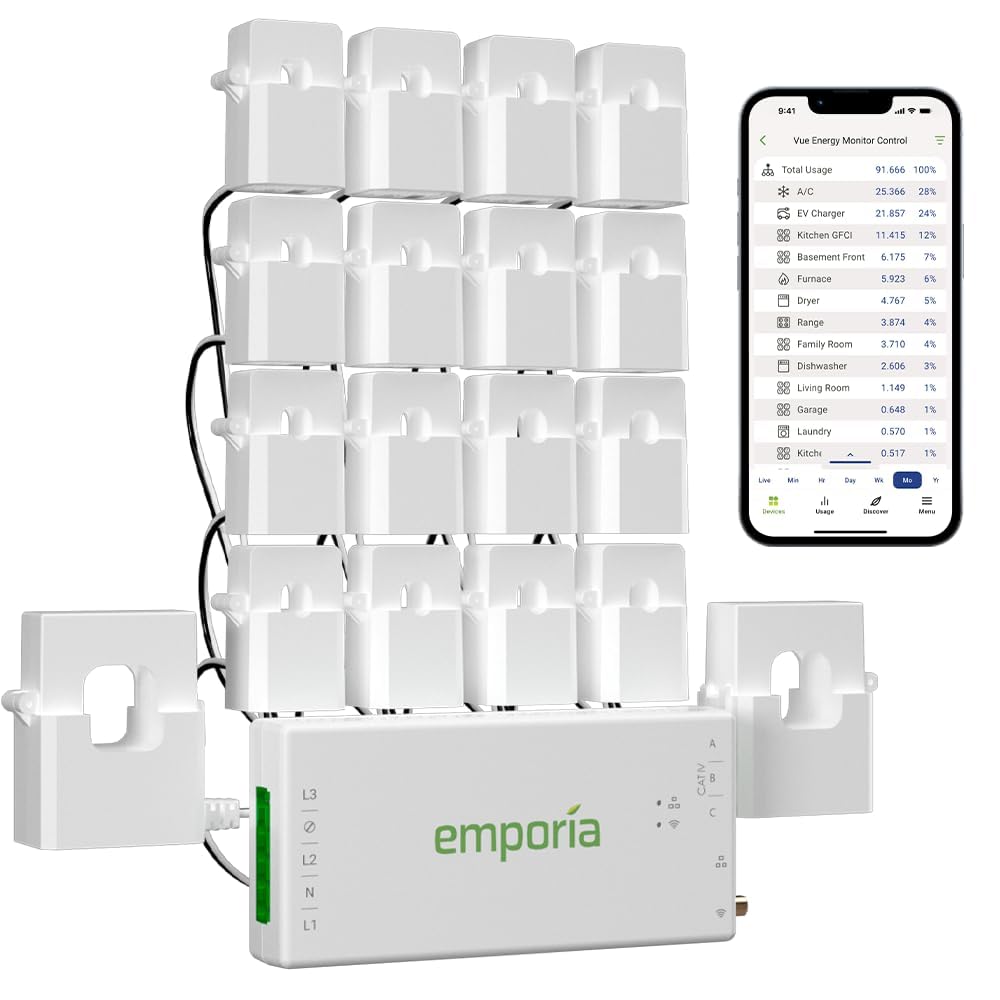
Type: Home energy monitor
Function: Real-time electricity usage monitoring
Features: Solar and net metering support
Certification: UL certified
Format: Smart home automation module
Check price on Amazon: https://www.amazon.com/dp/B0C79PNK84/?tag=wdowd-20
The Emporia Vue 3 is a monitoring module that reports real-time electricity consumption and supports solar and net metering, so a household can see what the building actually draws before spending on gadgets. It is UL certified, which is the reassurance a period property needs when anything is added near the electrical panel. For a listed building, the value is diagnostic rather than decorative: it reveals whether the money should go on heating control, lighting, or nothing at all. It suits owners who suspect an old house is bleeding energy and want evidence first.
This is the pick for the methodical buyer who would rather measure than guess, and it pairs well with a thermostat upgrade later. It is not for anyone hoping for a simple plug-in — installation happens at the consumer unit and is best handled by a qualified electrician. Trade-off: the monitor explains consumption but changes nothing by itself, so a household expecting instant savings will be disappointed until it acts on the data.
3. Kasa Smart Light Switch HS200

Type: Smart light switch
Pole: Single pole
Wiring: Neutral wire required
Connectivity: 2.4GHz Wi-Fi, no hub required
Certification: UL certified
Assistants: Alexa and Google Home
Color: White
Check price on Amazon: https://www.amazon.com/dp/B01EZV35QU/?tag=wdowd-20
The Kasa HS200 replaces an existing single-pole wall switch and adds Wi-Fi control, scheduling and voice commands through Alexa or Google Home, with no hub in the middle. It is UL certified and white, so it reads as an ordinary switch rather than a piece of tech, which is exactly what a conservation officer wants to see. Because it occupies the same opening as the old switch, it is one of the least invasive ways to smarten a room without surface conduit or new cabling. It suits owners replacing like-for-like fittings in rooms where the wiring already includes a neutral.
This is the budget pick and the fastest route to app and voice control in a heritage interior. It is not suitable for two-way switching, and older British-style wiring without a neutral at the switch will rule it out. Trade-off: the neutral wire requirement means a property with outdated switch loops may need an electrician before this can go in, which erodes the low headline cost.
4. ecobee Smart Thermostat Enhanced

Type: Programmable Wi-Fi thermostat
Assistants: Siri, Alexa, Google Assistant
Certification: Energy Star certified
Function: Energy-saving scheduling
Format: Smart thermostat
Check price on Amazon: https://www.amazon.com/dp/B09XXTQPXC/?tag=wdowd-20
The ecobee Smart Thermostat Enhanced is a programmable Wi-Fi thermostat that works with Siri, Alexa and Google Assistant and carries Energy Star certification. It replaces the existing thermostat on the wall, which is usually a permitted swap in a listed building because it does not alter the building’s fabric. Scheduling and remote control are the core features, and voice assistant support means heating can be adjusted without a phone in hand. It suits households with a conventional heating system that want comfort and efficiency without a full rewiring project.
This pick earns its place as the comfort upgrade that most listed-building owners actually feel day to day. It is not for homes with unusual or incompatible heating setups, where a specialist system may be required instead. Trade-off: the thermostat is only as good as the wiring behind it, and a period property with an older boiler or odd zone valves may need an installer to confirm compatibility before purchase.
5. Kasa Smart Plug Mini EP25P4

Type: Smart plug, four-pack
Rating: 15A
Connectivity: 2.4GHz Wi-Fi, no hub required
Assistants: Siri, Alexa, Google Home, Apple HomeKit
Certification: UL certified
Features: App control, scheduling, timer
Check price on Amazon: https://www.amazon.com/dp/B0B14C719T/?tag=wdowd-20
The Kasa Smart Plug Mini EP25P4 is a four-pack of 15A smart plugs that add app control, scheduling and timers to anything plugged into them, with support for Siri, Alexa, Google Home and Apple HomeKit and no hub required. It is UL certified and compact enough to sit in a standard socket without blocking its neighbour. For a listed building this is the zero-installation option: no wiring, no fixings, no consent conversation, just a plug that comes out when the tenant leaves. It suits renters and anyone who wants to test smart routines before committing to anything permanent.
This is the pick that lets a household automate lamps, seasonal lighting and small appliances in rooms where touching the electrics is off the table. It is not for high-draw fixed appliances or anything that should never be switched remotely. Trade-off: the plugs control only what is plugged into them, so a house full of hardwired ceiling lights will see limited benefit without adding switches as well.
Before You Buy
- Consent: check what the listing or conservation area permits before any fixed device is installed; plug-in and like-for-like swaps are usually lower risk than new wiring.
- Wiring: confirm whether wall switches have a neutral wire, since the Kasa switch requires one and older properties often do not.
- Compatibility: match devices to the assistants already in the home — Alexa, Google Home, Siri and HomeKit support varies by product.
- Hub vs no hub: decide whether a local hub such as Home Assistant Green is wanted for cross-brand control, or whether hub-free Wi-Fi devices are enough.
- Heating system: verify the thermostat works with the existing boiler and controls before ordering.
- Reversibility: favour devices that can be removed without patching plaster, chasing walls or leaving fixings behind.
- Electrical safety: use UL certified products and have panel-level work such as the energy monitor installed by a qualified electrician.
Frequently Asked Questions
-
Can a listed building have smart home devices at all?
Yes. The restriction is on altering the building’s fabric, not on technology, so plug-in devices, like-for-like switch swaps and thermostat replacements are common starting points. -
Which pick is best for a rental or short-term let?
The Kasa Smart Plug Mini EP25P4, because it needs no installation and can be removed without leaving a trace. -
Do these devices need a subscription?
No. The picks here run on local control or free manufacturer apps; the Home Assistant Green is specifically built around local automation. -
Why start with an energy monitor?
The Emporia Vue 3 shows where electricity actually goes, which prevents spending on the wrong upgrades in an old, leaky building. -
Will a smart thermostat work with an old boiler?
Often, but not always. Compatibility should be confirmed with an installer before purchase, especially where zone valves or older controls are involved. -
Do the switches and plugs need a hub?
No. The Kasa switch and plug connect directly over 2.4GHz Wi-Fi, while the Home Assistant Green is optional for households wanting one controller across brands.
Bottom Line
For most listed-building owners, the smartest first purchase is the Home Assistant Green: it keeps automation local, ties mixed-brand devices together and grows with a property that has to be upgraded slowly. Pair it with the Emporia Vue 3 to find out where the energy goes, then add the low-cost Kasa switch and plugs room by room. Buyers who want a single quick win should start with the ecobee thermostat instead.
