Why there are Amazon links here: Brave Review is paid a commission for qualifying Amazon purchases made through the links below. Your price does not change, and using our links is entirely optional. How this works
Best Solar Battery for a House With No South Facing Roof
A home without a south facing roof still has options for solar storage, but the equipment mix changes. Panels spread across east, west, or shaded pitches generate less consistent input, so battery capacity and inverter headroom matter more than raw panel wattage. The five picks below cover whole-house off-grid kits, a large standalone storage battery, and high-capacity systems for buyers who want room to grow. Three buyer profiles drive the list: the DIY off-grid builder, the homeowner adding storage to an existing array, and the budget-conscious buyer who wants one complete package.
Overview Of The Picks
| Product | Key Spec | Best Use | Price Tier |
|---|---|---|---|
| ECO-WORTHY 5KW Off Grid Solar System Complete Kit 2340W | 48V 100Ah LiFePO4 battery, 5000W inverter | First-time off-grid builds | Budget |
| ECO-WORTHY Powermega 48V 314Ah (2 pack) UL1973 | 200A BMS, aerosol fire protection, 2-pack | Large storage expansion | Premium |
| SUNGOLDPOWER 6500W Off Grid System Complete Solar Kit | 6500W UL1741 inverter, 6 x 370W panels | Split-phase whole-home backup | Mid-range |
| 16kwh Lithium Solar Storage Battery Wall-Mounted | 51.2V 314Ah wall-mount, 16kWh | Retrofits and tight spaces | Budget |
| ECO WORTHY 10000W Output Complete Off-Grid Solar Panel Kit | 10KW split-phase inverter, 16.1kWh storage | Whole-house independence | Premium |
ECO-WORTHY 5KW Off Grid Solar System Complete Kit 2340W
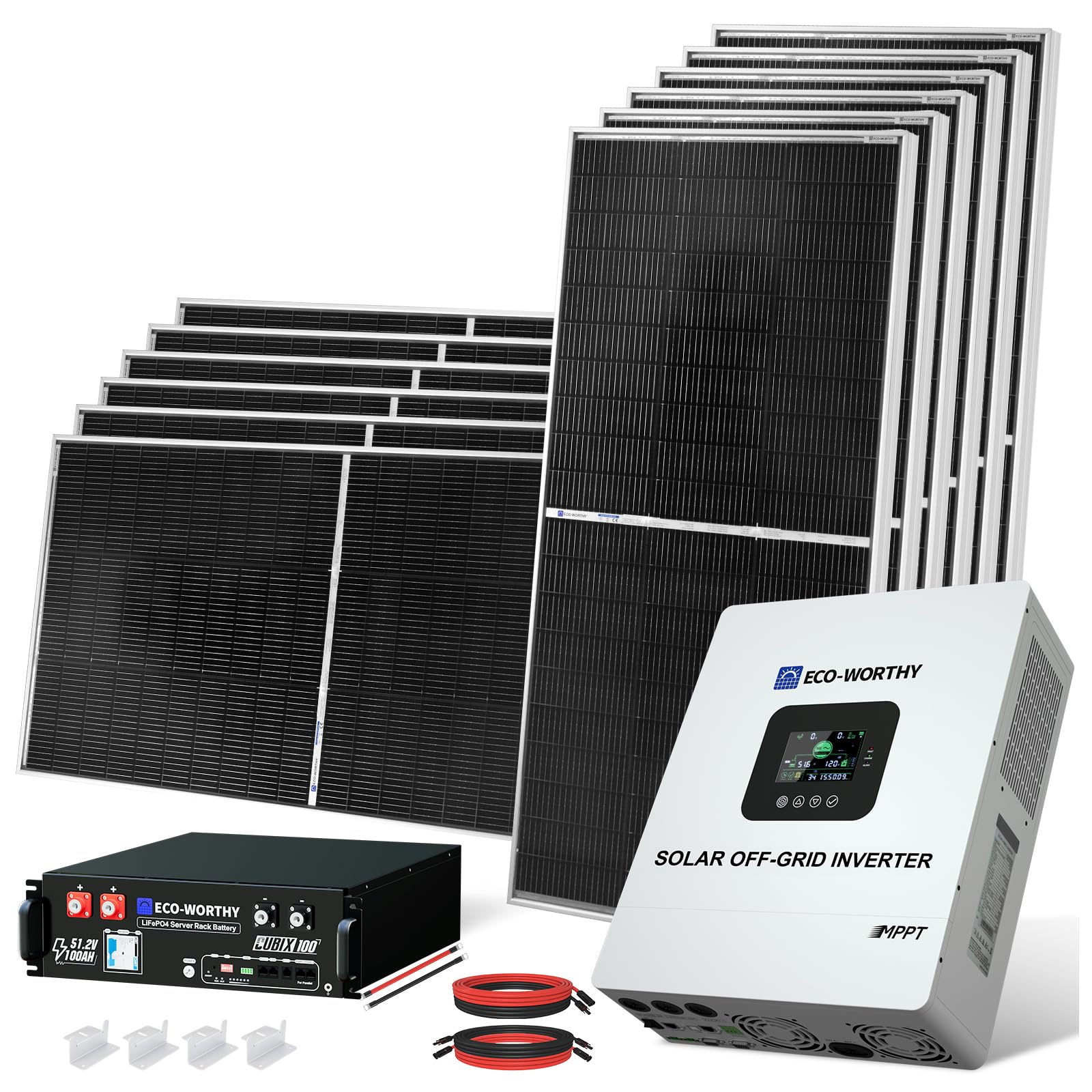
Battery Chemistry: LiFePO4 (Cubix)
Battery Voltage / Capacity: 48V, 100Ah
Inverter Output: 5000W
Panels: 12 x 195W
Total Panel Wattage: 2340W
System Type: Complete off-grid kit
This kit bundles twelve panels, a 48V 5000W inverter, and a 100Ah LiFePO4 battery into one off-grid package. The twelve-panel layout is the practical answer to a roof with no southern exposure: panels split across two or three planes still feed the same charge controller, and the 2340W array gives the battery a workable input even when no single face is ideal. The LiFePO4 Cubix battery is the safer, longer-lived chemistry compared with older lead-acid options, and the 48V architecture keeps cable sizing manageable.
This pick suits the buyer assembling a first off-grid system or a cabin setup who wants panels, inverter, and battery in a single order. It earns its place as the entry point because the 5000W inverter covers most household circuits without oversizing the budget. The caution is capacity: a 100Ah battery at 48V is a modest reserve, so buyers planning whole-home backup should expect to add batteries later.
Trade-off: The single 100Ah battery limits runtime for heavy loads, so this kit is a starting point rather than a finished whole-home system.
ECO-WORTHY Powermega 48V 314Ah (2 Pack) UL1973 LiFePO4 Battery
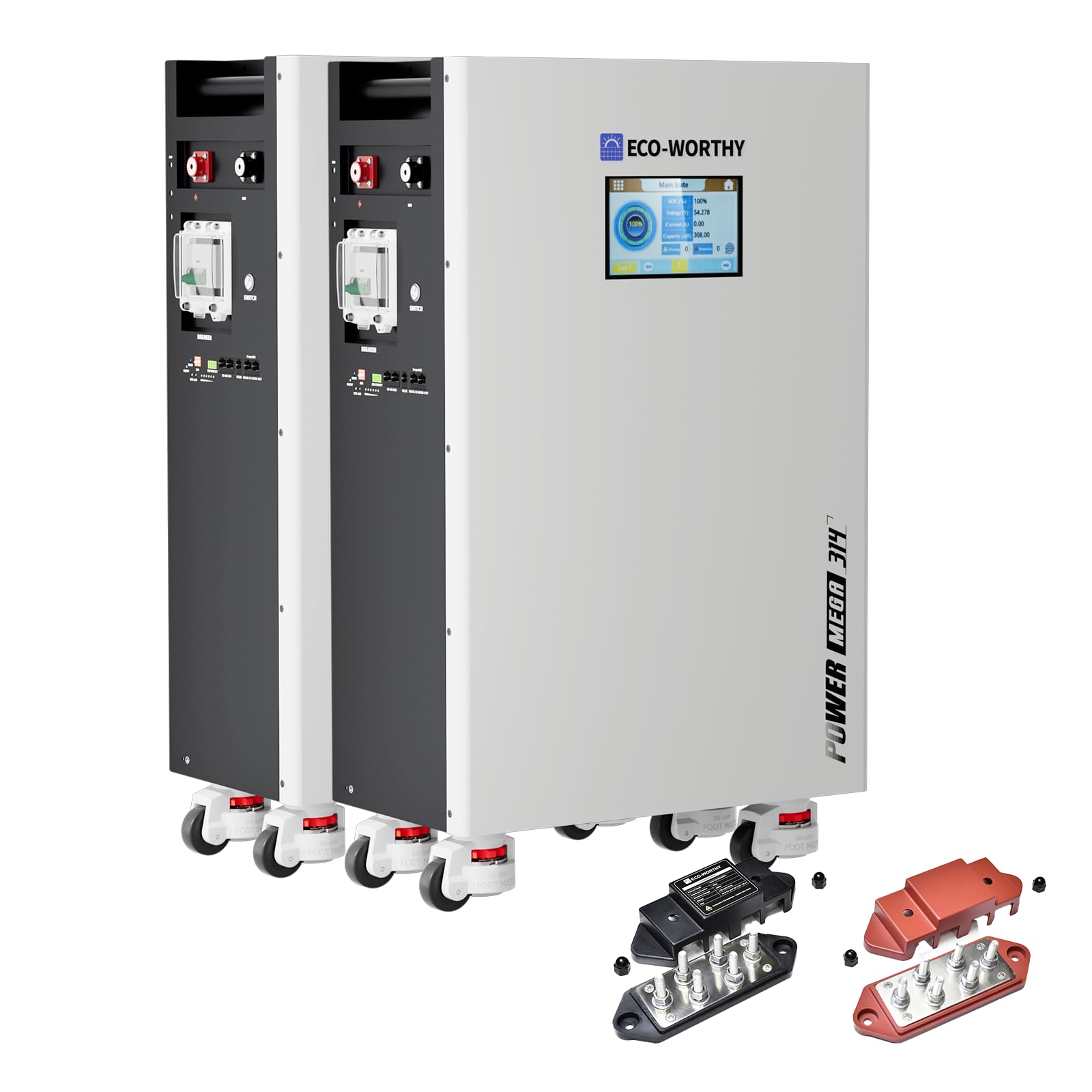
Battery Chemistry: LiFePO4 (UL1973)
Configuration: 2 pack
Voltage / Capacity: 48V, 314Ah per unit
BMS: Active balancing, 200A
Communications: RS485 / CAN / RS232, Bluetooth, WiFi
Safety Feature: Aerosol fire protection
Display: LCD
This two-pack of 48V 314Ah LiFePO4 batteries is built for homes that need serious reserve. The active balancing BMS keeps the cells in line across a large pack, and the 200A rating leaves headroom for a powerful inverter. Communications cover RS485, CAN, and RS232 alongside Bluetooth and WiFi, which matters for buyers integrating the bank with a monitoring app or an existing inverter that speaks one of those protocols. Aerosol fire protection is an unusual inclusion at this tier and adds a layer of safety for indoor installations.
This pick suits the homeowner expanding an existing off-grid system or building a large bank from scratch, particularly where remote monitoring is a priority. It earns its place as the premium storage option because the capacity and protocol support are aimed at serious installations. The caution is scale: two large batteries demand proper mounting, ventilation, and a compatible inverter, and the price tier reflects that.
Trade-off: The two-pack format and premium feature set push cost and installation complexity well above a single-battery starter system.
SUNGOLDPOWER 6500W Off Grid System Complete Solar Kit
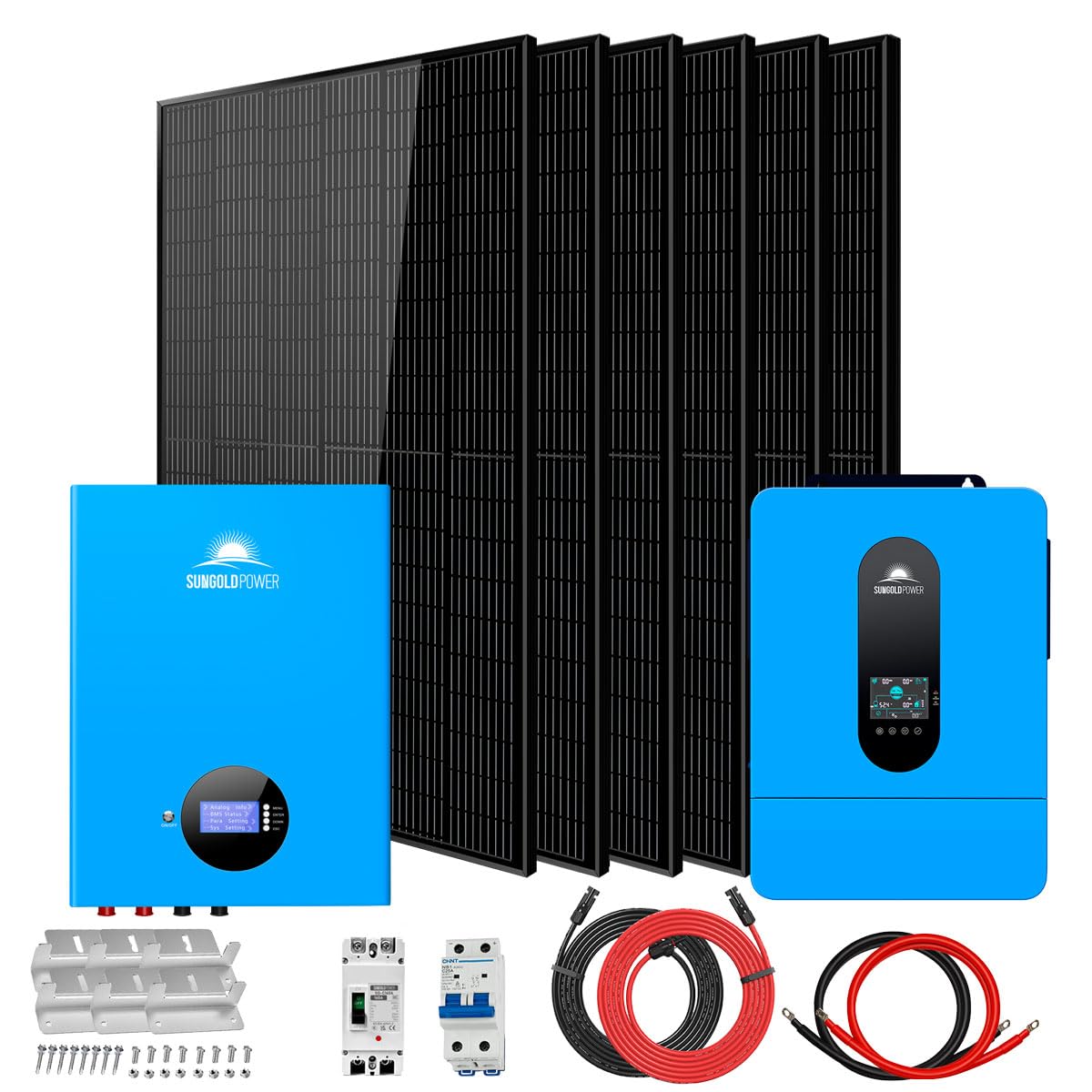
Inverter Output: 6500W, 120/240Vac
Inverter Certification: UL1741
Panels: 6 x 370W mono
Battery: 100Ah, 51.2V LiFePO4 (UL1973)
Output Type: Split phase
System Type: Complete off-grid kit
This kit pairs a 6500W 120/240Vac split-phase inverter with six 370W mono panels and a 51.2V 100Ah LiFePO4 battery. The split-phase output is the headline: 120/240Vac covers both standard household circuits and heavier 240V loads like a well pump or dryer. Six panels give a compact array that fits on smaller or split roof sections, which helps when no single large south facing plane is available. The UL1741 inverter and UL1973 battery signal the build is aimed at code-conscious residential installs.
This pick suits the homeowner who wants whole-home backup with 240V capability but does not need a massive panel field. It earns its place as the mid-range all-in-one because the inverter headroom is generous for the panel count. The caution is battery size again: a single 100Ah battery at 51.2V is a starter reserve, so buyers with heavy evening loads should plan for expansion.
Trade-off: The compact six-panel array and single battery cap total energy storage, so this kit favors inverter capability over long runtime.
16kwh Lithium Solar Storage Battery Wall-Mounted

Battery Chemistry: LiFePO4
Voltage / Capacity: 51.2V, 314Ah
Total Energy: 16kWh
Mounting: Wall-mounted
Intended Use: Home backup, emergency, camping, RV
Form Factor: Standalone storage battery
This standalone 51.2V 314Ah LiFePO4 battery delivers roughly 16kWh of storage in a wall-mounted enclosure. The wall-mount format is the practical win for homes short on floor space — a garage wall or utility room corner works, and the unit stays off the ground. The 16kWh figure is a meaningful reserve for a house, enough to carry essential circuits through an evening and into the next morning’s solar input. It is a battery only, so buyers pair it with their own inverter and charge controller.
This pick suits the homeowner retrofitting storage onto an existing array or anyone who wants a large reserve without a full kit. It earns its place as the budget route to high capacity because the price per kilowatt-hour is competitive for a wall-mount unit. The caution is compatibility: the buyer must confirm the inverter and charge controller match the battery’s voltage and communications, and wall mounting requires solid anchoring.
Trade-off: This is storage only, so the total cost rises once a compatible inverter and charge controller are added.
ECO WORTHY 10000W Output Complete Off-Grid Solar Panel Kit
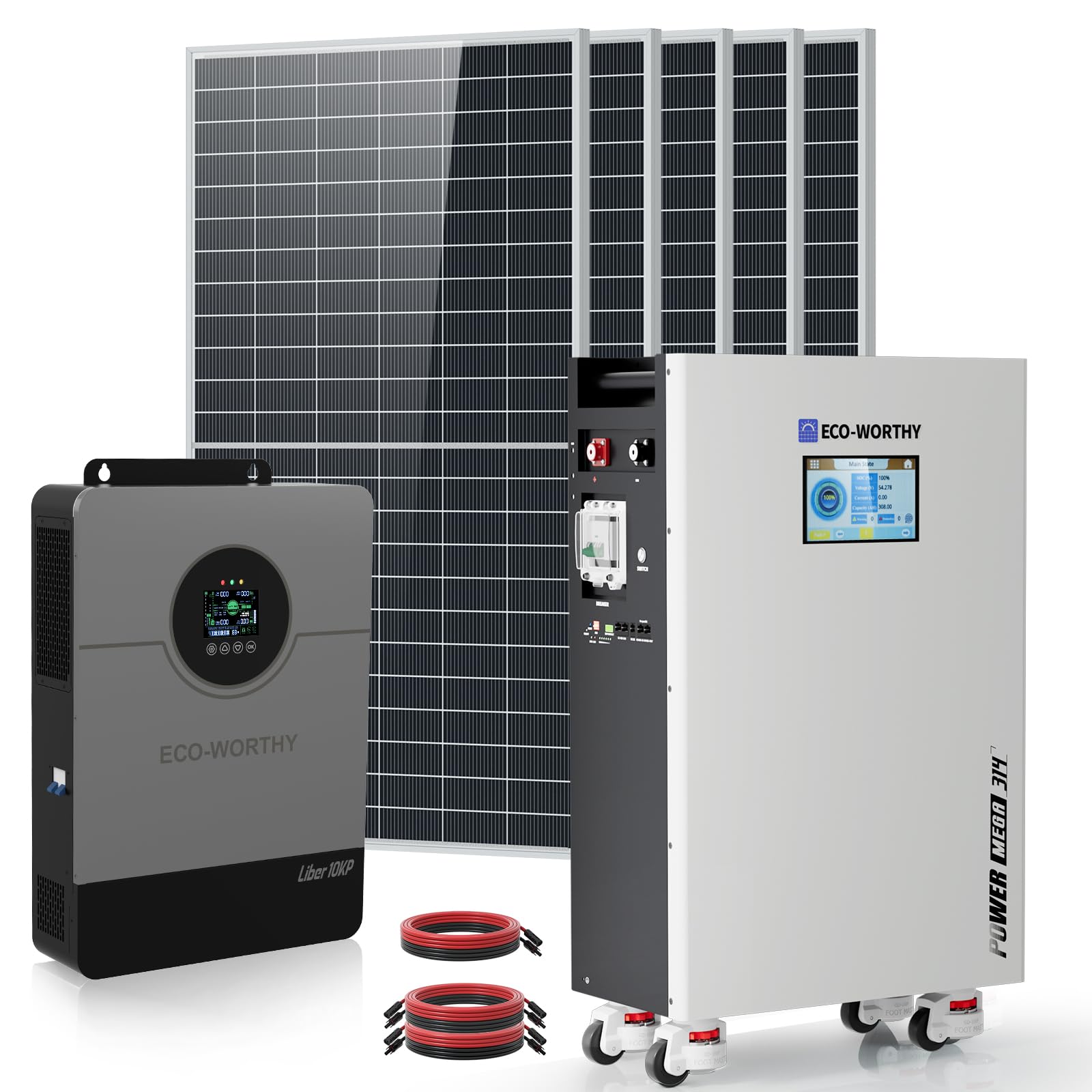
Inverter Output: 10KW, 120V/240V split phase
Battery: 48V, 314Ah
Total Storage: 16.1kWh
Panel Wattage: 2950W PV
System Type: Whole house off-grid system
Output Type: Split phase
This whole-house kit combines a 10KW split-phase inverter, a 48V 314Ah battery with 16.1kWh of storage, and 2950W of solar panels. The 10KW inverter is the largest here, sized for a full residential load panel including 240V appliances. The 16.1kWh battery gives the system real staying power, and the 2950W array is enough to recharge it across a day of decent sun — even when panels are spread over non-ideal roof planes. Together the three parts form a complete off-grid package rather than a starter set.
This pick suits the buyer who wants whole-house independence in one order and has the roof area and budget for a larger array. It earns its place as the premium complete system because the inverter and battery are both sized for full-home demand. The caution is planning: a 10KW system needs proper siting, wiring, and likely a professional install, and the array still needs reasonable sun exposure across the day.
Trade-off: The premium all-in-one package carries the highest upfront cost and demands professional-grade installation planning.
Before You Buy
- Roof orientation: Panels on east and west planes produce peak output at different times; a larger battery bank smooths that spread better than a single small battery.
- Battery capacity: Match kilowatt-hours to evening and overnight loads, not to panel wattage alone.
- Inverter compatibility: Confirm voltage, split-phase output, and communications protocols match the battery before ordering separate components.
- Certifications: UL1973 for batteries and UL1741 for inverters signal the equipment is built for residential use.
- Mounting and space: Wall-mount batteries save floor space but need solid anchoring; floor-standing banks need ventilation.
- Included accessories: Complete kits bundle panels, inverter, and battery, but cabling, mounts, and disconnects may still be needed.
- Expansion room: A system sized slightly above current needs leaves room to add batteries as demand grows.
Frequently Asked Questions
-
Can a house with no south facing roof still use solar batteries?
Yes. Panels on east, west, or split roof planes still generate power, and a larger battery bank stores the spread-out output for evening use. -
What size battery is needed for a home with imperfect panel placement?
Buyers should size storage to overnight loads rather than panel wattage; 16kWh units suit whole-home backup, while 100Ah starter batteries fit cabins and small systems. -
Do these kits include everything needed for installation?
Complete kits bundle panels, inverter, and battery, but mounts, cabling, and disconnects are often separate purchases. -
Is LiFePO4 the right chemistry for home storage?
LiFePO4 is the common choice for residential storage because it handles daily cycling well and is safer than older chemistries. -
Can a standalone battery be added to an existing solar array?
Yes, provided the existing inverter and charge controller match the battery’s voltage and communications protocols. -
What do UL1973 and UL1741 mean?
UL1973 covers battery safety for stationary storage, and UL1741 covers inverter safety and grid-interconnection standards.
Bottom Line
For most homes without a south facing roof, the ECO WORTHY 10000W Output Complete Off-Grid Solar Panel Kit is the strongest single order: its 10KW split-phase inverter and 16.1kWh battery handle the uneven output that split roof planes produce. Buyers on a tighter budget should start with the ECO-WORTHY 5KW kit, while those retrofitting an existing array get the best value from the wall-mounted 16kWh battery.
