Why there are Amazon links here: Brave Review is paid a commission for qualifying Amazon purchases made through the links below. Your price does not change, and using our links is entirely optional. How this works
DJI Power 1000 V2 vs BLUETTI Elite 300: Which Portable Power Station Fits
This comparison sets the DJI Power 1000 V2 against the BLUETTI Elite 300 on the points that actually split them: battery size, power output, footprint and price tier. The DJI is the lighter, faster-charging unit aimed at campers and short outages, while the BLUETTI is a much larger reserve built for home backup and RV use. The side-by-side table and the dimension-by-dimension notes below settle it, and the "Which Should You Buy?" section names the buyer each one suits.
DJI Power 1000 V2 Portable Power Station
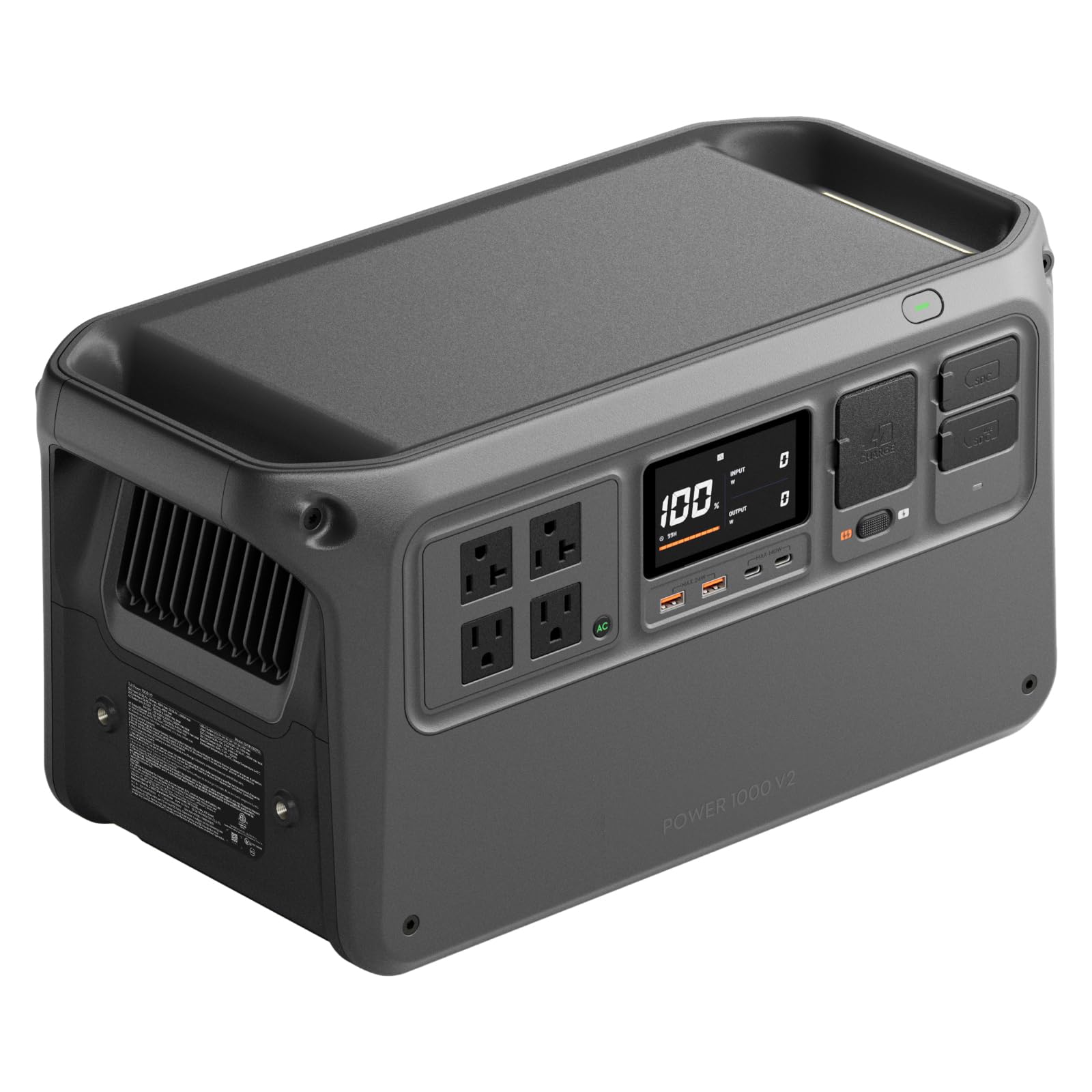
Battery Capacity: 1024Wh
Battery Chemistry: LFP (lithium iron phosphate)
AC Output: 2600W stable output
Recharge Time: 0–80% in 37 minutes
Form Factor: Compact size
Intended Use: Home use, camping, RVs, outdoors
The Power 1000 V2 is the smaller of the two by a wide margin, and its design brief is clearly portability with a fast turnaround. The 1024Wh LFP pack puts it in the one-kilowatt-hour class, which is enough for a camping weekend of lights, phones, a laptop and a small cooler, and the 2600W stable output gives it more headroom for appliances than the capacity alone would suggest. The headline feature is the recharge claim: 0–80% in 37 minutes is genuinely quick for this class and changes how the unit gets used, since a long lunch stop can put most of the battery back.
LFP chemistry is the right call at this tier. It tolerates being cycled often and held at partial charge better than older battery types, which matters for a station that sits in a closet between trips. The compact body and the stable-output design point to a unit meant to be carried and plugged in often rather than parked permanently in a garage.
Trade-off: The 1024Wh capacity is the ceiling here — a multi-day home outage or a heavy appliance load will drain it well before the BLUETTI does, so it rewards buyers who recharge frequently rather than those who want a week of reserve.
Check the DJI Power 1000 V2 on Amazon
BLUETTI Elite 300 Portable Power Station
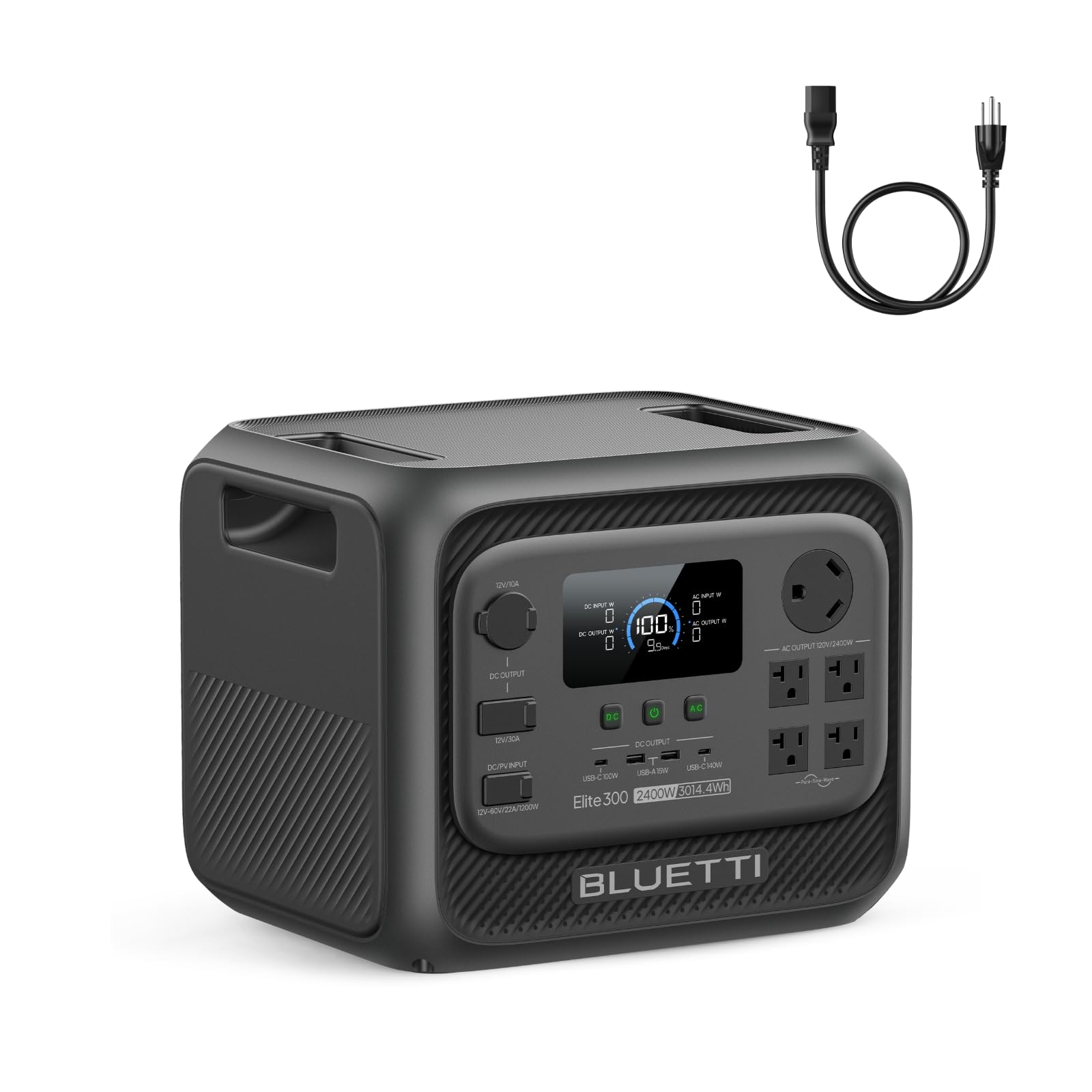
Battery Capacity: 3014.4Wh
Battery Chemistry: LFP
AC Output: 2400W continuous, 4800W surge
RV Port: TT-30
DC Output: 12V/30A
Intended Use: RV, home backup, emergency power
Included Accessory: AC charging cable
The Elite 300 is roughly three times the battery of the DJI, and BLUETTI positions it as the smallest way to get into the 3kWh class. That capacity is the whole argument: 3014.4Wh covers a refrigerator, a furnace blower or a CPAP setup through a real outage rather than a brief one, and the 4800W surge rating lets it start motor-driven loads that a lower-surge unit would trip on. The TT-30 RV port is the detail that matters most for trailer owners, since it connects to a camper’s shore-power inlet without an adapter chain.
The 12V/30A DC output is the second useful oddity — it suits high-draw DC accessories and gives the station a role beyond AC backup. The trade-off for all that capacity is weight and footprint. A 3kWh LFP pack is not a carry-on item, and the "smallest" claim is relative to other 3kWh units, not to the DJI.
Trade-off: This is a heavy, bulky station that is awkward to move solo and slow to top up from a wall outlet compared with the DJI’s fast-charge design, so it suits a buyer who parks it in one place rather than one who carries it to a campsite.
Check the BLUETTI Elite 300 on Amazon
DJI Power 1000 V2 vs BLUETTI Elite 300 Side by Side
| Specification | DJI Power 1000 V2 | BLUETTI Elite 300 |
|---|---|---|
| Battery capacity | 1024Wh | 3014.4Wh |
| Battery chemistry | LFP | LFP |
| AC output | 2600W stable | 2400W continuous |
| Surge output | Not stated in name | 4800W |
| Recharge speed | 0–80% in 37 minutes | Standard AC charging |
| RV connection | None listed | TT-30 port |
| DC output | None listed | 12V/30A |
| Form factor | Compact | Smallest 3kWh class |
| Price tier | Mid-range | Premium |
Where the Two Stations Actually Diverge
Capacity. The BLUETTI carries about three times the stored energy, and that single number decides most of the comparison. The DJI covers a weekend of small loads or a short outage; the BLUETTI covers a multi-day outage or a full RV trip. Buyers who have never run a station through a real outage tend to overestimate what 1024Wh does — it is a phone, a laptop, a light and a small cooler, not a refrigerator for two days.
Output and surge. The DJI’s 2600W stable output is higher than the BLUETTI’s 2400W continuous figure, which is the one place the smaller unit wins on paper. But the BLUETTI’s 4800W surge is the number that lets it start a compressor or a pump, and surge is what usually trips a station on motor loads. Buyers running resistive loads like heaters and kettles should weigh the DJI’s continuous rating; buyers starting motors should weigh the BLUETTI’s surge.
Recharge speed. The DJI’s 37-minute run to 80% is the most distinctive spec in this comparison. It makes the unit viable for road trips and short stops in a way that slower stations are not, and it partly offsets the smaller battery — a buyer who can recharge quickly needs less capacity in the first place. The BLUETTI’s much larger pack takes correspondingly longer to fill, and that is simple arithmetic rather than a flaw.
Ports and use case. The TT-30 RV port and the 12V/30A DC output give the BLUETTI a direct role in trailer and vehicle setups that the DJI does not claim. The DJI counters with size: it is the one that goes in a car trunk without a second person.
Price tier. The BLUETTI sits in the premium bracket for the capacity it delivers, and the DJI sits mid-range. Per watt-hour the larger unit is usually the better value, but only for a buyer who will actually use 3kWh. Paying for capacity that stays full most of the year is the most common mistake in this category.
Which Should You Buy?
Choose the DJI Power 1000 V2 if the station will travel — camping, tailgating, road trips, job sites — and the loads are small. The fast recharge makes a 1024Wh pack go further than the number suggests, and the compact body is the reason it gets taken along at all. It is also the better pick for a buyer who wants one unit for occasional short outages and does not want to store a heavy box.
Choose the BLUETTI Elite 300 if the station stays put: a garage, a trailer, a cabin, or a shelf reserved for outage season. The 3014.4Wh reserve and the TT-30 port are built for RV shore power and whole-home backup, and the surge rating covers motor loads the DJI is not positioned for. Buyers with a trailer or a well-stocked emergency plan get far more of the purchase back.
Neither is right for a buyer who needs to power a whole house through an extended outage, run high-draw appliances for hours, or recharge entirely from solar in poor light. Both are consumer stations with clear ceilings, and sizing up is the correct move rather than stretching either of these.
Frequently Asked Questions
-
Is the DJI Power 1000 V2 or the BLUETTI Elite 300 bigger?
The BLUETTI is the larger unit by a wide margin. It carries 3014.4Wh against the DJI’s 1024Wh, and it is correspondingly heavier and bulkier. -
Which one is better for RV use?
The BLUETTI Elite 300, because of its TT-30 RV port and 12V/30A DC output. The DJI lists RV use among its intended applications but does not claim a dedicated RV connection. -
Which station charges faster?
The DJI Power 1000 V2, which reaches 0–80% in 37 minutes. The BLUETTI’s much larger battery takes considerably longer to fill from AC. -
Do both use LFP batteries?
Yes. Both product names specify LFP chemistry, which is the more durable option for a station that gets cycled regularly. -
Can the DJI Power 1000 V2 run a refrigerator?
It can run one for a limited time, but 1024Wh is a short reserve for a compressor load. The BLUETTI’s 3014.4Wh capacity is the more realistic choice for keeping food cold through an outage. -
Which one is better for home backup?
The BLUETTI Elite 300. Its capacity and 4800W surge suit emergency circuits and motor-driven appliances, while the DJI is better treated as a short-outage and travel unit. -
Is the BLUETTI Elite 300 really the smallest 3kWh station?
That is the manufacturer’s positioning in the product name, and it is relative to other units in the same capacity class — not to smaller stations like the DJI. -
Which one is the better value?
Per watt-hour, the BLUETTI usually wins, but only for buyers who will use the capacity. A buyer who needs 1kWh and travels often gets more practical value from the DJI.
Bottom Line
The decision comes down to whether the station travels or stays put. Buyers who carry their power and can recharge often should take the DJI Power 1000 V2 for its compact body and 37-minute recharge; buyers who need a real reserve for an RV or a home outage should take the BLUETTI Elite 300 for its 3014.4Wh capacity, TT-30 port and 4800W surge.
