Why there are Amazon links here: Brave Review is paid a commission for qualifying Amazon purchases made through the links below. Your price does not change, and using our links is entirely optional. How this works
GE Cync Smart Plug: Matter-Connected Control for Any Outlet
The GE Cync Smart Plug turns a standard indoor outlet into one that responds to voice commands, follows app schedules, and reports how much power a device is drawing. It is built for renters and homeowners who want smart control without wiring in a new switch or buying a hub. This review covers what the plug does, where it fits, and the trade-offs worth knowing before ordering.
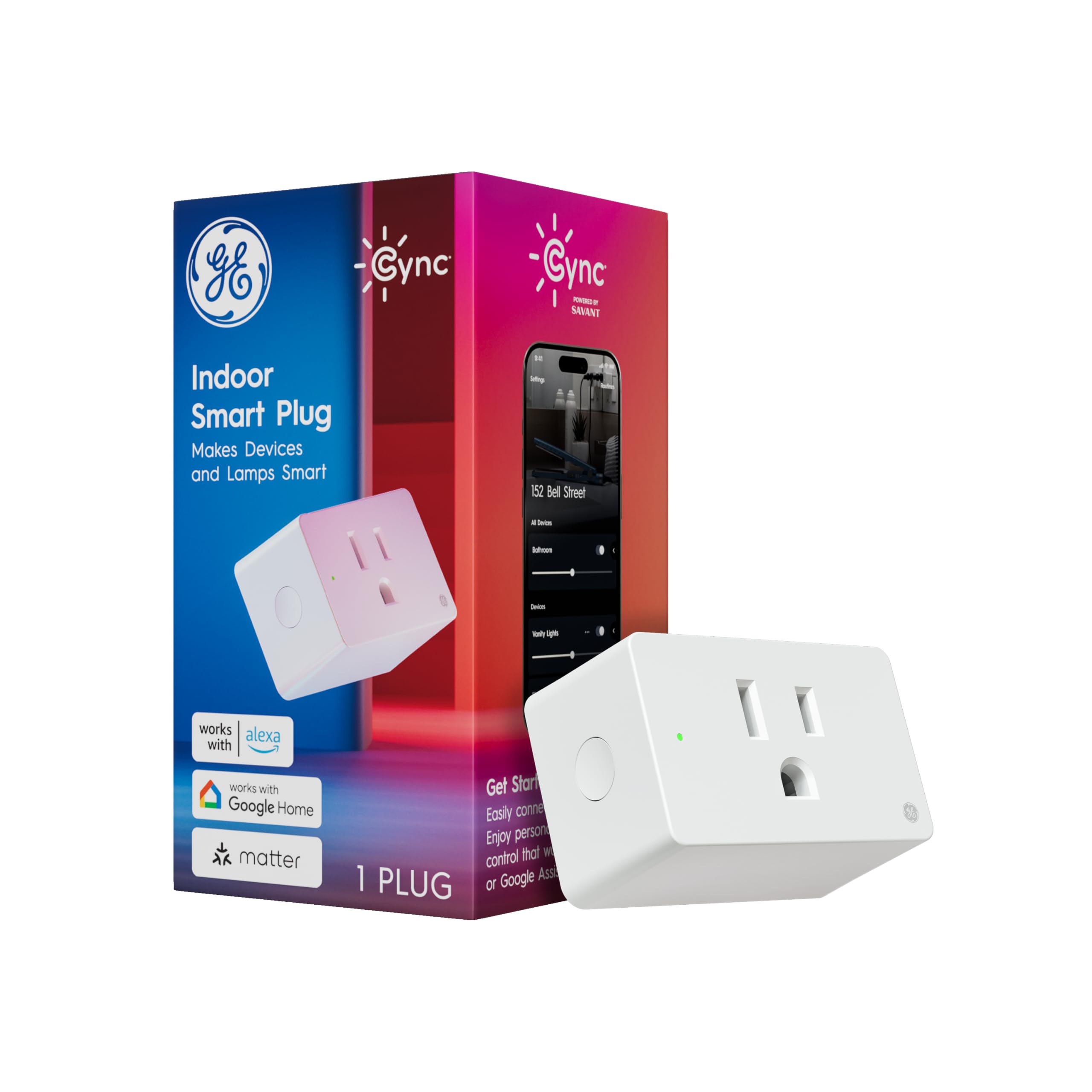
Features and Specifications
Type: Indoor smart outlet
Pack Size: 1-pack
Control: Voice and app
Energy Monitoring: Yes
Platform: Matter compatible
Hub Required: No
Works With: Alexa, Google Home
The headline feature is Matter compatibility. Matter is the cross-platform standard that lets one smart device work across ecosystems, so the plug is not locked to a single app or assistant. Buyers who switch phones or add a second assistant later are less likely to need to replace hardware.
Energy monitoring is the second feature that separates this from a basic smart plug. Rather than only turning a device on and off, the plug reports consumption, which helps buyers spot a device that runs longer or draws more than expected. For a space heater, a lamp left on overnight, or a TV in standby, that data is the practical part of the purchase.
The no-hub requirement keeps setup simple. The plug connects directly over WiFi, so there is no separate bridge to buy, pair, and keep powered. That matters in a small apartment as much as a large house — fewer boxes, fewer things to troubleshoot.
Build and Setup
The plug is a single-outlet unit designed to sit in a standard indoor receptacle. It is the type of device that stays plugged in and largely out of sight, so build quality is mostly about the housing holding up and the connection staying stable over months of use. Buyers should treat it as an indoor product — it is not built for outdoor receptacles, garages with heavy moisture, or anything exposed to weather.
Setup runs through the Cync app, which handles pairing and then hands the device off to Alexa or Google Home for voice control. Because the plug is Matter compatible, the pairing process is designed to work across platforms rather than forcing a single ecosystem. Buyers who already have a smart speaker in the house can usually get voice control running in a short session.
Trade-off: A single-outlet plug means one device per purchase, so buyers with several lamps or appliances to automate will need multiple units — and the per-outlet cost adds up faster than a multi-pack would.
Check the current price on Amazon
Capacity and Power
This is a standard indoor outlet plug, not a heavy-duty smart switch. It is suited to the devices people actually want to automate: lamps, fans, chargers, coffee makers, holiday lights, and small electronics. Those are the loads where scheduling and voice control deliver the most convenience for the least effort.
It is not the right pick for high-draw appliances like space heaters running continuously, window air conditioners, or anything that pulls a serious load. Buyers should check the rating on the device they intend to control before assuming a smart plug is appropriate. When in doubt, the appliance’s own documentation is the authority, not the plug’s marketing.
The energy monitoring feature is most useful on devices that run unattended — a box fan left on, a charger drawing power after a phone is full, a TV in standby. Seeing the draw is what turns a vague suspicion into a decision about whether to unplug, schedule, or replace the device.
App and Voice Control
The Cync app is where schedules, timers, and energy data live. Voice control through Alexa or Google Home handles the quick commands — turning a lamp on from across the room, or shutting off a fan without getting up. The two work together: voice for the moment, app for the routine.
Scheduling is the feature most buyers underrate. A lamp that turns on at dusk and off at bedtime, or a coffee maker that starts before the alarm, is a small convenience that becomes habit quickly. Because the plug is Matter compatible, those routines can be built in the assistant’s own app rather than only in Cync, which gives buyers flexibility as their smart home grows.
The limitation is that app-based control depends on the home network. A dropped WiFi connection means the plug falls back to whatever state it was in, and voice commands stop working until the connection returns. Buyers with unreliable routers should expect occasional hiccups.
Maintenance and Longevity
There is little maintenance involved. The plug stays in the outlet, the app handles updates, and the main task is keeping the WiFi network healthy. Dust around the outlet is worth clearing occasionally, as with any plugged-in device, but there are no filters, batteries, or wearable parts to replace.
Longevity is mostly a function of how hard the plug is worked. A lamp or charger is easy duty. A device that runs hot or draws near the plug’s limit shortens the useful life of any smart outlet, and this one is no exception. Buyers who keep it to light-duty indoor loads should get years of service.
The app is the part that ages least predictably. Smart-home apps get redesigned, and features move around. Buyers who depend on a specific routine should keep an eye on the app after updates, and lean on the assistant’s own routines where possible so the automation survives a Cync app change.
Strengths and Weaknesses
The strengths are straightforward: Matter compatibility, no hub, energy monitoring, and voice control across the two major assistants. That combination covers the practical reasons most people buy a smart plug in the first place, and it does so without asking the buyer to commit to one ecosystem.
The weaknesses come from the format. A one-pack means one outlet, so a whole-room setup requires several purchases. The plug is indoor-only and light-duty, which rules out the appliances some buyers most want to automate. And like any WiFi plug, it depends on a stable network to keep voice and app control working.
Trade-off: The single-pack, indoor-only design makes this a convenience purchase for one or two devices rather than a whole-home automation solution, and buyers planning a larger setup should price out multiple units before committing.
Who It Is For
This plug suits renters who cannot rewire, homeowners who want a low-effort entry into smart control, and anyone who already uses Alexa or Google Home and wants one more device that fits. It also suits buyers who care about energy use and want to see what a device actually draws.
It is not for buyers automating a whole room at once, anyone who needs outdoor control, or households planning to run high-draw appliances through a smart plug. Those buyers need a different product category, not a different brand of the same thing.
FAQ
-
Does the GE Cync Smart Plug need a hub?
No. The plug connects over WiFi and works without a separate bridge or hub, which keeps setup and ongoing use simple. -
Is the GE Cync Smart Plug Matter compatible?
Yes. Matter compatibility is one of its main features, and it is what lets the plug work across Alexa, Google Home, and other Matter-supported platforms. -
Does it work with Alexa and Google Home?
Yes. The plug is built to work with both assistants for voice control, alongside the Cync app for schedules and settings. -
Can it monitor energy use?
Yes. Energy monitoring is included, so buyers can see how much power a connected device is drawing rather than only turning it on and off. -
Can it be used outdoors?
No. It is an indoor smart outlet, so it should stay in indoor receptacles and away from moisture and weather exposure. -
How many outlets does one purchase control?
One. This is a 1-pack, so each purchase covers a single outlet, and multi-device setups need multiple units. -
Can it handle a space heater or air conditioner?
It is not intended for high-draw appliances. Buyers should check the device’s rating before connecting anything that pulls a heavy load. -
Does it need WiFi to work?
Yes. App and voice control depend on a WiFi connection, and the plug falls back to its last state if the network drops. -
Is there a subscription fee?
No subscription is required to use the plug, its scheduling, or its energy monitoring through the app. -
Can schedules run without the app open?
Yes. Schedules are stored and run without the phone being open, though they depend on the plug staying connected to WiFi.
Bottom Line
The GE Cync Smart Plug is the right buy for a buyer who wants one indoor outlet to respond to voice, follow a schedule, and report its energy use — without buying a hub or committing to one ecosystem. Matter compatibility gives it room to grow, and energy monitoring gives it a reason to exist beyond on/off control. Buyers planning a whole-room or whole-home setup should price multiple units first, and anyone with a high-draw appliance should look elsewhere. For the single lamp, fan, or charger that needs automating, it does the job cleanly.
