Why there are Amazon links here: Brave Review is paid a commission for qualifying Amazon purchases made through the links below. Your price does not change, and using our links is entirely optional. How this works
Kidde 30CUAR Smoke CO Detector: Wireless Alerts for Every Level
The Kidde 30CUAR-VRF is a hardwired smoke and carbon monoxide detector built for homes and apartments where one alarm is never enough. It adds wireless interconnect capability and voice alerts, so a hazard detected in the basement can be announced in the bedroom. This review covers what the unit does, how the wireless link changes whole-home coverage, and where the design asks buyers to plan ahead. The short answer: it suits owners replacing an existing hardwired alarm or building a linked system across a multi-level home, and it is less compelling for renters with no wiring to work with.
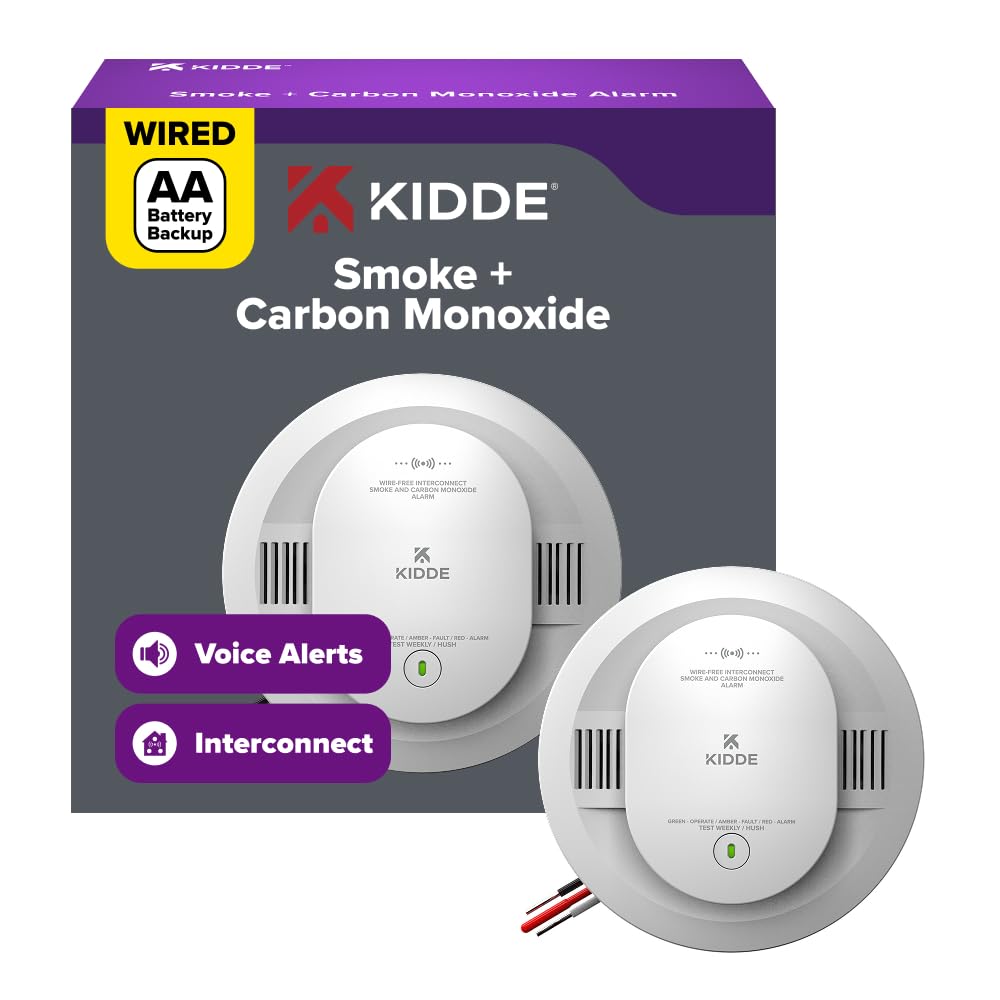
Features and Specifications
Type: Combination smoke and carbon monoxide detector
Model: 30CUAR-VRF
Power source: Hardwired with AA battery backup
Connectivity: Wireless interconnect capability
Alerts: Voice alerts plus standard alarm sound
Intended use: Homes and apartments
Brand: Kidde
The two headline features are the ones that separate this unit from a plain single-station alarm. Wireless interconnect means one detector can trigger the others without a physical signal wire running between them, which matters in finished homes where pulling cable is expensive or impossible. Voice alerts add spoken warnings alongside the tone, so the alarm names the hazard instead of leaving occupants to guess.
The hardwired design with AA battery backup is the other defining choice. It draws power from the home’s wiring and falls back to batteries during an outage, which is the arrangement most building codes expect in new construction. Buyers installing this in an older home need an existing wired alarm location or an electrician’s help to create one.
Trade-off: The unit depends on a hardwired connection to do its main job, so it is a poor fit for apartments or rentals where no alarm wiring exists and no drilling is permitted.
Build and Design
The 30CUAR-VRF is a ceiling- or wall-mounted unit in the familiar round detector footprint, sized to sit flush against drywall rather than call attention to itself. Kidde builds this class of alarm around a molded housing with a twist-off or hinged mounting bracket, and the wiring harness connects during installation. The finish is a neutral white that blends into most ceilings.
The combination sensor package means one device covers two hazards: smoke from a fire and carbon monoxide from a fuel-burning appliance or attached garage. That consolidation reduces the number of units on a ceiling, which is the practical reason combination detectors have become the default in remodeled homes.
Installation is the part that demands attention. The unit needs a junction box or an existing alarm’s wiring, and the interconnect setup has to be paired across the home. Buyers who are comfortable with basic electrical work can handle a like-for-like replacement; anyone else should budget for an electrician.
Wireless Interconnect and Voice Alerts
Interconnect is the feature that changes how a home behaves in an emergency. When one detector senses smoke or CO, the linked units sound together, so a fire starting in a closed utility room still wakes someone on the second floor. Because the link is wireless, that coverage does not require new cable runs between floors.
Voice alerts sit on top of that. Instead of a bare horn, the unit speaks the nature of the hazard, which helps occupants tell a CO event from a smoke event and react correctly. In a household with children, older adults, or anyone who sleeps deeply, a spoken warning is easier to act on than a tone alone.
The catch is that the wireless mesh only works among compatible Kidde units. A home with a mix of brands, or with older alarms that predate the wireless standard, will not get the full benefit until those units are replaced. Buyers should plan the whole system, not just one device.
Power and Battery Backup
Hardwiring is the primary power path here, and that is a genuine advantage: no ladder trips to swap batteries every few months, and no dead-alarm risk from a forgotten replacement. The AA battery backup covers the gap during a power failure, which is exactly when a fire risk can rise.
Two AA cells are easy to source and cheap to replace, and the backup function is the sort of thing buyers should test after installation. The trade-off is familiar in this category: battery backup is a safety net, not a primary supply, and a unit that has lost its wiring connection will drain those cells faster than expected.
Buyers replacing an old hardwired alarm should confirm the existing connector matches before ordering, since wiring harnesses vary between generations. That single check saves a second trip to the hardware store.
Maintenance and Long-Term Ownership
Detectors in this class need periodic testing and occasional cleaning, and the sensor elements have a service life that ends well before the housing wears out. Kidde builds in end-of-life signaling so the unit announces when it needs replacing rather than failing silently, which is the behavior buyers should look for.
The voice alert feature doubles as a maintenance aid: spoken status messages are easier to interpret than a sequence of chirps. Buyers who have spent years decoding beep patterns will notice the difference.
Long-term cost is low once installed. The main ongoing expense is AA batteries for backup and the eventual replacement of the unit itself when the sensor reaches the end of its rated life.
Who It Suits and Who It Does Not
This detector fits homeowners with existing hardwired alarms, multi-level houses where linked coverage matters, and anyone building a Kidde system room by room. It also suits landlords upgrading older wired units to something with voice and wireless capability.
It is not the right pick for renters with no alarm wiring, for buyers who want a purely battery-powered unit they can mount anywhere, or for households already standardized on a different interconnect protocol. Those buyers should look at battery-operated combination alarms instead.
Check the current price on Amazon
FAQ
-
What does the Kidde 30CUAR-VRF detect?
It detects both smoke and carbon monoxide in a single unit, so one device covers fire and CO hazards. -
Does this detector need to be hardwired?
Yes. It is designed for hardwired installation with AA battery backup, so it requires an existing alarm wiring location or new wiring. -
What does wireless interconnect mean?
Linked compatible units sound together when one detects a hazard, without a physical signal wire between them. -
Does it speak instead of just beeping?
It provides voice alerts alongside the alarm, announcing the type of hazard detected. -
Can it be used in an apartment?
It can, provided the apartment has compatible hardwired alarm wiring and the building permits the installation. -
What kind of batteries does the backup use?
AA batteries provide backup power during an outage. -
Will it link with other brands of smoke alarms?
Wireless interconnect works with compatible Kidde units, so mixing brands limits or prevents linking. -
Is this a good replacement for an old hardwired alarm?
It is a strong candidate for like-for-like replacement, though buyers should confirm the wiring connector matches first. -
Does it work during a power outage?
Yes. The AA battery backup keeps it operating when household power is lost. -
Who should not buy this unit?
Renters without alarm wiring and buyers who want a portable, battery-only detector should choose a different model.
Bottom Line
The Kidde 30CUAR-VRF is the right choice for a homeowner who already has hardwired alarm locations and wants the whole house to respond as one system. Wireless interconnect and voice alerts are the features that justify the step up from a basic alarm, and the hardwired design with AA backup keeps maintenance low. Buyers without existing wiring should look elsewhere, but for everyone else this is a straightforward upgrade.
